Concerns about changes around the eyes caused by aging, such as bulging fat under the eyes and sagging upper eyelids, may lead you to consider upper and lower blepharoplasty.
Upper and lower blepharoplasty are relatively common procedures, but that does not mean they should be approached lightly.
The area around the eyes involves both function and appearance, and it can also be difficult to correct when the surgical results are unsatisfactory.
Today, I will explain what upper and lower blepharoplasty involve and why they should each be approached carefully.
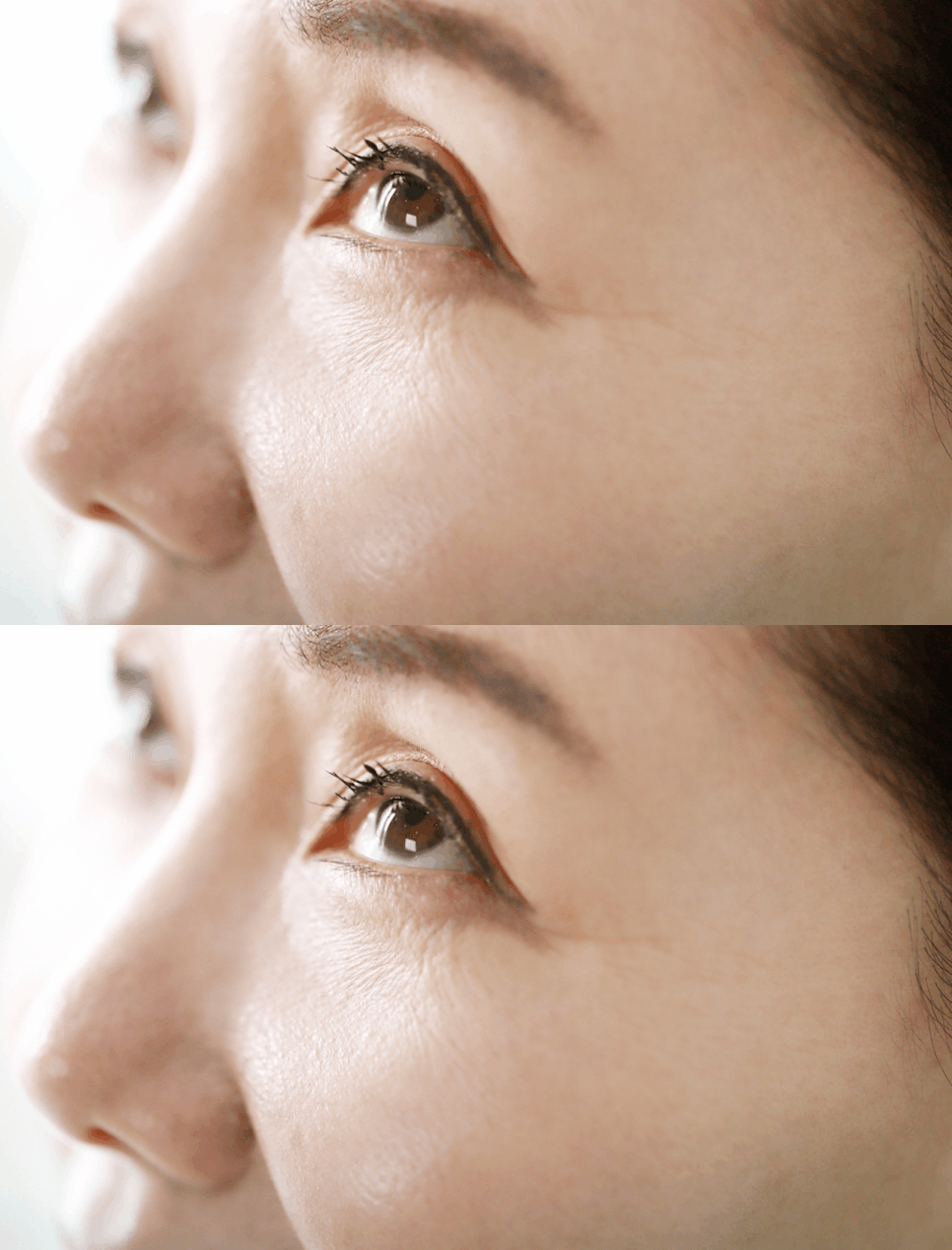
What Is Upper Blepharoplasty?
Upper blepharoplasty is a procedure that removes loose skin and fat from the upper eyelids and creates a double-eyelid fold.
Because the incision is made along the double-eyelid line, the scar is positioned within the natural crease of the eye.
As the skin of the upper eyelids becomes loose with age, the eyes may appear heavy or give a tired impression.
In severe cases, sagging skin can lead to functional problems by obstructing the field of vision.
It is one of the middle-aged eye-surgery procedures performed when middle-aged and older adults have drooping eyelids.
The procedure involves making an incision along the double-eyelid line, removing excess skin and, if necessary, some fat, and then closing the incision with sutures.

Why Does Upper Blepharoplasty Require Careful Consideration?
Upper blepharoplasty may appear to be a simple cosmetic procedure, but the amount and location of skin to be removed must be planned and addressed precisely.
Removing too much skin can result in lagophthalmos, a condition in which the eyes cannot close completely.
If the eyes are not completely covered during sleep or when closing them, this can lead to corneal dryness, irritation, and reduced vision, resulting in serious functional problems.
If too little skin is removed, the drooping may not be sufficiently corrected, making it difficult to notice the effects of surgery.
There is also something that must be checked before upper blepharoplasty.
That is the presence of ptosis. Ptosis is a condition in which the muscle that raises the eyelid, the levator muscle, has weakened, and it is one of the causes of drooping-looking eyelids.
When ptosis is present, upper blepharoplasty alone, which removes skin, may not provide sufficient correction.
A procedure to strengthen the ability to open the eyes must also be added to achieve a youthful and lively appearance after surgery.
1

What Is Lower Blepharoplasty?
Lower blepharoplasty is a type of middle-aged eye surgery performed under the eyes.
As aging progresses, various changes can occur under the eyes, including bulging, sagging, and wrinkling.
The surgical methods are broadly divided into two types.
If only the bulging area under the eyes needs improvement, the issue can be addressed relatively simply through a transconjunctival approach. This method is mainly used when removing or repositioning fat under the eyes. It is suitable when the skin is not severely loose.
When comprehensive improvement of under-eye bulging, wrinkles, and other concerns is needed, surgery is performed through a direct approach to the skin under the eyes.
This method involves making an incision directly below the lower eyelashes and treating the skin and fat together. It is considered when the skin beneath the eyes is also sagging or when skin removal is needed.

Why Does Lower Blepharoplasty Require Careful Consideration?
Lower blepharoplasty involves more complex variables than upper blepharoplasty.
First, controlling the amount of fat is essential.
Removing too much fat under the eyes can instead make the area appear hollow and create a tired or aged appearance. Under-eye fat should not simply be eliminated; the amount and method of treatment must be planned carefully.
Second, there is a risk of lower-eyelid ectropion.
If the skin or muscle of the lower eyelid is pulled excessively or tissue damage occurs, the lower eyelid may turn outward, causing ectropion. Severe ectropion can lead to functional problems such as dry eyes, corneal exposure, and excessive tearing.
Third, the skin's elasticity must be assessed first.
If the skin under the eyes is already significantly loose, addressing only the fat is insufficient, and treatment of the skin must also be performed. Conversely, if there is no skin laxity, unnecessarily making a skin incision may leave only a scar.

When Upper and Lower Blepharoplasty Are Performed Together
Upper and lower blepharoplasty are often performed at the same time.
When there are problems with both the upper and lower eyelids, one advantage is that both can be corrected during a single recovery period.
However, when the two procedures are performed together, each condition must be evaluated separately.
A surgical plan should be established after comprehensively assessing the degree of upper-eyelid skin laxity, the distribution of fat and skin elasticity in the lower eyelids, and the overall structure around the eyes.
In addition, when both procedures are performed together, swelling may persist for longer during the recovery period.
It is advisable to plan the timing while considering your schedule for social activities and important events.

Because upper and lower blepharoplasty can have a significant impact on appearance, expectations for the results are high, but these procedures must also be approached with appropriate caution.
Rather than focusing simply on improving sagging or bulging areas, it is important to carefully assess each person's current condition, establish an appropriate surgical plan accordingly, and proceed with treatment.
Before surgery, be sure to have a thorough consultation with a board-certified plastic surgeon who has extensive experience and expertise in middle-aged eye surgery before making your decision.
| This post was written for informational purposes in compliance with Article 56, Paragraphs 1–15 of the Medical Service Act. All treatments carry a risk of side effects and complications that may vary from person to person. Before undergoing treatment, be sure to consult thoroughly with medical professionals who have extensive experience, and make your decision afterward. |