Have you ever stood in front of the mirror, gently lifted both cheeks with your hands, and thought, “If only they could stay like this”?
Skin sagging does not suddenly appear at a certain moment. Rather, it is the result of changes that develop over a long period of time within the deeper layers of the skin.
Thread lifting is a procedure that improves sagging without incisions, and it has attracted the interest of many people.
However, because it is often perceived as a relatively low-burden procedure, many people undergo it without fully understanding it.
Today, I will explain the anatomical causes of facial sagging, what thread lifting involves, how long its effects last, and why it should be approached carefully.

Why does facial sagging occur?
Sagging skin is caused by complex structural changes across several layers of the skin.
Loss of skin elasticity
The skin’s elasticity is maintained by collagen and elastin fibers in the dermis. As we age, the production of these components decreases, and existing fibers also undergo degeneration, causing the skin itself to lose elasticity. At this stage, the skin’s surface may begin to feel rough, and fine lines may appear.
Relaxation of the SMAS layer
The SMAS layer is located beneath the skin and contains fascia and muscle. It plays a key role in supporting the structure of the face. When this layer relaxes due to aging, the sagging involves not only the skin but also the downward movement of the overall facial structure.
Weakening of the retaining ligaments
Facial skin is not simply laid over the surface. It is held in place by retaining ligaments that connect the bones and skin. As these ligaments weaken with age, the skin and fat gradually move downward in the direction of gravity. Nasolabial folds, marionette lines, and sagging cheek fat may appear during this process.
Changes in the fat layers
Fat is distributed throughout different areas of the face, and when we are young, it maintains sufficient volume in the proper locations. As we age, fat may shrink or move downward, making the area beneath the eyes appear hollow or reducing volume in the cheeks.
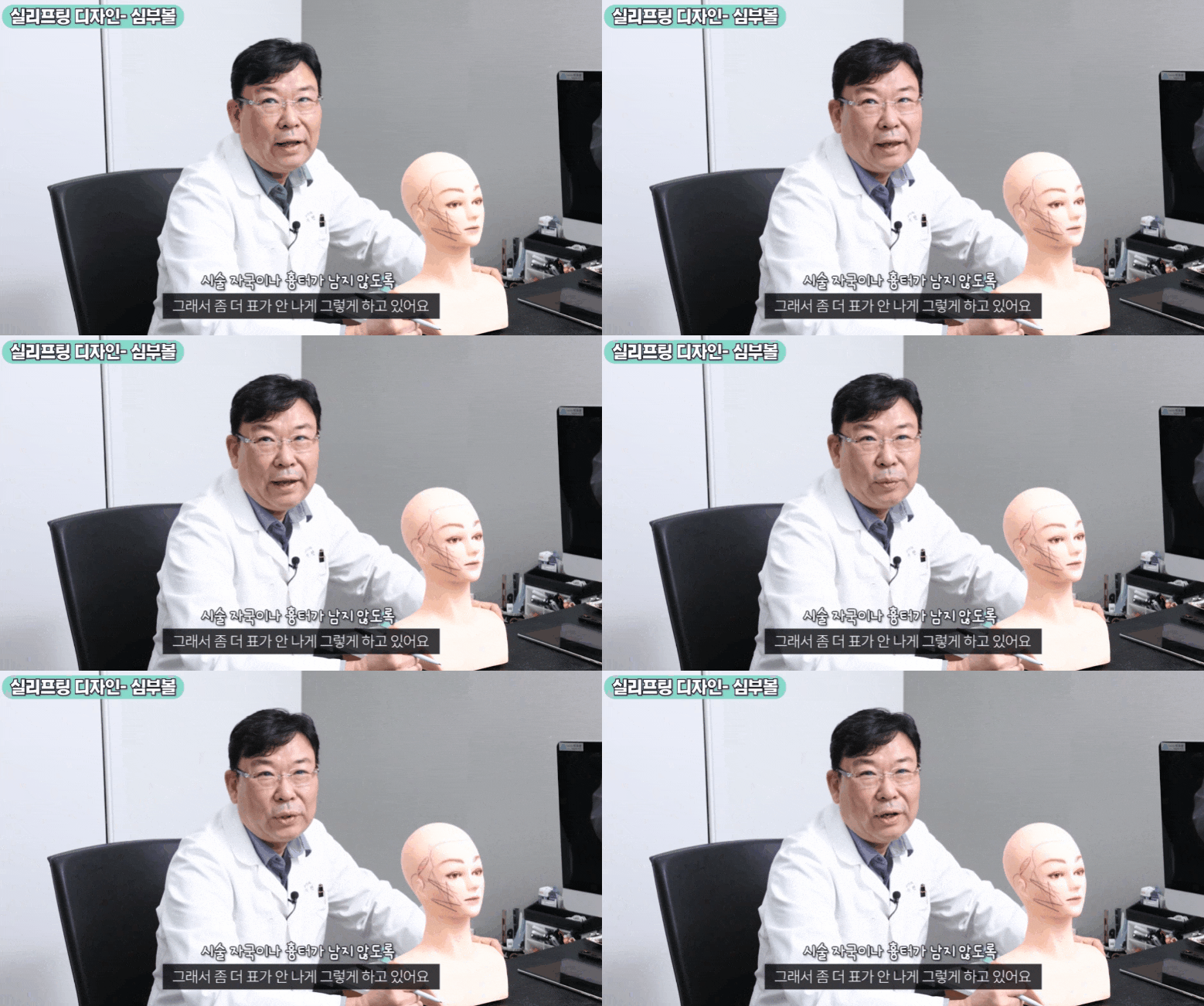
What is thread lifting?
Thread lifting is a procedure in which medical-grade PDO threads are inserted beneath the skin to lift sagging tissue and improve elasticity.
It lifts sagging areas of the face while creating subtle stimulation in the skin and encouraging collagen production.
It can help improve overall skin elasticity and reduce fine lines, working more toward improving skin quality than providing physical pulling alone.
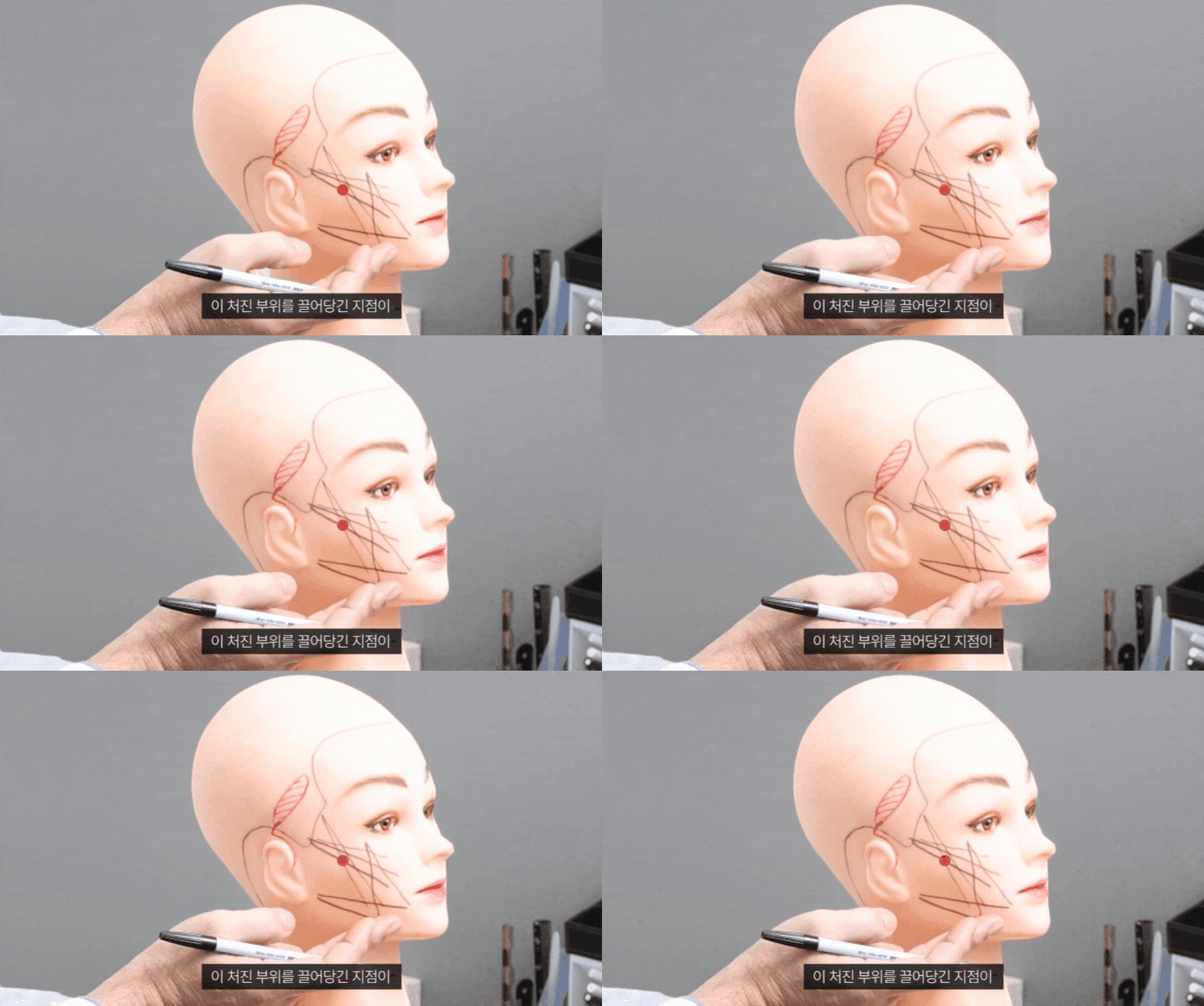
Threads with barbed projections may also be used.
These catch onto the skin tissue and physically lift sagging areas. They may help improve noticeable sagging, such as cheek fat, a double chin, nasolabial folds, and sagging facial contours.
PDO threads are made of a material that naturally breaks down and is absorbed by the body, so they do not need to be removed separately. One characteristic is that recovery tends to be less demanding than with surgical methods.

How long do the effects last?
PDO threads themselves naturally break down in the body over approximately 6–12 months after insertion. However, the effects do not disappear immediately just because the threads have broken down.
While the threads remain in place, the stimulation applied to the surrounding tissue encourages collagen production, and this process improves the skin’s own elasticity.
For this reason, the lifting effect and improvement in elasticity may continue for a certain period even after the threads have been absorbed.
In general, the effects of thread lifting last approximately 1–2 years, and some people may seek continued effects through repeated procedures.
However, the duration varies from person to person. The following factors can affect it:
✔ Skin elasticity at the time of the procedure — The effects tend to last longer when a certain level of elasticity is still present.
✔ Quality and freshness of the threads — Older threads may have reduced tensile strength, which can decrease their ability to maintain the result.
✔ Precision of the insertion direction and design — More precisely planned insertion allows the threads to settle more securely and may improve durability.
✔ Post-procedure care — Care during the initial period can affect how long the effects last.
Precautions after the procedure
Post-procedure care also affects the results of thread lifting.
✅ Avoid strong massages for approximately one month after the procedure — Activities that apply strong pressure to the face, such as meridian massages and facial massages, may cause the barbs on the threads to separate from the tissue.
✅ Be careful when opening your mouth wide — Caution is needed during the early stage after the procedure when yawning or biting into large pieces of food, for example. If you occasionally feel a “pop,” this does not mean that the thread has snapped; it may be a partial separation of the barbs.
✅ Avoid pressure on the treated area — Please avoid sleeping face down or habitually pressing on the area with your hands.
✅ Avoid alcohol, saunas, and strenuous exercise for two weeks — Activities that excessively promote blood circulation may affect early recovery.
✅ Swelling and a foreign-body sensation are natural reactions — For several days after the procedure, you may experience swelling, a tightening sensation, or a foreign-body sensation. These usually subside within 1–2 weeks. If you experience severe pain or unusual symptoms that persist, it is recommended that you visit the clinic immediately.
Why should you consult carefully before making a decision?
Although thread lifting is relatively low-burden, it is risky to think, “It is simple, so it does not matter where I have it done.”
Dimpling as a side effect — If the skin is pulled excessively or the insertion angle and depth are unsuitable, dimpling may occur, causing the treated area to appear indented.
Thread quality — PDO threads lose elasticity over time after manufacture. Procedures performed in settings where it is difficult to verify the source and manufacturing date of the threads may result in differences in quality and effectiveness.
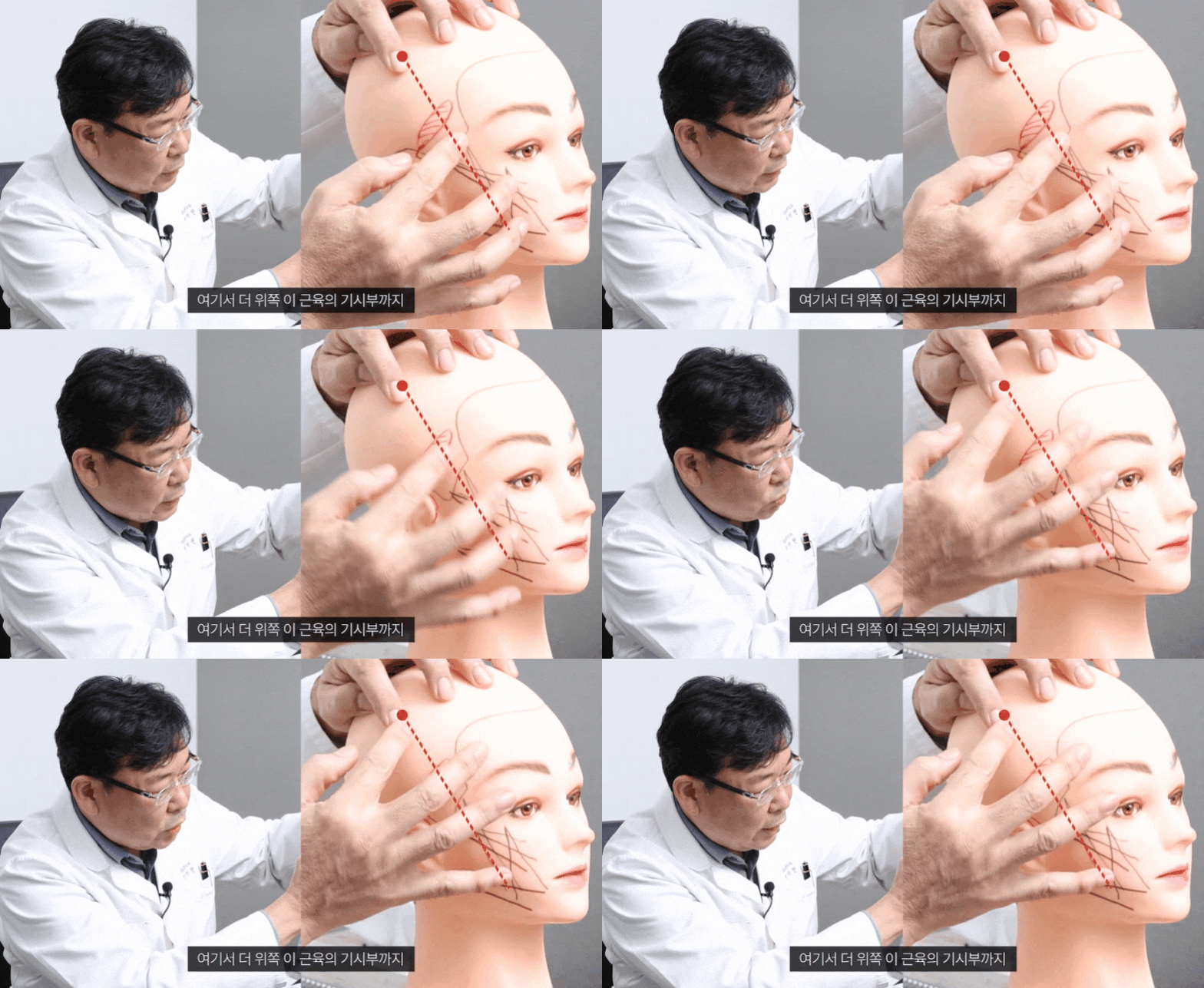
Customized planning — Even with the same thread-lifting procedure, the type, number, and insertion direction of the threads should vary according to skin thickness, fat distribution, areas of sagging, and the condition of the skin’s elasticity. A uniform approach may produce less-than-expected results or lead to asymmetry and an unnatural appearance.

Before thread lifting, the skin thickness, areas of sagging, fat distribution, and elasticity should be carefully assessed, and the procedure should be planned for the individual in order to achieve a stable result.
Facial sagging results from complex structural changes beneath the skin. The cause and condition should be assessed before determining the approach to the procedure.
If you are considering thread lifting, remember that the most important part of the process is the consultation: first checking the condition of your skin and determining which method is most appropriate for you, rather than focusing only on the procedure itself.
| This post was written for informational purposes in compliance with Articles 56(1)–(15) of the Medical Service Act. All treatments carry the risk of side effects and complications, which may vary from person to person. Before treatment, be sure to have a thorough consultation with a medical professional with extensive experience before making a decision. |