When someone you know says, “You look different these days,” you may initially brush it off. But when you hear it once, then twice, you gradually begin to pay attention. You take out old photos and compare them with how you look now, analyzing on your own whether it is because of the lighting, weight gain, or whether something has really changed. Then, at some point, you acknowledge it: your face feels heavier than it used to.
Sagging does not appear suddenly. Changes that have gradually settled downward over a long period of time simply become noticeable all at once. Collagen gradually decreases each year starting in your 30s, while the fat that once filled and supported the area also begins to shift, causing the cheeks to look hollow, nasolabial folds to deepen, and the jawline to lose definition.
That is why many people seek lifting procedures. Among them, thread lifting is consistently chosen, especially by people in their 30s to 50s, because it involves less of a surgical burden and allows a quick return to daily life. Today, we have organized the key points you should know before deciding on thread lifting.
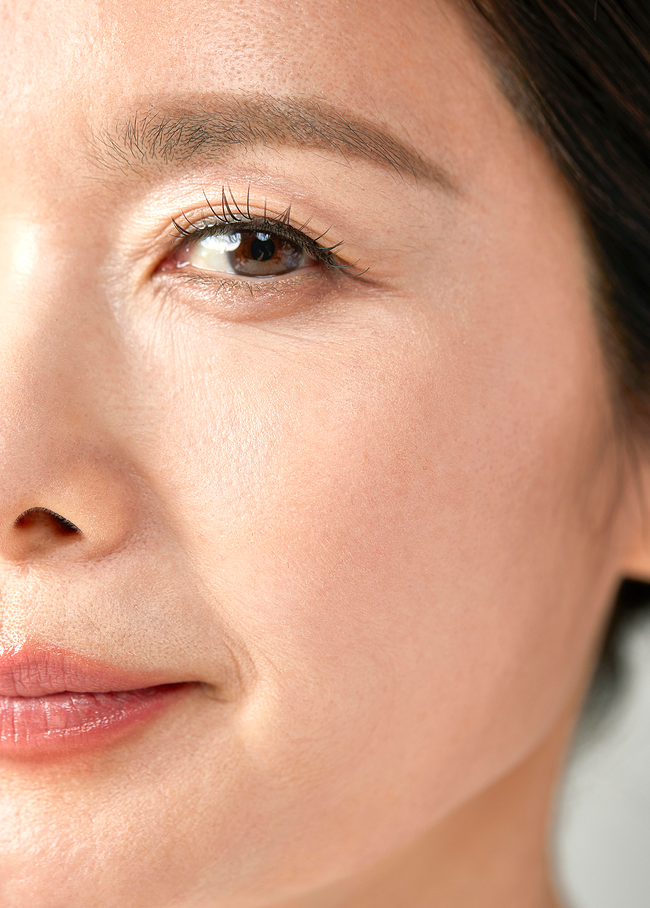
Does using more threads result in a better lifting effect?
When looking into thread lifting, you will often come across various packages and promotional events. This can naturally lead to the idea that more threads will produce better results. However, using a larger number of threads does not necessarily lead to better results.
The key to achieving satisfying results from thread lifting is whether a personalized procedure has been planned and performed. It is essential to carefully assess the degree of sagging, skin thickness, and elasticity of your face, and then design and plan which types of threads to place, where to place them, and in which directions. If more threads than necessary are inserted, the skin may be pulled excessively, creating an unnatural appearance, or there may be an awkward pulling sensation when making facial expressions, so particular caution is needed.

Thread lifting plans should vary depending on the degree of facial sagging
Even with the same thread-lifting procedure, it cannot be applied in the same way to everyone. The treatment approach itself should vary depending on how advanced the sagging is, and in some cases, other methods may also need to be considered in addition to thread lifting.
| Stage of sagging | Condition | Recommended approach |
|---|
| Early | Elasticity remains, and mild sagging has just begun | Natural lifting may be possible with thread lifting alone |
| Moderate | Cheek sagging and nasolabial folds are noticeable, and elasticity has decreased | Combining thread lifting with laser lifting is recommended |
| Advanced sagging | The skin is significantly loose and elasticity has markedly decreased | A facelift should be considered |
The more elasticity remains when you receive the procedure, the longer-lasting results you may achieve with fewer treatments. If you wait until sagging has progressed considerably, the effects may disappear quickly or the desired changes may not appear. Many reviews saying that “thread lifting had no effect” originate from this situation. This is why receiving an assessment of your degree of sagging should come before choosing a procedure.
Is it okay to receive thread lifting repeatedly?
Many people approach thread lifting as a form of periodic maintenance. To put it simply, repeat procedures are possible, and consistently managing your condition may actually become a more natural way to maintain the results over the long term.
The threads used in thread lifting naturally dissolve and are absorbed by the body over time. Since this process stimulates collagen production, elasticity may remain for a certain period even after the threads have disappeared. If an additional procedure is performed when the effects begin to gradually diminish, the new effects tend to build on the collagen foundation accumulated through the previous procedure.
However, if the same area is treated again before the previous threads have been fully absorbed, problems such as excessive tissue pulling or lumping may occur. The timing of a repeat procedure should generally be determined after checking the current condition of the skin, using at least one to one and a half years after the previous procedure as a reference.

Ways to delay renewed sagging after thread lifting
How you care for yourself after the procedure determines how long the effects last. The procedure is only the beginning; your lifestyle habits afterward also contribute to the results.
The first two weeks immediately after the procedure require the most care. While the threads are settling into the tissue, you should avoid environments that raise your body temperature, such as saunas, Korean-style bathhouses, and hot baths. You should also avoid rubbing the treated area vigorously or receiving strong massages. Getting through this period carefully helps the threads become securely fixed and allows the effects to settle properly.
In the long term, managing exposure to ultraviolet rays is essential. Because ultraviolet rays are one of the strongest external factors that break down collagen, it is important to develop the habit of applying sunscreen thoroughly regardless of the weather or season. Smoking, excessive drinking, and lack of sleep can also reduce the skin’s regenerative capacity, so it is best to manage these factors as well. Periodically combining laser lifting after thread lifting may help maintain the effects longer by continuously stimulating collagen production.

If you are considering thread lifting, we recommend prioritizing assessment and treatment planning over price and the number of threads. Creating a plan suited to your degree of sagging and continuing with post-procedure care is the way to maintain satisfying results for a long time. We hope you make the choice that is right for you based on sufficient information.
| This post was written for the purpose of providing information in compliance with Article 56, Paragraphs 1–15 of the Medical Service Act. All treatments carry a risk of side effects and complications that may vary from person to person. Before undergoing treatment, be sure to have a thorough consultation with a medical professional with extensive experience and make your decision afterward. |