
Rhinoplasty is a relatively common procedure, but many people consider revision surgery because they are not satisfied with the results after a single operation.
Because the nose is located at the center of the face, even small changes can significantly alter one’s impression, so the burden and expectations surrounding revision surgery inevitably become greater.
So why is revision rhinoplasty necessary, and how should it be approached to become the “final surgery”?
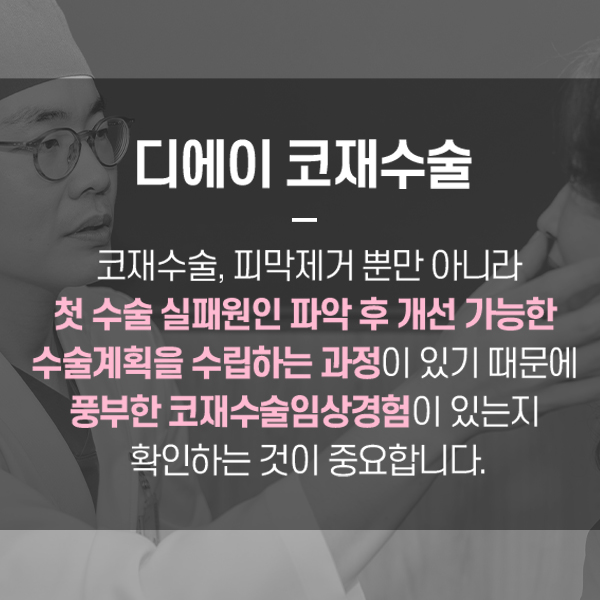
Revision rhinoplasty is a much more complex and difficult process than the first surgery.
Among its many aspects, capsule removal is not just a simple option but one of the key factors that determines the outcome.
It is important to accurately diagnose the current condition and, when necessary, obtain a stable and natural result through appropriate capsule management.
When enough time has passed after rhinoplasty and you begin considering revision surgery, it is easy to think that only the shape needs to be corrected.
However, in reality, how the “capsule” formed during the previous surgery is handled greatly affects the outcome.
If you are considering revision surgery, carefully checking not only the shape but also the condition of the internal tissues can lead to better results.
Today, let’s take a closer look at why capsule removal is important in revision rhinoplasty and in what cases it is absolutely necessary.

Why the capsule must be removed
✅ Preventing contracture and deformity
✅ Reducing the risk of inflammation and infection
✅ Securing accurate revision surgery results
Capsule removal is not a simple process but a surgery that requires delicate technique.
If it is removed too aggressively, tissue damage can occur; conversely, if it is removed incompletely, there is a risk of recurrence.
Therefore, accurate diagnosis and planning by an experienced medical team are essential.
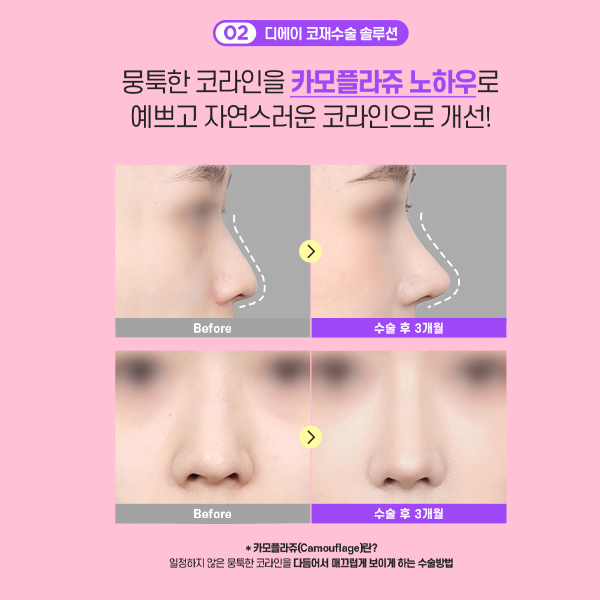
Revision rhinoplasty is not simply a “surgery done again.”
Tissue that has already undergone surgery has changed in various ways, such as scarring, capsule formation, and adhesions, so a much more precise approach is needed.
In particular, the capsule and scar tissue formed during the previous surgery can interfere with a new design,
so how they are handled greatly affects the surgical result. This is why simply replacing the implant alone is not enough to solve the problem fundamentally.
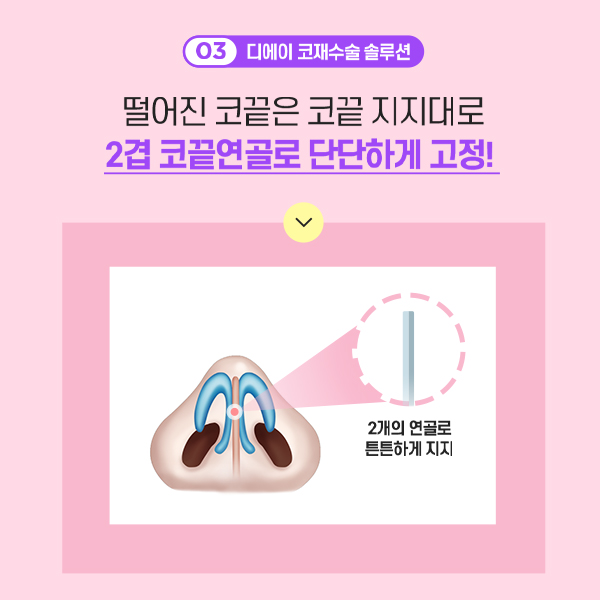
If the support structure at the tip of the nose is weak,
simply correcting the shape may allow it to deform again over time, so structural reinforcement is very important.
It is most important to approach the procedure carefully with the mindset that “this is the last time.”
Through sufficient consultation and accurate analysis, I hope you choose a direction that can deliver satisfying results without further repetition.
For revision surgery, prioritizing stability and durability over dramatic changes often leads to more satisfying long-term results.

Conditions for becoming the “final surgery”
To avoid repeated revision rhinoplasty, several important criteria are needed.
First, an accurate diagnosis of the current condition.
Second, a realistic design setting rather than excessive desire.
Third, a careful surgical plan by an experienced medical team.
For revision surgery, prioritizing stability and durability over dramatic changes often leads to more satisfying long-term results.
If you are considering revision surgery, it is advisable to judge based on long-term stability and durability rather than short-term changes.
Careful choice can ultimately lead to satisfying results.


This post complies with the legal standards regarding medical advertising disclosures.
https://youtu.be/3Y0pyblSyEY?si=BN7llSB512AoSR6a