
Facial contouring surgery is performed to improve the overall lines and proportions of the face. However, if the results differ from what was expected after surgery or functional or aesthetic discomfort occurs, revision surgery may be considered. Surgery performed in such cases is referred to as revision facial contouring surgery.
Revision surgery requires a more cautious approach than the initial procedure. This is because tissue changes and adhesions may have developed in areas that have already undergone surgery.
Therefore, when planning revision surgery, it is necessary to comprehensively examine not only the current areas of dissatisfaction but also the following aspects.

The reasons for considering revision facial contouring surgery may vary from person to person.
Feeling that the face is asymmetrical after surgery
A difference between the result and the desired facial lines
Regret over excessive or insufficient bone removal
Concern about changes in the facial contours over time
Low psychological satisfaction
However, these concerns may be temporary changes caused by swelling immediately after surgery or the tissue recovery process. Therefore, it is important to allow sufficient recovery time and then have the condition evaluated through a consultation with a specialist.
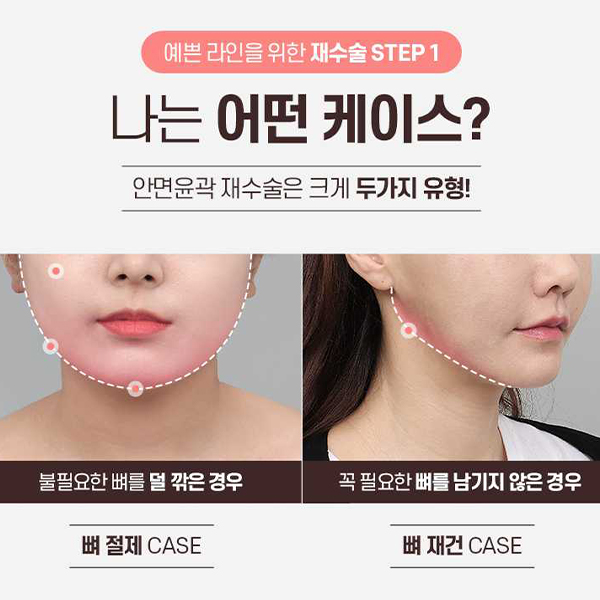
Some people consider revision surgery because they are dissatisfied with their facial lines after facial contouring surgery. In particular, revision facial contouring surgery may require not only additional bone removal but, in some cases, an approach involving bone reconstruction.
Because revision surgery involves more factors to consider than the initial procedure, accurately analyzing the current condition of the face and the bone structure is important. Today, we will look at cases involving bone removal and bone reconstruction that may be performed in revision facial contouring surgery. In such cases, detailed examinations such as CT scans should be used to thoroughly determine whether additional bone removal is possible and whether removal can be performed safely.
However, because the bone has already been removed once in revision surgery, excessive additional removal may cause functional or structural problems, requiring careful judgment.
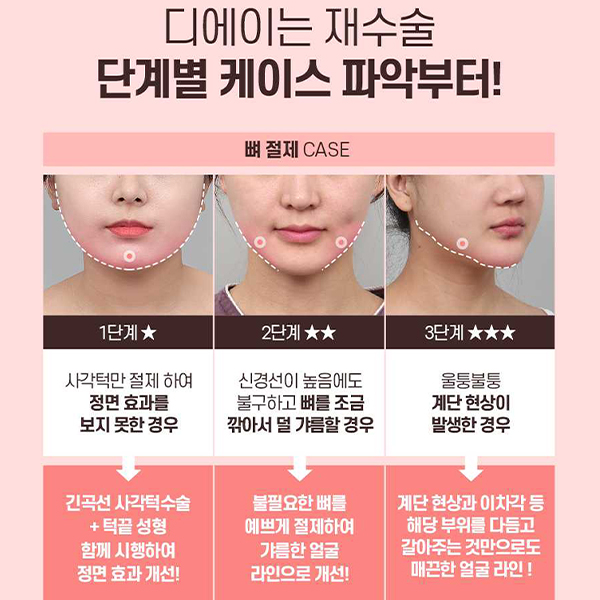
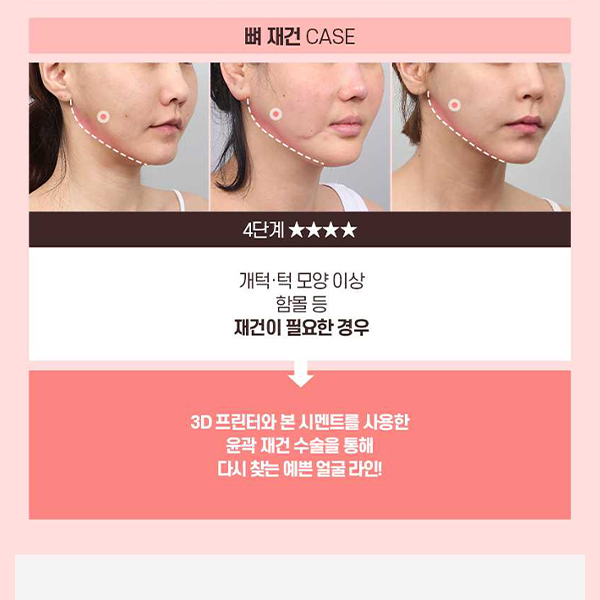
The most important consideration when planning revision surgery is not simply whether to “remove more” or “fill it in again.”
The priority is to accurately identify the cause of the current problem.
For example, a face that appears wide does not necessarily require additional bone removal, and a face that appears unnatural does not necessarily require bone reconstruction.
An appropriate direction for improvement can be established only by comprehensively considering the bone structure, soft tissue, skin elasticity, and left-to-right balance.
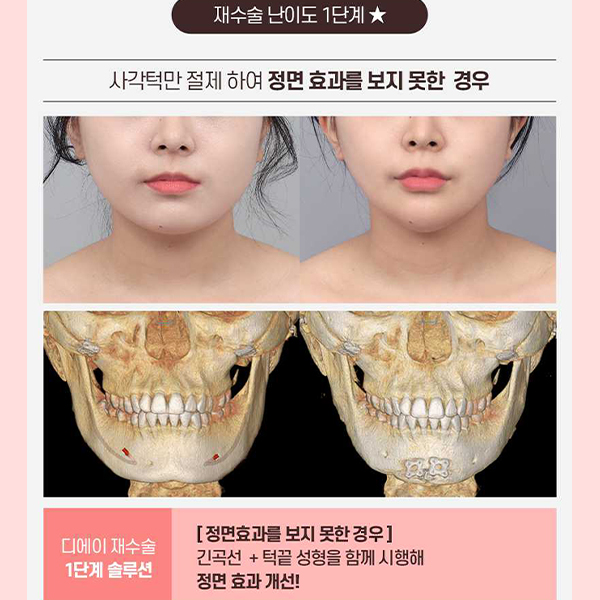
Square jaw reduction surgery is effective for softening an angular jawline, but its effect on improving the width of the face from the front may vary depending on the individual’s bone structure and the extent of the surgery.
Therefore, when someone feels that their face looks unchanged despite having undergone square jaw reduction, it is important to examine the various factors that determine facial width rather than focusing solely on the amount of bone removed. Before deciding whether to undergo revision surgery, analyzing the current condition through an accurate diagnosis and establishing an appropriate direction for improvement can be the first step toward a satisfactory result.
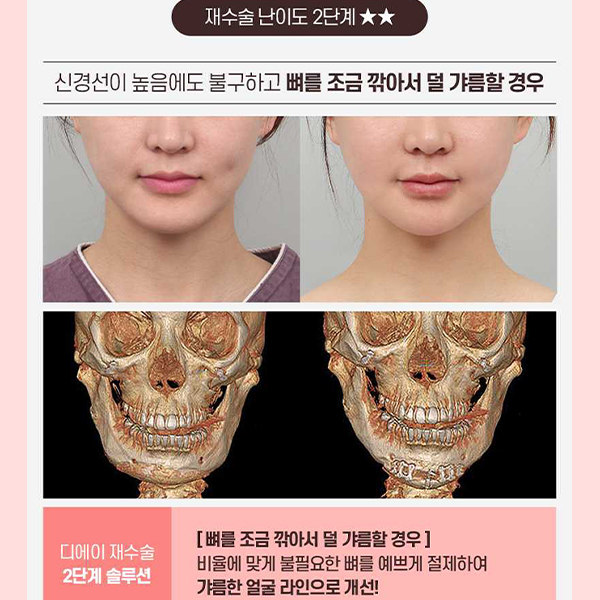
If the face appears less slender than expected after square jaw surgery, one possible cause is that the area of bone removal was limited. However, not every case is due to insufficient bone removal. Facial width is influenced not only by the bone but also by the muscles, fat, and condition of the skin.
If you are considering revision facial contouring surgery, it is important to accurately analyze the current bone structure and soft tissue condition and identify which aspects can be improved. A careful approach based on a thorough diagnosis and consultation may lead to a more satisfactory result.
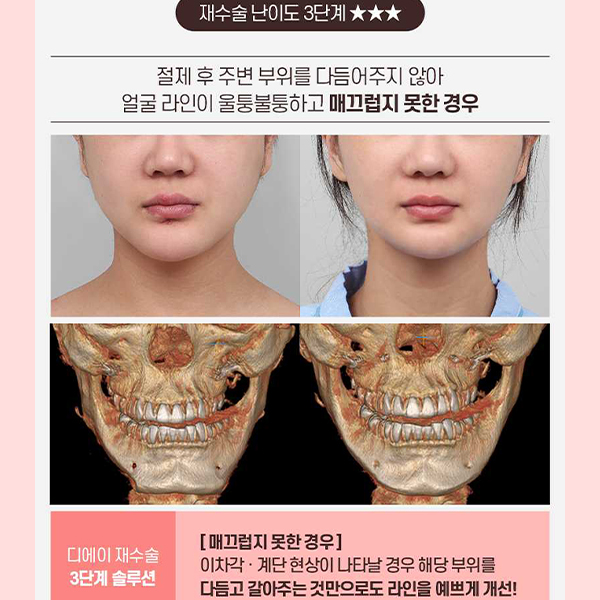
If the jawline appears uneven after square jaw surgery, this may occur not simply because too little bone was removed, but because the surrounding bone was not sufficiently smoothed after the removal.
In facial contouring surgery, the process of naturally connecting the overall lines is just as important as removing the bone. If you are concerned about uneven steps or irregularities in the jawline after surgery, it may be helpful to identify the cause through an accurate CT analysis and review possible directions for improvement.
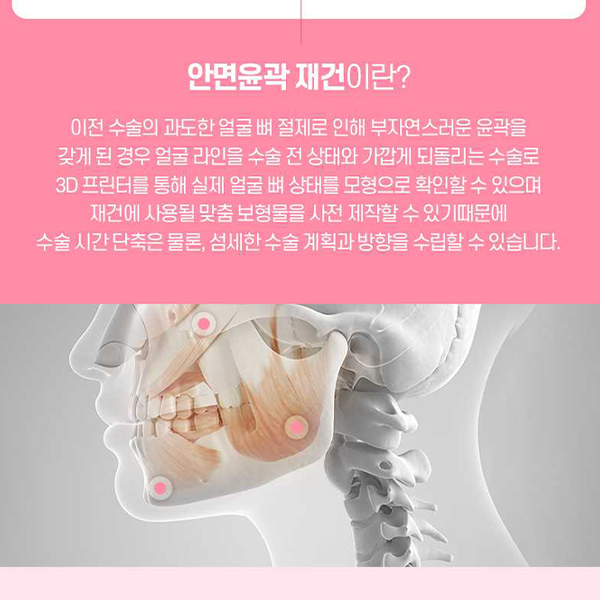
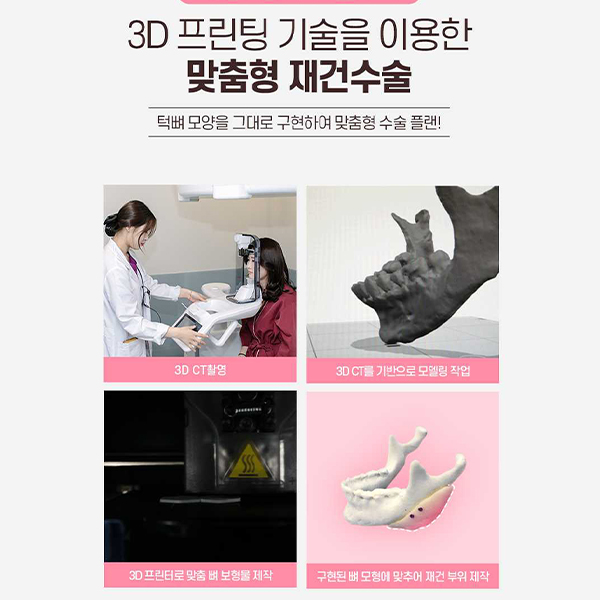
3D printing technology creates a three-dimensional representation of the actual bone structure based on the patient’s CT data.
The facial bones can be precisely analyzed using a CT scan taken before surgery, and the data can be converted into digital information to establish a reconstruction plan tailored to each patient.
Because the actual shape of the bones can be examined three-dimensionally rather than through flat images alone, more accurate analysis is possible.
Revision facial contouring surgery is an area that requires an even more detailed approach than the initial procedure. In particular, when bone reconstruction is needed, it is important to accurately analyze the deficient areas and establish a plan suited to the individual’s facial structure.
Recently, advances in 3D printing technology have made it possible to precisely analyze each patient’s facial bone shape and plan customized reconstructive surgery. This may help with reconstruction that takes more natural facial contours and balance into account, and it also plays an important role in the revision surgery planning process.
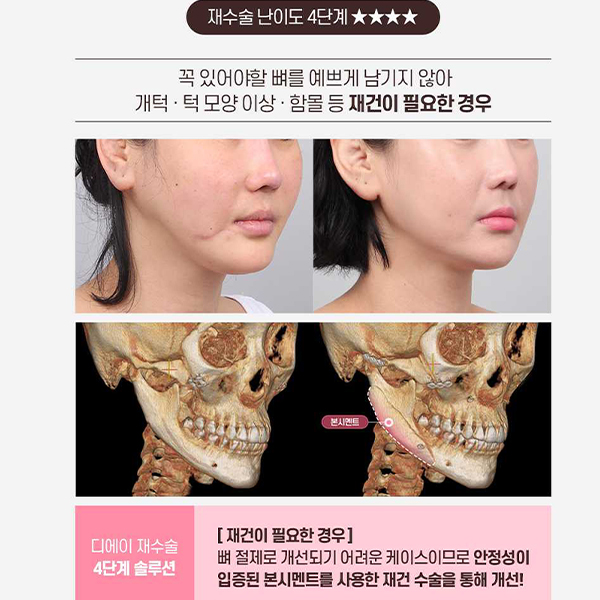
Revision facial contouring surgery is not simply a procedure to correct deficient areas again. It is a complex surgery that requires a detailed analysis of the previous surgical results and comprehensive consideration of the current bone structure and soft tissue condition.
In particular, when insufficient bone removal has occurred, when contour imbalance has resulted from excessive removal, or when steps and asymmetry appear along the jawline, an accurate diagnosis of the cause must come first. Even when the dissatisfaction appears similar, additional bone removal may be necessary depending on the cause, while in other cases bone reconstruction may be required.
Recently, customized surgical planning using 3D CT analysis and 3D printing technology has enabled more precise diagnosis and reconstruction. The important point is not to automatically remove or add more bone, but to find the most appropriate direction for improvement while considering the individual’s facial proportions and harmony.
If you are considering revision facial contouring surgery, it is advisable to have your current condition objectively evaluated after allowing sufficient recovery time and to consult with medical professionals who have extensive experience with revision surgery and a systematic diagnostic system. Careful analysis and an accurate plan can be the beginning of a satisfactory result.


This post complies with the standards of the Act on the Display of Medical Advertisements.
https://youtu.be/0n4oGbyZhlc?si=eb37onfMf7Dks5H_