
The interest of people considering breast augmentation is no longer limited to simply increasing size. Recently, “Bounce breast augmentation,” which considers not only natural feel but also movement when walking or changing posture, has been attracting attention. Bounce is considered an important factor in creating natural movement through harmony among the characteristics of the implant, the surgical plan, and the individual’s body shape, and is an aspect that many people seeking more satisfying results are interested in.
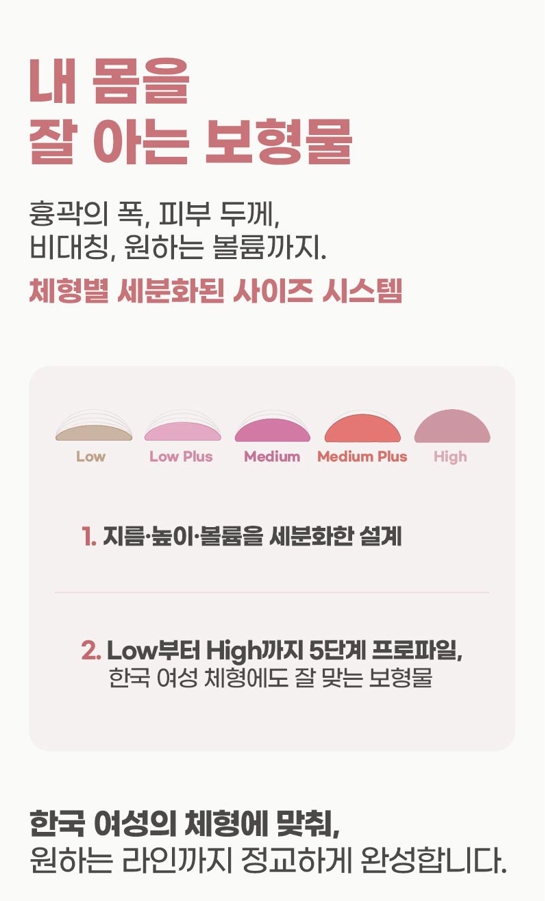
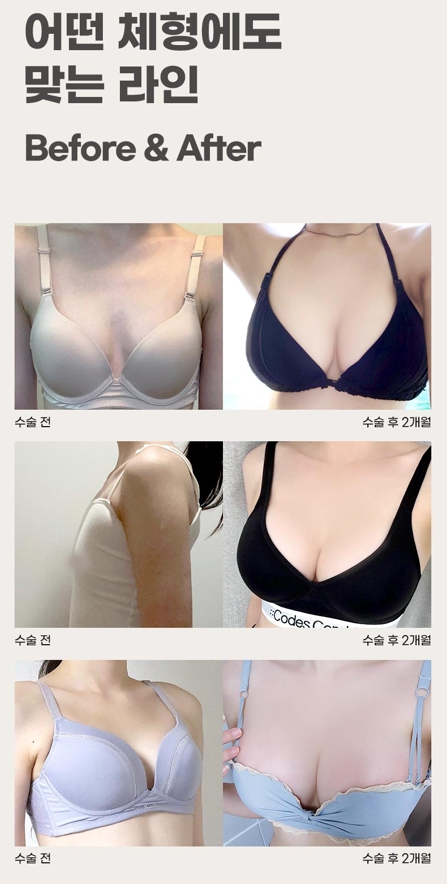
To improve the quality of Bounce breast augmentation, selecting implants suited to the individual’s body shape is especially important.
Even with implants of the same volume, the postoperative contour and movement may vary depending on the width of the rib cage, breast base width, skin elasticity, and thickness of the mammary gland tissue.
Recently, implants are often selected based on a body-type-specific, subdivided sizing system that closely analyzes these individual physical conditions.
Rather than simply recommending a larger size, it is important to plan an appropriate size and shape while considering body proportions, the desired image, and the characteristics of the existing tissue together.
Selecting implants suited to the individual may help create a more balanced silhouette and allow a surgical plan that takes a more natural contour into account during movement. Therefore, choosing implants appropriate for oneself through sufficient consultation and accurate measurement can be considered an important step in increasing satisfaction.
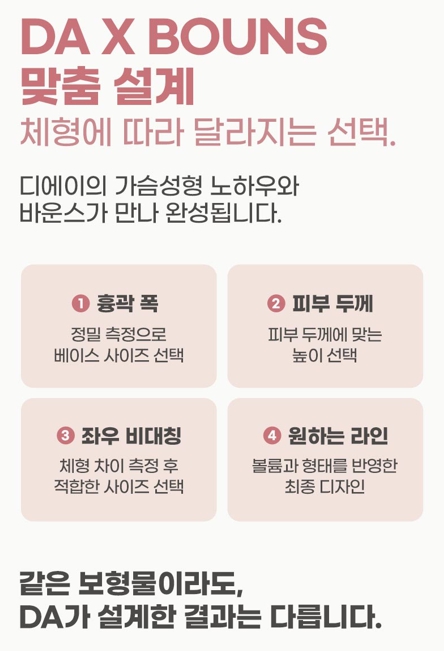
Once implants suited to the body shape have been selected, the next important step is individualized planning.
Since each person has a different rib cage width and shape, as well as different skin thickness and elasticity and varying degrees of mammary gland development, it is difficult to apply the same surgical method to everyone.
There are also many cases in which the size or position of the breasts differs slightly from side to side, creating asymmetry, so a plan that takes these factors into account is needed as well.
In addition, whether an individual wants a natural teardrop shape or a contour with emphasized upper fullness, the desired overall image must be comprehensively reflected to achieve a more harmonious result.
Thus, closely analyzing various physical conditions and the desired design before surgery, then planning the implant size and shape and the insertion position based on that analysis, can be an important factor in considering natural bounce and a balanced silhouette.
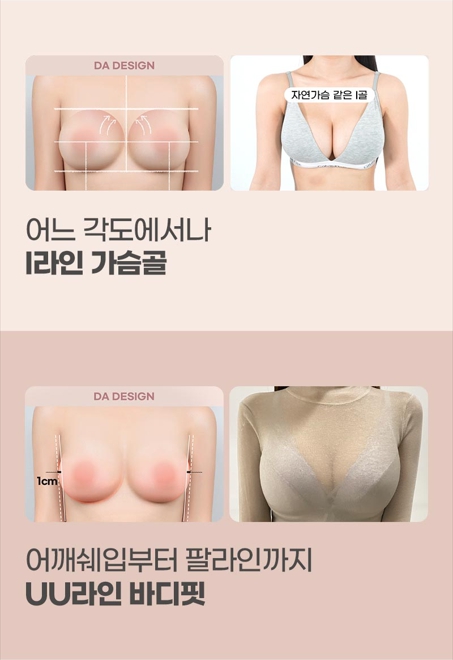
Planning a design suited to the breast contour an individual wants is also an important process.
The design approach may differ depending on whether someone wants an I-line cleavage that comes together naturally or prefers a UU-line body fit with emphasized volume, taking into account the implant size and shape, insertion position, and tissue condition.
Therefore, rather than applying a uniform design, a customized plan should be created after analyzing the body shape, rib cage structure, and the characteristics of the skin and tissue together, while also reflecting the desired image. Through sufficient consultation, comprehensively considering the silhouette an individual seeks and their physical conditions may help in planning a breast contour that suits them.
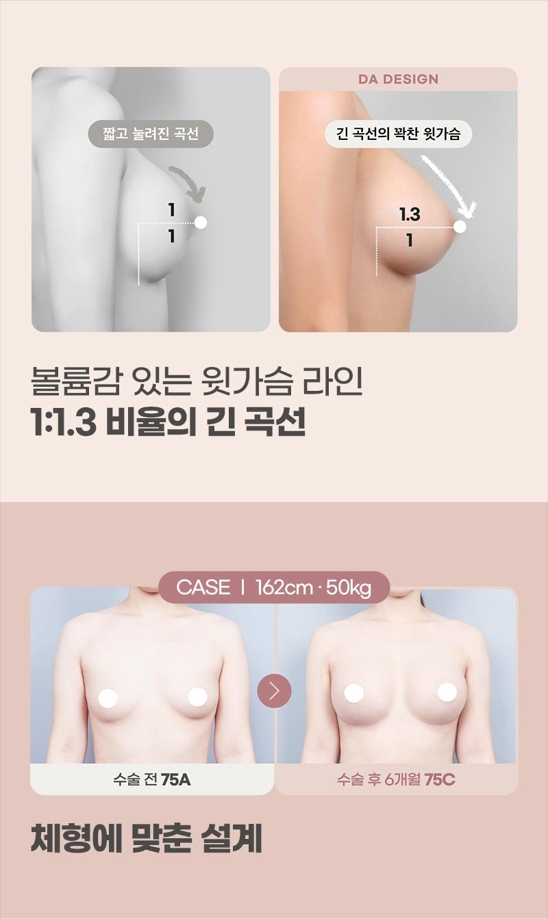
In particular, upper-breast fullness is one of the factors that influences the overall silhouette and how clothing fits.
However, applying the same amount of fullness to everyone does not necessarily lead to good results. The appropriate fullness and design may differ depending on whether a person has a slim body type, a relatively wide rib cage, or a certain amount of skin and tissue laxity. Therefore, it is important to sufficiently analyze the body shape before planning upper-breast fullness suited to the individual. Through customized planning that considers the individual’s body proportions and desired image together, it is possible to plan an upper-breast contour with volume while also considering a natural body balance. Pursuing a harmonious silhouette rather than excessive enlargement may help increase satisfaction.
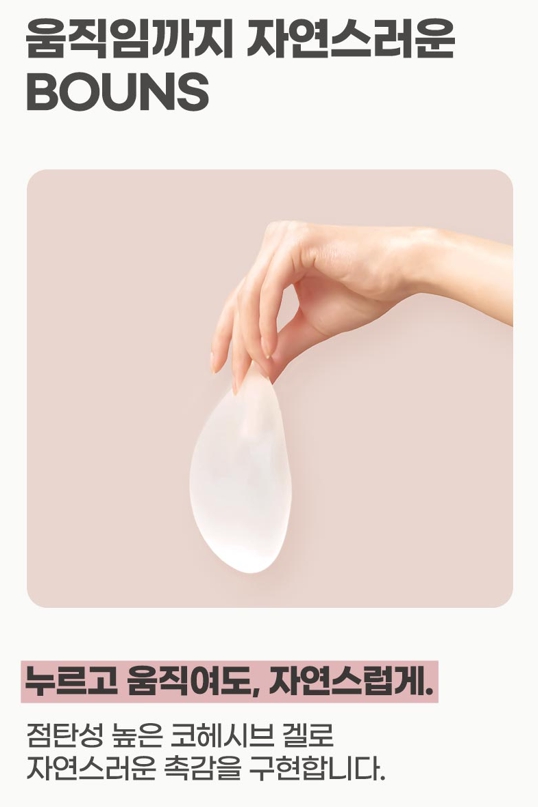

Bounce implants are characterized by the use of highly viscoelastic cohesive gel, taking movement and feel into consideration.
They are designed to maintain the implant’s shape even when external pressure is applied while responding flexibly to movement, allowing the feel and silhouette to be considered according to the individual’s body shape and surgical plan.
Some products also operate a lifetime warranty program to increase confidence in implant durability and quality management, and may provide warranty services from the manufacturer when certain conditions apply. Reviewing not only the implant material but also the quality warranty policy may help with product selection before surgery and may also be a factor worth considering from the perspective of long-term management.
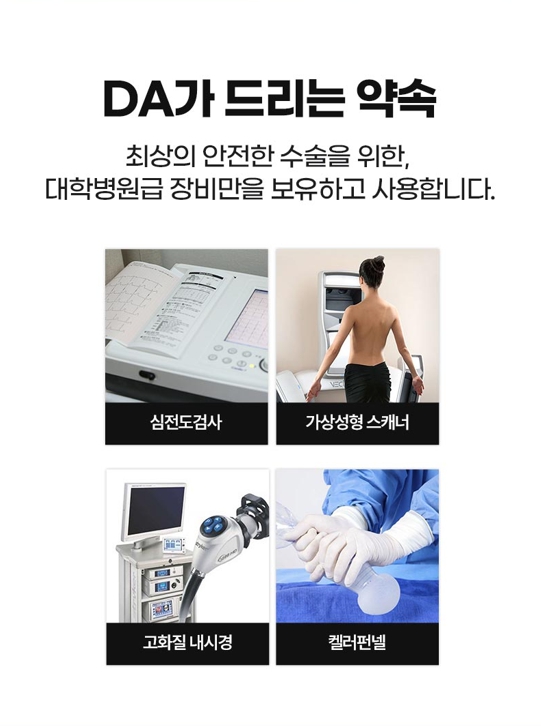
Because breast augmentation is a delicate procedure, it is important to examine not only the surgical process but also the medical environment and postoperative care system.
For a safe surgical environment, university-hospital-level medical equipment is provided, along with a systematic care system covering preoperative examinations, intraoperative monitoring, and the recovery process.
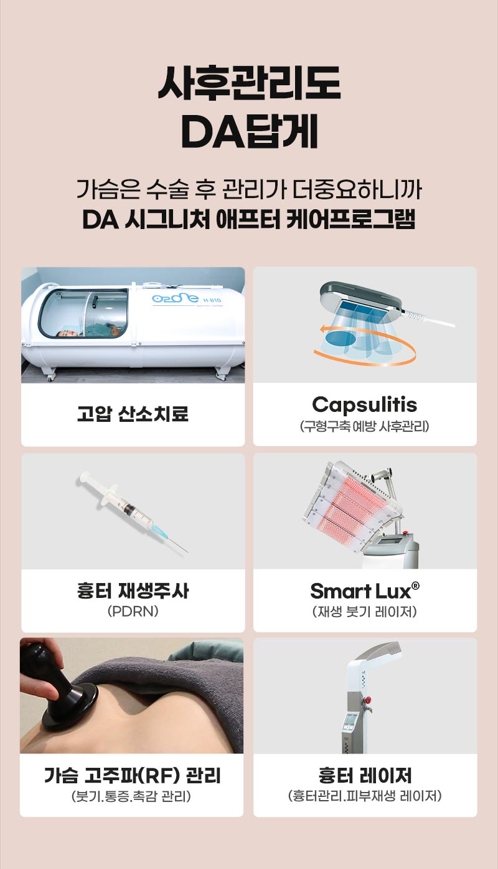
After surgery, a customized postoperative care program is provided based on each individual’s recovery status. The recovery process is carefully managed through various programs, including hyperbaric oxygen therapy, capsular contracture management, scar regeneration injections, regenerative swelling laser treatment, breast radiofrequency care, and scar laser treatment. Establishing a system that provides continuous care not only during surgery but also throughout recovery may be another factor to consider for satisfactory results.

Bounce breast augmentation is not simply about increasing volume; a customized approach that comprehensively considers the individual’s body shape, desired design, and natural movement is important. The process requires a detailed analysis of the rib cage shape, skin condition, left-right balance, and preferred breast contour, followed by the establishment of an appropriate implant and surgical plan.
In addition, the recovery process and postoperative care must be carried out systematically to help increase long-term satisfaction. If you are considering breast augmentation, it is important to comprehensively review not only the characteristics of the implant but also the medical team’s experience, the surgical system, and the postoperative care program, then choose a method suitable for you through sufficient consultation.


This post complies with the standards of the Medical Advertising Display Act.
https://youtu.be/ek5RpnCCZeQ?si=aykOltoc7eFx7UAT