
Many people feel that their face looks larger than it actually is or that their jawline appears blurred because of the overlapping fullness beneath the chin that they see whenever they look in the mirror.
However, a double chin is not caused simply by having excess fat.
Because various factors—including reduced skin elasticity, the structure of the muscles beneath the chin, and aging—can work together, it is important to choose an improvement method suited to the individual cause. For this reason, interest has recently increased in double-chin muscle tightening, which addresses the muscles beneath the chin in addition to removing fat.
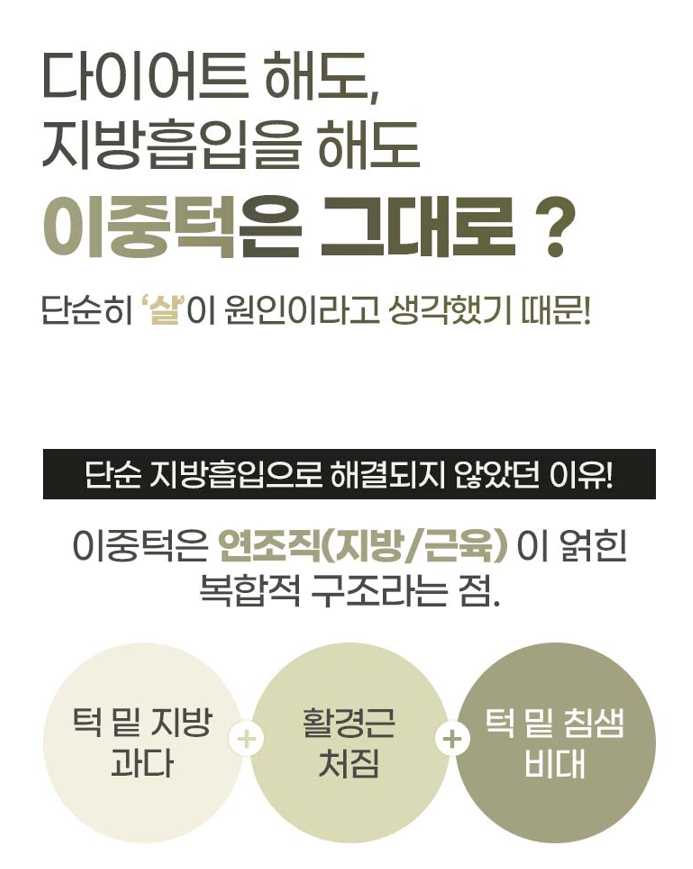
Many people think, “If I lose weight, my double chin will disappear too,” but in reality, there are cases where fullness beneath the chin remains a concern even after weight loss or liposuction. This is because the condition of the soft tissues, including the muscles and fascia supporting the area beneath the chin, can have an effect in addition to the amount of fat. When the soft tissues have sagged or separated, the jawline may not become clearly defined even after reducing fat. In such cases, it is important to accurately evaluate the individual’s anatomical structure and the cause before considering an appropriate improvement method.

Therefore, simply removing visible fat or tightening only the skin may not resolve all of the underlying causes of a double chin.
This is because the area beneath the chin is a structure in which various soft tissues—including fat, muscles, fascia, and skin—balance one another to support the jawline.
If the soft tissues have become lax or their supporting strength has weakened,
the jawline may remain indistinct even after the amount of fat is reduced, or it may appear saggy again over time.
Therefore, for satisfactory improvement, it is necessary not only to reduce the visible fullness,
but also to carefully examine the condition of the soft tissues beneath the chin and take an approach suited to the individual cause.
In particular, when the jawline has collapsed because of soft-tissue laxity, it is important to develop a treatment plan aimed at appropriately supplementing the sagging structures and restoring support. Through this process, a more natural and balanced jawline may be achieved. However, the cause of a double chin and the appropriate treatment method may vary depending on an individual’s anatomical structure, skin elasticity, and amount of fat. Therefore, it is advisable to decide whether to proceed with treatment based on a thorough diagnosis.
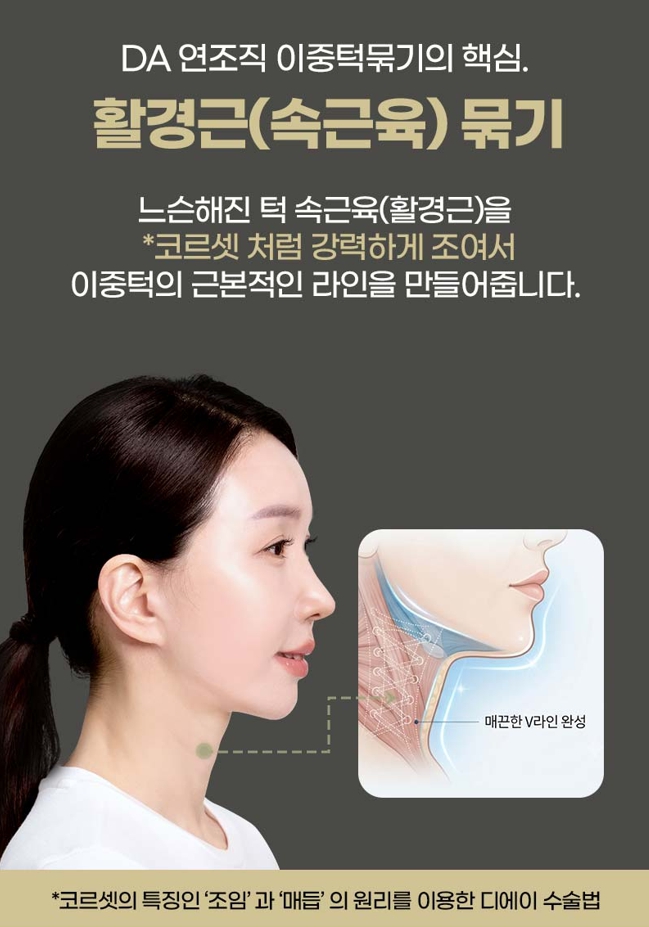
Double-chin muscle tightening is a procedure that considers these characteristics of the soft tissues and uses a corset-style technique to tighten and tie the deeper muscles beneath the chin.
It focuses on bringing separated or relaxed muscles beneath the chin together in an appropriate position to supplement their support. Rather than simply removing fat, the goal is to help maintain the structures beneath the chin more stably. By considering the soft tissues beneath the chin as well, this approach may help improve the structure of a collapsed jawline. When performed together with liposuction or another lifting procedure, it may help create a more balanced jawline depending on the individual’s condition. However, whether it is appropriate and how the procedure is performed should be decided after thoroughly evaluating anatomical characteristics such as skin elasticity, the amount of fat, and the degree of muscle laxity, in consultation with a medical professional.
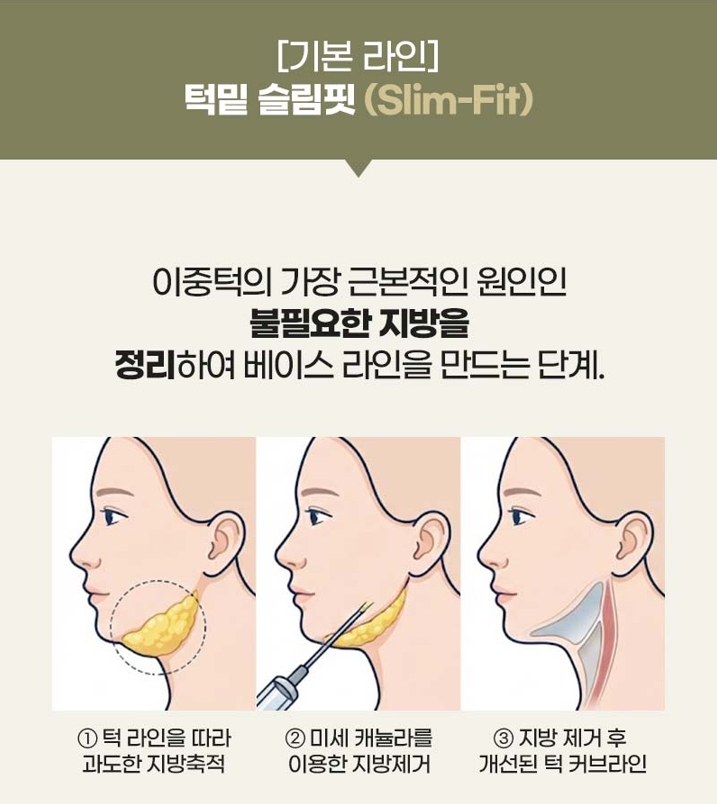
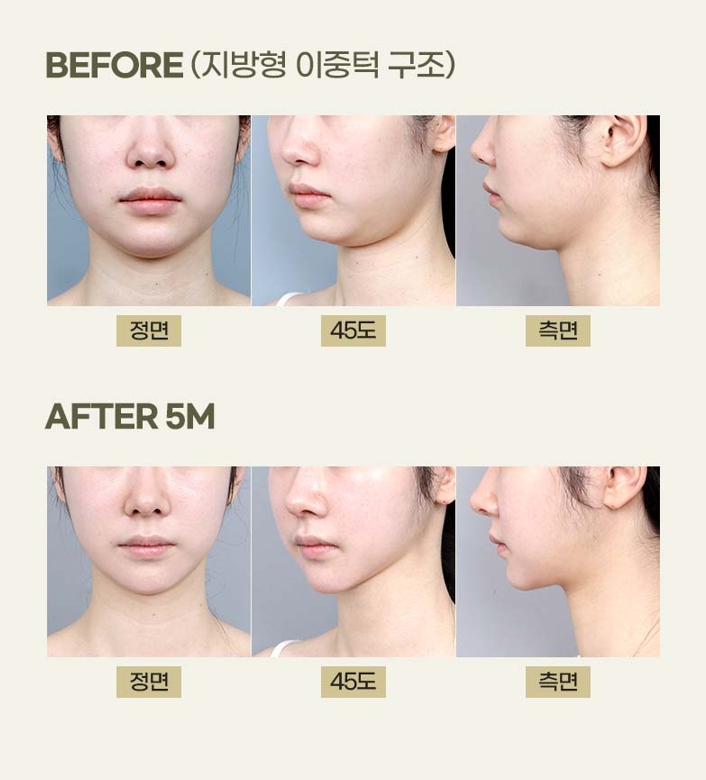
For double-chin improvement, it is also important to appropriately reduce unnecessary fat while supplementing the support of the soft tissues. Excess fat accumulated beneath the chin can blur the boundary of the jawline and make the face appear less defined. Therefore, after thoroughly examining the individual’s fat distribution and thickness, carefully reducing fat within the necessary range may make the area beneath the chin appear lighter and help the resulting jawline appear more natural. In other words, submental Slim Fit can be understood as a process of selectively reducing only unnecessary fat, rather than removing excessive amounts indiscriminately, while considering the balance of the face and the flow of the jawline to create a baseline for a more defined jawline. When this is combined with support from the soft tissues, a more balanced contour beneath the chin may be achieved.
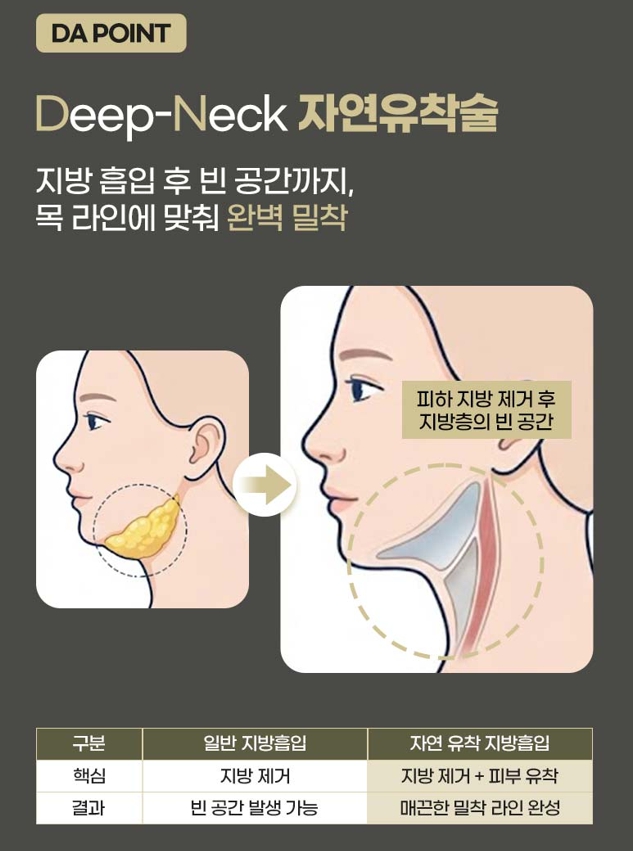

After the fat is reduced, the result may also be affected by how naturally the remaining space, skin, and soft tissues adhere to one another. Natural adhesion is a procedure focused on helping the space created after liposuction adapt more naturally to the neck line and the structures beneath the chin. Rather than simply removing fat and finishing the procedure, it is important to plan for the skin and soft tissues to settle securely while considering the flow from beneath the chin through to the neck line. This approach may help create a smooth connection between the jawline and neck line, and whether and how it is applied is determined while considering the individual’s skin elasticity and tissue condition. Ultimately, more harmonious contours beneath the chin may be achieved when fat reduction, supplementation of soft-tissue support, and the process of helping the tissues settle naturally after liposuction are carried out in coordination.
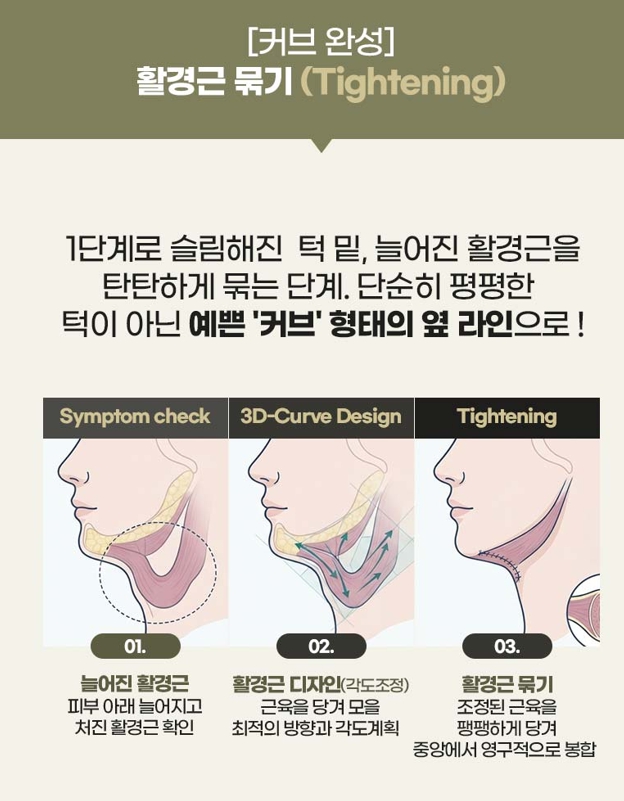
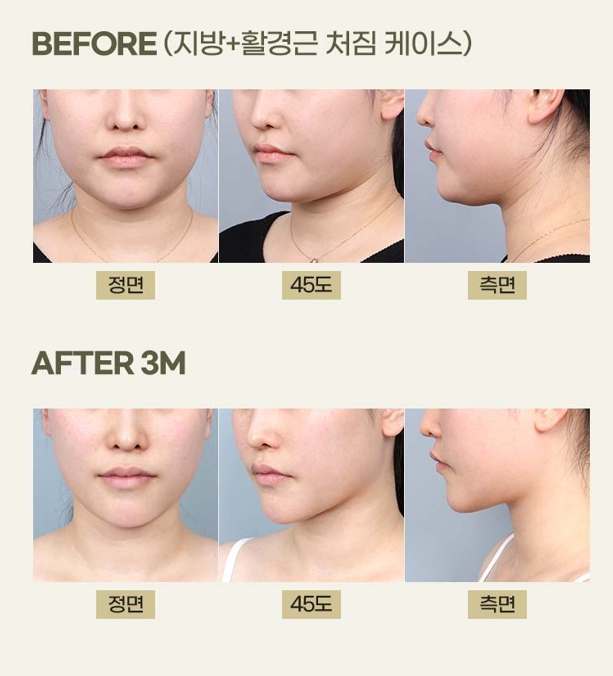
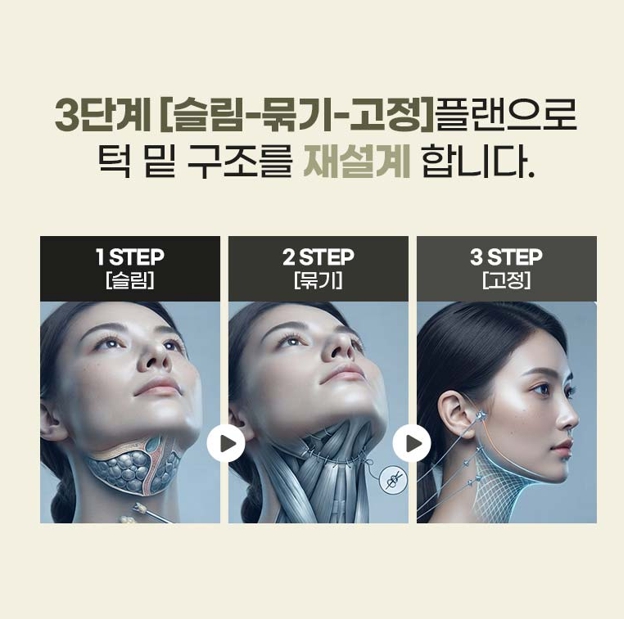
Step 1 is the process of providing firmer support for the slimmer area beneath the chin. After reducing the fat, the condition of the relaxed platysma is examined, and, when necessary, support is supplemented at an appropriate position so that the contour beneath the chin can be maintained more stably. Rather than simply flattening the area beneath the chin, an important point is to design the contour while considering the natural curve extending from the tip of the chin to beneath the ears and along the neck. Because the human face can appear more three-dimensional and balanced when it has soft curves rather than straight lines, careful attention is given to creating a natural connection between the area beneath the chin and the side contour. This process is carried out by comprehensively considering the individual’s facial shape, skin elasticity, and soft-tissue condition, with the goal of creating a face line that continues naturally and smoothly from the side rather than an indistinct jawline.
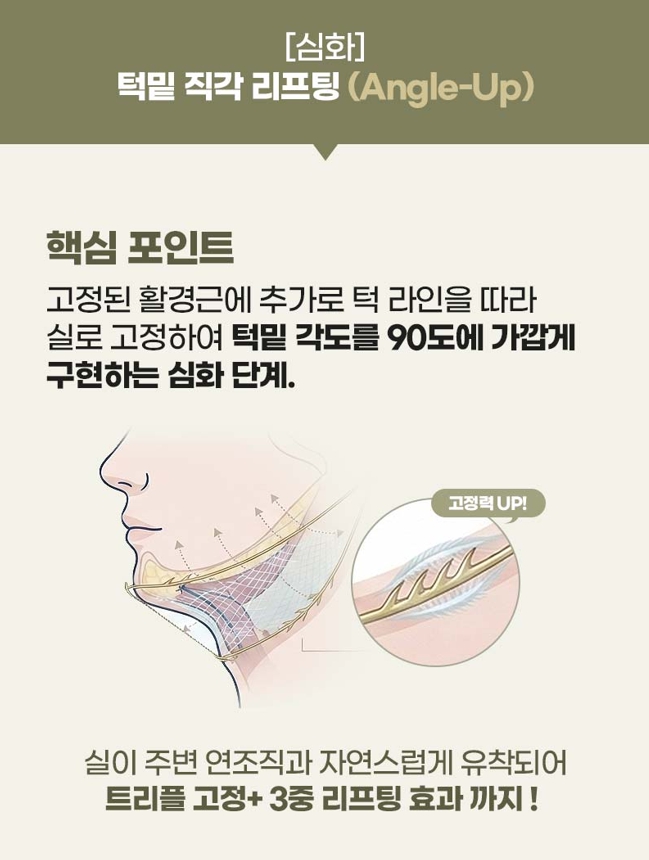
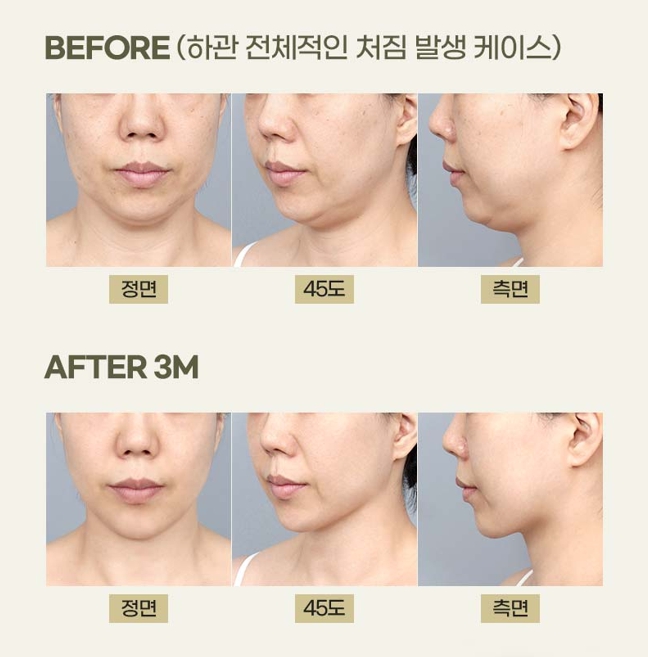
Step 3 is an advanced design stage for refining the jawline. After Steps 1 and 2 create a slim area beneath the chin and a stable supporting structure, additional threads are used to secure the necessary areas along the jawline in the region where the platysma has been reinforced. This allows the contour to be designed while considering the angle at which the area beneath the chin and the neck line connect naturally. The focus is not simply on pulling the area beneath the chin to make it flat, but on making the boundary between the jawline and neck line appear more defined from the side as well. The inserted threads are also planned to settle naturally with the surrounding soft tissues during the recovery process, applying the concept of Triple Fixation, in which muscle support, thread reinforcement, and soft-tissue stabilization work together. In addition, a Triple Lifting design that considers the area beneath the chin, the jawline, and the neck line three-dimensionally is used with the goal of creating a smoother and more natural lower-face contour. However, the surgical method, treatment scope, and changes that can be expected may vary depending on an individual’s skin elasticity, soft-tissue condition, and anatomical structure. Therefore, it is important to make these decisions through a thorough diagnosis and consultation.

A double chin does not occur solely because of fat; changes in various soft tissues, including fat, muscles, fascia, and skin, may also contribute. Therefore, to achieve a satisfactory contour beneath the chin, it is important not only to reduce visible fullness but also to accurately identify the individual’s submental structure and its cause, then take an approach suited to those findings. Double-chin muscle tightening is a method that aims to create a more balanced jawline design by considering the support of relaxed soft tissues together with the reduction of fat beneath the chin. The important point is that the same method is not suitable for everyone; an appropriate plan should be developed according to factors such as facial shape, skin elasticity, and muscle condition. A natural and harmonious jawline is not simply a thinner contour. It can be completed by considering the balance and continuity of the entire face, so it is important to choose an improvement plan suited to you based on sufficient consultation and an accurate diagnosis.


This post complies with the standards of the Medical Advertising Display Act.
https://youtu.be/qxyLA15FCdI?si=oGSlFcTxjUbDjEMS