
Why Functional and Cosmetic Rhinoplasty for Rhinitis Considers Both Nasal Congestion and External Changes
People who experience discomfort from nasal congestion or rhinitis symptoms while also having concerns about the shape or proportions of their nose may consider functional and cosmetic rhinoplasty for rhinitis. Because the functional aspects and external shape of the nose can be closely related, it is important to examine the current internal nasal structures, including the nasal septum and turbinates, rather than simply changing the shape of the nose. Therefore, when considering surgery, it is necessary to comprehensively assess each person’s nasal structure, symptoms, and desired cosmetic direction before planning an appropriate surgical method.

Why Functional and Cosmetic Rhinoplasty for Rhinitis Should Be Tailored to Each Person’s Nasal Condition
When planning functional and cosmetic rhinoplasty for rhinitis, it is necessary to identify not only the externally visible shape of the nose but also the cause of nasal congestion. If the nasal septum is deviated or the turbinates are enlarged, focusing only on external changes without considering the internal nasal structures may make it difficult to achieve the desired outcome. Therefore, it is important to carefully examine the current nasal structure and breathing condition, and to determine the surgical approach while considering both cosmetic and functional aspects.
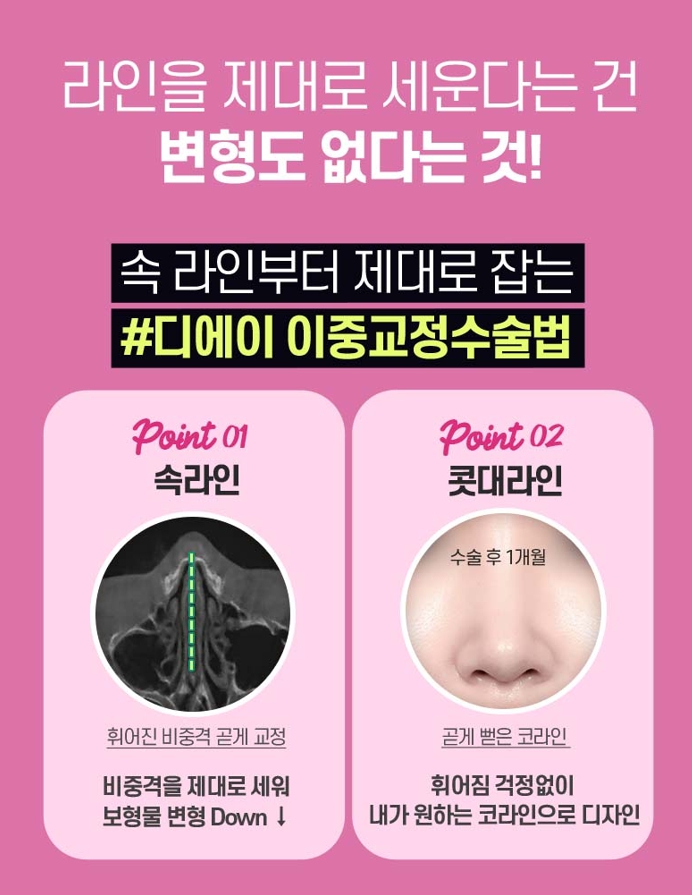
In functional and cosmetic rhinoplasty for rhinitis, the dual-correction technique considers both functional problems inside the nose and the external nasal line. First, the deviated nasal septum is corrected to straighten the internal structure of the nose. Based on this correction, areas where the external nose is shifted or appears crooked are also improved to create a straighter and more balanced nasal line. In other words, the significance of this approach lies in correcting both the deviated nasal septum and the external shape of the nose, rather than simply adjusting its outward appearance, thereby addressing functional and cosmetic aspects together.

The dual-correction technique straightens the deviated nasal septum inside the nose while also correcting the externally crooked appearance of the nose. When the nasal septum is deviated to one side, a person may experience nasal congestion or difficulty breathing, and the external nose may also appear shifted to one side. For this reason, it is important to examine both areas together. During surgery, the deviated nasal septum is corrected to improve the internal structure of the nose, while the centerline and external balance of the nose are considered to create a straight, even nasal line without visible deviation. This makes it possible to consider functional and cosmetic aspects together, although the specific correction method may vary depending on the individual’s nasal structure and the degree of deviation.
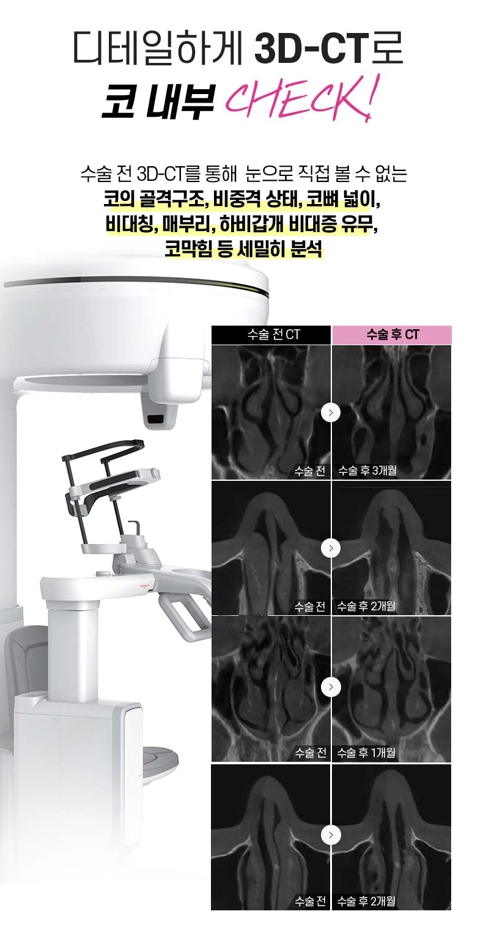
Before surgery, a 3D CT scan is used to analyze the condition of the nose in greater detail and develop a surgical plan suited to the individual. The examination includes the overall skeletal structure of the nose, the degree of nasal septum deviation, the width of the nasal bones, any left-right asymmetry, and the shape of any dorsal hump. It also checks for enlargement of the inferior turbinates. In addition, it is important to comprehensively identify the cause of nasal congestion and structural problems inside the nose while considering functional and cosmetic aspects together. By accurately assessing the current condition of the nose through 3D CT and then planning the surgical approach, a more systematic correction tailored to the individual’s structure and characteristics can be performed.

After improving the internal nasal line, surgery is performed with consideration for the overall harmony of the nasal line by naturally aligning the connection between the bridge and tip of the nose. Two layers of nasal tip cartilage are used to provide firmer support to the nasal tip, which may help prevent the tip from drooping or becoming overly upturned. The nasolabial angle is adjusted while considering the angle between the nasal tip and the lips, creating a natural and balanced appearance from the side as well. In addition, the columella is carefully corrected so that the left-right balance and shape of the nasal tip remain harmonious when viewed from the front, with the goal of creating a natural nasal line that suits the individual’s face.

Could I Have Rhinitis? If the Following Symptoms Recur Regularly, It May Be a Good Idea to Have Your Nasal Condition Checked.
-
A runny nose occurs frequently
-
Nasal congestion occurs frequently
-
You sneeze repeatedly
-
You breathe through your mouth because breathing through your nose is difficult
-
You often experience mild headaches
-
You feel that your concentration has decreased
-
You snore heavily or frequently
-
You have difficulty detecting odors
These symptoms can occur not only with rhinitis but also with various other nasal conditions. If multiple symptoms persist or cause discomfort in daily life, it is advisable to receive an accurate diagnosis.
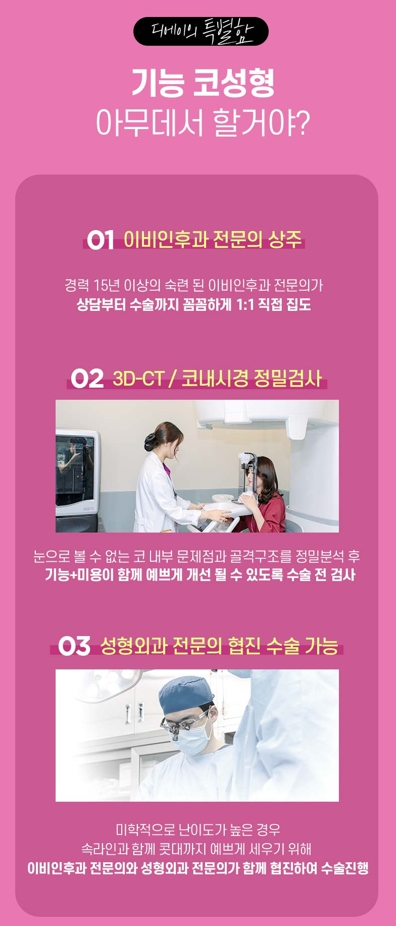
Systematic Care Considering Both Function and Appearance Is Important for Functional and Cosmetic Rhinoplasty for Rhinitis
Functional and cosmetic rhinoplasty for rhinitis is not simply surgery to improve the external appearance of the nose. Because it must consider functional issues such as nasal congestion and nasal septum deviation together with the overall shape of the nose, it is important to carefully review the medical team’s experience and the systematic examination system. In particular, it may be helpful to choose a facility where an otolaryngology specialist is available to first examine the internal condition of the nose and breathing function in detail, then use precise examinations such as 3D CT and nasal endoscopy to identify structural issues involving the nasal septum, nasal bones, and inferior turbinates before establishing a surgical plan. If the medical institution can also provide collaborative care with a plastic surgery specialist, it can develop a more balanced surgical plan that considers not only functional correction but also external features such as the nasal bridge, nasal tip, and columella. Therefore, if you are considering functional and cosmetic rhinoplasty for rhinitis, rather than comparing surgical outcomes alone, it is advisable to carefully confirm whether care by an otolaryngology specialist is available, whether detailed examinations such as 3D CT and nasal endoscopy are performed, and whether collaborative surgery with a plastic surgery specialist is possible before making a cautious decision.


This post complies with the standards set forth under the Medical Advertising Act.
https://youtu.be/aPFAAe48RAg?si=ckoPNDR3t621sHlX