For several years now, mini facelifts, mini face lifts, mini facelift, and similar procedures
have become very popular, and many people ask about them.
Those names make it sound as if they promise magical results through a small incision.
That is because “mini” brings to mind something easy and quick.
But the results are also mostly “mini.”
That is why, if your face has aged and you are looking for a surgical solution, I tell you that you should have a classic facelift, not a mini facelift.
From my experience, many people come to me after having a mini facelift because they are dissatisfied with the results.
They say they never want to have a mini facelift again.
The process ends with me giving them results that a mini facelift could not provide through a classic facelift.
As more clinics perform and advertise facelifts,
it has become confusing to choose which clinic to go to,
and after being swayed by advertisements,
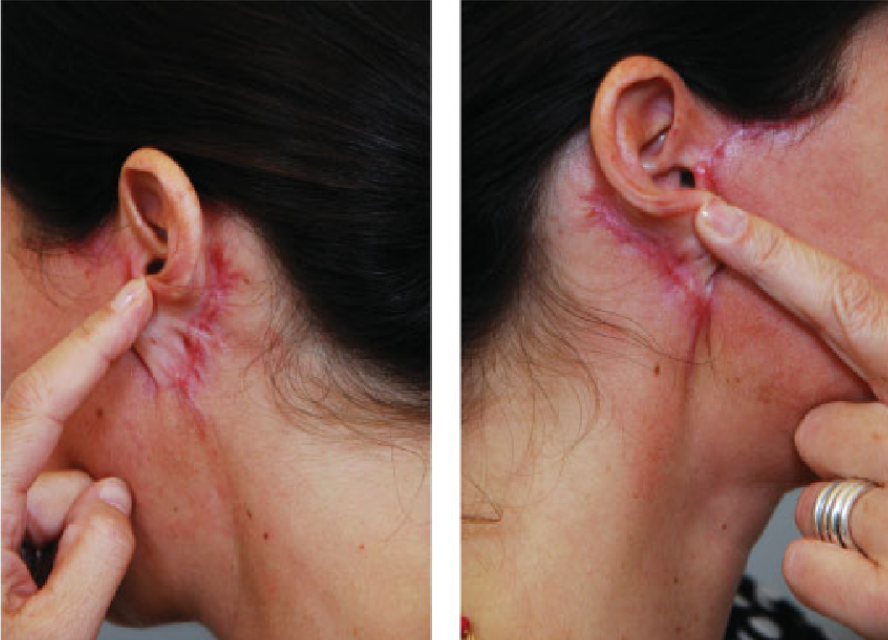
many people end up not only without satisfying results, but also with side effects and scars,
and they unexpectedly suffer wasted time, wasted money, and emotional distress as a bonus.
https://www.semanticscholar.org/paper/Face-lift-complications.-Bloom-Immerman/f5e936cb08dcc813a000cf2eeb4808ceee0c578d/figure/5
The surgical effect disappears in less than a year and the face returns to its preoperative state,
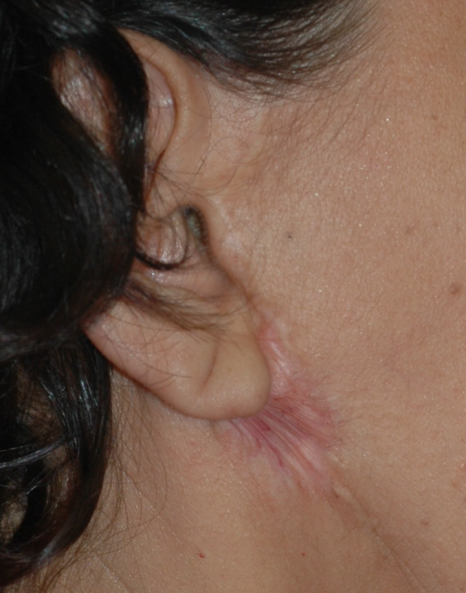
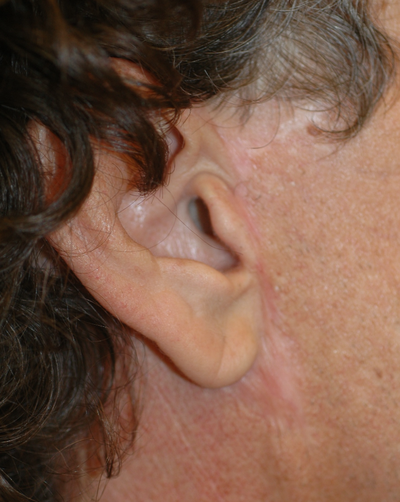
or scars widen in front of and behind the ears,
https://www.drbustillo.com/cosmetic-procedures/facelift
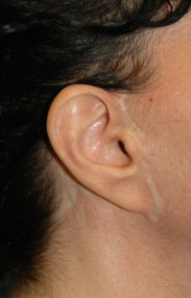
and they live with side effects such as pixie ear deformity.
https://www.lookrefreshed.com/blog/aesthetic-surgery/are-all-facelift-incisions-results-the-same/
Why do the unsatisfactory results above occur even after a facelift?
There are many people who are in a hurry, so let me give you the answer first.
It happens when the SMAS is not properly dissected and fixed,
and instead the skin is excessively dissected and pulled in an attempt to achieve the surgical result.
This leads to those side effects.
SMAS (Superficial Musculo-Aponeurotic System)
is a term that always goes together with the word facelift.
In Korean, it is called the facial musculoaponeurotic system, and in Chinese characters, the superficial musculoaponeurotic system.
There are the skin and subcutaneous layer, and beneath that, the SMAS layer.
I will explain why this layer matters.
The purpose of a facelift is to pull an enlarged and sagging face
back to where it was when you were younger, and to remove excess skin.
The layer that makes the phrase “pull it back” possible
is the layer beneath the SMAS.
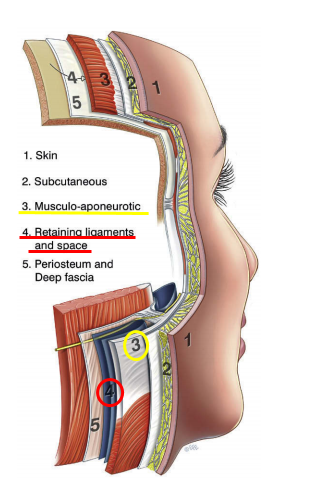
RJ Warren, PC Neligan, Plastic Surgery, Vol.2, Aesthetic Surgery, p79, Fig. 6.2
In the figure, layer 3 marked with a yellow line is the SMAS, and
the layer that allows the superficial layers (1–3) to move smoothly (to glide)
over the deepest layer (5. periosteum and deep fascia) is layer 4, marked with a red line.
If you properly find and lift the SMAS and separate the retaining ligaments holding the SMAS,
it will pull smoothly.
Let’s look at a schematic of the retaining ligaments.
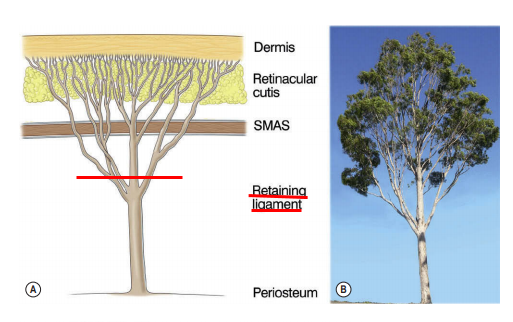
RJ Warren, PC Neligan, Plastic Surgery, Vol.2, Aesthetic Surgery, p80, Fig. 6.3
The retaining ligaments, which begin as a single strand in the deepest layer, spread upward like tree branches
and extend all the way to the skin as they move into the superficial layer.
What happens when these ligaments are still holding while the SMAS is pulled in layer 4?
It does not pull as much as you want.
That is why they need to be cut, as shown by the red horizontal lines.
I checked the retaining ligaments that need to be addressed during a facelift.
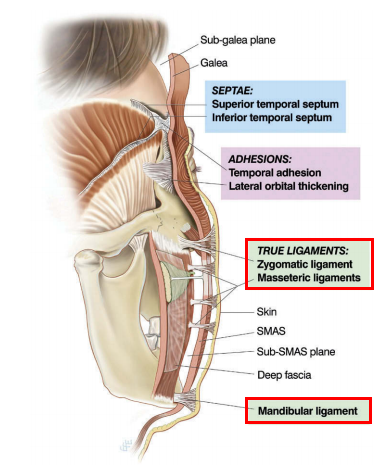
RJ Warren, PC Neligan, Plastic Surgery, Vol.2, Aesthetic Surgery, p80, Fig. 6.4
The sky-blue and light purple boxes above indicate the retaining ligaments that need to be released during a forehead lift. https://blog.naver.com/creating_beauty/222065071982
If a facelift is performed while following these basic principles,
not only can the unnecessary side effects patients experience after surgery be minimized,
but the surgical results can also last longer and be more satisfying.
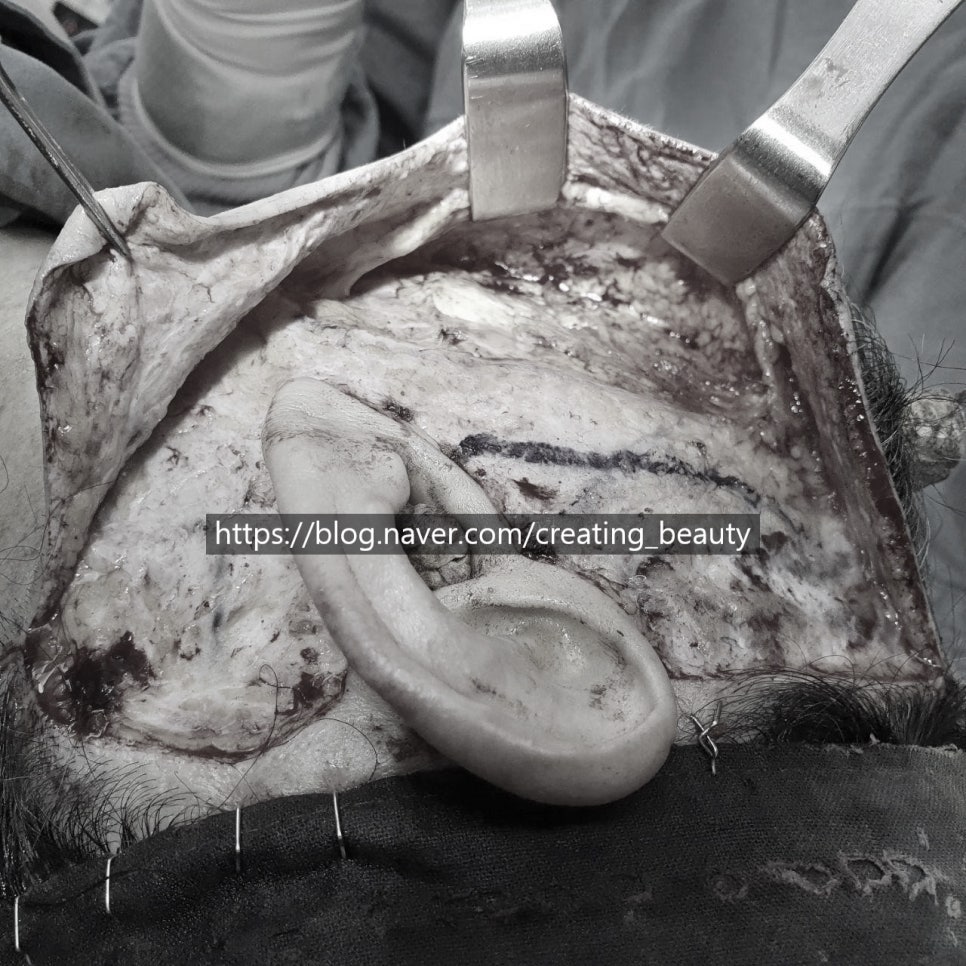
If the dissection is done well in each layer, there is very little bleeding, as shown in the photo above.
You should not think of this as a surgery you can do after seeing it once or twice.
You have to practice on cadavers several times and study them as well.
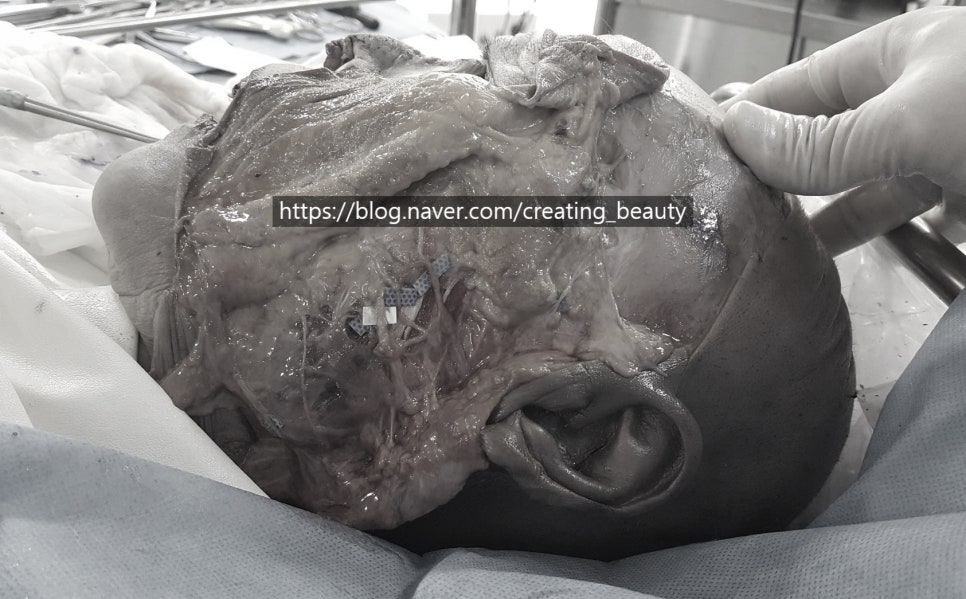
Only when the structures are drawn anatomically
can a facelift be performed comfortably.
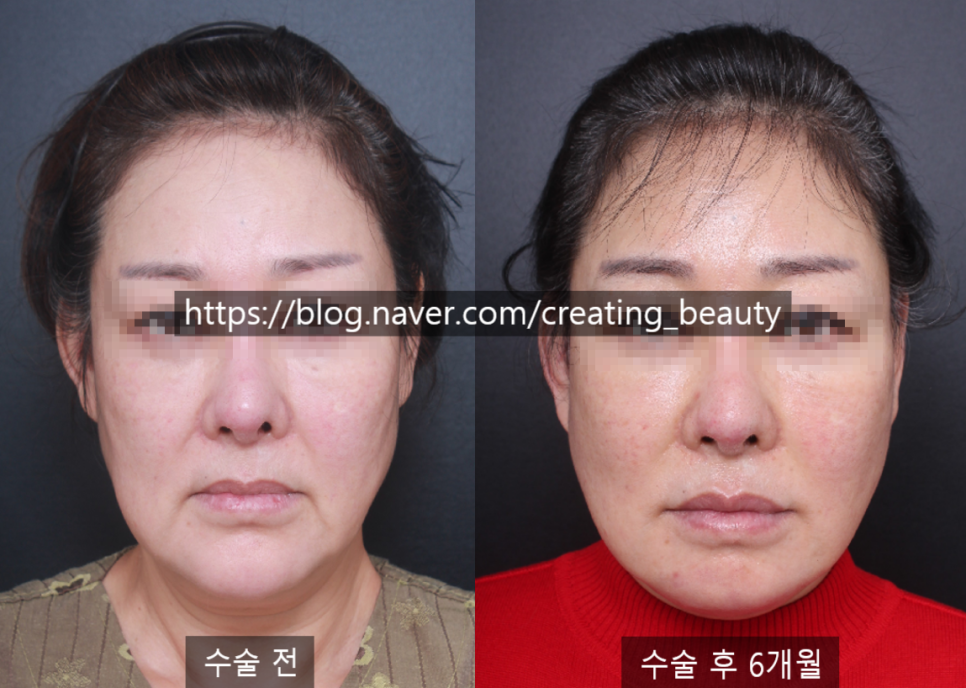
The hollowing and sagging of the cheeks, and the jowl (the wrinkle next to the corner of the mouth), have been improved and maintained.
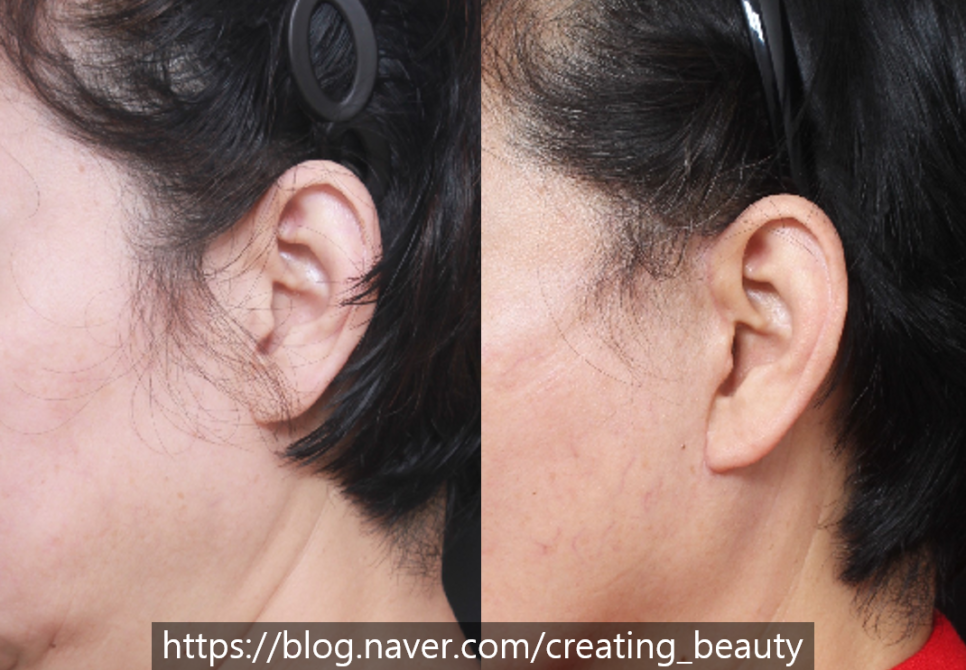
Even after 6 months, the scar remains as a single line.
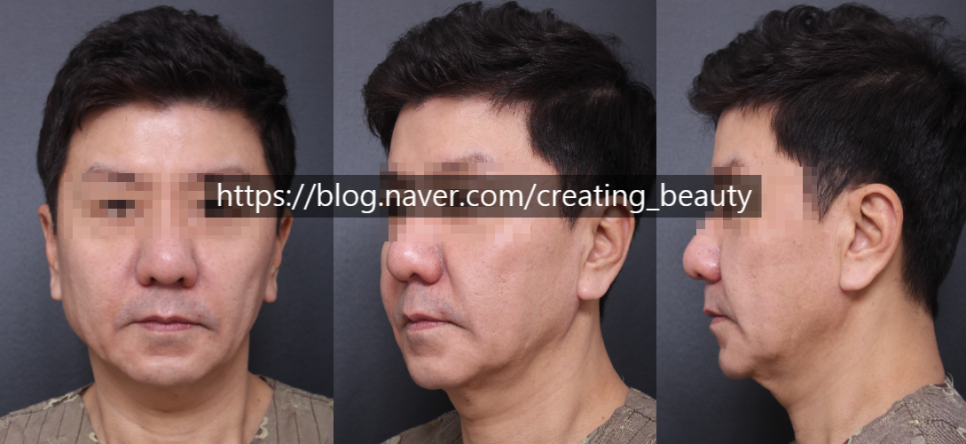
Before surgery
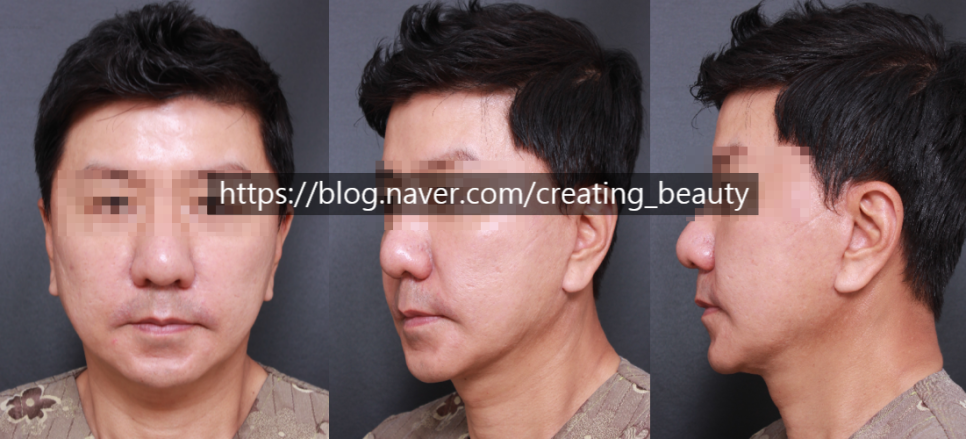
6 months after surgery
A facelift (face lift), or face and neck lift, is a surgery that restores an enlarged and sagging face to how it looked 10 or 20 years ago.
Simply pulling the face does not create that effect.
The jawline also needs to be improved
in order to create a youthful and sharp appearance.
<If you have additional questions, leave a private comment
and I will kindly answer them. Thank you. ^-^>