Hello, I’m Kim Jun-hyeon, director of Midline Plastic Surgery.
Today, I’ll explain septoplasty, one of the methods for functional nose surgery for rhinitis, which may help patients who are considering nose surgery because they are troubled by nasal congestion and have been diagnosed with rhinitis.
First, let me explain what the septum and deviation are.
-
Nasal septum: The partition wall that separates the inside of the nose into left and right sides. It supports the bridge and tip of the nose and is located between the left and right nasal cavities inside the nose.
-
Deviated nasal septum: As explained above, this refers to a case where the nasal septum is curved away from the center between the left and right sides inside the nose, causing symptoms such as nasal congestion.
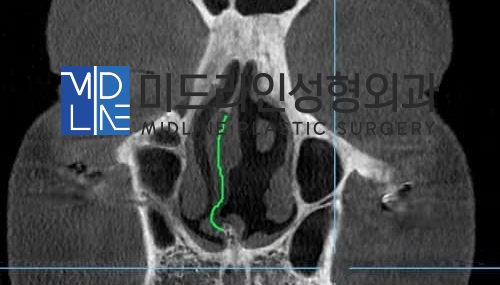
Deviated nasal septum
When the septum is bent to one side like this,
the nose on the narrowed side is often blocked.
However, when patients visit for a nasal consultation and we check their nasal congestion,
there are cases where they feel that the opposite side, not the side where the septum is deviated on CT, is blocked.
That is why, during consultations with patients seeking functional nose surgery, we take a CT scan to confirm the condition and diagnose a deviated nasal septum.
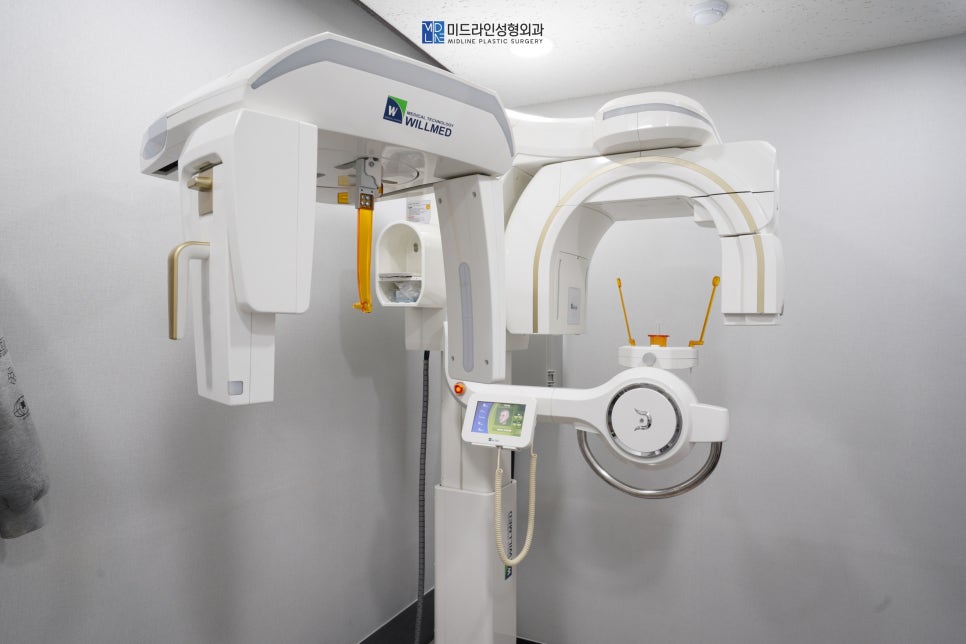
There are several hypotheses regarding the cause of a deviated nasal septum.
It may be congenital,
and in most cases, it is considered to be due to excessive growth and tension caused by internal cartilage tension from acquired trauma.
In other words, during trauma, the cartilage separates from the posterior bone,
and the septal cartilage, which has grown larger than the space inside the nose,
becomes bent.
There are other hypotheses about the cause of a deviated nasal septum as well,
but they are not certain.
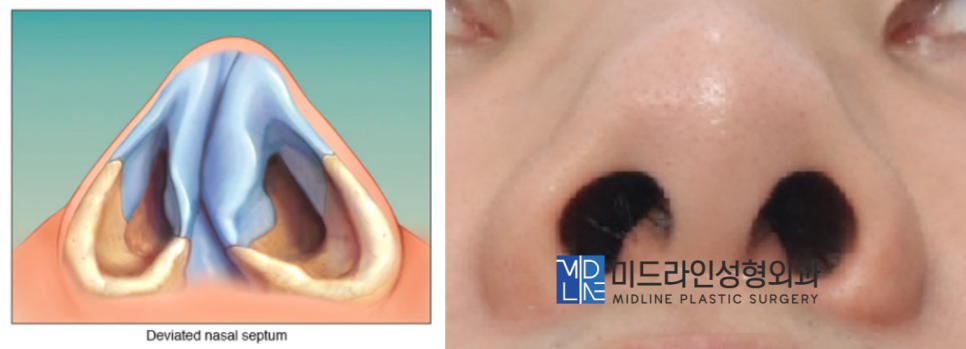
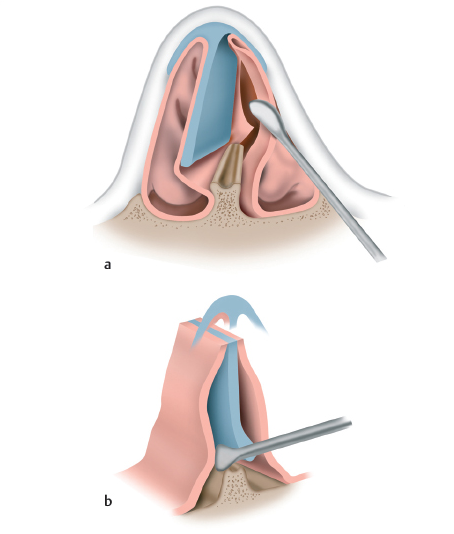
If the nose is bent because there is so much cartilage, as shown in the photo above,
how is it corrected?
Because the bend occurs due to excess growth of the septum,
the extra portion is cut away and then fixed again.
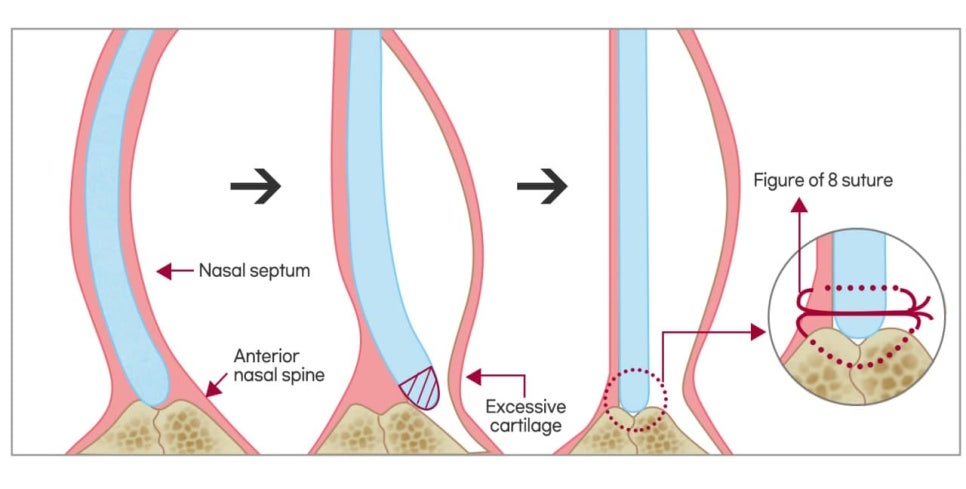
The hatched portion of the septum in the diagram above
must be reduced for the bent septum to become straight.
In other words, it is about relieving the inherent tension in the cartilage
and securing space so that the bent septal cartilage
can straighten out.
To do this, the septal cartilage must be separated from the bone
(Vomer, maxillary crest, anterior nasal spine) where it is attached,
so that the cartilage can swing without being caught on either side.
This is where the name Swing-door technique comes from.
The Dual Character of Nasal Surgery | Plastic Surgery Key
As mentioned above, people with a deviated septum often have one side of the nose more blocked than the other, making breathing uncomfortable.
While performing augmentation rhinoplasty, the bent posterior septal cartilage is removed and used to extend the height of the nose,
and as a result, it becomes a good source of autologous cartilage material for creating the height of the nasal tip,
and it can also improve the symptoms of nasal congestion associated with functional nose surgery.
In other words, septal deviation can be improved at the same time as rhinoplasty.
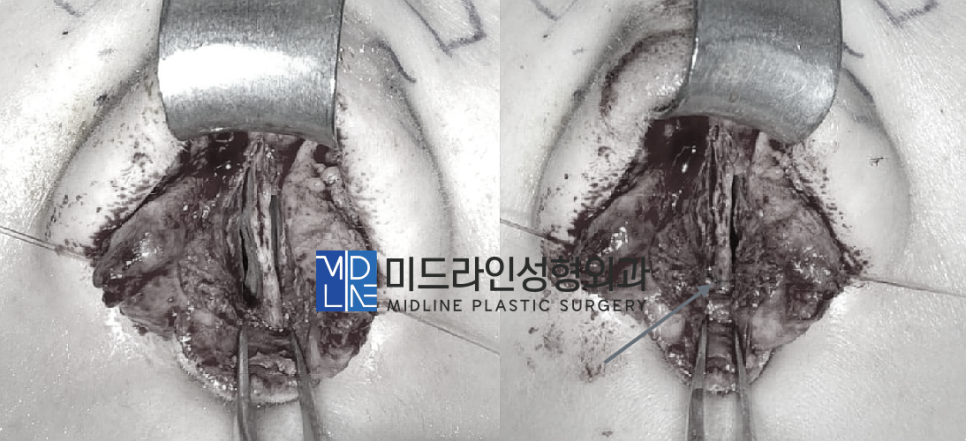
“Figure-8 suture”
This shows the bent cartilage from the deviated septum after it has been straightened.
The arrow in the image on the right indicates the “figure-8 suture.”
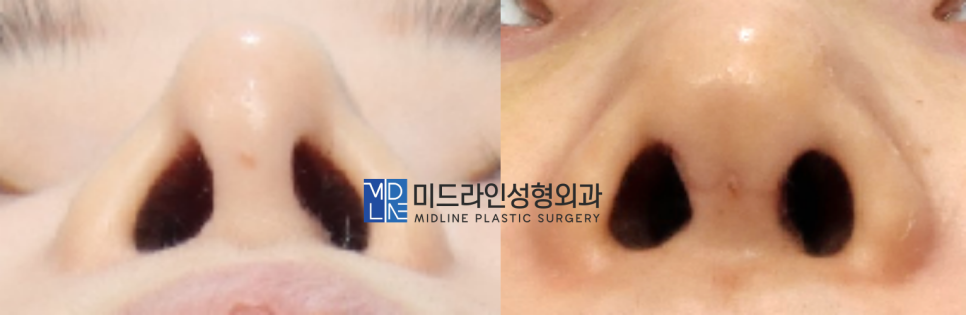
Before and after a pinched nose correction
The patient in the intraoperative photo above also underwent correction of a pinched nose.
After surgery, the septum has been properly aligned.
Let me show you another example.
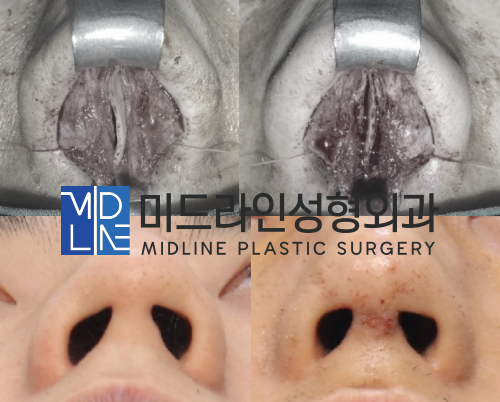
Septoplasty
The image above shows the septum being straightened during surgery and the postoperative result. (Top)
These are preoperative and postoperative nose photos. (Bottom)
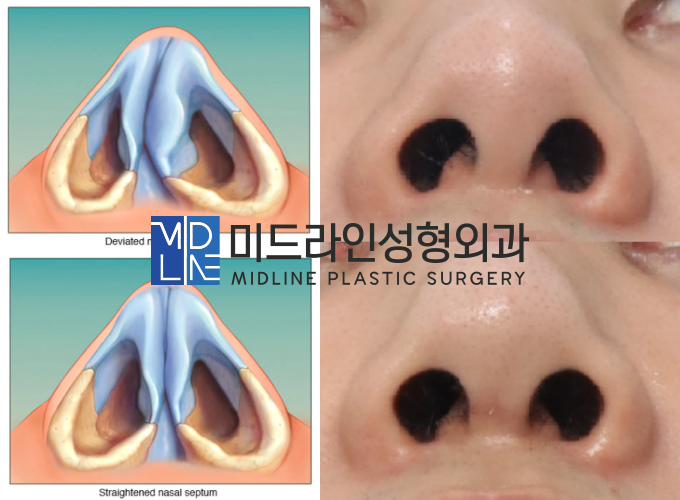
Before septoplasty (top)
Before septoplasty (bottom)
This is the postoperative result of the patient shown at the very top.
If you have concerns about nasal congestion and nose bending caused by a deviated septum, you may consider a surgery like the one above.
<If you have additional questions about functional nose surgery or a deviated nasal septum,
please leave a private comment and I will kindly answer. Thank you.>