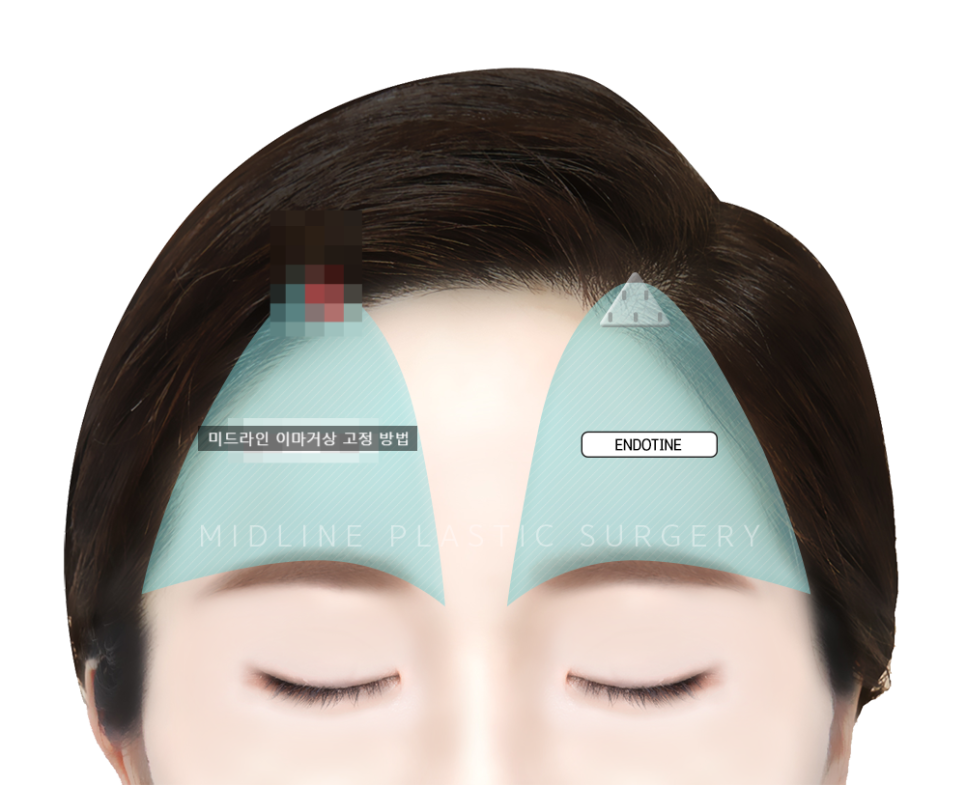
<The fixation methods of
Endoscopic forehead lifting :
Endotine vs Absorbable Thread>
Explaining differences of the
surgical results & complications.
Board-certified Plastic Surgeon _ Director Kim Junhyun
In the last post,
a patient who had forehead lift surgery at our clinic because the distance between the eyes and eyebrows was close, and the eyelids looked droopy,
had been briefly introduced along with before-and-after photos.
When performing forehead lift surgery,
to achieve satisfactory results while maintaining them semi-permanently without side effects,
dissection is important, but fixation is also important.
In other words, if we simply dissect the structures holding the forehead down, such as retaining ligaments and muscles,
the forehead and eyebrows will not rise on their own.
Once the dissection is finished,
the wrinkled forehead and drooping eyebrows must be lifted upward and firmly fixed.
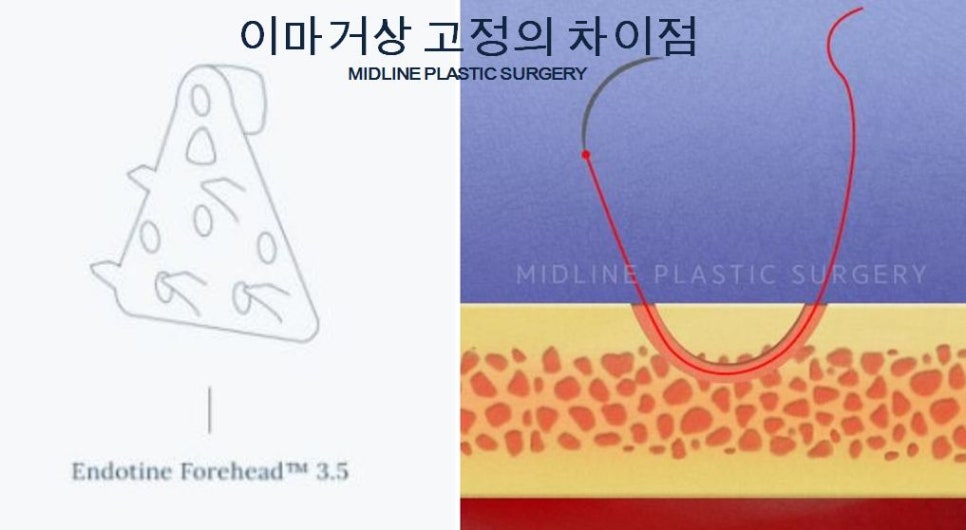
Fixation methods for forehead lift surgery
There are two fixation methods for forehead lift surgery.
-
A method using Endotine
-
A method of fixing with absorbable thread through bone tunneling
Method 2 is my (Midline) surgical method.
Before explaining the differences in results and side effects of the fixation methods,
we need to first understand what Endotine is.
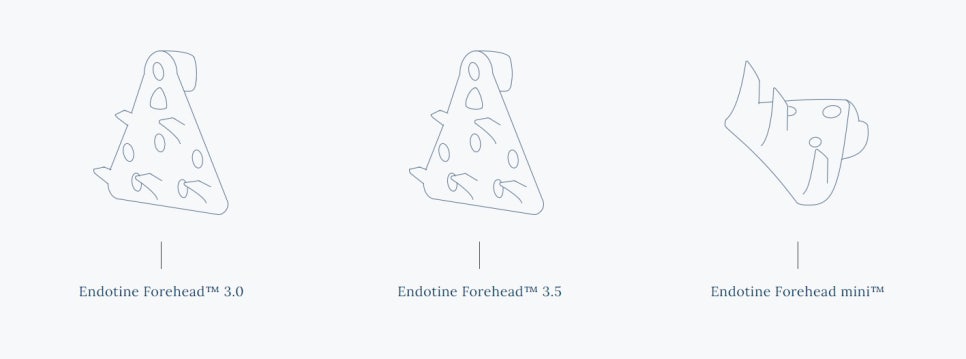
http://www.endotine.co.kr/
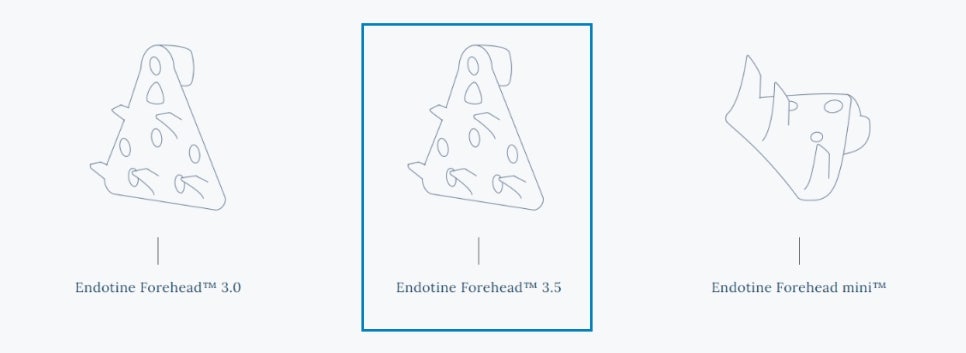
The figure above shows the Endotine design for forehead lift on the Endotine website.
There are three types for the forehead.
What is Endotine?
It is a transparent, plastic-like product
made of polylactic acid (PLA).
It is extracted from corn starch
and is a material that is absorbed in the body.
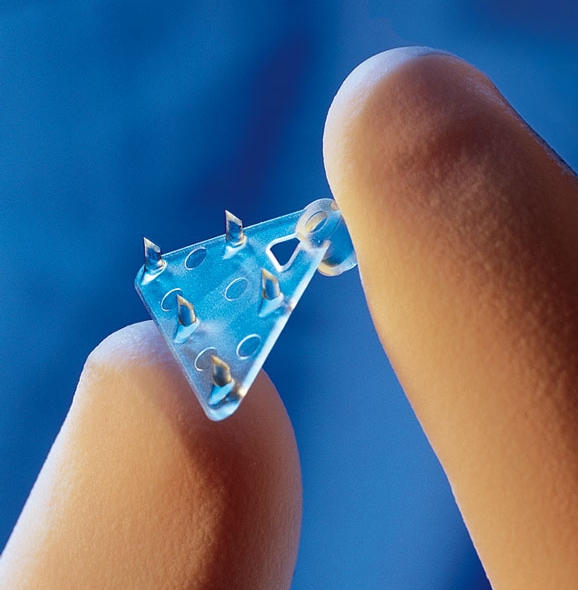
https://www.microaire.com/products/endotine-forehead/
The Endotine used in forehead lift
is about this size.
- Forehead lift method using Endotine
To fix it to the bone,
1-1. Make a hole in the bone with the tool shown in the photo below.
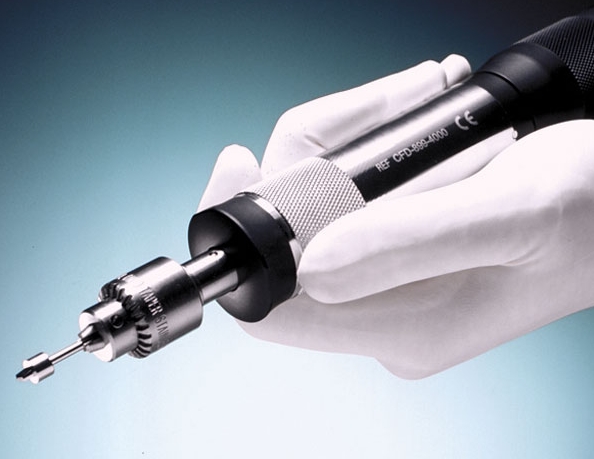
https://www.microaire.com/products/endotine-forehead/
1-2. Once a hole is made in the bone,
insert the Endotine.
The Endotine should be oriented so that the insertion point
is the top vertex of the equilateral triangle.
1-3. After lifting the dissected forehead and scalp upward,
press them onto the pointed part of the Endotine to secure them.
It will be easier to understand if you look at the figure below.
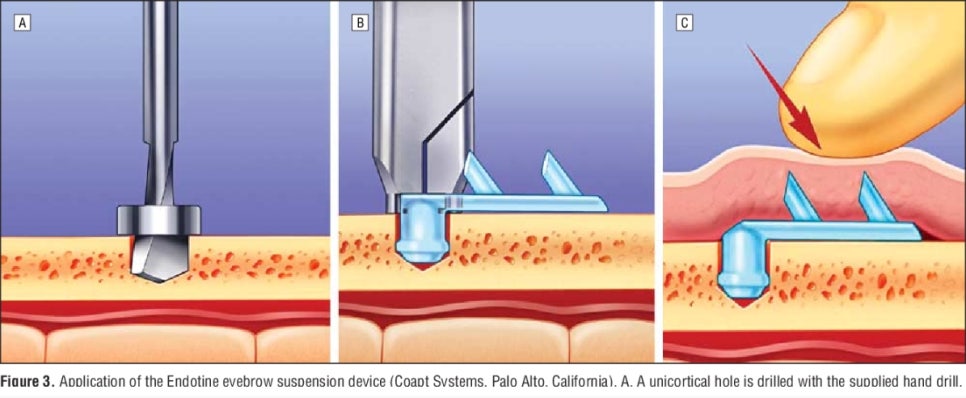
https://www.semanticscholar.org/paper/Reconstructive-application-of-the-endotine-devices.-Boehmler-Judson/928fb56331fb00629b2af065b6117391a5f33427/figure/2
This is how forehead lift using Endotine works.
- A method of fixing with absorbable thread through bone tunneling
(Midline Plastic Surgery forehead lift fixation method)
Now let’s look at how fixation is done with absorbable thread.
It is basic procedure to ensure proper dissection before fixation^^.
2-1. After carefully and sufficiently dissecting the retaining ligaments and muscles,
2-2. make a tunnel in the bone with a thin drill for fixation.
This is called bone tunneling.
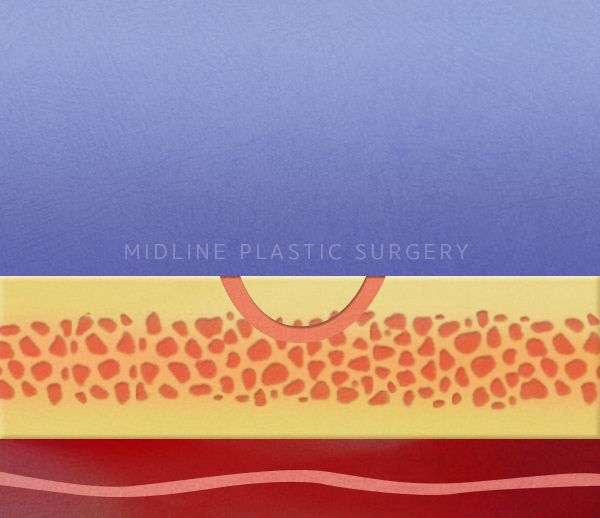
Bone tunneling
2-3. The light orange area in the figure above is the tunnel.
The thread is passed through it.
If this process is not performed by an experienced doctor,
it can take a very long time.
When tunneling,
a large hole may be made even though the tunnel diameter does not need to be large at all.
It can also be difficult to pass the thread through.
That is why,
if the surgeon has limited experience with forehead lift surgery,
they tend to prefer fixation using Endotine.
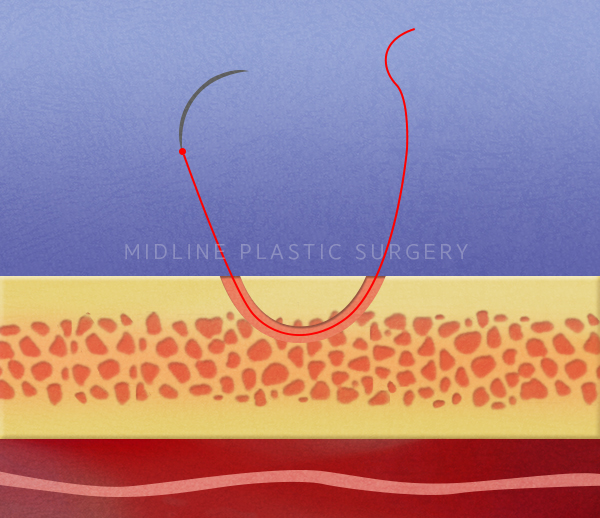
Retention period of absorbable thread
2-4. Hook the thread into the periosteum and scalp tissue,
2-5. lift the forehead and eyebrows,
and then fix them in place.
!!
If there are two fixation methods,
there will naturally be clinics that use Endotine
and clinics that fix with absorbable thread.
There is a commonly used illustration at clinics that promote Endotine,
so I will show it here.
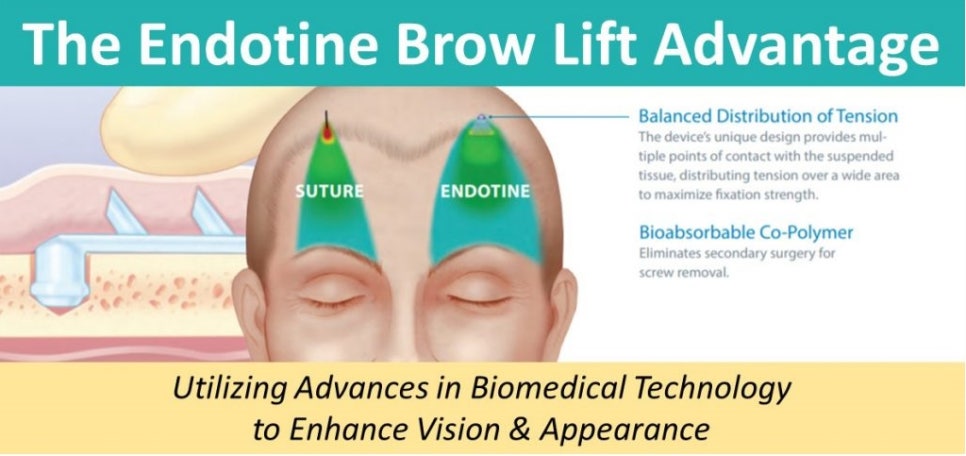
http://sigler.epiokc.com/procedures/endotine-brow-lift/
As a difference between Endotine and absorbable-thread fixation,
the explanation says that fixation with a suture concentrates excessive force on a single fixed point
and the lifting effect covers a narrower area compared with Endotine,
so Endotine is better.
Does this remind you of what I mentioned earlier,
that dissection is fundamental?
If the dissection is done properly,
the problem pointed out in the illustration above will not occur.
!!
Rather, by changing the angle of the thread,
I use my own surgical method
to make the area affected by the fixing force wider and stronger,
which allows for a clear lifting effect
and also makes semi-permanent maintenance possible.
(Detailed methods can be discussed during a visit.)
Maintenance period after forehead lift surgery
Now, the difference in the fixation part has been clarified.
Endotine is a material that is absorbed by the body and disappears,
but as shown in the figure above,
it needs to be a certain size and thickness in order to perform that role.
So when it is fixed,
it can always be felt as a bulge.
Like in the figure below.
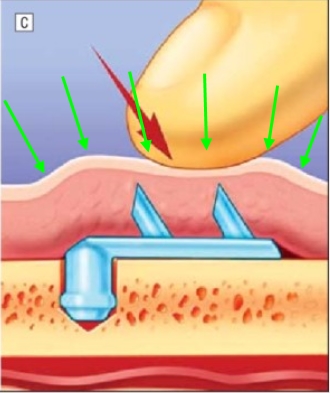
Endotine side effects
There is a paper about Endotine,
so I will quote it.
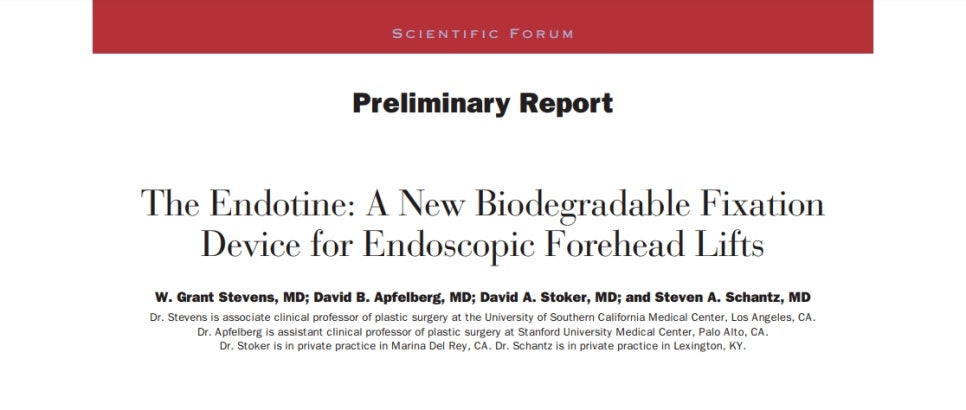
As the fixation method for forehead lift,
the Endotine 3.5 model was used.
The main point of this paper is that
it is convenient to use
and has strong fixation,
but

the downside is that the fixed area with Endotine remains palpable for up to 24 weeks
and there is some degree of pain.
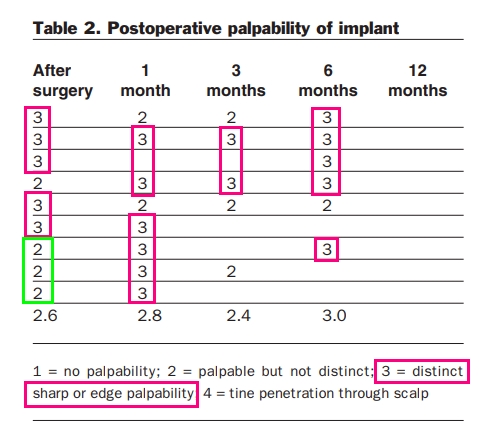
After Endotine forehead lift surgery,
even after 6 months,
5 out of 9 patients said the Endotine could still be clearly felt.
3 said it was more noticeable one month after surgery than immediately after surgery.
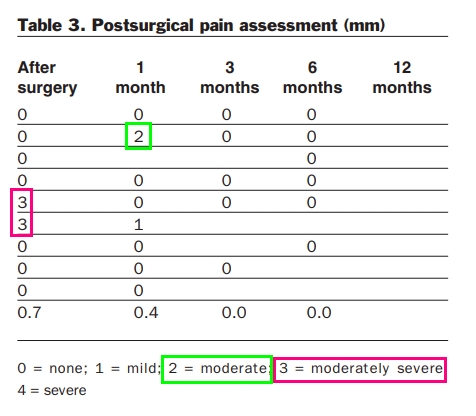
Also, immediately after Endotine surgery,
2 patients complained of severe pain,
and 2 people who had no pain immediately after surgery
developed pain one month after surgery.
VS
If fixed with thread,
it may look slightly sunken instead of protruding like Endotine.
However, it returns to normal after about a month.
^^
With Endotine,
for the 2 people who complained of pain immediately after surgery,
it is possible that anesthesia during surgery was insufficient.
Still, the fact that 2 people had pain even one month later is worth noting.
There have been no patients so far who said the fixed area hurt when fixation was done with thread.
Here is the conclusion on the differences in fixation methods.
- Effect and longevity:
Both Endotine and thread provide sufficient fixation strength.
(However, proper dissection must be performed first.
If the surgeon is not experienced in forehead lift surgery,
either the effect or the maintenance period can be expected.)
- Endotine recovery period:
Endotine may be felt as a bulge,
and it takes more than 6 months to be absorbed and disappear.
It may take up to 1 year.
There may also be partial hair loss in the Endotine area.
- Pain after forehead lift surgery:
Pain at the fixation site due to Endotine
may still be present even after one month.
- Surgical difficulty:
Endotine is not difficult to handle.
That is why people with less experience in forehead lift surgery often use Endotine.
Fixation with thread requires skilled technique
when making the tunnel and passing the thread through it.
Some places reportedly tell patients to be careful because the forehead may come down when combing or washing the hair after Endotine forehead lift,
but there is no need for that at all in this surgery^^
★★Key points of Midline forehead lift★★
Proper dissection of the muscles, retaining ligaments, and so on
is fundamental.
We make bone tunnels and fix with absorbable thread
to avoid the pain and discomfort caused by Endotine.
And here!
Using my own surgical method,
I widen and strengthen the area affected by the fixing force,
thereby providing a clear lifting effect
and helping maintain it semi-permanently.
(Detailed methods can be discussed during a visit.)
Kim Junhyun Director’s forehead lift surgery
In this post, we looked at the fixation methods and characteristics
of Endotine and absorbable thread,
which many people are curious about.
<If you have additional questions, please leave a private comment,
and I will kindly answer them. Thank you.>

.
.
.
.
.
.
.
.
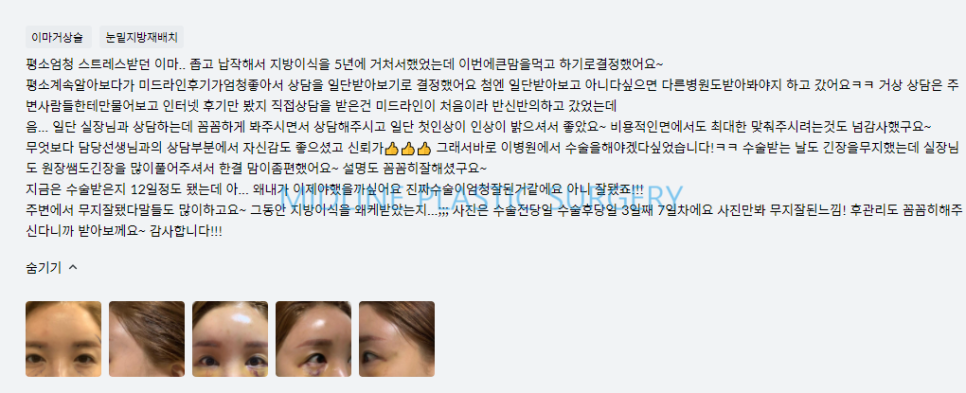
Forehead lift review
They had surgery with me
and posted a review.
(Thank you.^^)
Forehead lift is performed not only to improve wrinkles or drooping eyes,
but also when the forehead is narrow or feels stuffy,
and to create a brighter impression.
If the eyes feel heavy and you only add volume to the forehead with fat grafting,
it can make both the forehead and eyes feel stuffy.^^
Thank you.