
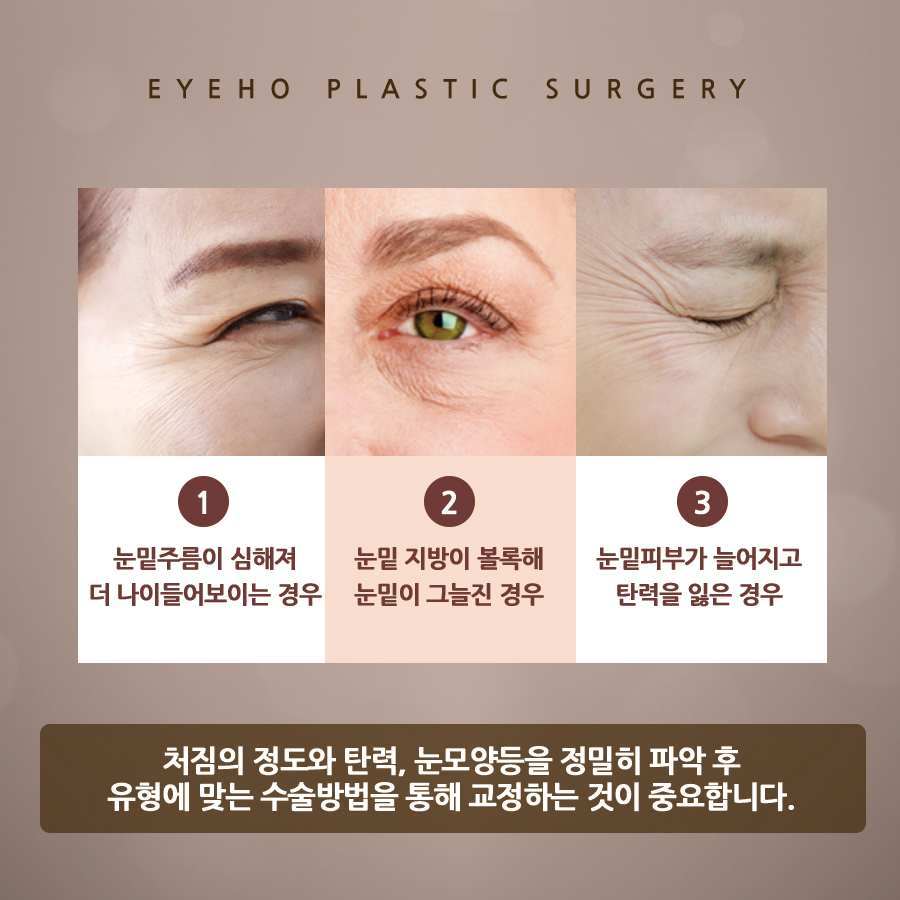
One of the procedures most commonly performed in middle-aged adults is lower blepharoplasty. People usually use the terms “looking younger than your age” or “looking older than your age” to describe a youthful or aged appearance. Most people want to keep a youthful face, but at some point they begin to experience lower eyelid sagging and under-eye wrinkles. If these changes are corrected early, a youthful impression can be maintained for a long time. Eyelid skin is one of the thinnest areas of the body. Because there is almost no subcutaneous fat layer, it is the area where aging appears first. For this reason, many people are sensitive to changes in the eyelids and worry about them. However, depending on the case, aging symptoms of the eyelids can cause not only changes in appearance but also a decline in function, so more and more people are visiting clinics for consultation about lower blepharoplasty to improve under-eye sagging and wrinkles. Under-eye lower eyelid sagging can easily appear in middle-aged and older adults, but depending on skin type it can also occur at a somewhat younger age, and some people have especially severe sagging compared with their peers. Today, we will look at lower blepharoplasty methods that can improve under-eye sagging and wrinkles, which are concerns for middle-aged adults, and take a look at lower blepharoplasty reviews, under-eye lower eyelid surgery scars, and lower blepharoplasty pain, along with a comparative analysis of clinics known for lower blepharoplasty.

Lower Blepharoplasty: Under-Eye Lower Eyelid Surgery
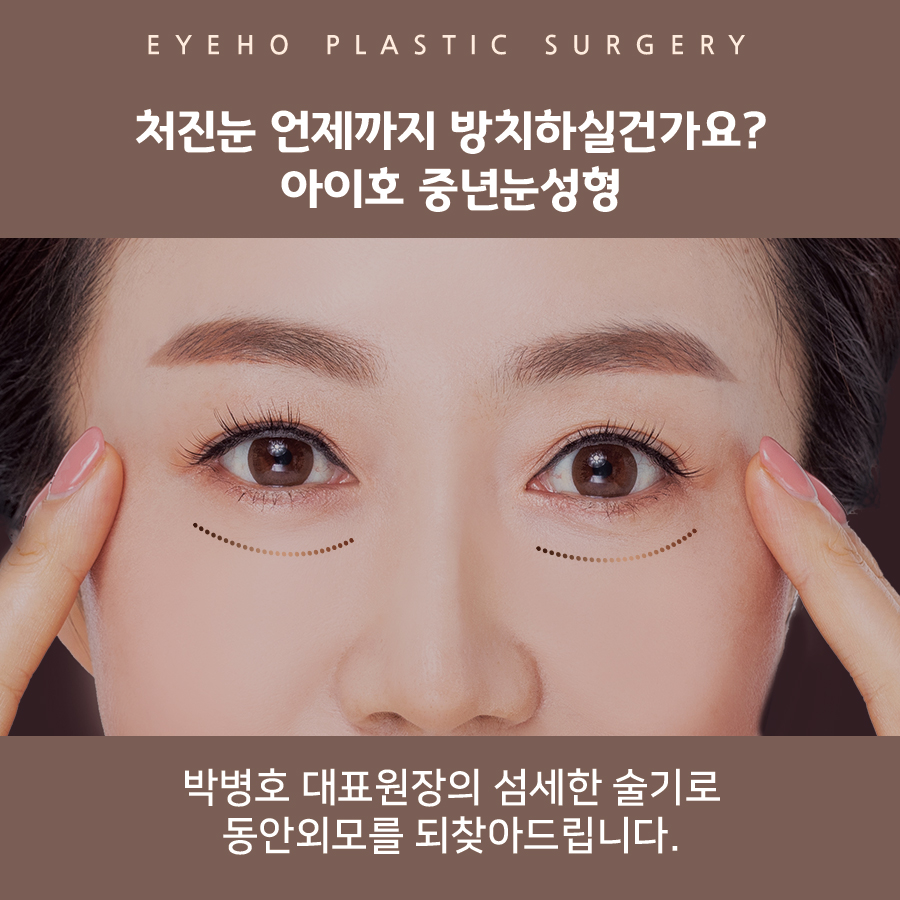
As a middle-aged eye aesthetic procedure, lower blepharoplasty, or under-eye lower eyelid surgery, is a procedure that improves the dark, tired-looking under-eye area that makes you look older than your actual age by removing and repositioning under-eye sagging, under-eye wrinkles, and protruding under-eye fat to improve elasticity and create a brighter appearance. The difference between lower blepharoplasty and under-eye fat repositioning surgery is whether skin is incised. To improve under-eye sagging and wrinkles, the sagging lower eyelid skin must be removed, so a skin incision is always necessary when performing lower blepharoplasty. Therefore, it is good to remember that whether lower blepharoplasty or under-eye fat repositioning is performed is determined by the degree of elasticity and sagging in the lower eyelid area.
Many people considering this procedure worry that their appearance may change negatively after under-eye lower eyelid surgery. Lower blepharoplasty, a middle-aged eye aesthetic procedure chosen to improve an older, darker-looking impression into a brighter and more refreshed one, can be a sensitive surgery that causes stress if done incorrectly. When performing under-eye lower eyelid surgery, the surgical plan should be tailored to each individual’s degree of under-eye sagging and fat distribution, and it should be performed by medical staff with extensive experience and a high level of anatomical understanding for satisfactory postoperative results.

Lower Blepharoplasty: Procedure for Under-Eye Lower Eyelid Surgery
-
Before lower blepharoplasty, a consultation is conducted to assess the degree of sagging and the condition of the under-eye skin.
-
After confirming the degree of under-eye sagging and the progression of aging, a customized design and surgical plan are established.
-
An incision is made close to the lower eyelashes to remove sagging under-eye skin, under-eye fat, and lower eyelid muscle.
-
After securing the skin and muscle, the area is carefully sutured.
Lower blepharoplasty is a procedure in which an incision is made directly below the lower eyelashes, some of the under-eye fat is removed, and the remaining fat is spread evenly and repositioned to the tear trough wrinkle area. As a result, the stretched skin and muscle are removed as needed, and the muscle is firmly fixed to the periosteum of the outer orbital bone wall to prevent the under-eye area from sagging again. The surgery takes about one hour, and the stitches are removed on day 7 after surgery. Daily life is possible immediately after lower blepharoplasty, and bruising and swelling generally recover to a natural eye shape in about two weeks, though this may vary by individual. At our clinic, the medical staff personally handles the entire process, including consultation, design, surgery, and aftercare, allowing for natural improvement.
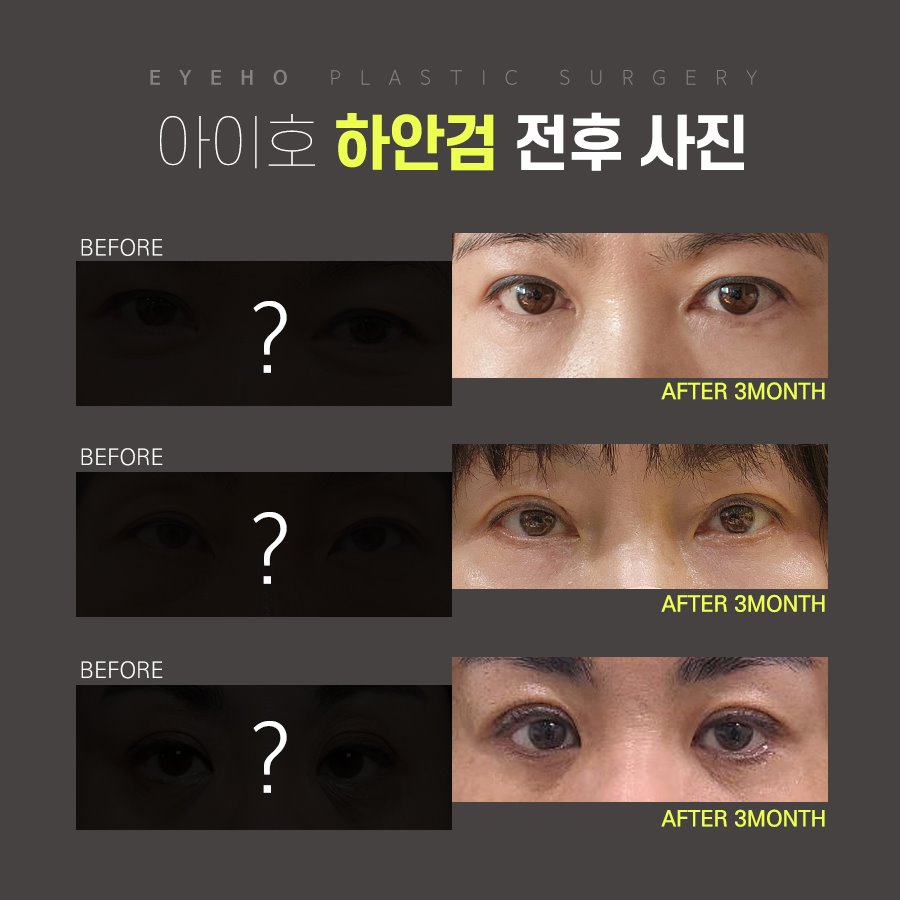
Lower Blepharoplasty Review
Satisfaction with lower blepharoplasty reviews varies greatly depending on the skin condition before surgery, the degree of sagging, and the severity of under-eye wrinkles. If skin sagging is severe and under-eye wrinkles are already present, some degree of sagging and wrinkling will inevitably remain before and after surgery. Results may also vary depending on the elasticity of the lower eyelid skin. For this reason, rather than performing lower blepharoplasty at too old an age, it is also a method that can lead to more positive before-and-after results to have the procedure done in your 40s, when some skin elasticity is still preserved. If people in their 50s or older attempt lower blepharoplasty, they should be careful and keep in mind that lower eyelid complications such as ectropion or scleral show may occur. Since people over 50 generally have reduced skin elasticity, the likelihood of lower eyelid complications is higher, so the procedure should be approached carefully.
People look for under-eye lower eyelid surgery reviews when they have sunken under-eyes, sunken under-eyes with prominent cheekbones, protruding under-eye fat, revision lower blepharoplasty due to complications or problems, or pigmentation. Through this, under-eye wrinkles can be improved and protruding under-eye fat caused by aging can be evenly repositioned, restoring a firmer and brighter impression. Lower blepharoplasty is not simply a surgery that removes protruding under-eye fat; depending on the individual’s skin elasticity and the direction of improvement, it is a procedure that simultaneously removes and repositions under-eye fat while also fixing the lower eyelid muscle, restoring a lively and defined eye area.
Lower Blepharoplasty: Under-Eye Lower Eyelid Scars
Because lower blepharoplasty is performed through an incision, some people worry that visible marks may remain. To make lower blepharoplasty scars less noticeable, the skin is excised directly below the eyelashes, so even after surgery the incision line is barely visible and under-eye lower eyelid scars usually do not remain prominently. Even if a scar does remain, it is not easily seen because the incision is made close to the eyelashes. In cases where lower blepharoplasty scars remain, the incision line is often placed too low. The location of the incision line differs by clinic, so during the preoperative consultation, be sure to check carefully by looking at before-and-after lower blepharoplasty reviews. There are also cases where scars remain even though the incision line is close to the eyelashes. This happens because the muscle beneath the incision line is not reinforced, leading to a depressed scar, or because a keloid develops. Careful attention to scar management after lower blepharoplasty is necessary, so it is important to proceed with a medical team that has extensive clinical experience and expertise.
Lower Blepharoplasty Pain
After lower blepharoplasty, temporary pain may occur as the anesthesia wears off. In the case of pain that occurs immediately after surgery, it can be relieved quickly by taking the prescribed medication. A cause of lower blepharoplasty pain after surgery can be a hematoma. As a hematoma develops, the area swells rapidly and very severe pain occurs. If the pain is excessive, a hematoma should be suspected, and in such cases you should visit the hospital immediately to receive emergency treatment.
Lower blepharoplasty requires a skin incision and has a wider surgical area, so the recovery period is inevitably longer than that of under-eye fat repositioning surgery. In addition, because many blood vessels are distributed around the lower eyelid skin, swelling and bruising can easily occur after surgery. If you undergo lower blepharoplasty, care should be taken to control bleeding as much as possible to reduce bruising and swelling before and after surgery. To recover more quickly from bruising and swelling before and after lower blepharoplasty, it is advisable to apply cold compresses from the day of surgery and warm compresses after 10 days. Alcohol and smoking can cause inflammation and interfere with wound healing, so it is best to avoid them for one month.

The cost of lower blepharoplasty may vary depending on the difficulty and method of the surgery. Depending on the degree of lower eyelid skin sagging and the amount of under-eye fat, the cost may differ, and if additional procedures beyond lower blepharoplasty are needed depending on the current condition, the cost may increase. For a first-time lower blepharoplasty, the expected cost is around 2 million to 3.5 million won. In the case of revision lower blepharoplasty, the cost is determined differently and is higher depending on the degree of complications. However, because the appropriate surgical method must be determined by the medical team based on the individual condition of the lower eyelids, the amount of under-eye fat, the degree of under-eye skin sagging, and elasticity, it is important to receive a consultation. If the extent of skin excision is incorrectly predicted, or if lower eyelid sagging and elasticity are not accurately assessed before performing lower blepharoplasty, complications can occur, so it is essential to receive a careful diagnosis from a board-certified plastic surgeon to achieve positive results.

Comparative Analysis of Clinics That Do Lower Blepharoplasty Well
- Customized plastic surgery for each individual
Is this a place that conducts consultations and solutions aimed at high satisfaction by emphasizing the harmony of facial shape and features, setting the surgical direction by comparing with other areas, and performing customized plastic surgery after considering various aspects?
- Dedicated 1:1 responsibility system
Is this a place where one medical professional takes full responsibility for the entire process, preventing possible complications and problems and applying different surgical methods according to the patient’s condition?
- Board-certified plastic surgeon
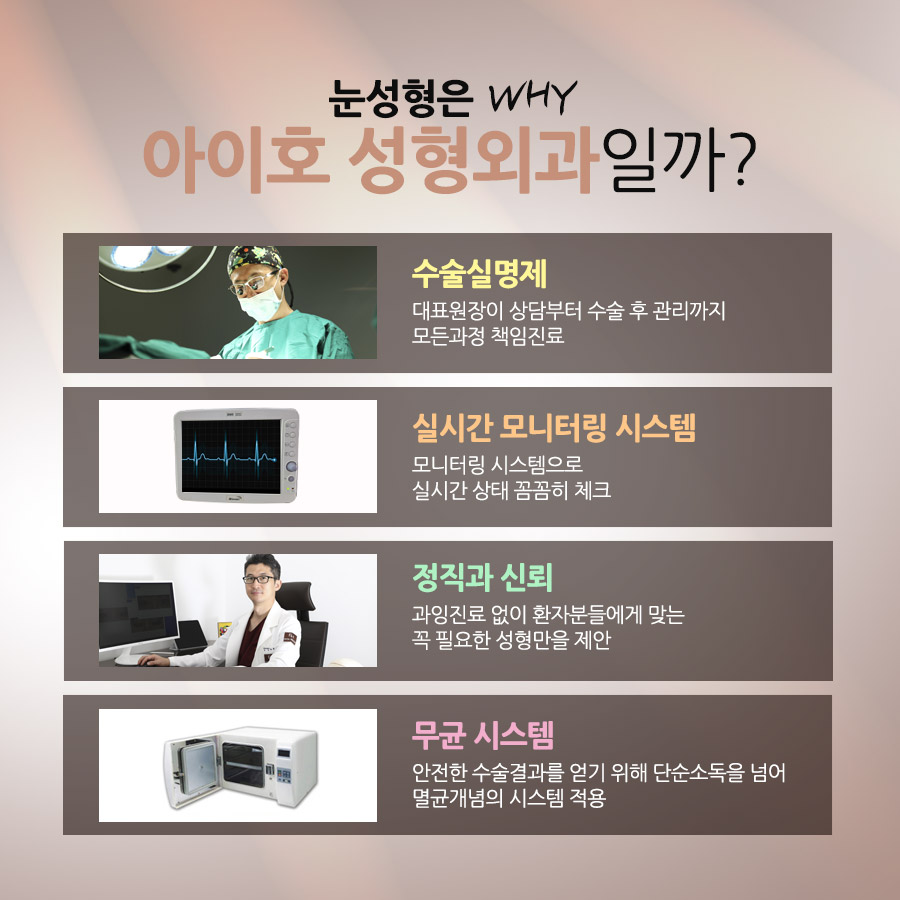
Is this a place where a board-certified plastic surgeon with extensive clinical experience and technical skill performs the surgery directly, and also handles follow-up and aftercare, doing their best to achieve satisfying results?
In addition, to carry out a stable surgery, it is important to check whether the clinic has a systematic and efficient surgical system, know-how, whether there is an after-sales service period after surgery, and whether an aftercare program is in place.
Lower blepharoplasty is generally performed in middle-aged or older adults. Therefore, if you are taking any medication before surgery, you must inform the medical team. If you are taking red ginseng, omega-3, aspirin, or hormone-related medications that may interfere with blood clotting, you should stop taking them for 7 days before surgery, and if you have any drug allergies or unusual sensitivities, you should inform the medical team in advance. Medications for adult diseases such as diabetes or blood pressure can be continued regardless of the surgery. To achieve high satisfaction after lower blepharoplasty, the procedure must be performed with an accurate consideration of the elasticity and degree of sagging of the lower eyelid skin when removing sagging skin and muscle, so that the eye area can be improved into a lively appearance. Please choose a good clinic for lower blepharoplasty carefully and proceed with the surgery.






�



Previous image
Next image