AI-translated archive post

I’ll explain the differences between natural adhesion, buried, and incisional double eyelid surgery, along with the selection criteria.

EYEHO Plastic Surgery Clinic · 눈전문 아이호성형외과 ‍ · January 27, 2025

I’ll explain the differences between natural adhesion, buried, and incisional double eyelid surgery, along with the selection criteria. Hello. This is Iho Plastic Surgery, where be...

AI translation notice

This page is an English translation of a Korean Naver Blog archive entry. For exact wording and source context, verify against the Korean archive original and the original Naver post.

Clinic: EYEHO Plastic Surgery Clinic

Original post date: January 27, 2025

Translated at: April 22, 2026 at 2:13 PM

Medical note: This translation does not guarantee medical accuracy or suitability for treatment decisions.

Hello.

This is Iho Plastic Surgery, where beauty is renewed again.

During the winter vacation season, many people visit plastic surgery clinics to get double eyelid surgery, which is commonly called "ssangsu." The reason is that there is enough time to recover, so not only middle and high school students but also parents look into it. Since the eyes are an important area in determining first impressions, many people hope to achieve a more refined image by changing to bigger, clearer eyes through double eyelid surgery.

Double eyelid surgery is a procedure that creates a crease on the eyelid to make the eyes look bigger and more defined, and it is performed using natural adhesion, buried, or incisional methods. Since each method has its own pros and cons, applying the method that suits you best can lower the chance of revision surgery later. That is why I’d like to explain the buried method, natural adhesion, and incisional method.

I’ll explain the differences between natural adhesion, buried, and incisional double eyelid surgery, along with the selection criteria. image 1

Buried method

I’ll explain the differences between natural adhesion, buried, and incisional double eyelid surgery, along with the selection criteria. image 2

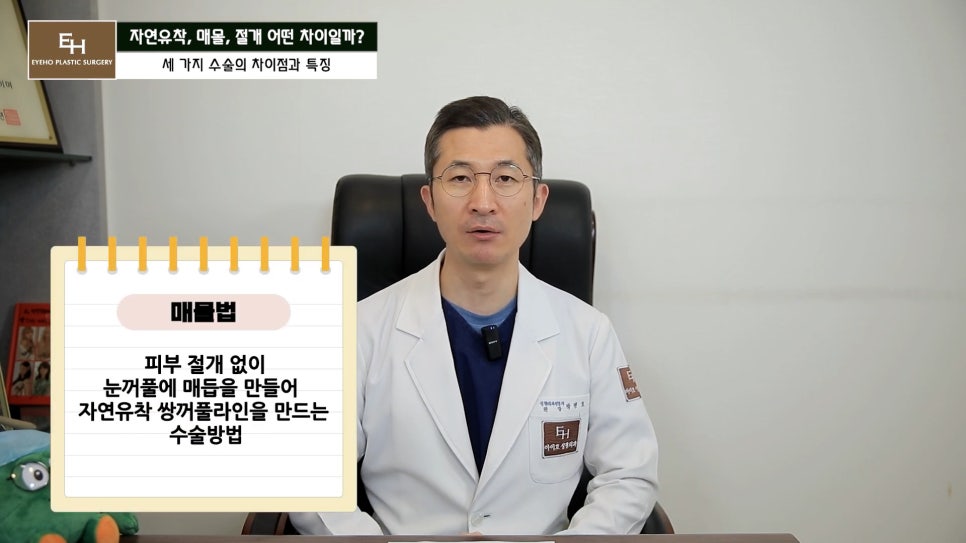
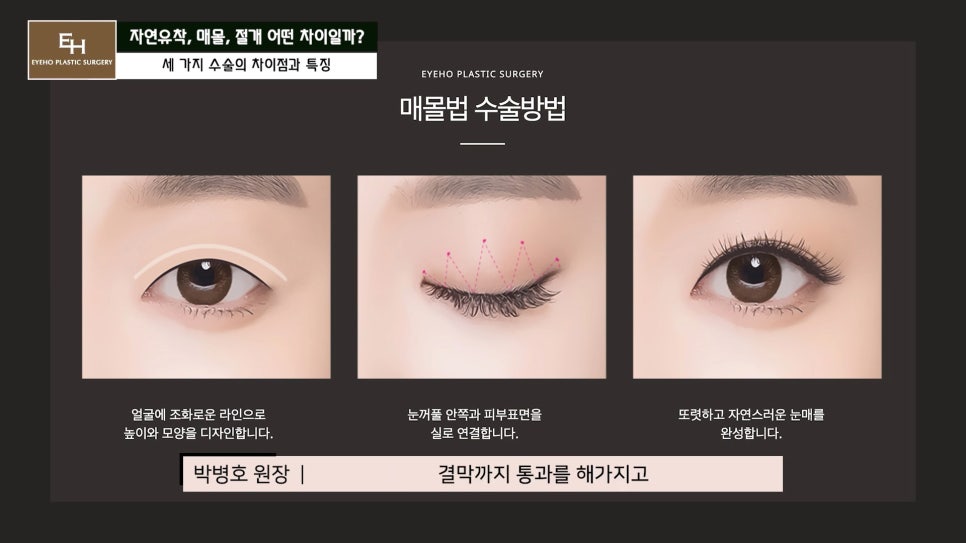
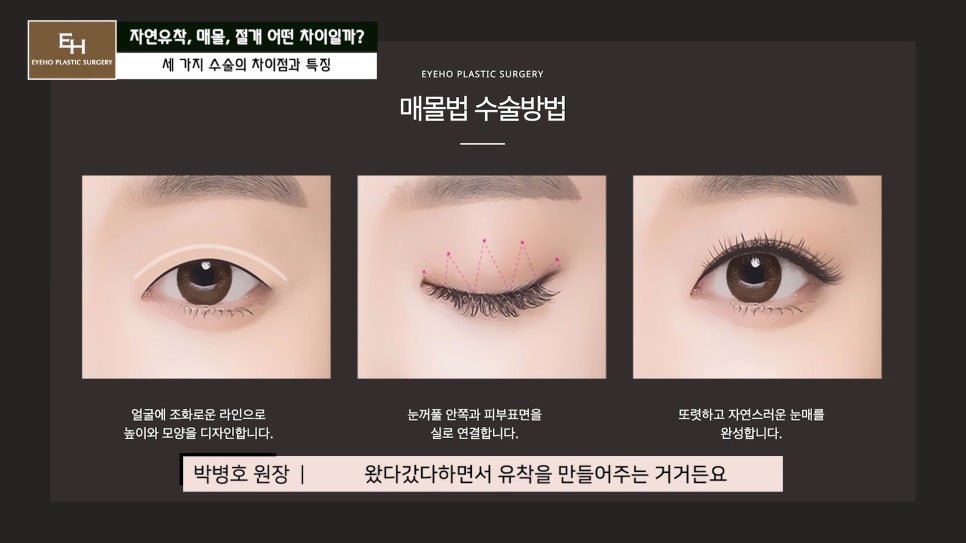
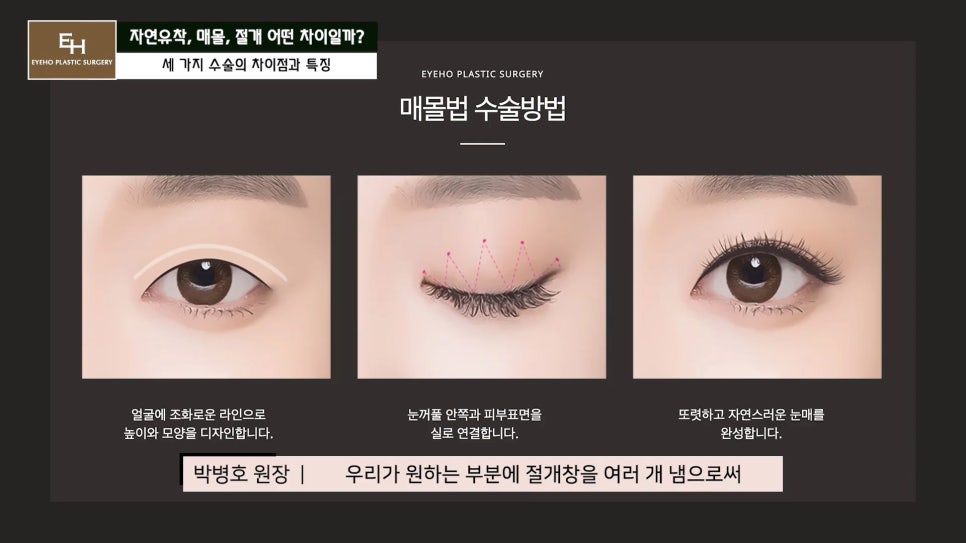
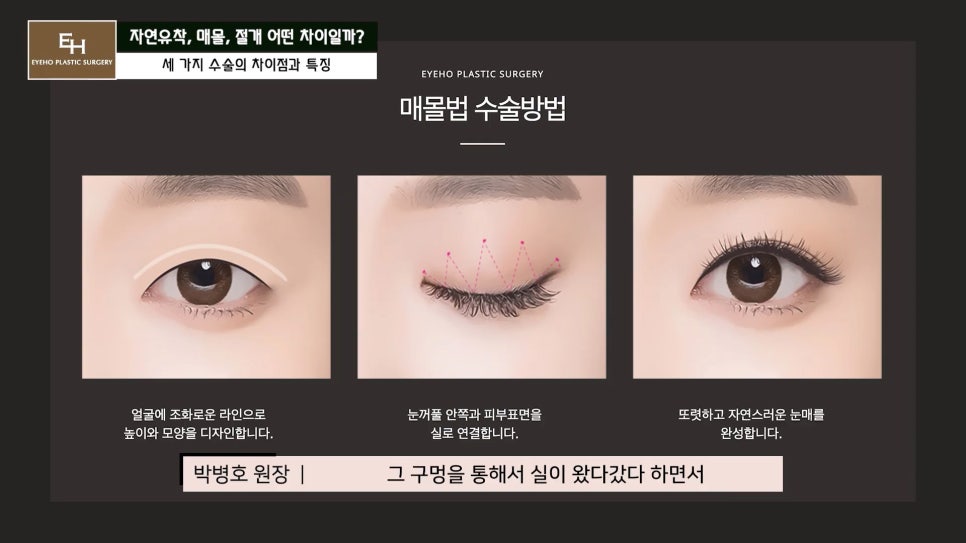
The buried method is a procedure in which tiny incisions and holes are made at the desired line without cutting the skin, and a thread passes back and forth through the holes and through the conjunctiva to create adhesion. The thread that moves back and forth to create adhesion becomes hidden inside, so there is no visible thread on the outside and a line with almost no scar is completed.
I’ll explain the differences between natural adhesion, buried, and incisional double eyelid surgery, along with the selection criteria. image 3

I’ll explain the differences between natural adhesion, buried, and incisional double eyelid surgery, along with the selection criteria. image 4

I’ll explain the differences between natural adhesion, buried, and incisional double eyelid surgery, along with the selection criteria. image 5

I’ll explain the differences between natural adhesion, buried, and incisional double eyelid surgery, along with the selection criteria. image 6

Previous image Next image

Because the buried method forms the line using micro-incisions, it is suitable for people with thin skin, little fat, and a certain amount of eyelid-opening strength. For that reason, it is mainly chosen by younger people who do not have drooping eyelids.


I’ll explain the differences between natural adhesion, buried, and incisional double eyelid surgery, along with the selection criteria. image 7

I’ll explain the differences between natural adhesion, buried, and incisional double eyelid surgery, along with the selection criteria. image 8

I’ll explain the differences between natural adhesion, buried, and incisional double eyelid surgery, along with the selection criteria. image 9

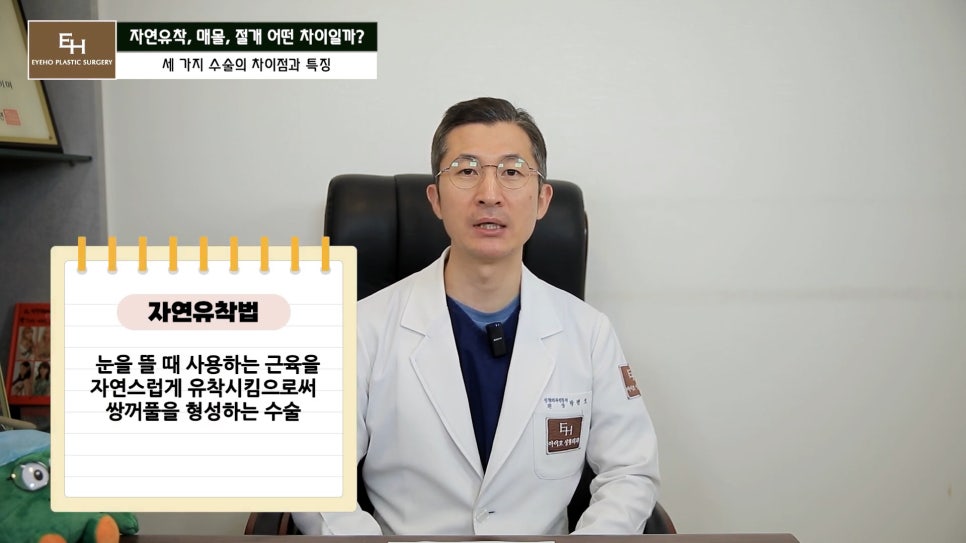
Natural adhesion

I’ll explain the differences between natural adhesion, buried, and incisional double eyelid surgery, along with the selection criteria. image 10

The natural adhesion method is performed in the same way as the buried method. Because a small incision is made and adhesion is created in the desired skin tissue, it becomes barely noticeable over time and looks natural, which is why many people prefer it. As with the buried method, it can be recommended for cases where the skin is thin, there is little fat, and the eyelid-opening strength is moderate.


I’ll explain the differences between natural adhesion, buried, and incisional double eyelid surgery, along with the selection criteria. image 11

I’ll explain the differences between natural adhesion, buried, and incisional double eyelid surgery, along with the selection criteria. image 12

Many people choose it because of its natural look and the fact that it does not look like they had surgery, but there is something to be careful about.

I’ll explain the differences between natural adhesion, buried, and incisional double eyelid surgery, along with the selection criteria. image 13

If the incision is made a little too long, the mark can sometimes look unattractive. One of the main purposes of choosing natural adhesion or the buried method is to make the scar less visible, so keeping the incision small is an important point.

It is good to remember that if multiple long incisions are made, the result can sometimes look more noticeable than an incisional procedure.


I’ll explain the differences between natural adhesion, buried, and incisional double eyelid surgery, along with the selection criteria. image 14

I’ll explain the differences between natural adhesion, buried, and incisional double eyelid surgery, along with the selection criteria. image 15

I’ll explain the differences between natural adhesion, buried, and incisional double eyelid surgery, along with the selection criteria. image 16

In the case of natural adhesion, the adhesion is characterized by being relatively weak. If the adhesion is created well, it can actually be less likely to come undone than the buried method, but because the adhesion is generally made weaker, there may be cases where it loosens over time. Therefore, it would not be correct to say that natural adhesion is less likely to come undone than the buried method; rather, it should be understood as a difference in the surgeon’s technique.


I’ll explain the differences between natural adhesion, buried, and incisional double eyelid surgery, along with the selection criteria. image 17

I’ll explain the differences between natural adhesion, buried, and incisional double eyelid surgery, along with the selection criteria. image 18

I’ll explain the differences between natural adhesion, buried, and incisional double eyelid surgery, along with the selection criteria. image 19

I’ll explain the differences between natural adhesion, buried, and incisional double eyelid surgery, along with the selection criteria. image 20

I’ll explain the differences between natural adhesion, buried, and incisional double eyelid surgery, along with the selection criteria. image 21

I’ll explain the differences between natural adhesion, buried, and incisional double eyelid surgery, along with the selection criteria. image 22

I’ll explain the differences between natural adhesion, buried, and incisional double eyelid surgery, along with the selection criteria. image 23

I’ll explain the differences between natural adhesion, buried, and incisional double eyelid surgery, along with the selection criteria. image 24

I’ll explain the differences between natural adhesion, buried, and incisional double eyelid surgery, along with the selection criteria. image 25

Previous image Next image

Incisional method
I’ll explain the differences between natural adhesion, buried, and incisional double eyelid surgery, along with the selection criteria. image 26

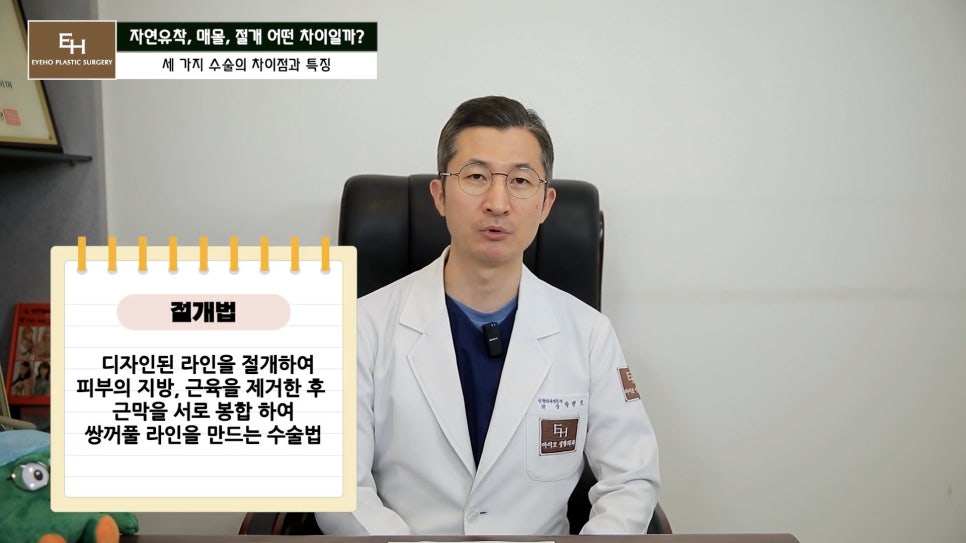
The incisional method is a surgical procedure in which the designed line is incised, the skin’s fat and muscle are removed, and then the fascia is sutured together to create the double eyelid line. Therefore, it is suitable when the skin is thick, the eyelid-opening strength is weak, and there is a large amount of fat.


I’ll explain the differences between natural adhesion, buried, and incisional double eyelid surgery, along with the selection criteria. image 27

I’ll explain the differences between natural adhesion, buried, and incisional double eyelid surgery, along with the selection criteria. image 28

I’ll explain the differences between natural adhesion, buried, and incisional double eyelid surgery, along with the selection criteria. image 29

Because an incision is made, recovery is slower than with natural adhesion or the buried method, and scarring may be visible. However, if there are many factors that interfere with creating eyelid-opening strength and adhesion, choosing the incisional method can lead to a more defined eye shape.

Therefore, the most important part when deciding on a double eyelid surgery method is the patient’s own condition. However, sometimes the incisional method is recommended for design reasons as well.

If the patient wants a more dramatic, higher outer-line design, the incisional method may be chosen even if the eyes could be treated with the buried method or natural adhesion.


I’ll explain the differences between natural adhesion, buried, and incisional double eyelid surgery, along with the selection criteria. image 30

I’ll explain the differences between natural adhesion, buried, and incisional double eyelid surgery, along with the selection criteria. image 31

The surgeon’s skill is important!

I’ll explain the differences between natural adhesion, buried, and incisional double eyelid surgery, along with the selection criteria. image 32

Because the incisional method involves making a full incision along the line, the scar can last longer than with the buried method or natural adhesion. However, it has the advantage of allowing more options in terms of design.


I’ll explain the differences between natural adhesion, buried, and incisional double eyelid surgery, along with the selection criteria. image 33

I’ll explain the differences between natural adhesion, buried, and incisional double eyelid surgery, along with the selection criteria. image 34

Today, we looked at the double eyelid surgery methods: the buried method, natural adhesion, and the incisional method.

Since each method has its own pros and cons, I would like to say that it is important to find the method that suits you best through sufficient consultation with a specialist.

I’ll explain the differences between natural adhesion, buried, and incisional double eyelid surgery, along with the selection criteria. image 35

If you are curious about which surgical method is right for you, and whether the result you want is possible, please visit us and receive detailed consultation from Dr. Park Byeong-ho, a plastic surgery specialist.

Continue browsing

Keep exploring this clinic's public source trail

Return to the source archive for more translated posts, or open the Korean clinic profile to compare other public channels.