Hello.
This is EH Ear-Nose-Throat and Eye Plastic Surgery.
Many people consider eye correction surgery to make droopy, heavy-looking eyes appear brighter and more defined. However, not everyone necessarily needs eye correction surgery in these cases. Eye correction surgery is performed when there is ptosis, and after determining whether the ptosis is true or false, the appropriate surgical method should be applied. Today, I will write about how to determine whether it is ptosis and about precautions before and after surgery.
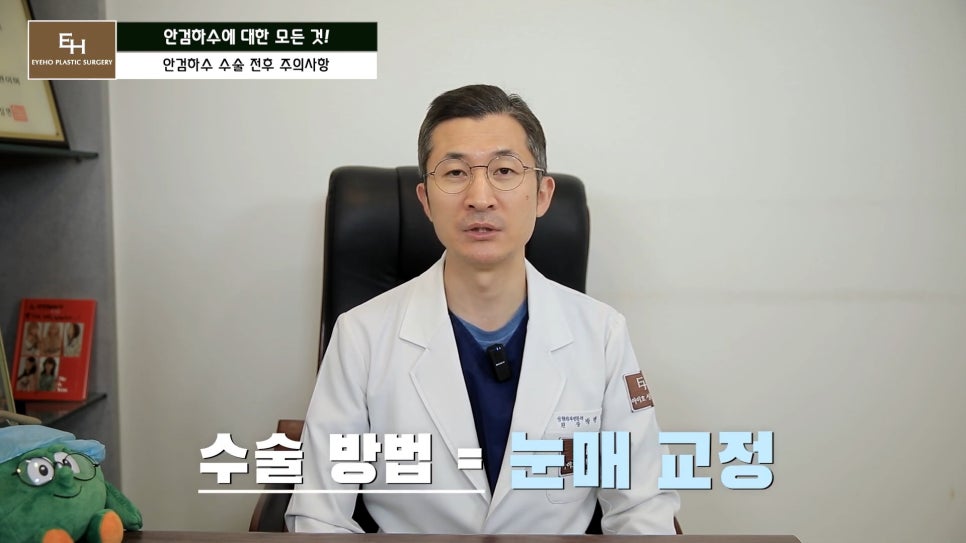
As mentioned earlier, if the eyelids droop and make you look sleepy, or if the drooping eyelids block your field of vision, the first priority is to identify the problem. If the reason the drooping eyelid is covering the pupil is because you cannot open your eyes well, it can be improved with eye correction surgery.
Previous image
Next image
Experience of the medical staff is important.
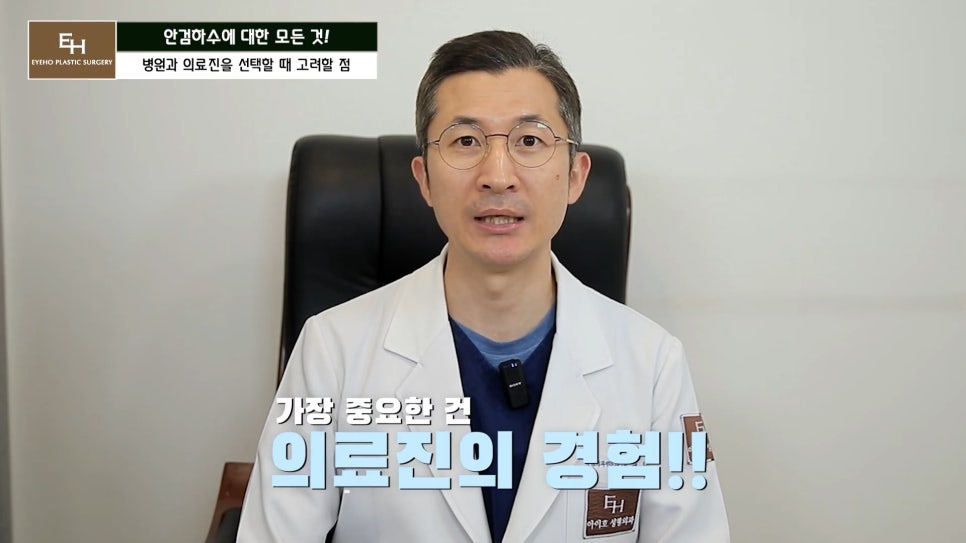
When eye correction surgery is needed, people often hear that using the forehead a lot means it is ptosis, so they may think they must have eye correction surgery. However, if you are examined by a medical professional with a lot of experience, there are cases where double eyelid surgery alone, without eye correction surgery, is enough to create a clear and refreshed eye look.
That is why it is necessary to accurately assess the condition of the eyes.
If your eye muscles are strong enough and it is simply a case of skin covering the eyes, eye correction surgery may not be necessary.
Because it is important to determine the strength of the eye-opening muscles in this way, many people receive treatment at plastic surgery clinics where surgery is commonly performed, rather than at an ophthalmology clinic for ptosis correction.
Things to consider when choosing a clinic
How long it has been in operation
Whether it has specialized services
How much word of mouth it has
Things that are good to check during consultation
It is important to check whether your eyes have ptosis.
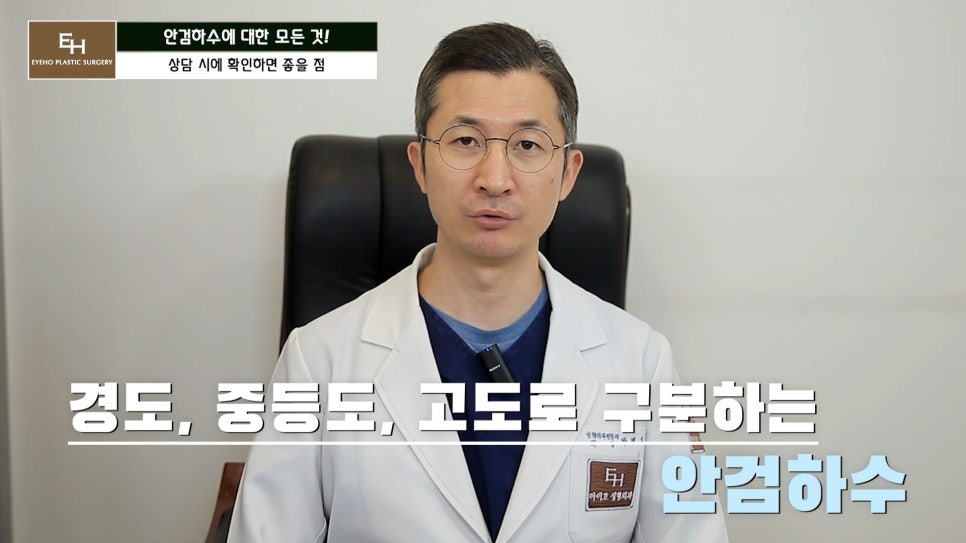
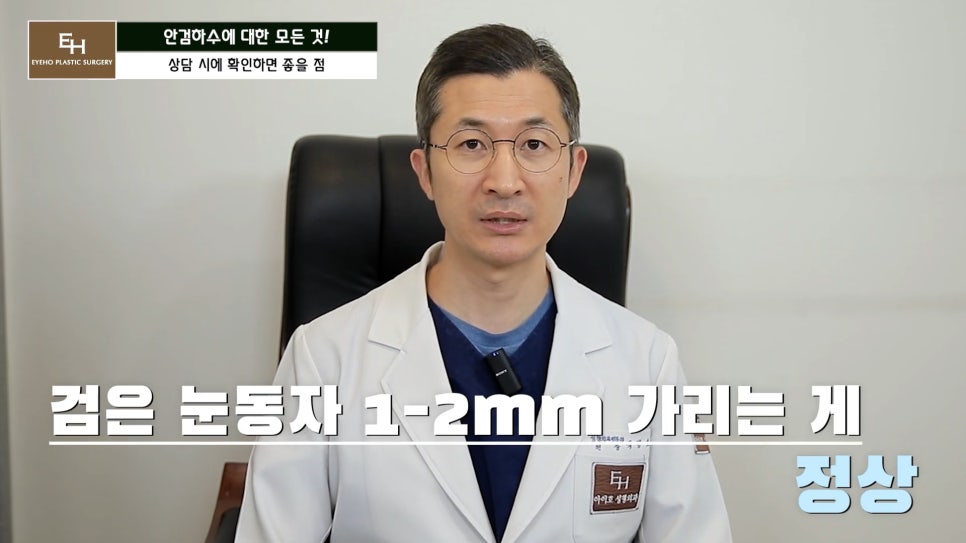
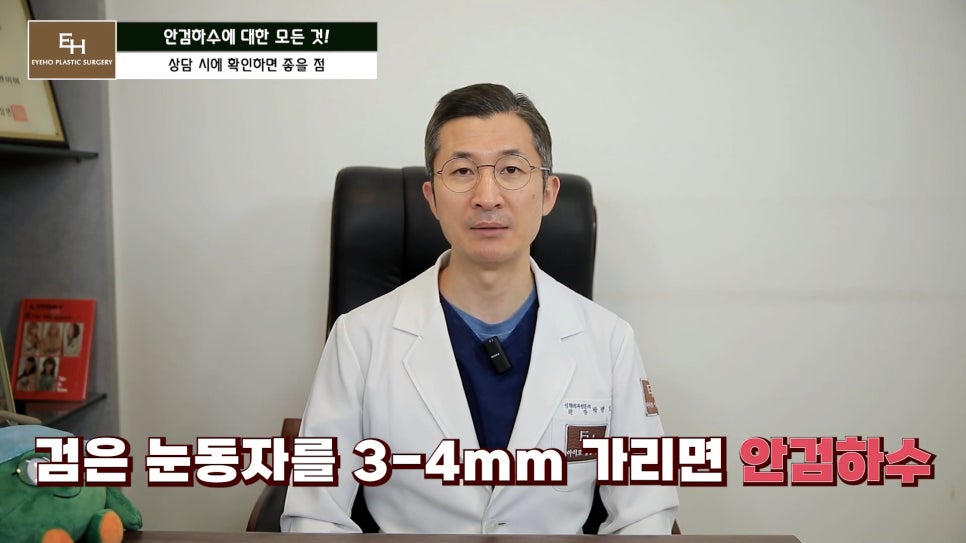
Ptosis is classified into mild, moderate, and severe depending on how much the black pupil is covered. When the eyes are open, it is normal for the black pupil to be covered by 1 to 2 mm, and if more than 3 to 4 mm is covered, it can be considered ptosis.
Previous image
Next image
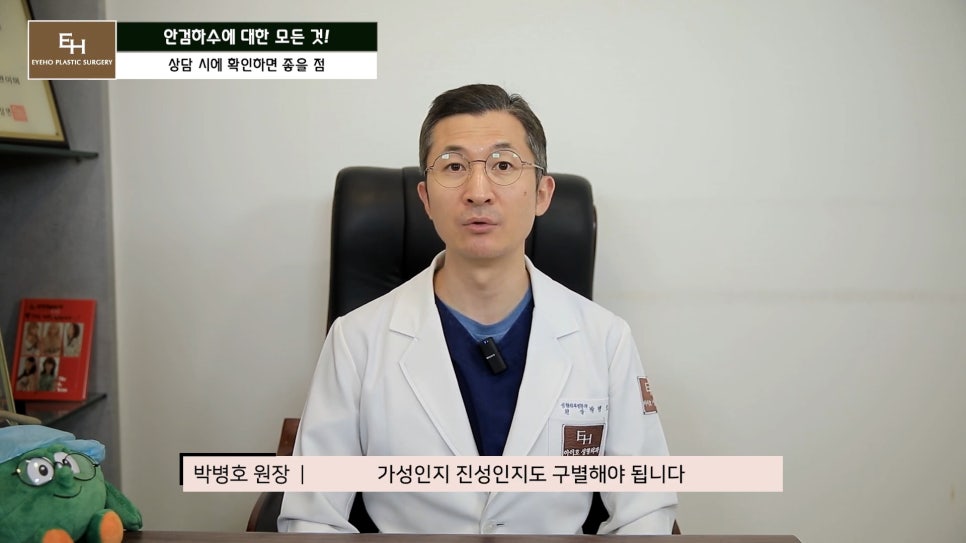
At this point, it is necessary to distinguish whether it is false ptosis or true ptosis.
Just because the black pupil is covered when you open your eyes does not mean it is ptosis. Even if you can open your eyes well, the pupil may be covered because the skin has loosened. In such cases, it may be resolved by removing the sagging skin tissue.
Previous image
Next image
Rather than coming in for consultation already deciding, “I’m definitely going to have eye correction surgery,” I recommend coming in with the possibility that eye correction surgery may be needed.
Are pre-surgery lifestyle habits also important?
It is important not to irritate the area.
Before surgery, you should not use double eyelid tape. If the skin is continuously irritated by repeatedly applying and removing the tape, surgery may not be possible in some cases.
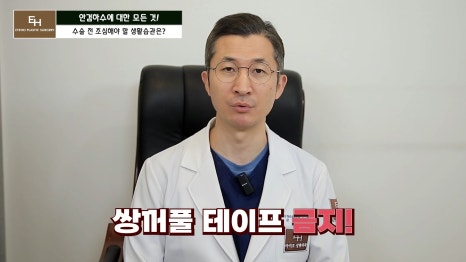
Pre-surgery precautions
Starting one week before surgery, it is best to stop taking aspirin and other anticoagulants, as well as omega-3 and other blood platelet aggregation inhibitors. This is because there will be less bleeding during surgery, which makes the procedure a little easier for the medical staff, and for the patient it may also reduce swelling because there will be less bleeding.
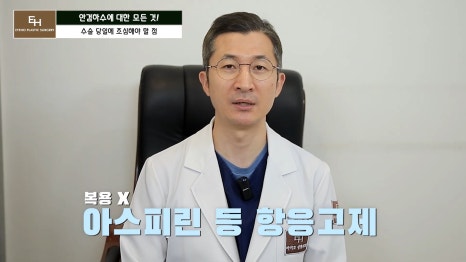
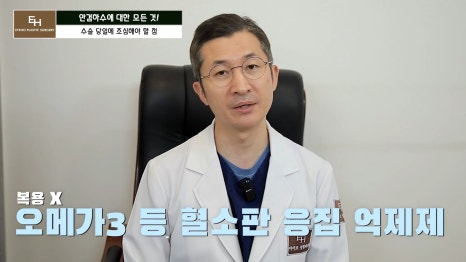
However, if it is an important medication—for example, a heart medication for another condition that should not be stopped—you may take it on the day of surgery with a small amount of water. It is also a good idea to consult your primary doctor and confirm whether it can be stopped on the day of surgery.
You do not necessarily have to stop every medication you are taking.
Anesthesia-related matters
When having plastic surgery, either sedation anesthesia or local anesthesia is used. No matter which anesthesia method is chosen, fasting is essential.
For sedation anesthesia, you must fast starting 6 hours before the procedure, and for local anesthesia, starting 2 hours before.
Sometimes people ask, “Can’t I just drink a sip of water?” No, you cannot!!
If you consume water, candy, or gum, gastric fluid will be secreted, and this can later develop into pneumonia, so you must be very careful.
No alcohol or smoking
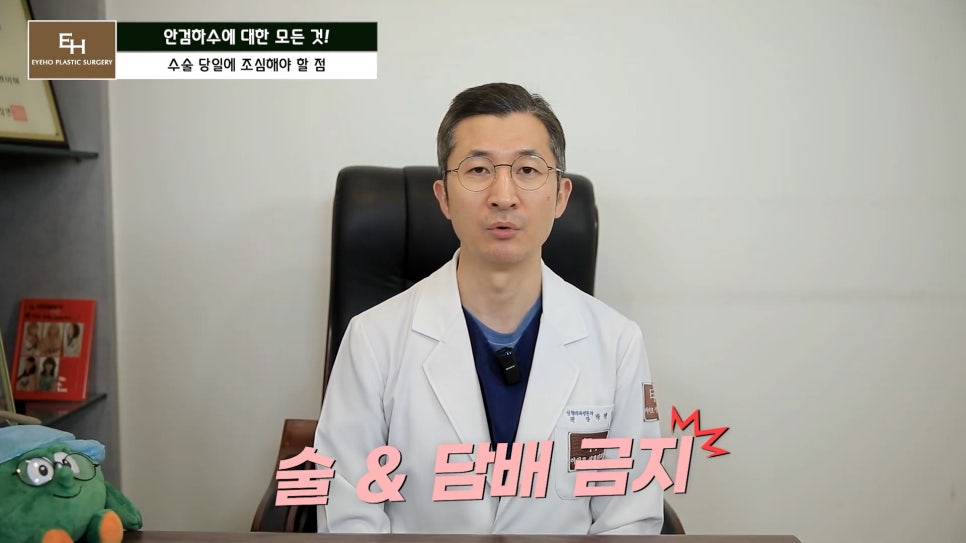
Smoking, which affects tiny blood vessels, inevitably slows recovery.
And sometimes people say, “I didn’t smoke,” but going to places like clubs filled with cigarette smoke can also have an effect, so please keep that in mind.
Precautions after surgery
As before surgery, you should not irritate the area.
Also, and most importantly, you should practice opening your eyes without using your forehead.
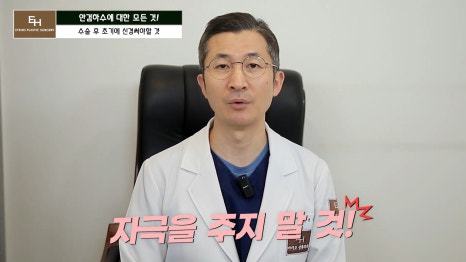
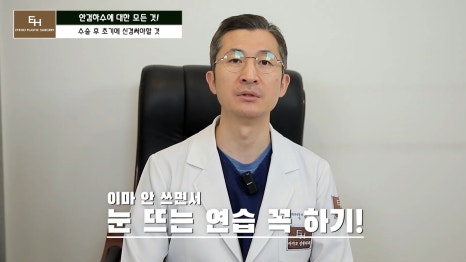
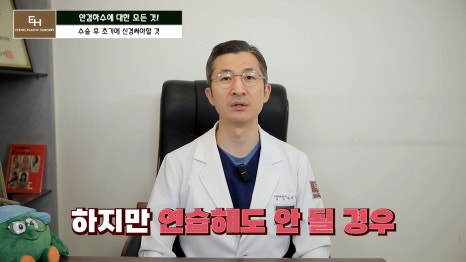
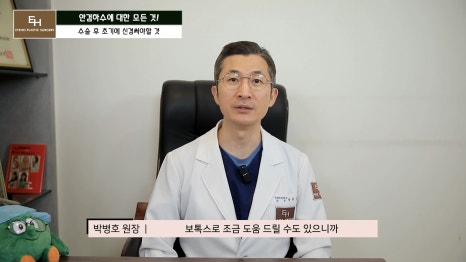
Practicing opening your eyes without using your forehead may help the surgically created line settle in more naturally and may also help reduce swelling. However, if it is still difficult to open your eyes without using your forehead even after practice, I would recommend getting help from Botox.
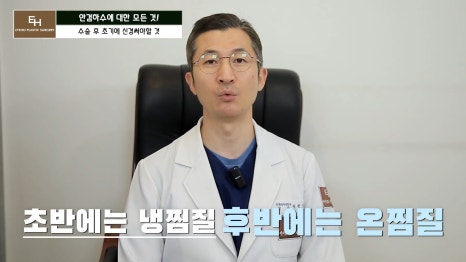
You should use cold compresses until the third day after surgery, and start warm compresses after 10 days.
Light exercise or walking can help with swelling and recovery.
Things to be careful about in daily life
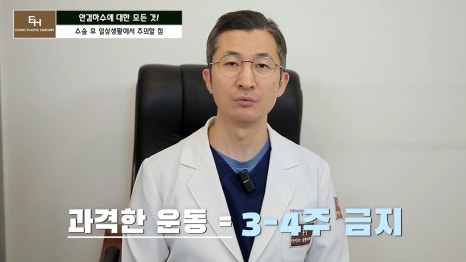
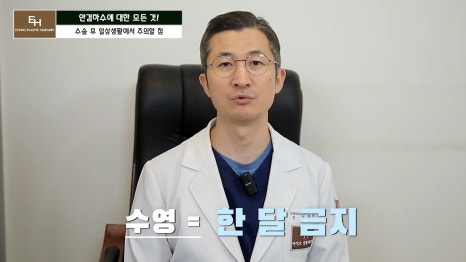
It is best to avoid strenuous exercise and swimming for about a month. During this period, walking is very good as long as you do not overexert yourself.
Of course, it is better to avoid alcohol and smoking until recovery is complete.
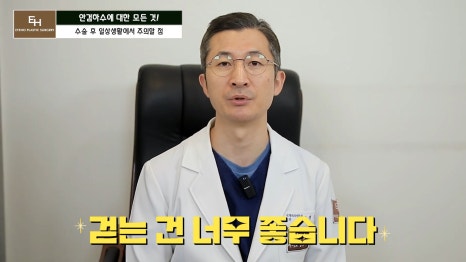
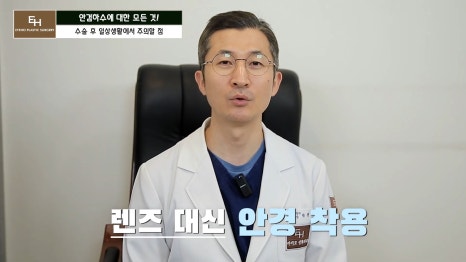
I mentioned that you should avoid irritation. Wearing contact lenses or applying makeup can irritate the eyes, so I recommend wearing glasses rather than contact lenses, and starting after 3 to 4 weeks.
However, if you have something important or absolutely need to do it, let us know in advance, and depending on the patient’s condition, we can tell you whether it may be possible a little earlier.
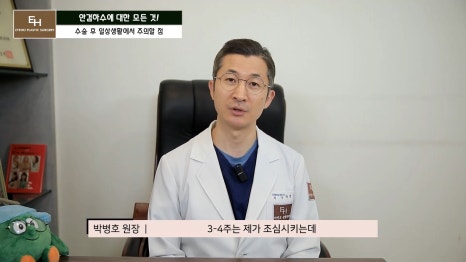
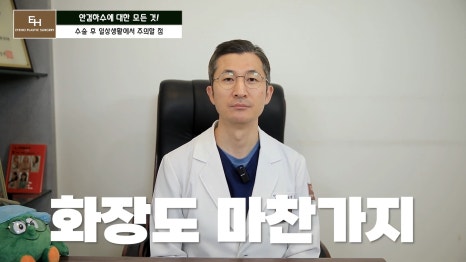
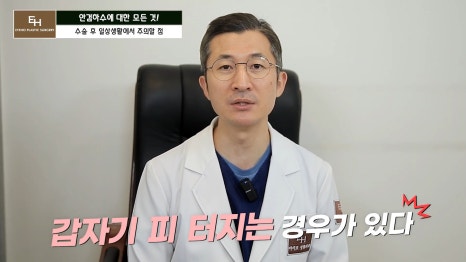
If you bend your head down, blood will rush to your face. The same can happen when washing your face, or if energy suddenly flows toward the face, causing bleeding. In such cases, you can contact the clinic or come in for a visit. It is a temporary phenomenon, so there is no need to worry too much.
Is a post-surgery hospital visit important?
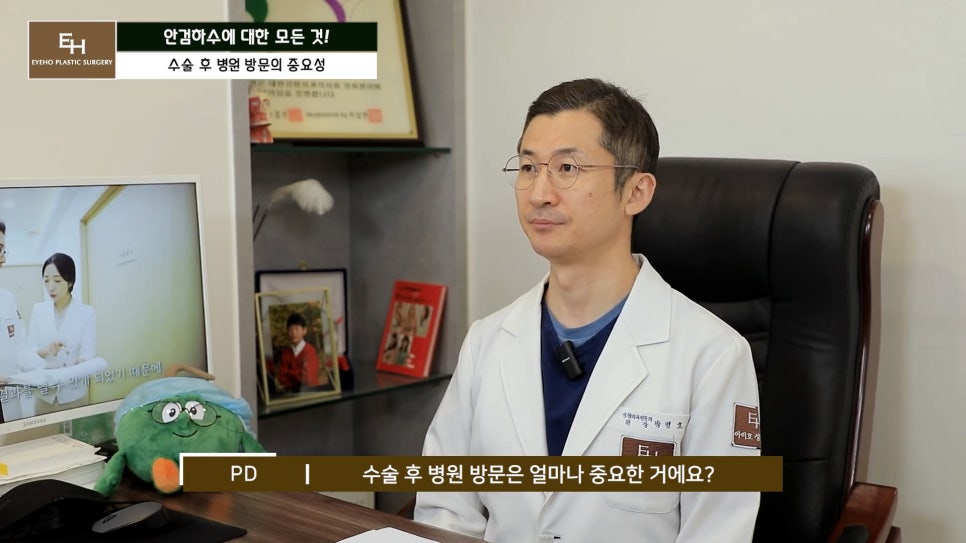
Surgery is the most important part, but follow-up observation afterward is also important.
By checking how the surgical area is changing, whether any additional measures are needed, whether scarring is becoming severe, and whether the swelling is more severe than expected for the healing process, appropriate medication or injections can be prescribed so that you can achieve a more stable result.
Previous image
Next image
It is not a good idea to search online and decide, “My symptoms are like this, so this is what I should do.” That is because even when the surgery is the same double eyelid surgery or eye correction surgery, the condition and form differ, so the response methods that should be applied will also differ.
The most necessary part is
You could say it is your mindset.
If you love yourself and avoid irritation so that the surgical area can heal well, you will likely be able to achieve the result you want.