
It would be best if, even after a long time following rhinoplasty,
the nose could maintain its original shape without any changes.
However, if an artificial implant was used
to raise the bridge or tip of the nose,
the body may recognize the implant as a foreign object
and cause problems such as an inflammatory reaction.
In some cases, inflammation develops soon after surgery,
causing redness or swelling of the nose,
but there are also cases where small, subtle inflammation inside the nose
is not noticed and left untreated,
leading to major problems later on.
In particular, contracture caused by changes in the capsule surrounding the implant,
which makes the nose shorter and gradually turn upward,
is considered one of the worst complications in rhinoplasty
and is known for being extremely difficult to treat with revision surgery.
If you are experiencing symptoms of contracture nose,
you should look into treatment and surgery methods that help prevent recurrence
at a hospital that is skilled in contracture nose revision surgery.
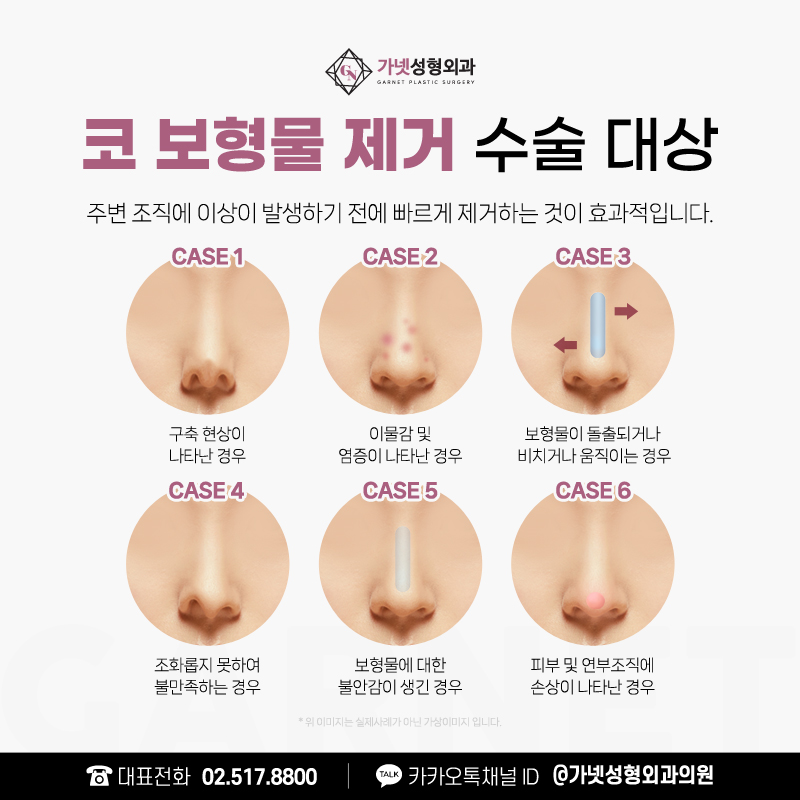
If you are noticing signs of contracture, or if you feel discomfort
or inflammatory symptoms from the implant,
the first step is usually to remove the problematic implant
through nasal implant removal.
In particular, if the skin is thin and the implant is visible,
or if there is damage to the skin or soft tissue
that causes redness and pain,
contracture may occur, so quickly
consult with a hospital that is skilled in contracture nose revision surgery
to decide on implant removal.
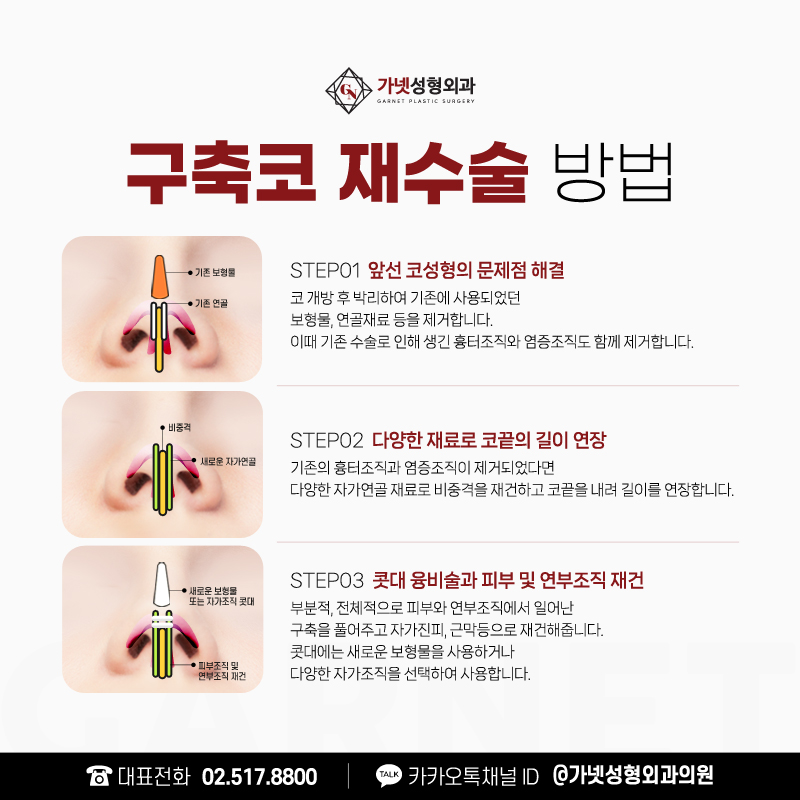
Contracture nose revision surgery is performed by opening and dissecting the nose,
then removing the previously used implant or cartilage material
to address the problems from the earlier surgery.
At this time, inflammatory tissue or scar tissue caused by the previous surgery
must also be removed together.
In addition, hospitals skilled in contracture nose revision surgery
carefully release the contracture that has occurred in the skin and soft tissue,
whether partial or extensive.
After that, reconstruction can be performed using autologous dermis and fascia,
and a new implant may be used for the bridge of the nose
to recreate the shape.
However, what is important here is
the choice of implant material.
If an artificial implant like the one used in the previous surgery is used again,
it may create a more dramatic look,
but you must be careful because the same complications could happen again.
Therefore, during revision surgery, using autologous cartilage
can be considered to improve safety.
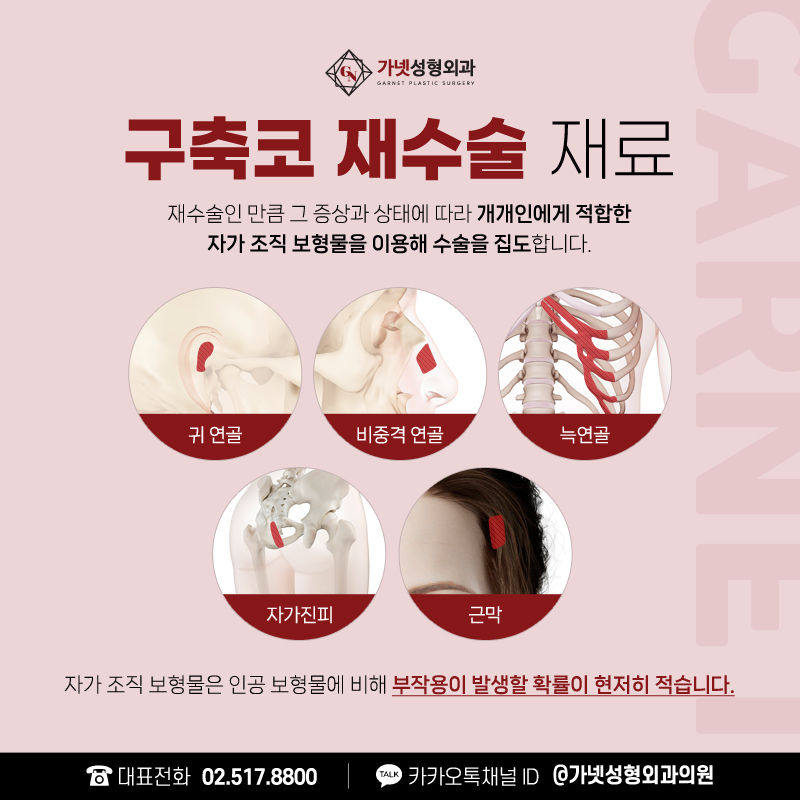
Hospitals skilled in contracture nose revision surgery
perform revision surgery using ear cartilage, septal cartilage, rib cartilage,
autologous dermis, and fascia,
which can reduce the likelihood of complications
compared with artificial implants.
Therefore, when deciding on material for revision surgery,
it is best to have a thorough consultation with the medical team
to carefully choose the material that suits you best,
or the one that fits the design of the nose line during revision surgery.
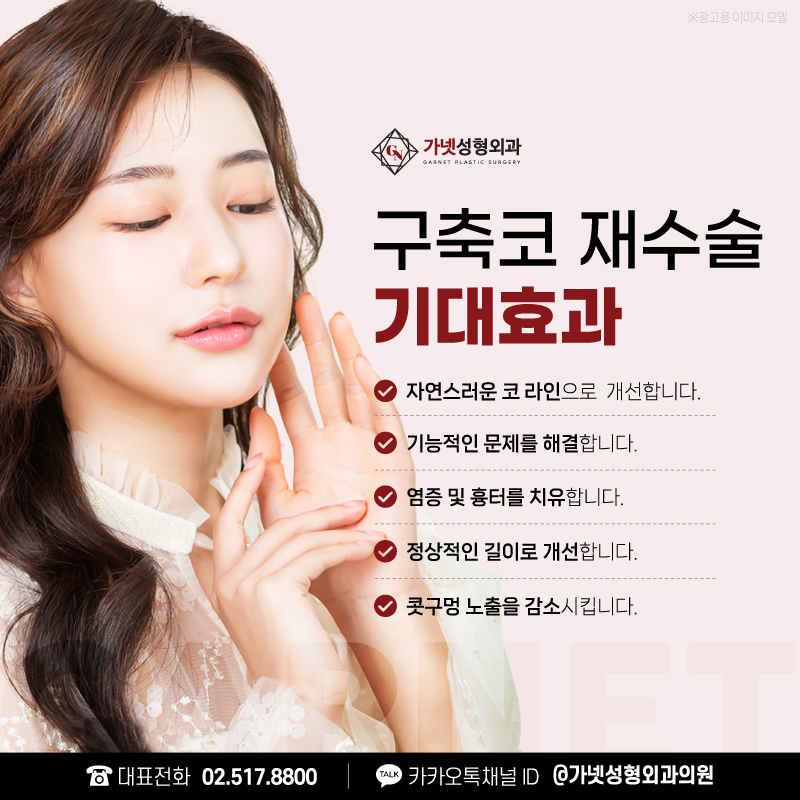
Contracture nose revision surgery is a procedure that improves the shortened
and upward-turned shape of the nose,
while also addressing functional problems such as nasal obstruction,
and its purpose is to treat internal inflammation and scar tissue.
When the nose begins to turn upward due to contracture,
the nostrils become more exposed,
which makes the appearance look unnatural and can also cause discomfort in social life.
If these symptoms appear, it is wise to visit a hospital as soon as possible
to determine the timing and method of revision surgery.
If you would like to learn helpful tips through the video,
including which cases require rhinoplasty revision,
the surgical methods, and the timing of surgery,
please take a look.
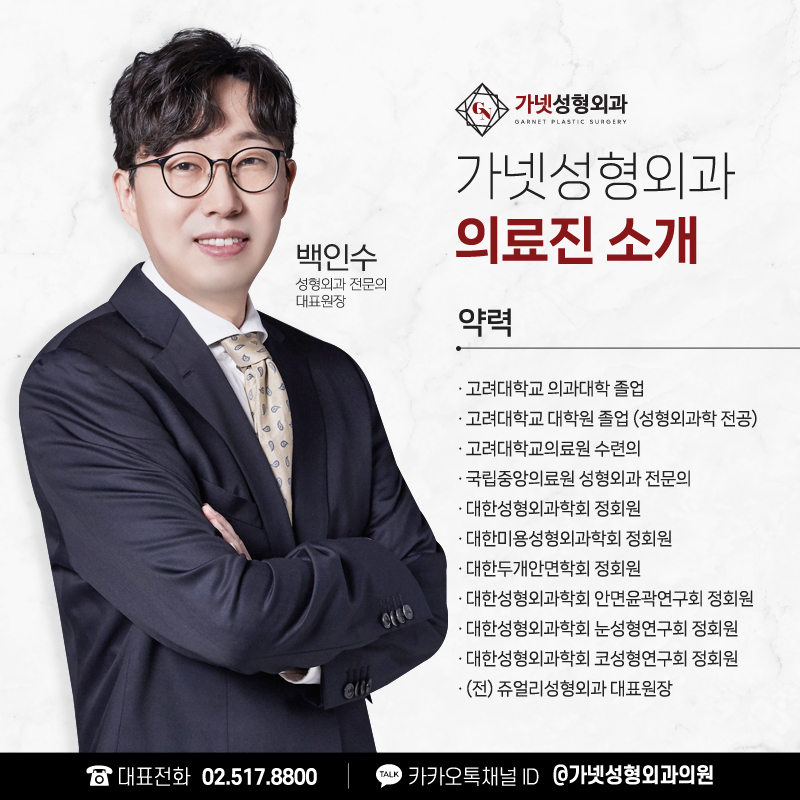
A hospital skilled in contracture nose revision surgery,
Garnet Plastic Surgery, provides careful one-on-one consultation and surgery
with Director Physician Baek In-soo.
When performing rhinoplasty revision,
to ensure that the same problem does not require another revision later,
we carefully assess the condition through preoperative examinations using various devices,
and while reflecting each patient's individual needs,
we also design the nose with consideration for harmony with facial proportions
and overall face shape in order to provide a high level of satisfaction.
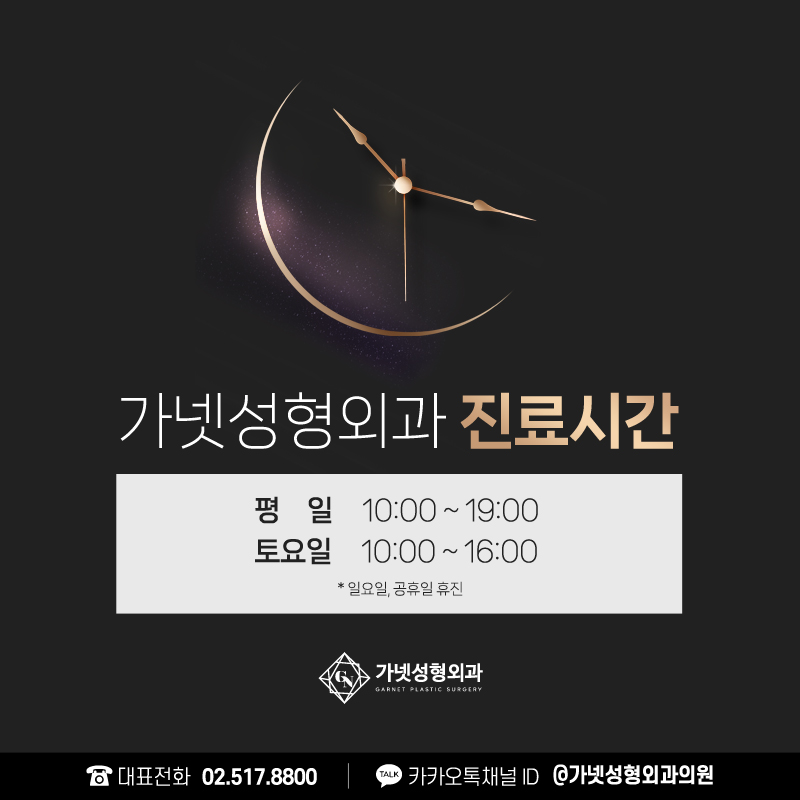
Our clinic is open until 7 p.m. on weekdays
and until 4 p.m. on Saturdays, so please keep this in mind when visiting.