One of the side effects that people who have had nose surgery fear the most
is contracted nose.
A contracted nose refers to a condition in which the nose becomes hard and is pulled upward
as inflammation and foreign-body reactions repeat after nose surgery.
Because of this, after nose surgery using an implant,
it is important to carefully check whether inflammation has occurred,
whether there are no particular symptoms,
and whether the tip of the nose seems to be gradually rising.
If you think a contracted nose has developed,
seeking consultation at a clinic that is skilled in contracted nose revision surgery is the top priority.
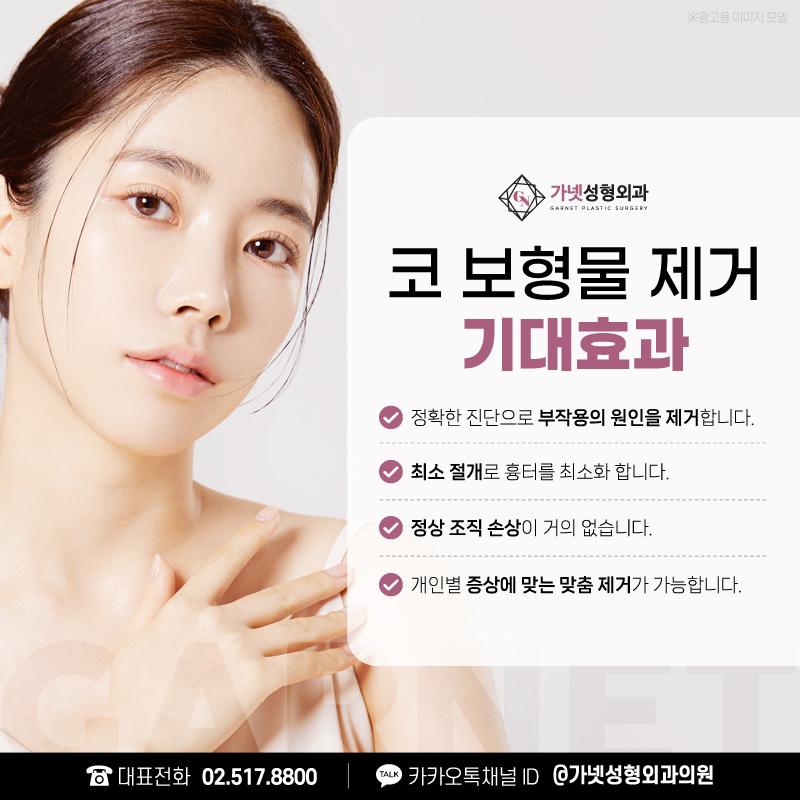
First, the implant used in the previous nose surgery
must be removed.
Since the implant is the cause of the side effects,
an accurate diagnosis and prompt removal are important.
The procedure should minimize scars with the smallest possible incision,
and it requires delicate technique so that the surrounding normal tissue is not damaged.
Before proceeding with contracted nose revision surgery,
the internal condition of the nose must first be restored
through customized removal of foreign material according to the symptoms.

When removing the implant,
scar tissue or inflammatory tissue caused by the previous surgery
must also be removed.
Using various cartilage materials, the septum is reconstructed
and the tip of the nose is lowered to lengthen it.
If you compare cases before and after contracted nose revision surgery,
you can see a naturally improved appearance as the shortened, upward-turned tip of the nose
is lengthened.
After releasing partial or full contracture
and reconstructing the tissue with autologous dermis or fascia,
a new implant or autologous tissue can be used on the bridge of the nose
to create the desired line.
When performing contracted nose revision surgery,
rather than using an artificial implant again,
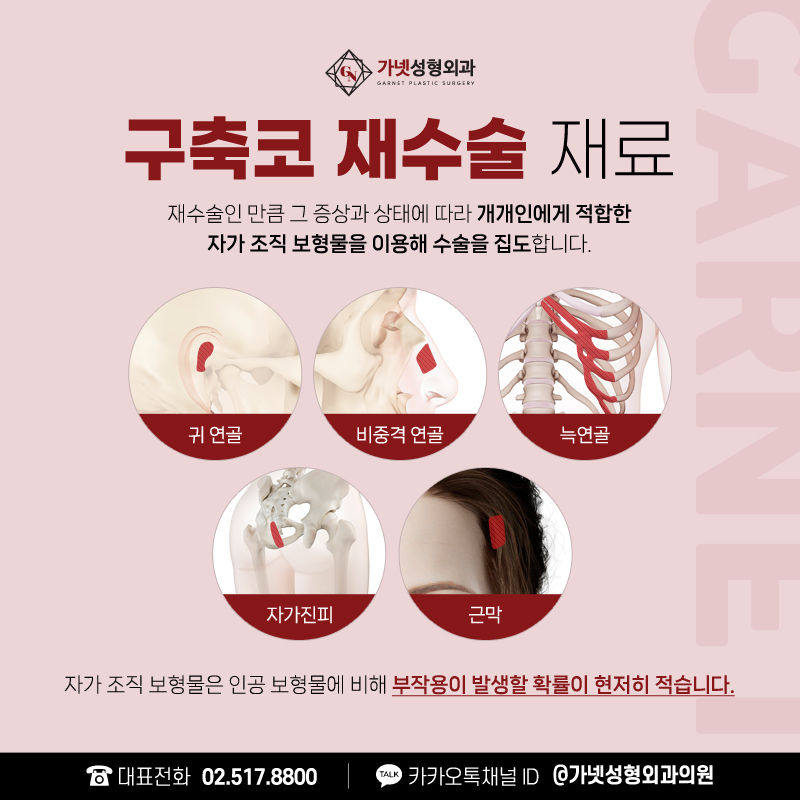
it may be wiser to use autologous tissue.
Because our body recognizes artificial implants as foreign bodies,
contracture may occur again.
To minimize such side effects,
autologous dermis or fascia, ear cartilage, septal cartilage,
and rib cartilage should be used.
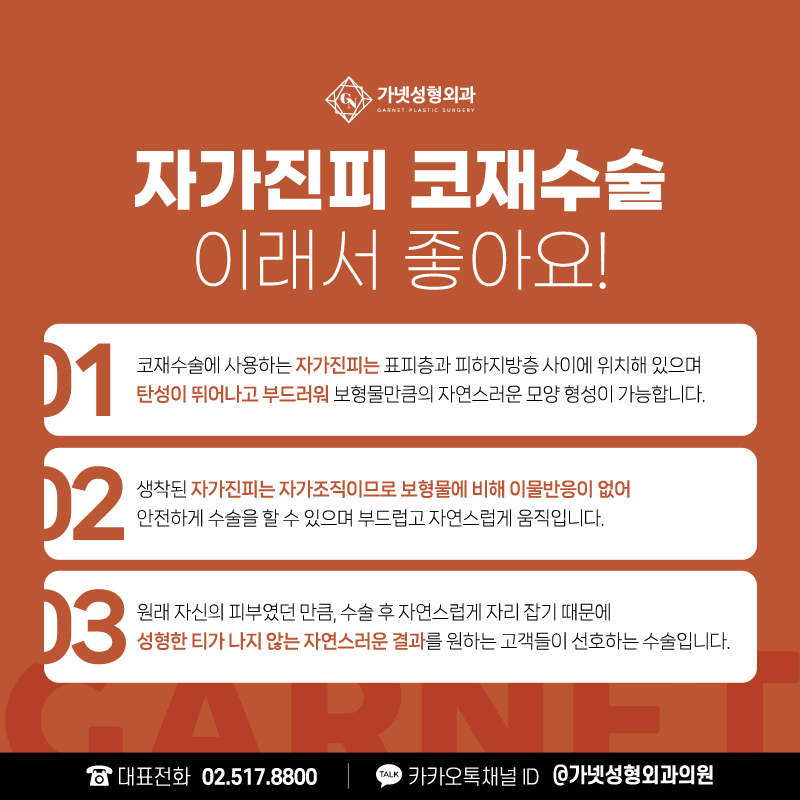
Among these, revision rhinoplasty using autologous dermis
requires a great deal of know-how.
Autologous dermis can be harvested from the buttocks or thighs
and processed into the desired shape for use,
which is an advantage.
Because it is autologous tissue,
there is no foreign-body reaction compared with artificial implants,
so relatively safe surgical results can be expected.
In addition, because it settles in naturally,
it does not look like plastic surgery,
and it is characterized by excellent elasticity and softness.
It can be designed and applied to match the desired line,
which is why it is one of the more popular materials.
Therefore, if you are considering contracted nose revision surgery,
you should carefully learn which type of implant material is suitable for you,
what to watch out for if you want to avoid additional revision surgery,
and whether the clinic has strong expertise in revision rhinoplasty.
Also carefully check before-and-after photos of revision rhinoplasty
before proceeding. :)
Please learn the key tips for a successful revision rhinoplasty
through the video above!
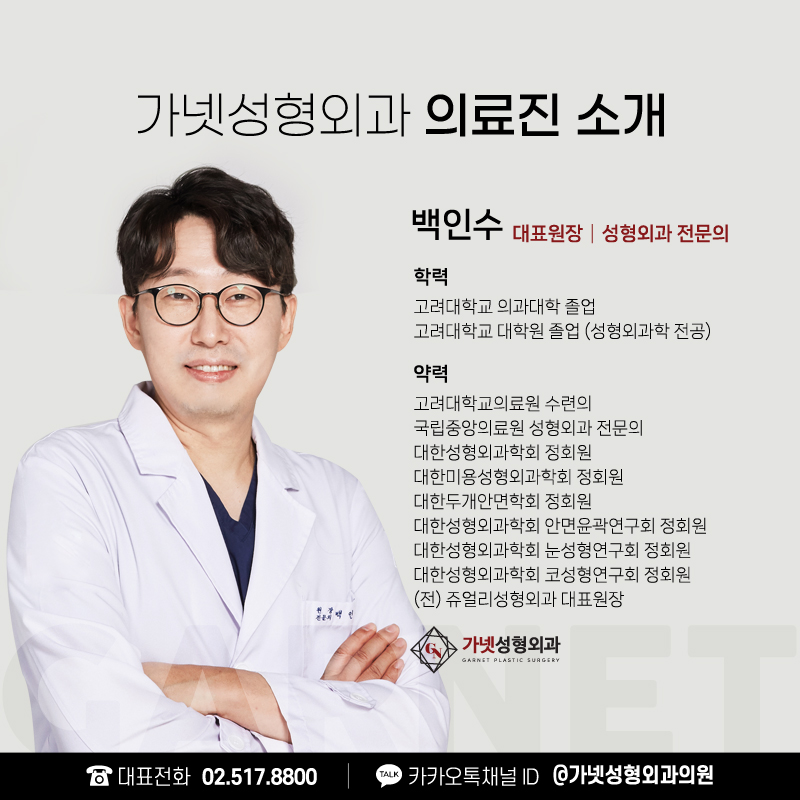
Dr. Baek In-su of Garnet Plastic Surgery
is a board-certified plastic surgeon with over 20 years of experience.
Based on his experience meeting many patients at a large plastic surgery clinic,
he has developed skilled technique and know-how.
He strives to help you confirm results that are as satisfying as possible,
even for difficult and sensitive revision nose surgeries such as contracted nose surgery.
If you are 고민 about revision surgery,
please consider making a decision after a consultation.
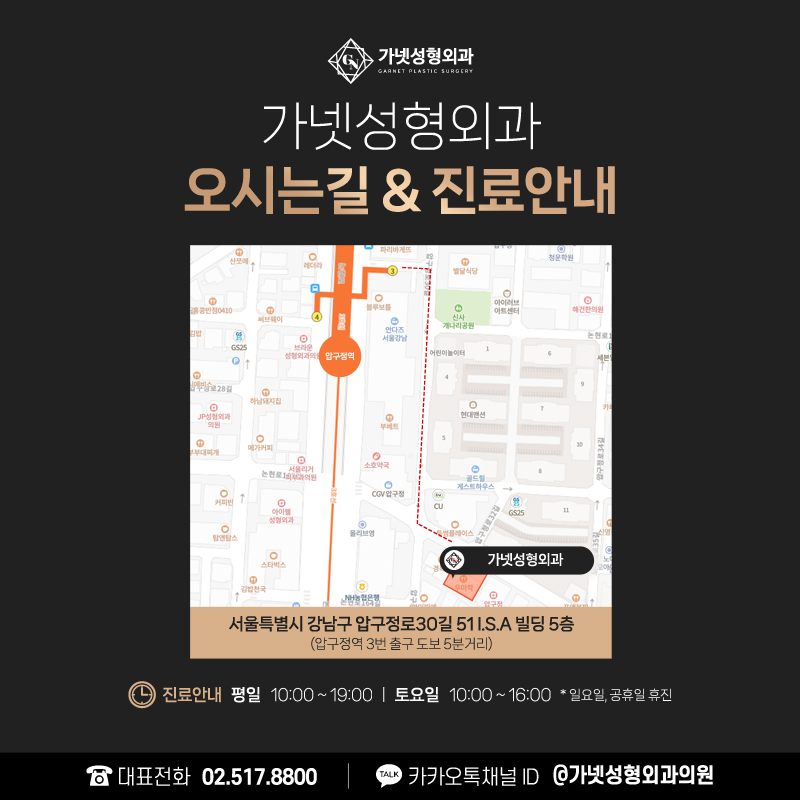
Garnet Plastic Surgery, which performs contracted nose revision surgery,
is located a 5-minute walk from Apgujeong Station Exit 3,
so please keep this in mind when making a consultation appointment and visiting.