If not much time has passed since nose surgery
and the tip of the nose keeps turning red, or the area between the eyebrows becomes swollen,
you may want to suspect a side effect of contracted nose.
In addition, even if a long time has passed
since the surgery,
the tip of the nose may gradually lift upward
and the nose may become shorter over time.
In such cases of contracture,
the shape needs to be corrected again through nose reconstructive surgery.
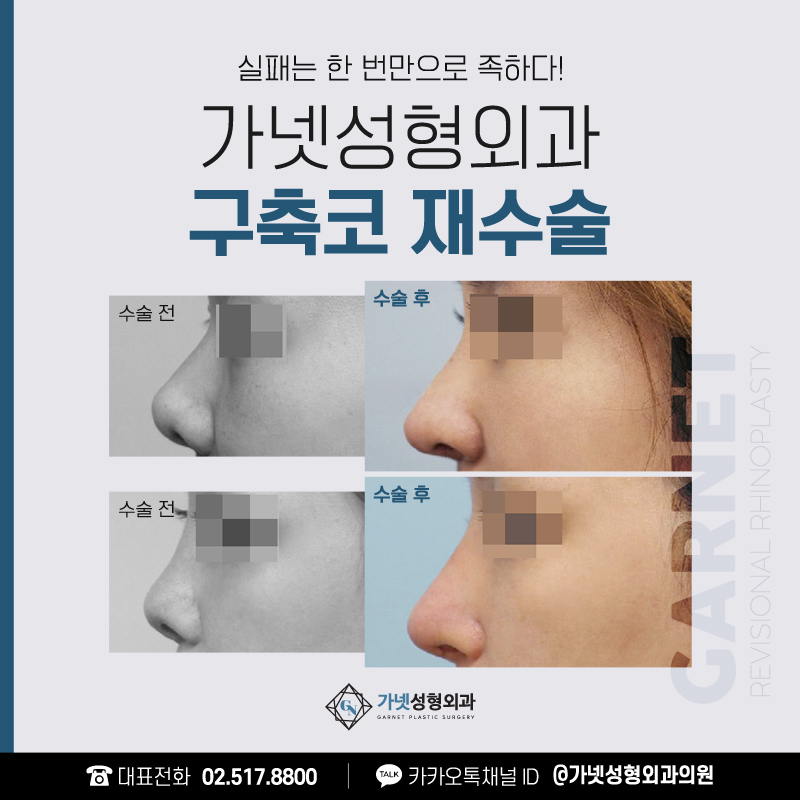
A contracted nose can make breathing difficult
and also cause functional discomfort such as pain and swelling
due to inflammation, but
because the deformed appearance also causes significant stress
in daily life,
many people visit the hospital for treatment.
Also, when contracted nose occurs once,
many people worry whether contracture will occur again
even after nose reconstructive surgery.
Usually, when performing nose surgery, synthetic materials such as silicone are used
to raise the bridge or tip of the nose,
but if these materials are recognized by the body as foreign substances
and trigger an inflammatory response,
the likelihood of contracted nose becomes high.
Therefore, if silicone is not used during revision surgery,
the likelihood of contracture may decrease.
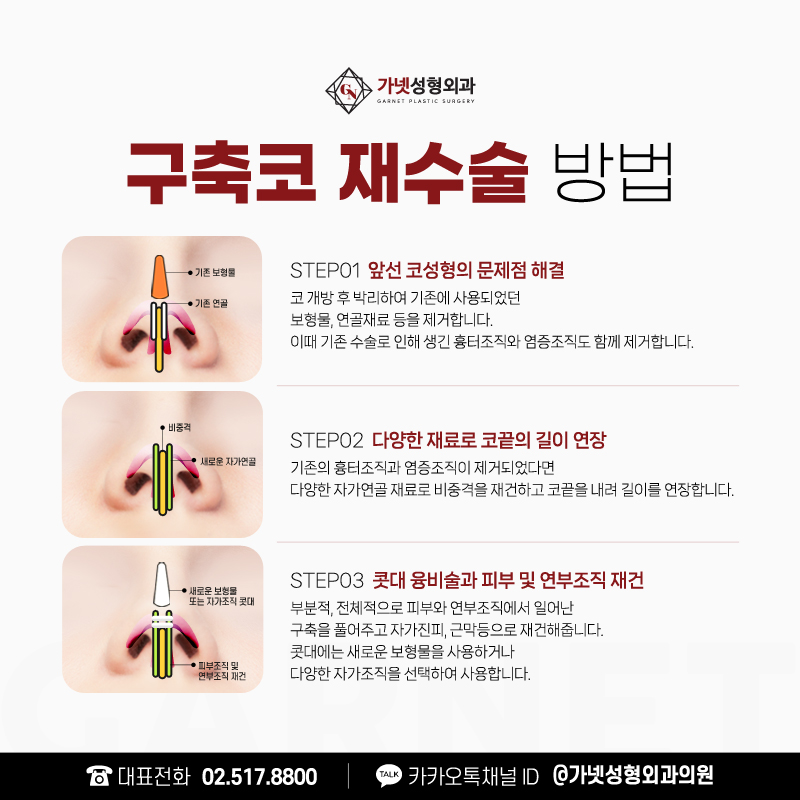
First, when performing nose reconstructive surgery,
the previously used implant or cartilage materials
are removed, and then scar tissue and inflamed tissue are also
carefully removed to prevent further side effects
after the revision surgery.
After that, the nose can be reconstructed using various materials.
At this time, rather than using synthetic materials such as silicone again,
if reconstructive surgery is performed using various autologous tissue materials,
the survival rate is high and the result looks natural,
which can reduce the likelihood of side effects.
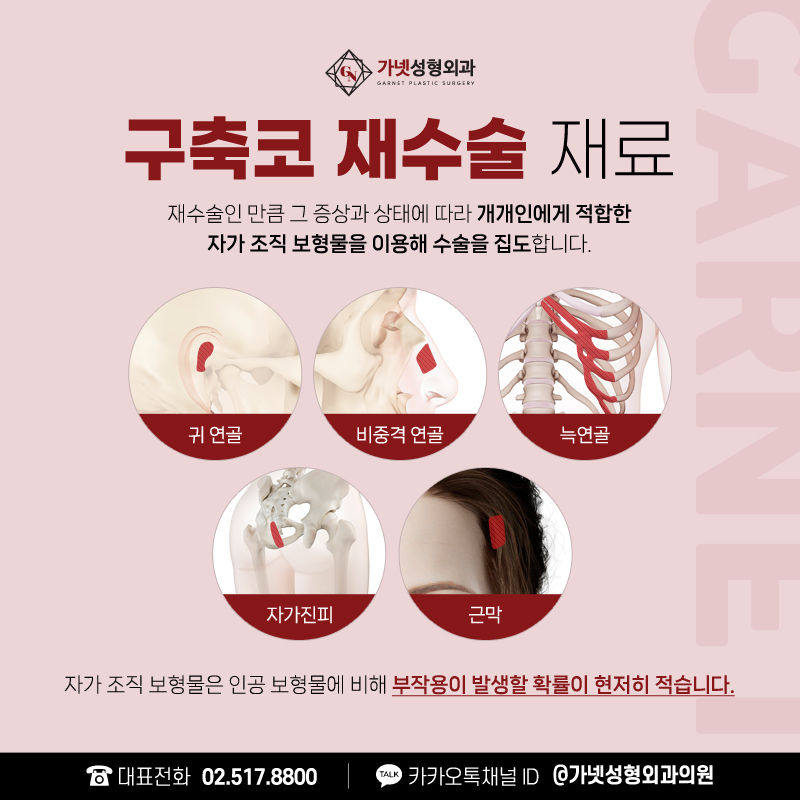
Autologous tissue materials include ear cartilage,
septal cartilage, and costal cartilage,
and the length of the nose can also be increased
or the bridge can be reconstructed using autologous dermis and fascia.
That said, when performing contracted nose reconstructive surgery,
it is not necessary to use only autologous tissue.
Depending on each patient’s condition
and the purpose of the procedure, even if silicone is used again,
it does not necessarily mean that contracture will recur 100%.
Therefore, after consulting with a board-certified plastic surgeon,
it is advisable to choose the implant material that is right for you.
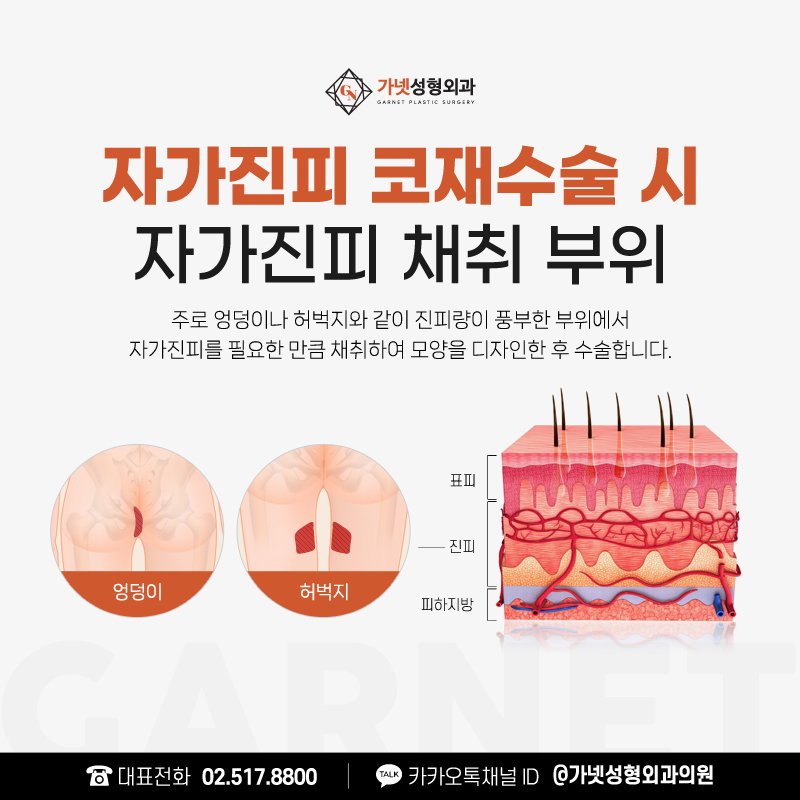
At our clinic, revision nose surgery using autologous tissue is also performed.
Autologous dermis, in particular, is a method of harvesting abundant dermis
from the buttocks or thighs and using it in nose reconstructive surgery.
When autologous dermis is used,
the survival rate is high, so the prognosis after revision surgery is good,
and because it uses one’s own skin,
the shape does not look awkward and is natural,
allowing for greater satisfaction.
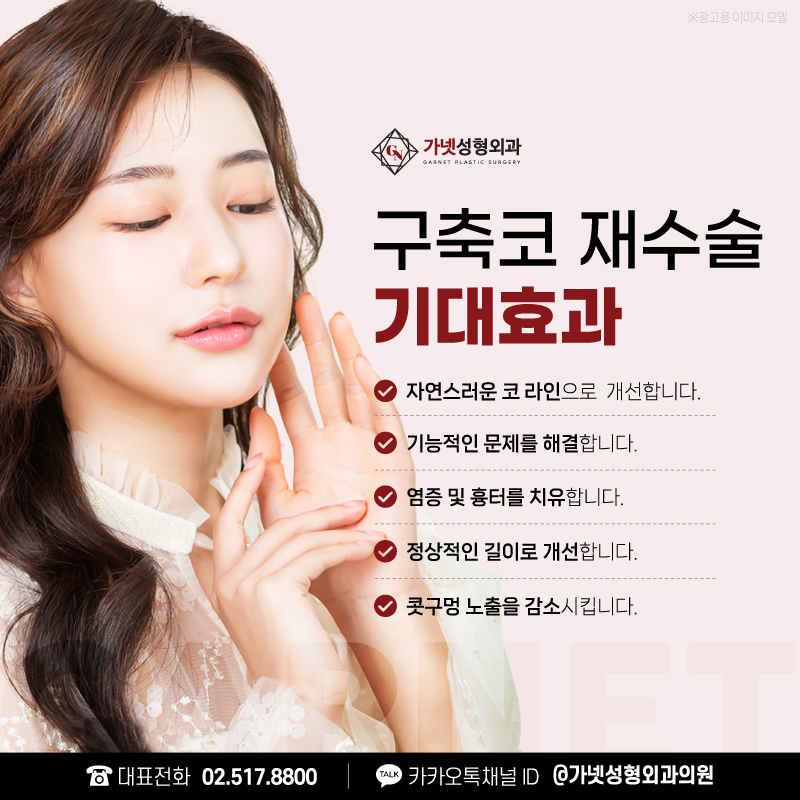
The biggest advantage of undergoing contracted nose reconstructive surgery
is that an unnatural and awkward nose shape can be improved
into a natural and beautiful line,
and by restoring the nose to a normal length
and reducing nostril exposure,
it becomes possible to regain daily life that had been stressed by the deformed nose shape.
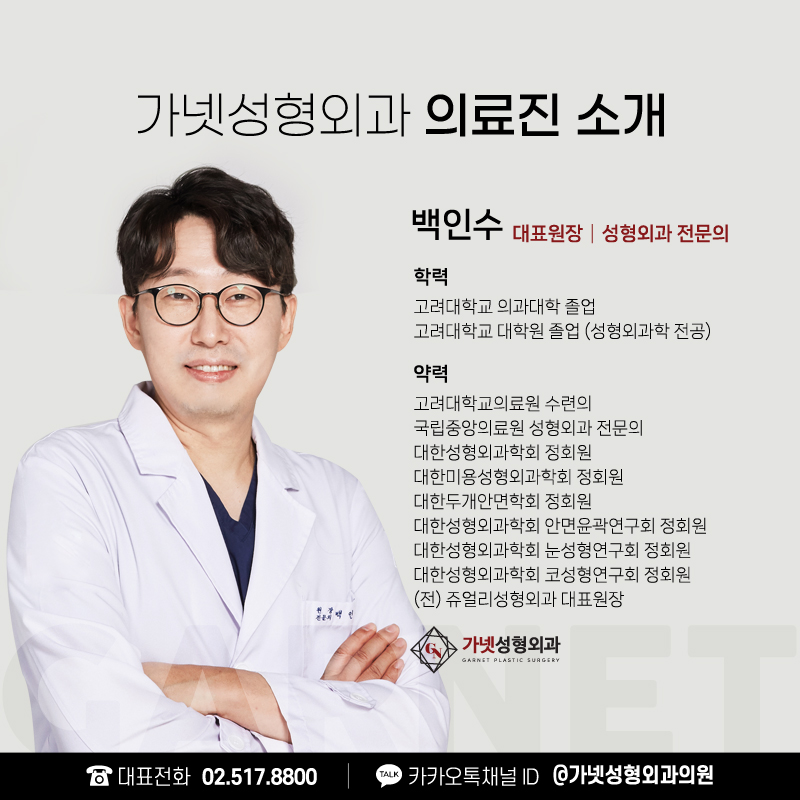
Director Baek In-soo of Garnet Plastic Surgery has extensive know-how,
having performed surgery on a patient who came in for their ninth nose revision surgery :)
Please check the video to resolve any questions you may have about revision nose surgery!
When someone develops contracted nose,
the stress about the appearance can be severe,
so many patients come for consultation
with a strong hope that it will never recur again.
As a board-certified plastic surgeon,
Director Baek In-soo of Garnet Plastic Surgery
uses his long experience in revision nose surgery
to clearly identify the cause of the contracted nose
and, with care for each patient’s feelings,
does his utmost in revision surgery to restore the function and shape of the nose as much as possible.
This allows patients to feel greater satisfaction
and to feel reassured.