From Director Baek In-su of Garnet Plastic Surgery
Doctor's Note
Hello^^ I’m Baek In-su, the chief director of Garnet Plastic Surgery and a board-certified plastic surgeon.
Today, I’ve brought another surgical case that may be helpful.
I hope this will be useful for anyone considering double eyelid revision surgery or ptosis correction surgery.
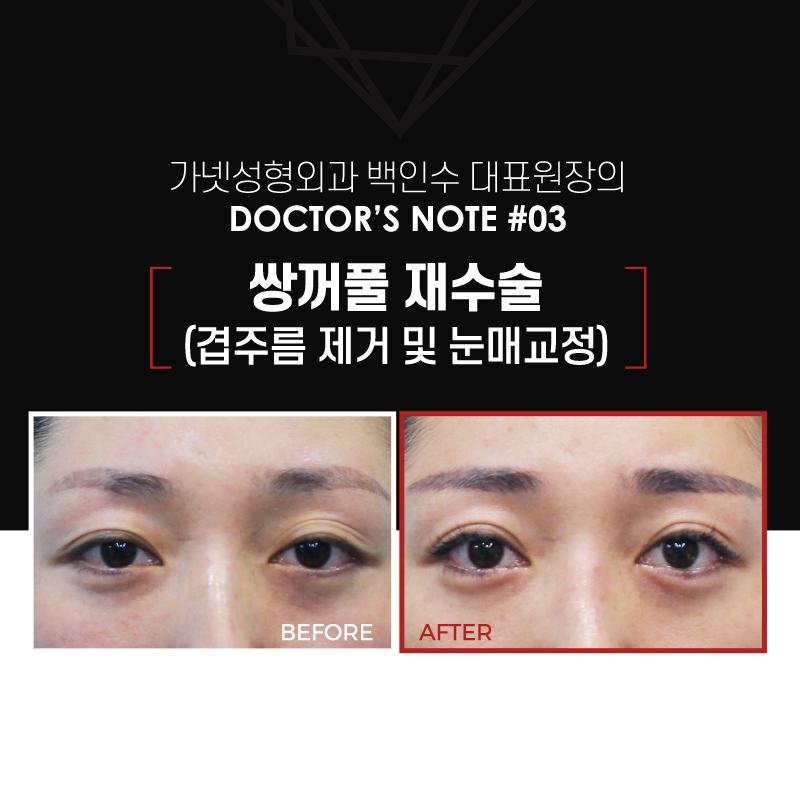
Today’s case is a double eyelid revision case for a woman in her 30s who visited after her double eyelid crease loosened following a buried-suture (non-incisional) double eyelid surgery performed several years ago.
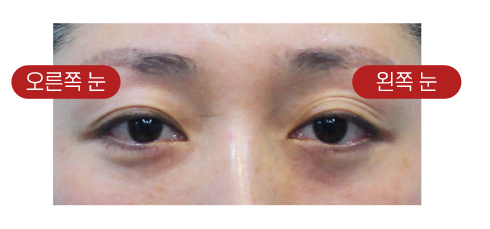
After the buried-suture procedure, the double eyelid crease was well maintained in the right eye (left side in the photo), but
in the left eye (right side in the photo), the crease had loosened and multiple overlapping folds had formed.
The patient had undergone buried-suture double eyelid surgery before
and remembered being fairly satisfied with the result,
so she wanted to have revision surgery with the same buried-suture method again.
However, in cases like this, if you simply assume the crease has loosened and perform revision surgery with the buried-suture method,
the current problem often is not resolved, or even if it is resolved, it often recurs.
Preoperative Diagnosis
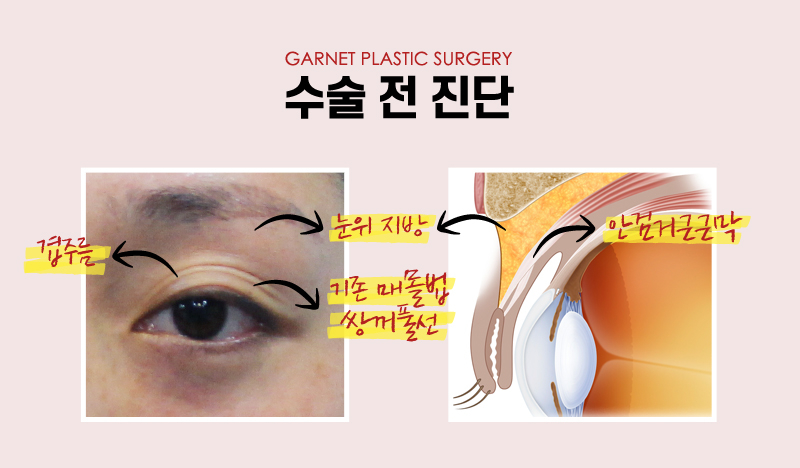
Looking at the preoperative photos, the upper eyelids are slightly hollow,
and the double eyelid line does not appear evenly formed.
There is also a set of multiple folds above the crease that was previously created with the buried-suture method.
The eyelid opening strength is not a major issue,
but aesthetically there is room for improvement.
In other words, this is a case where ptosis correction is needed.
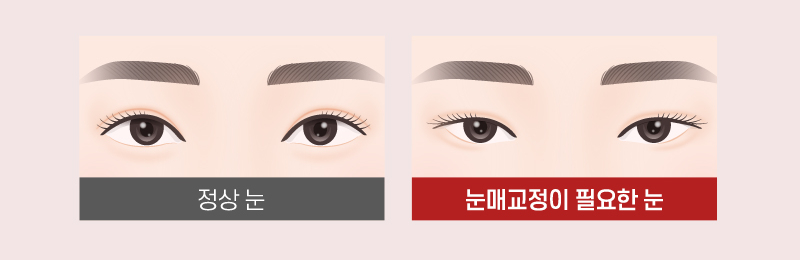
Ptosis correction surgery is also called blepharoptosis correction,
and it refers to improving eyelid-opening strength to achieve a more beautiful-looking eye, even when there is no functional problem.
The patient understood the cause well,
and changed her original plan of having surgery with the buried-suture method to having surgery with the incisional method.
Surgical Procedure
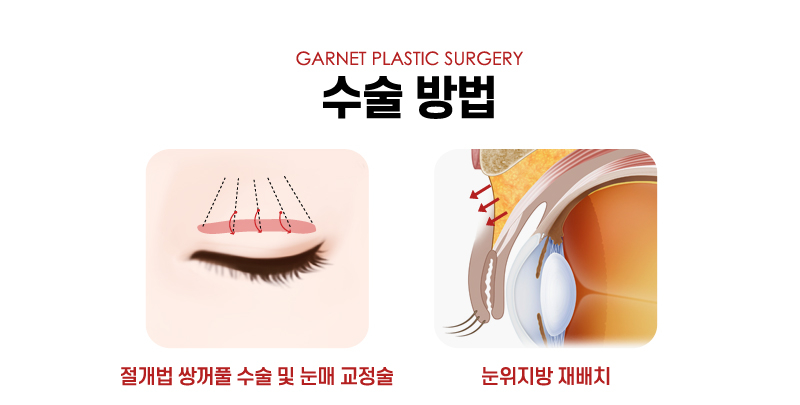
The surgery was performed using the incisional double eyelid method,
and ptosis correction surgery was done to improve eyelid-opening strength.
In addition, the eyelid’s natural fat pad was repositioned downward and fixed in place
to prevent multiple eyelid folds and address upper eyelid hollowing. This was upper eyelid fat repositioning.
This was performed on both eyes,
and the degree of ptosis correction may also be applied slightly differently depending on the difference in eyelid-opening strength between the left and right eyes.
Of course, since incisional double eyelid surgery was performed as well,
the double eyelid crease was created and the final suturing was completed carefully.
The surgery is performed under local anesthesia, and because partial
sedation anesthesia is also used, pain and discomfort are minimal.
The surgery takes about one hour.
Postoperative Progress
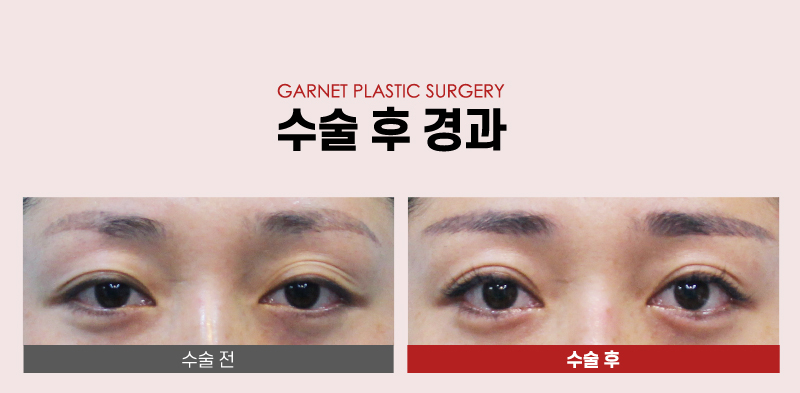
The eyelid-opening strength has improved, so the eyes open comfortably and well without needing to strain.
And the problem of multiple folds caused by the loosened double eyelid crease has also been resolved well.
In addition, the hollowing of the eyelids has been alleviated.
Unlike the previous buried-suture double eyelid surgery, when performed
with the incisional method like this, the double eyelid crease is hardly ever loosened
and multiple folds rarely recur.
Although the recovery period is a bit longer than with buried-suture double eyelid surgery,
the crease lasts a long time without loosening, eyelid opening becomes more comfortable,
and left-right symmetry also improves, so the patient was satisfied.
Wrapping Up...
Today, we looked at double eyelid revision surgery for a patient whose double eyelid crease loosened after buried-suture double eyelid surgery.
There are many causes of a loosened double eyelid crease,
and in many cases, the cause is not simply that the line has loosened.
In such cases, it is important to choose revision surgery that addresses the underlying cause.
I hope today’s case was helpful.
Thank you!