Facelift surgery is one of the best lifting methods for reversing facial aging.
However, if the surgery is performed incorrectly, the effect may be reduced, so accurate dissection of the facial layers is important.
The skin and subcutaneous layers of the face can be divided into five layers.
-
Skin
-
Subcutaneous
-
Musculo-aponeurotic
-
Retaining ligaments and spaces
-
Periosteum
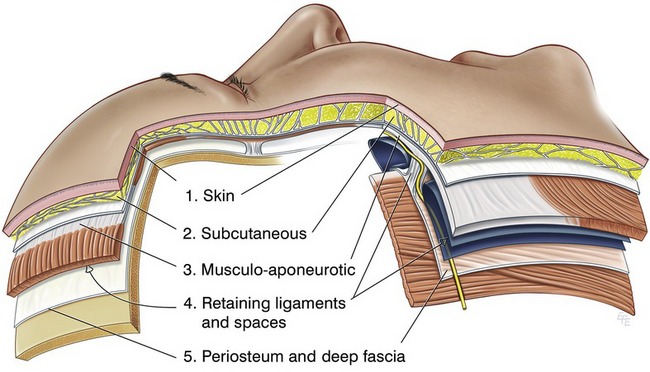
Multiple layers of the face
Among these layers, the 3rd musculo-aponeurotic layer is called the SMAS (superficial musculo-aponeurotic system), and it is the structure most importantly dissected in a facelift.
Facelift surgery begins with a skin incision and dissection of the subcutaneous layer.
Incisions are made around the scalp and ears, with the incision line designed to be hidden by hair and less visible as a scar.
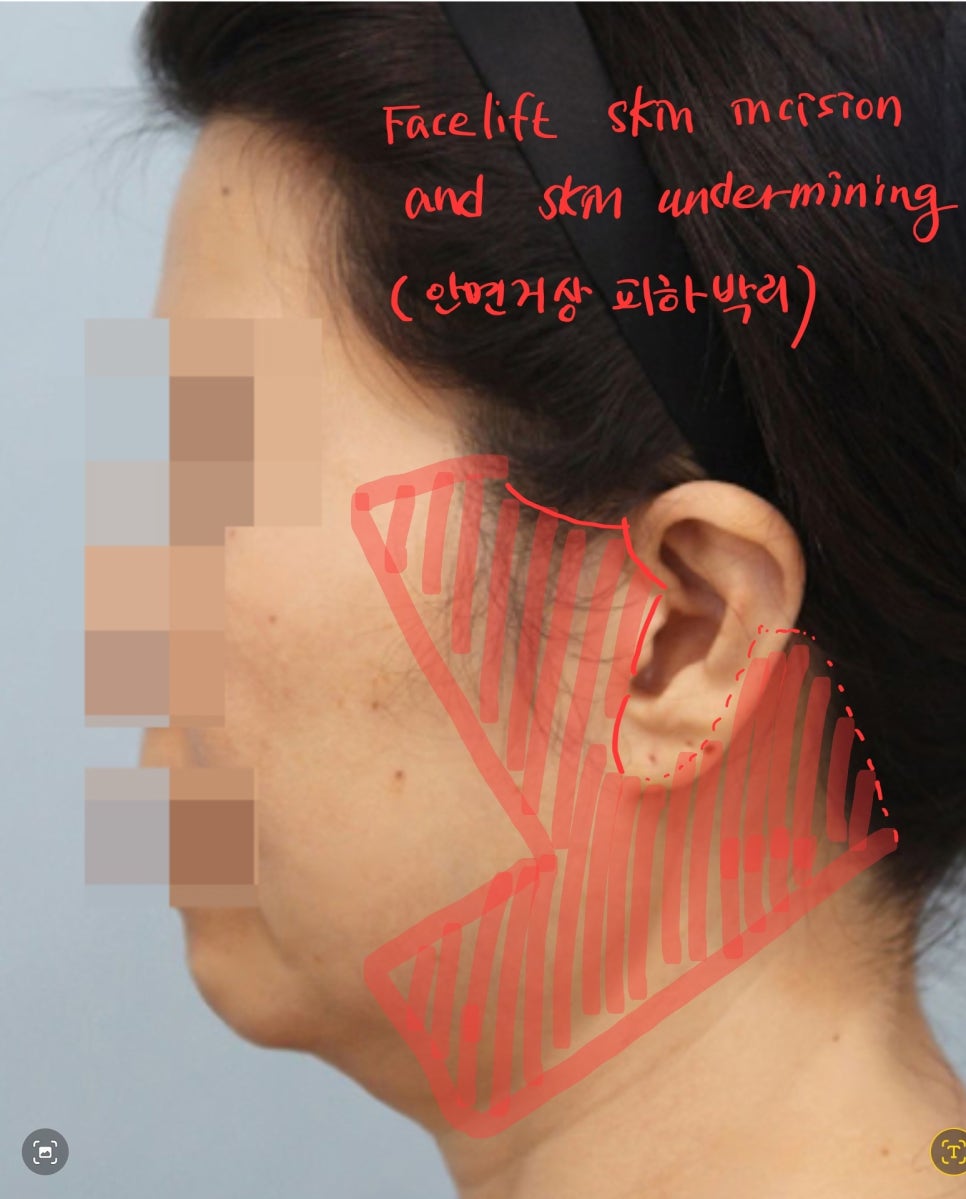
Skin incision line and the range of subcutaneous dissection
It is important to carefully dissect the subcutaneous layer, and the thickness of the subcutaneous layer must be properly controlled to make SMAS dissection easier.
A facelift is not a surgery that simply pulls and cuts the skin, so dissection of the SMAS layer beneath the skin is the most important part.
There are various methods for incising the SMAS, but it is usually started by making a 'ㄱ'-shaped incision near the cheekbone and then proceeding with the dissection.
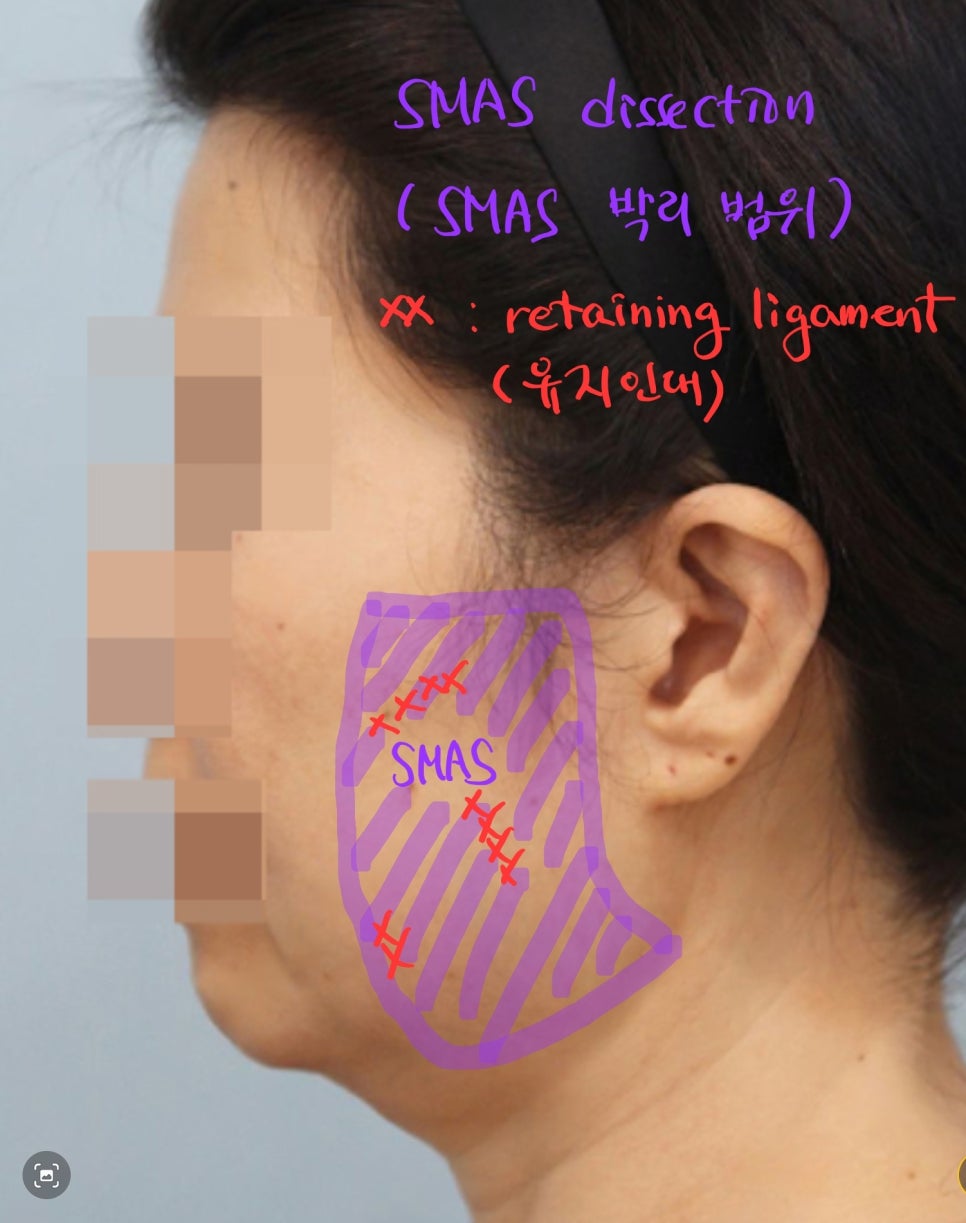
Dissection range of the SMAS layer and the location of the retaining ligaments
When dissecting the SMAS layer, you encounter major facial structures, so anatomical knowledge is essential.
Retaining ligaments of the face are attached beneath the SMAS layer, and these retaining ligaments must be precisely dissected to improve the lifting effect.
The SMAS layer is widely dissected, lifted in a vertical direction, and the remaining SMAS is removed.
In particular, because the various retaining ligaments are complexly intertwined with the facial salivary glands and salivary ducts, facial nerves, and facial expression muscles, care must be taken during dissection.
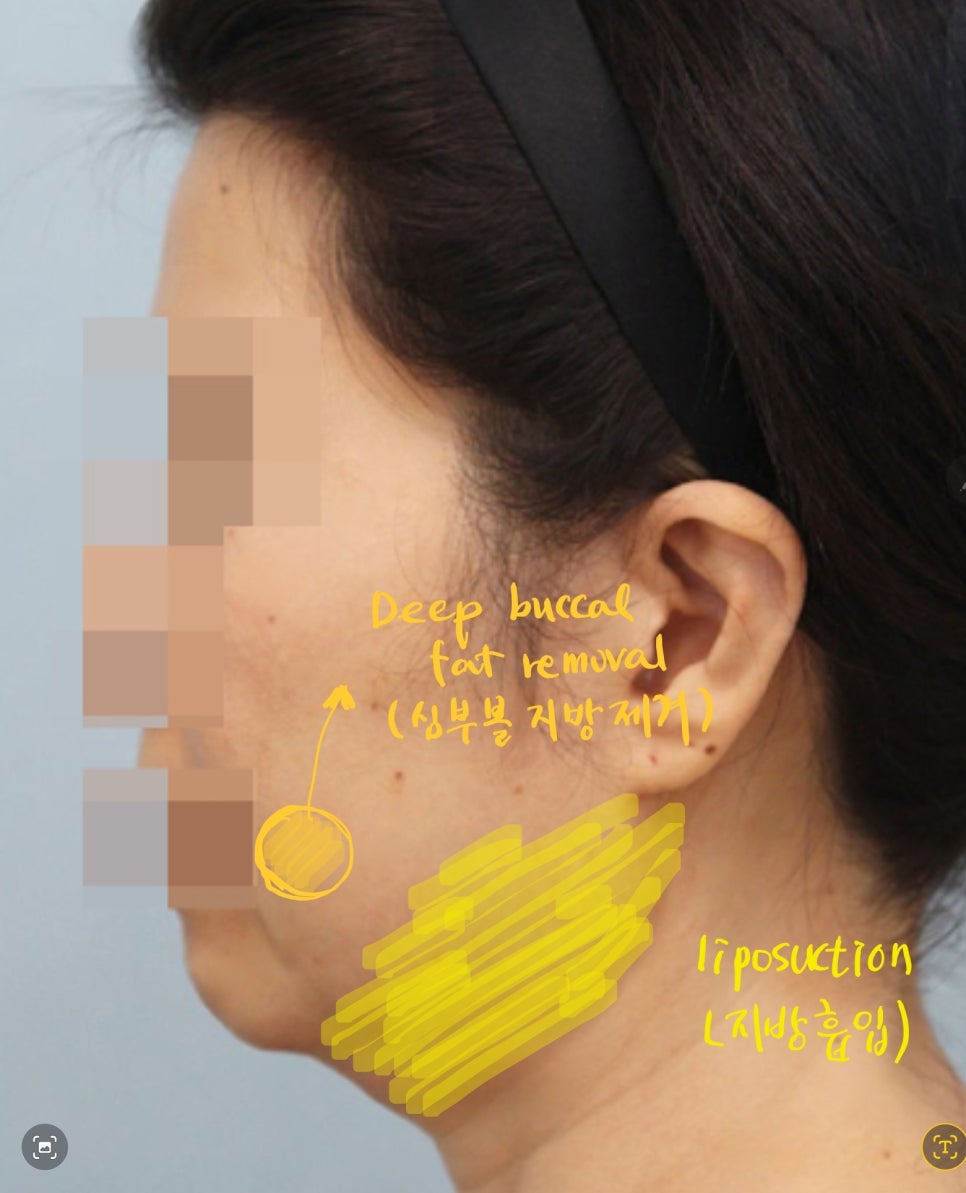
Areas of fat removal in the face
In the face, dissection of the skin and SMAS layer is important, but removal of fat is also important.
Fat around the double chin and jawline should be appropriately treated with liposuction, and buccal fat cannot be removed by suction, so it is removed as a mass during the SMAS dissection process.
After completing SMAS dissection and lifting, as well as facial fat removal, the remaining skin is appropriately removed and sutured.
When a facelift is done well, the lifting tension is all borne by the area where the SMAS layer is lifted, so almost no tension is placed on the skin layer.
As a result, although the facelift incision is long, scars are not easily left behind.
If too much tension is placed on the skin layer, scarring becomes severe, the lifting effect decreases, and pixie ear deformity occurs.
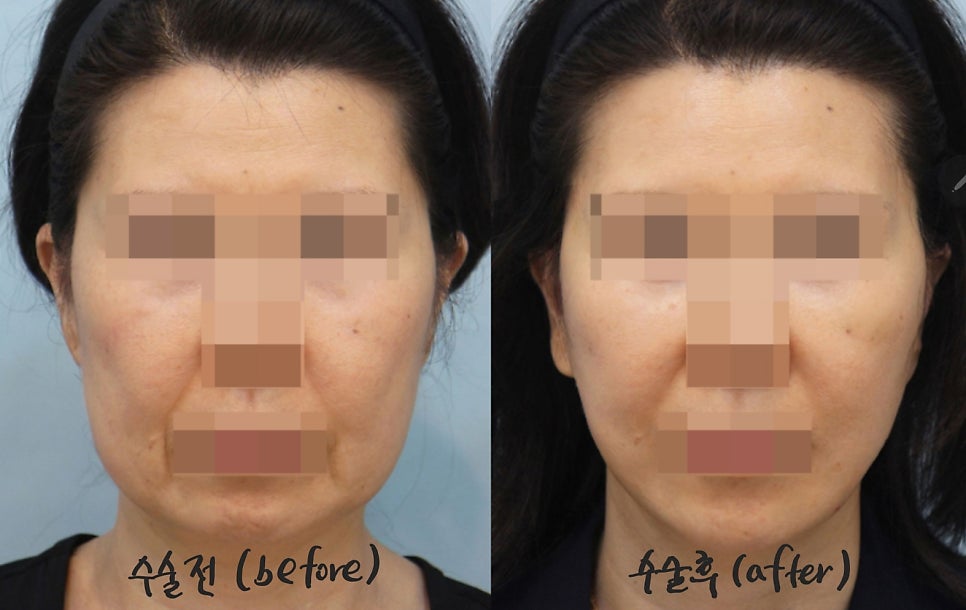
Front view before and after surgery
Before surgery, sagging skin made the lower face look thicker, but after the facelift, it has been lifted into a slimmer appearance.
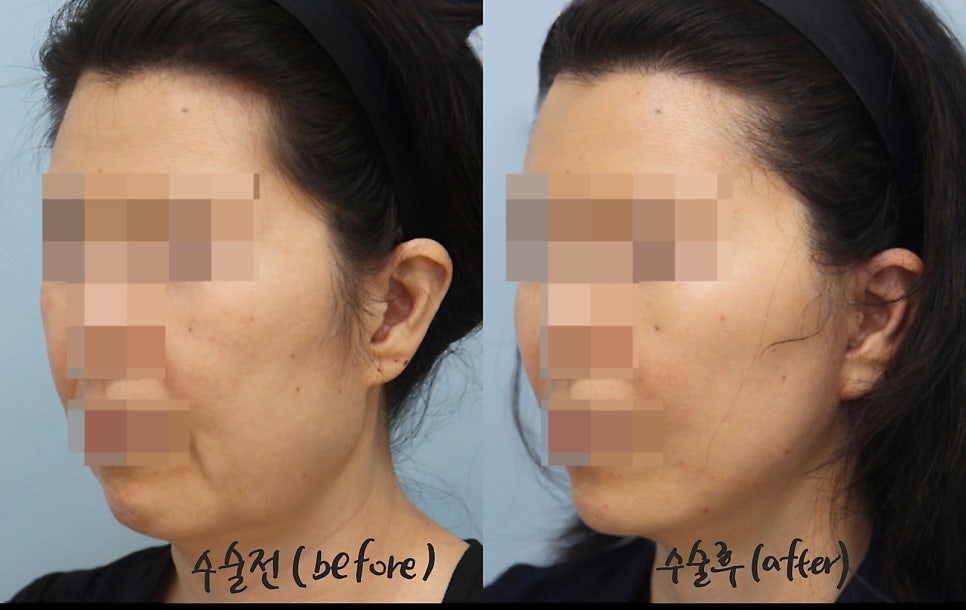
45-degree view before and after surgery
The nasolabial folds and wrinkles around the mouth caused by preoperative sagging skin were well improved, and the sagging jawline was well lifted.
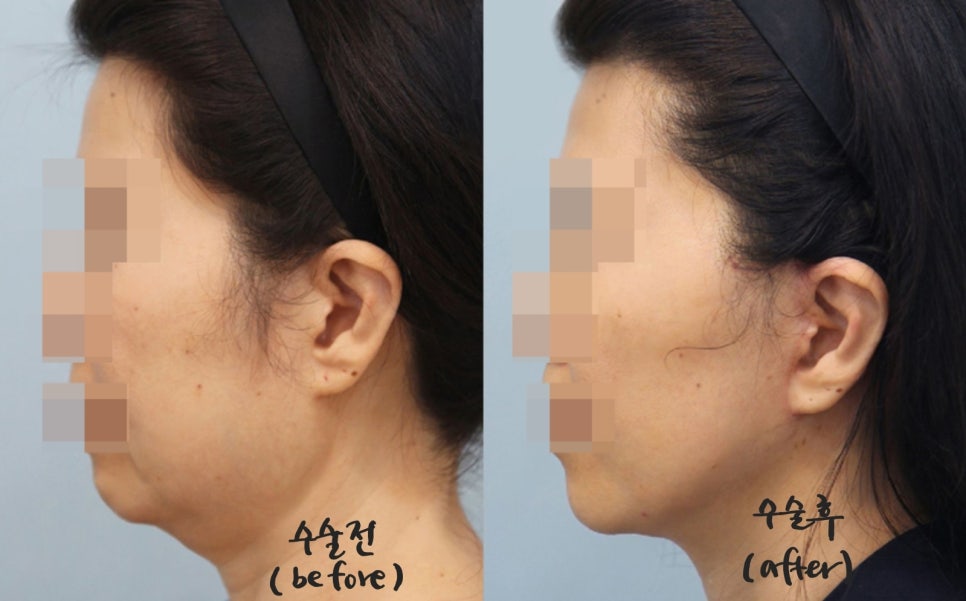
Side view before and after surgery
In the side view, the jawline that had been hidden by the double chin before surgery has become clearly visible.
The incision scar from a facelift may feel long, but over time it becomes much fainter, and much of it is hidden behind the ears and in the scalp.
A facelift scar can be minimized by making the incision without deforming the ear shape and by following the natural crease lines around the ear.
In this way, facelift dissection is broadly divided into subcutaneous dissection and SMAS dissection, and it is very important to properly dissect and lift both layers.