When consulting for revision rhinoplasty, I often meet many people whose skin at the nasal tip or bridge has become thin.
The skin of the nose has different thicknesses at the bridge and the tip, and in particular, the skin around the nasal tip is often thin.
When the skin of the nose is thin, some people may have naturally thin skin from birth, but in most cases, the skin becomes thinner during revision rhinoplasty.
Usually, the more times revision surgery is repeated, the thinner the nasal tip skin becomes. If skin reinforcement is not performed when an implant or the tip is raised higher, the skin can remain thin and give an awkward appearance.
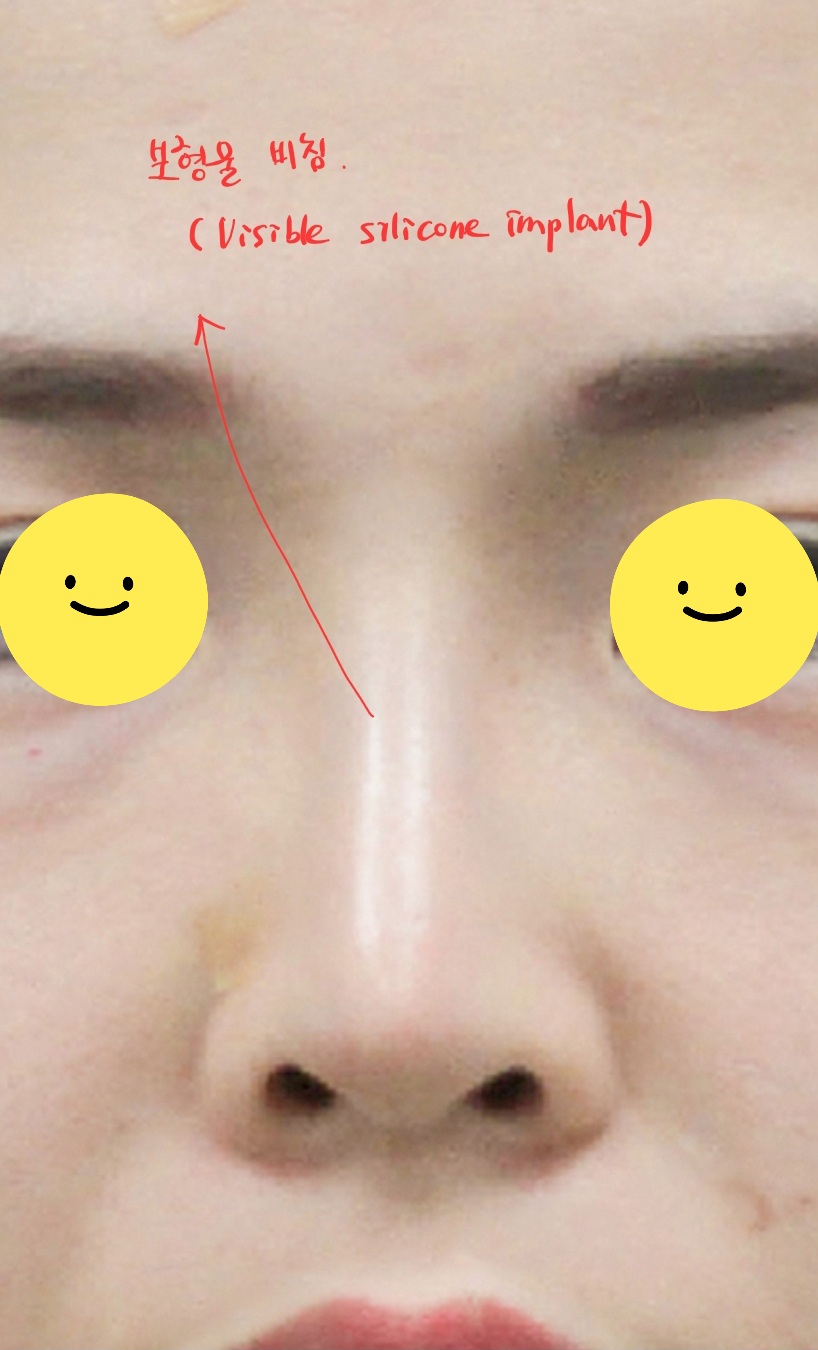
When an implant shows through thin skin
If a silicone implant becomes visible through the skin, the nose will look very obviously operated on regardless of its height, creating an unnatural appearance.
In the past, it was common to use a silicone implant extending all the way to the nasal tip, and when raising the tip, there were also many cases where too much ear cartilage was stacked layer upon layer. In such cases, the cartilage can cause long-term irritation to the skin at the tip, which leads to thinning of the nasal skin.
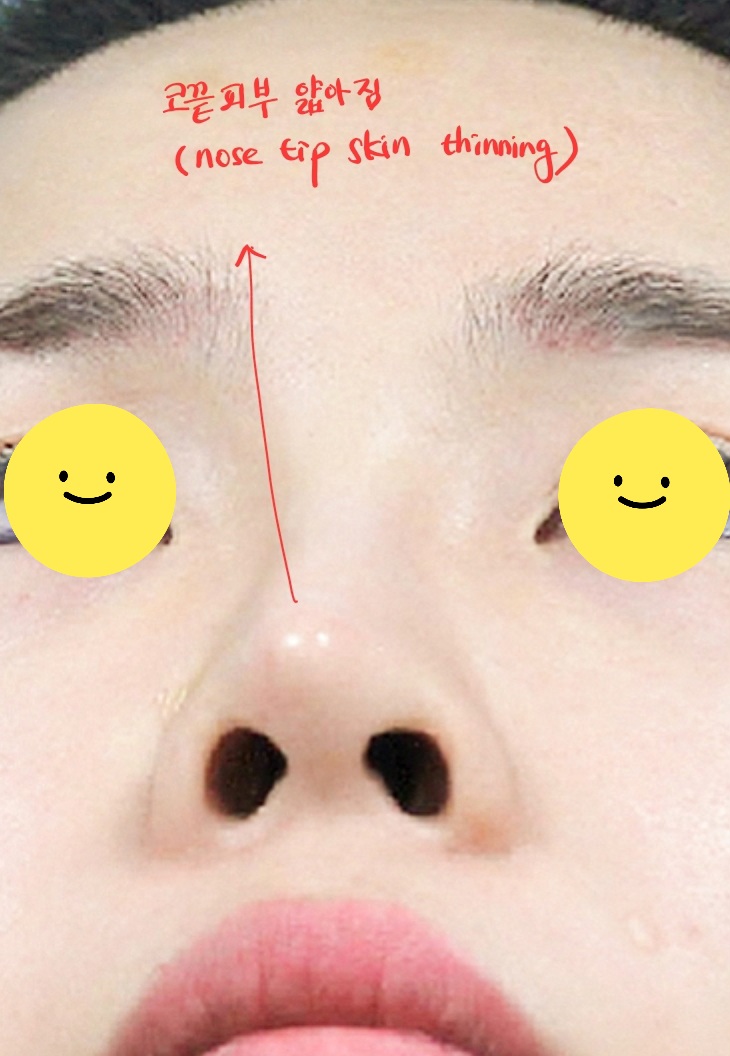
Thin skin caused by long-term irritation at the nasal tip
When the skin of the nasal tip is thin, it is important to minimize skin irritation applied to the tip, and surgery that properly reinforces already thinned skin is necessary.
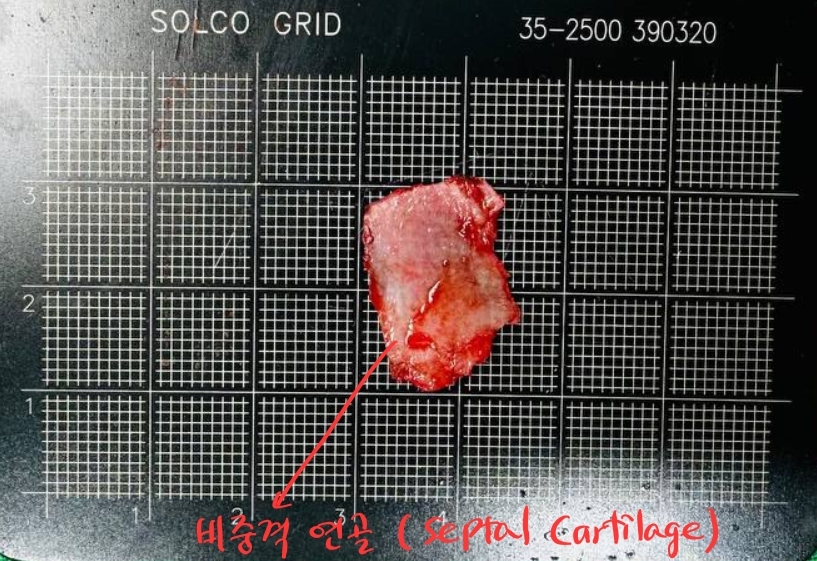
Harvesting septal cartilage
To raise the nasal tip, a support structure is placed using septal cartilage.
When raising the tip, it is important to use cartilage material to create stable support so that irritation to the tip is reduced, and the number of onlay grafts can be lowered. This also helps reduce long-term irritation to the skin at the tip.
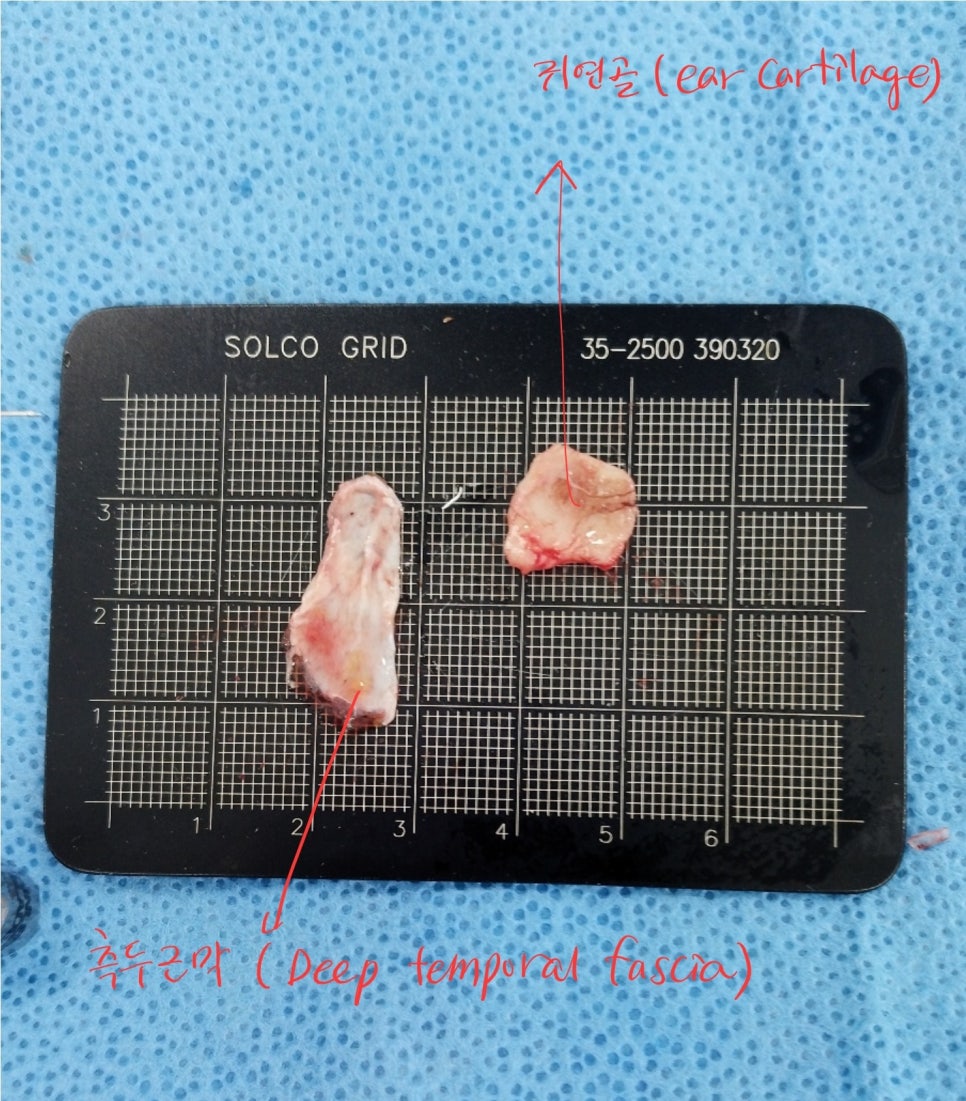
Temporalis fascia and ear cartilage
Temporalis fascia is the membrane of the temporalis muscle located inside the scalp, and it is a good material for reinforcing the skin of the nasal tip. A cut of about 2 cm is made in the temple area to harvest the fascia. This is an area where scars are not visible and are sufficiently covered by hair, and because only a simple incision and closure are performed without removing scalp or hair, there is no need to worry about hair loss or scarring.
Ear cartilage is harvested minimally and used as an onlay graft on the nasal tip, while temporalis fascia is used to reinforce the thinned skin of the nose.
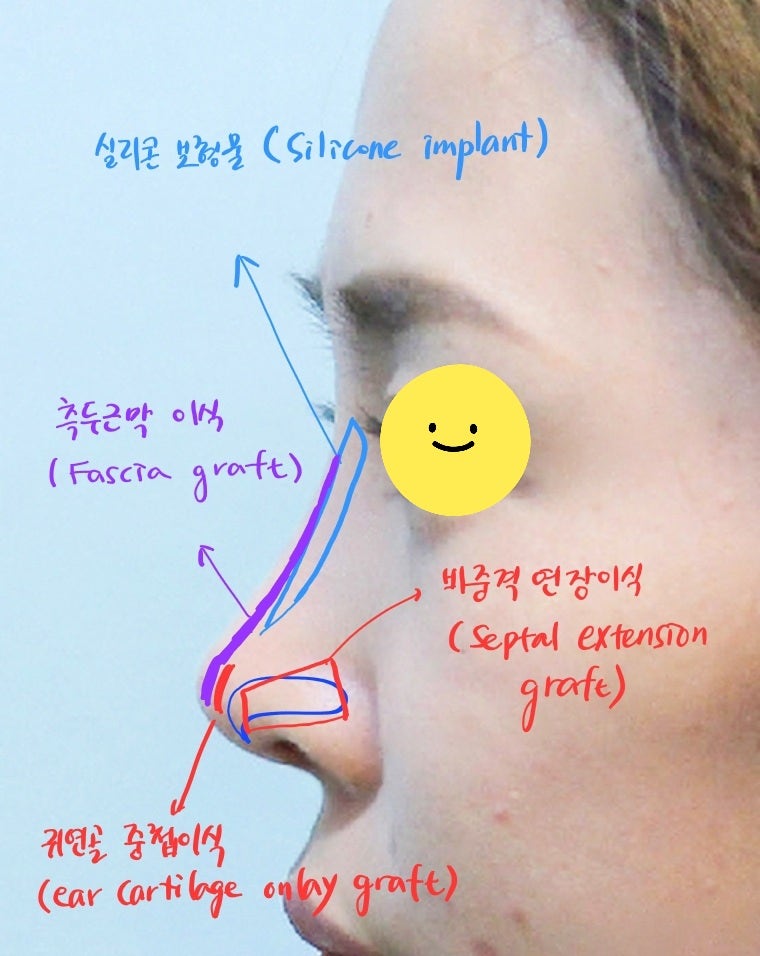
Surgical diagram for revision rhinoplasty
If the silicone implant and the cartilage at the nasal tip are well covered with fascia, visibility of the implant or cartilage can be reduced.
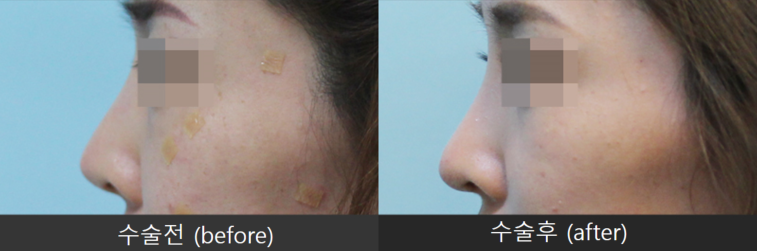
Side view comparison before and after surgery
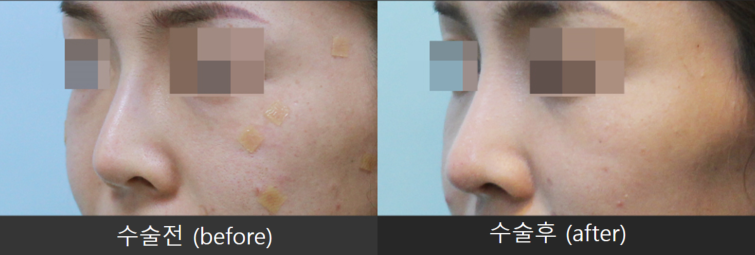
45-degree comparison before and after surgery
Before surgery, the nasal tip looked pointed and the implant was visible, but these symptoms have been greatly improved.
In fact, the nose is higher after surgery, but because the problems caused by thin skin have been resolved, the result looks much more natural.
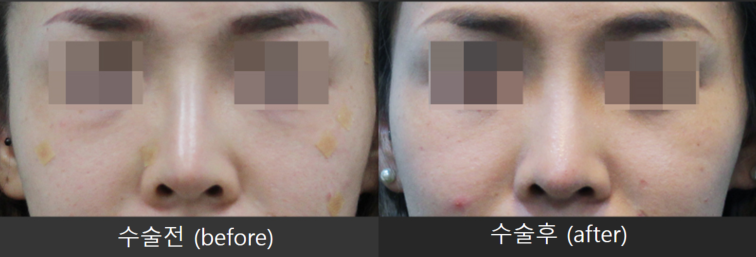
Front view comparison before and after surgery
From the front, the visibility of the implant and cartilage at the bridge and tip has been greatly reduced, and overall the surgery looks less obvious.
There are many different reasons for undergoing revision rhinoplasty, but implant visibility due to thin skin at the bridge and tip is also a common reason for revision.
A method that reinforces thin skin from the first operation is also a positive approach, and especially in revision cases, reinforcing the thinned skin is very important.