Aegyo-sal gives the face a lively impression and creates a bright, smiling look.
The easiest way to create aegyo-sal is with fillers. It is a convenient method, but it can sometimes look unnatural instead.
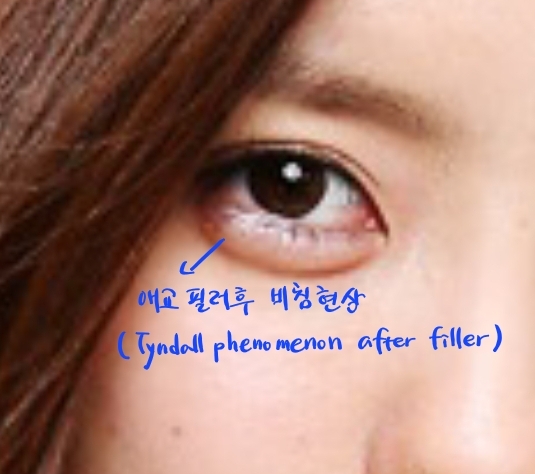
Aegyo-sal filler involves injecting a small amount of filler under the eyes to enhance the volume of the aegyo-sal area, but if the skin is thin, the filler may sometimes show through.
Because filler is originally transparent, when it is injected under thin skin, the Tyndall phenomenon can occur, making it appear slightly bluish.
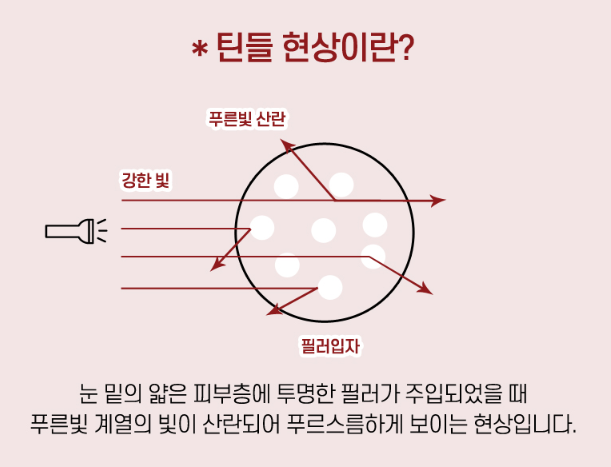
Tyndall phenomenon
In addition, with fillers, after the retention period of several months passes, they lose their shape and spread in the direction of gravity. If more filler is then injected again, the skin may become looser and the aegyo-sal area may widen, creating an awkward appearance.
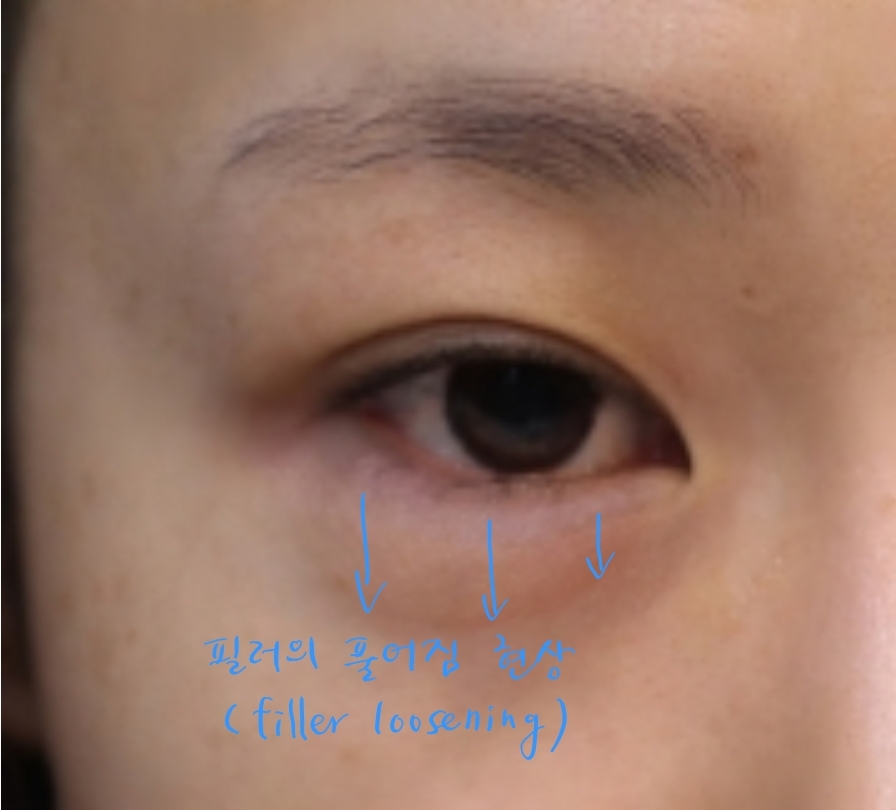
Filler spreading and downward migration
That is why aegyo-sal filler should be performed carefully, and even when the procedure is done in several sessions, care should be taken not to inject too much in total.
Another point that should be closely observed when trying to enhance under-eye aegyo-sal is whether there are dark circles caused by under-eye fat.
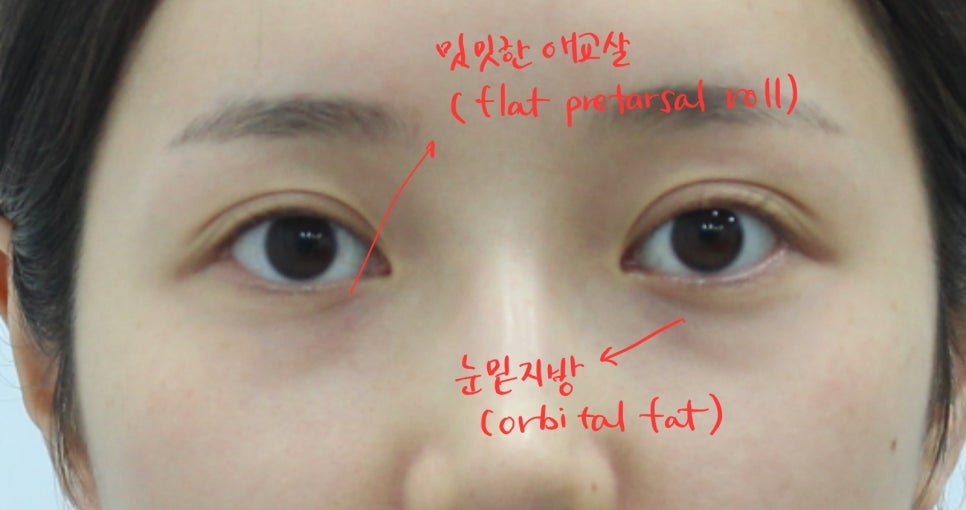
Aegyo-sal and under-eye fat
If dark circles are present, even if aegyo-sal is created, the under-eye area may not look clean. In some cases, the created aegyo-sal may instead look like two dark circles, so if dark circles exist, it is important to also consider under-eye fat repositioning.
When aegyo-sal is created through fat grafting, it can be made naturally. First, because the color of fat is close to skin tone, there is no see-through effect like with filler.
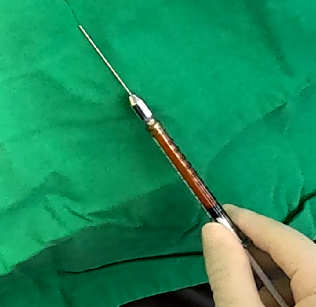
Micro fat grafting
In addition, the grafted fat becomes established in the orbicularis oculi muscle, which is part of the aegyo muscle under the eyes. As a result, it is less likely to spread, move downward, or widen like filler.
However, creating aegyo-sal with fat grafting requires delicate work.
First, the fat particles to be grafted must be fine.
If the particles are even slightly coarse, they may form lumps in the thin under-eye skin.
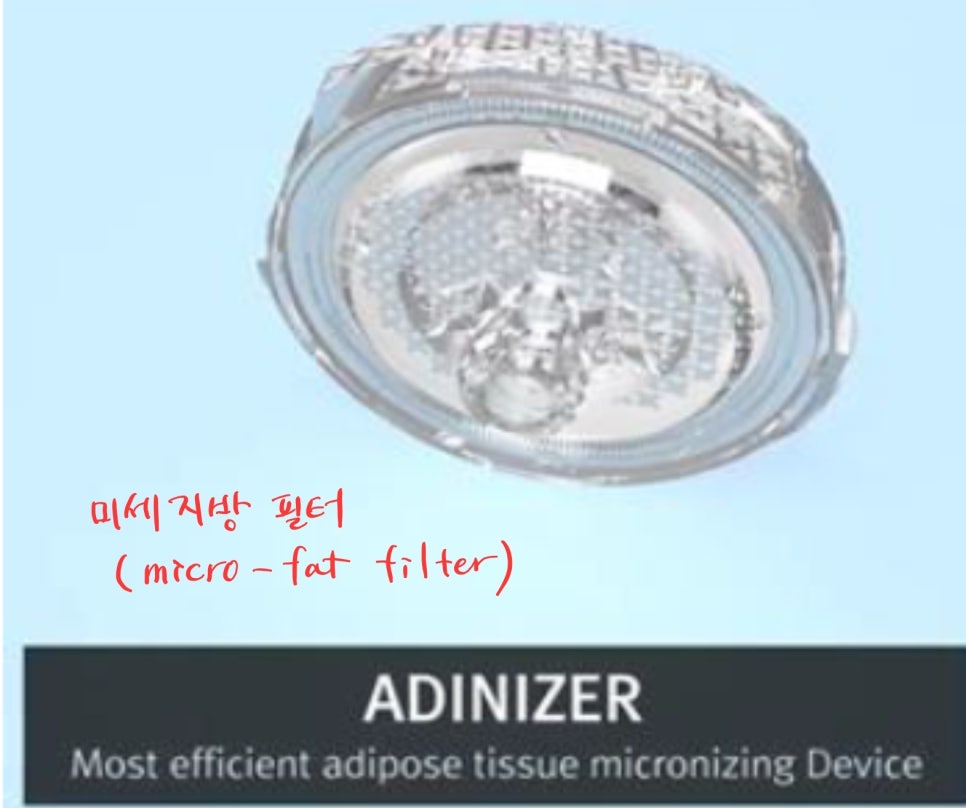
Fat filter for micro fat grafting
Unlike general fat grafting, areas such as the upper eyelids, under-eyes, and aegyo-sal require fine fat particles, so a filtering process is needed to create microfat.
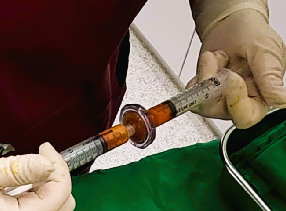
Filtering process for micro fat grafting
After centrifuging fat harvested from the abdomen or thighs, if it is processed a certain number of times through a micro fat grafting filter, the coarse fat particles can be filtered out and refined.
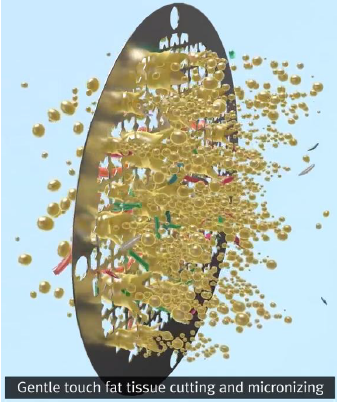
Filtering micro fat
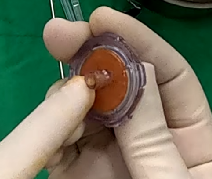
Coarse particles being filtered out
The fine fat filtered through this process is called microfat, and when grafted to the aegyo-sal area, it can produce good results.
Let’s compare the before and after results.
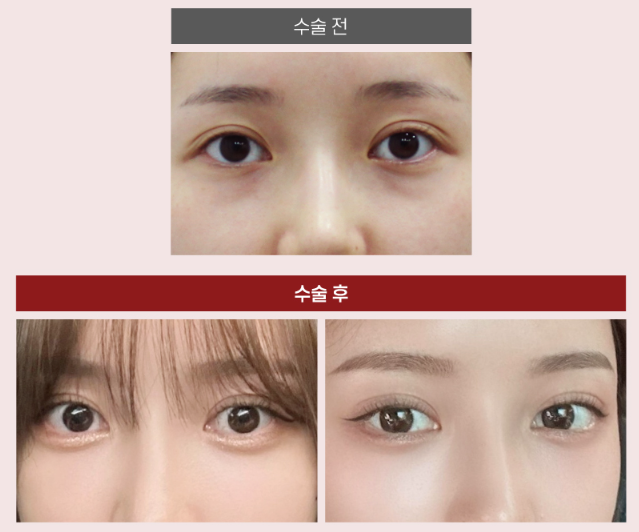
Results of aegyo-sal fat grafting and under-eye fat repositioning
The dark circles under the eyes before surgery were addressed through under-eye fat repositioning, and the flat aegyo-sal was given volume through micro fat grafting.
Unlike filler, aegyo-sal created with micro fat grafting does not show through, spreads less downward, and, above all, has the advantage of lasting semi-permanently once it takes hold. For those considering how to create aegyo-sal, it can be a good option.

This is a real model who has consented to disclosure.