To return to daily life quickly after rhinoplasty without swelling, both the doctor and the patient need to make an effort.
Of course, performing the surgery well is the most important thing, but if postoperative care is handled properly and treatment is received well, there will be less swelling and recovery will be faster.
When rhinoplasty is performed, the skin of the nose and the nasal mucosa are dissected, and this creates empty spaces (dead space) after surgery.
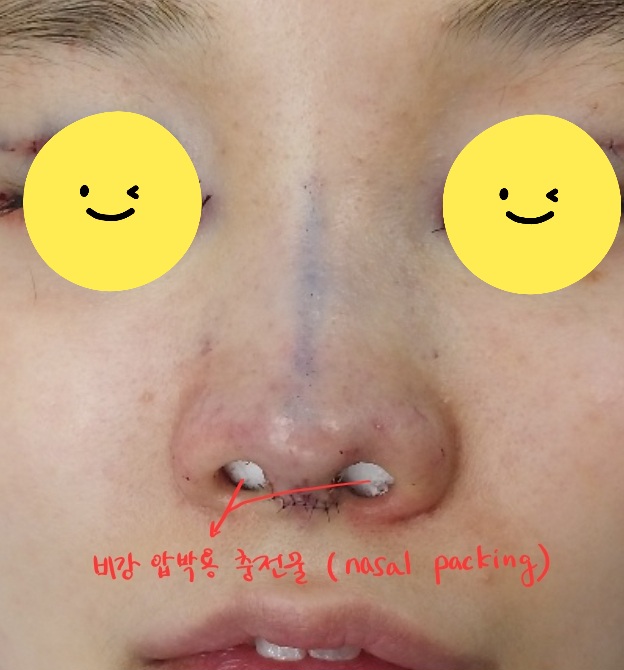
Nasal packing cotton (Merocel)
First, because blood can collect in the empty space where the septal cartilage was harvested, medical cotton is inserted into the nostrils after nasal surgery to compress the nasal mucosa. This helps the nasal mucosa recover more quickly and prevents various problems that can arise if blood collects in the septum.
This varies by hospital, but many hospitals remove the cotton within 3 days.
At our Garnet Plastic Surgery clinic, we usually remove the cotton from inside the nose on the first day to reduce patient discomfort.
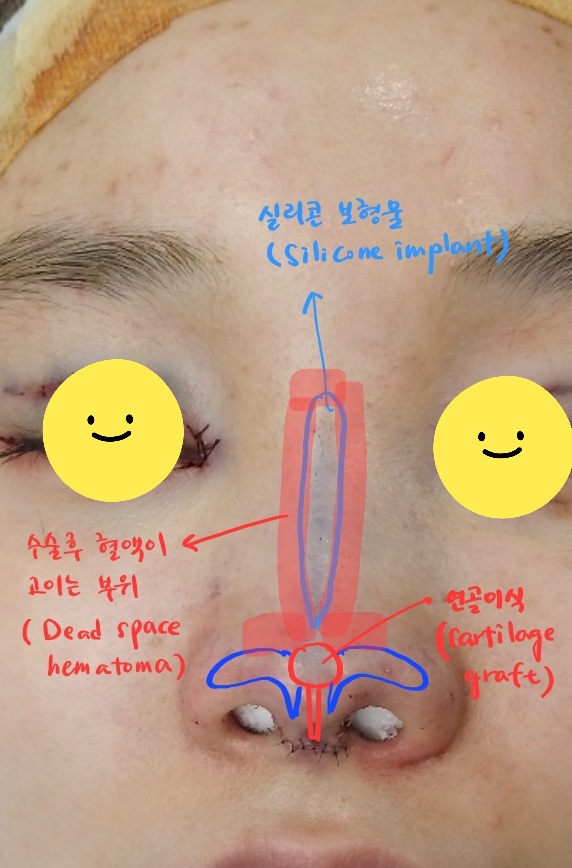
Areas where blood collects after nasal surgery
After nasal surgery, a small amount of blood collects in the space around the silicone implant and cartilage, and removing the collected blood has the advantage of speeding recovery.
Usually, even if blood collects after surgery, the amount is small, so most of it is absorbed and does not cause major problems. However, if the remaining blood is absorbed slowly, swelling can last longer, and a capsule may form around the silicone. This can also lead to side effects.
The inflammatory reactions that sometimes occur after rhinoplasty, as well as contraction caused by a capsule around the silicone, usually occur when the blood in the postoperative empty space is not absorbed well.
Therefore, if the blood in the empty space is removed during the treatment process, recovery can be sped up and side effects can be reduced.
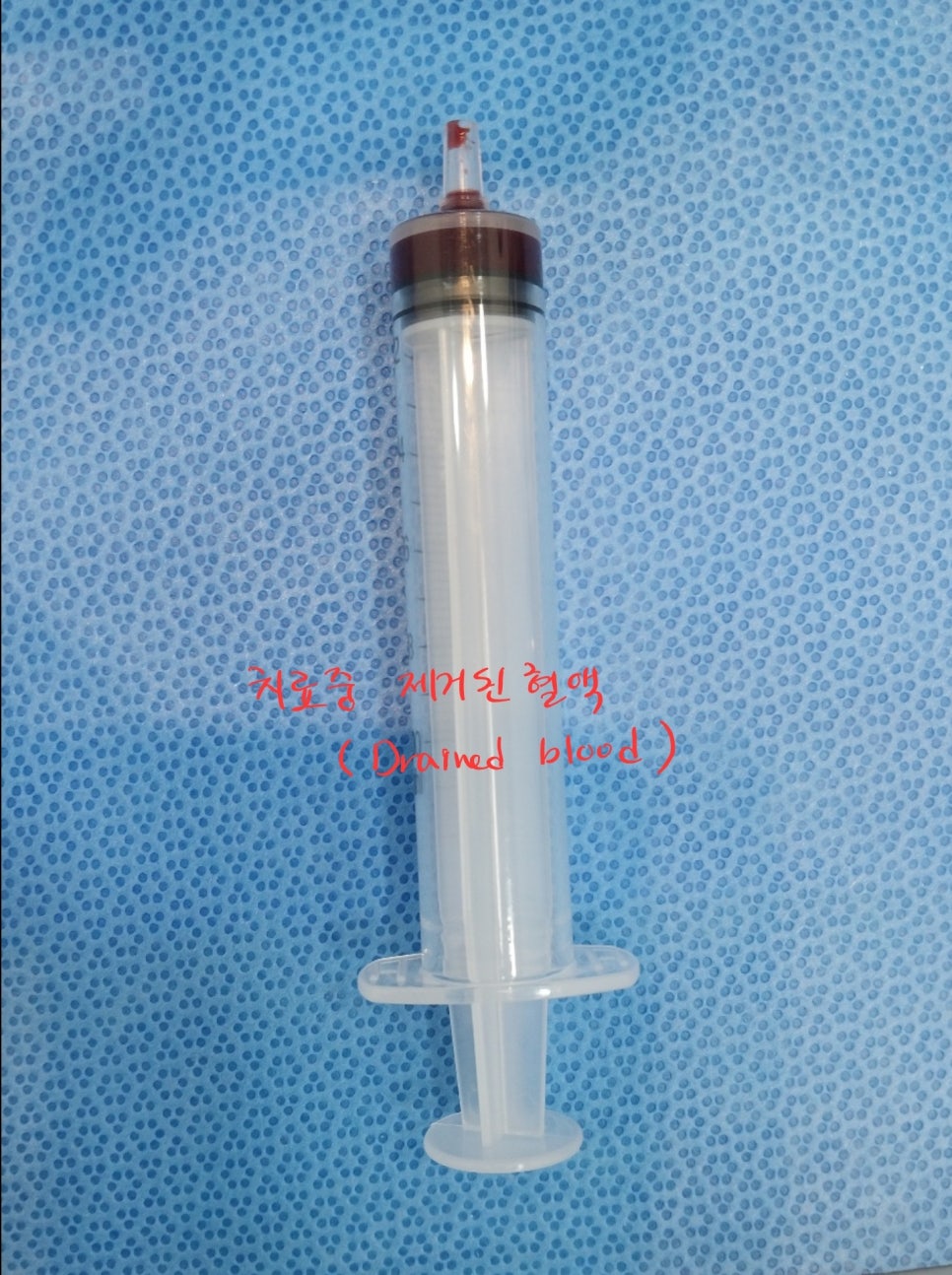
Blood removed during treatment
At Garnet Plastic Surgery, we remove blood that has collected in the empty space using a syringe on days 1 to 2 after surgery.
Usually, the amount of blood removed is relatively small, around 1 cc, and is often an amount that would normally be absorbed naturally, but
even a small amount of blood can be removed from the empty space to speed recovery and greatly reduce the chance of side effects.
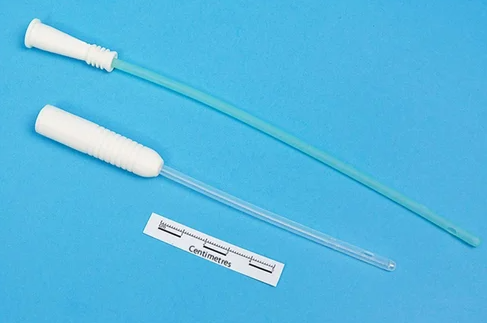
Soft plastic tube
Blood is removed through a soft plastic tube to minimize discomfort during treatment.
And after nasal surgery, taping is applied, which helps fix the position of the silicone implant and cartilage.
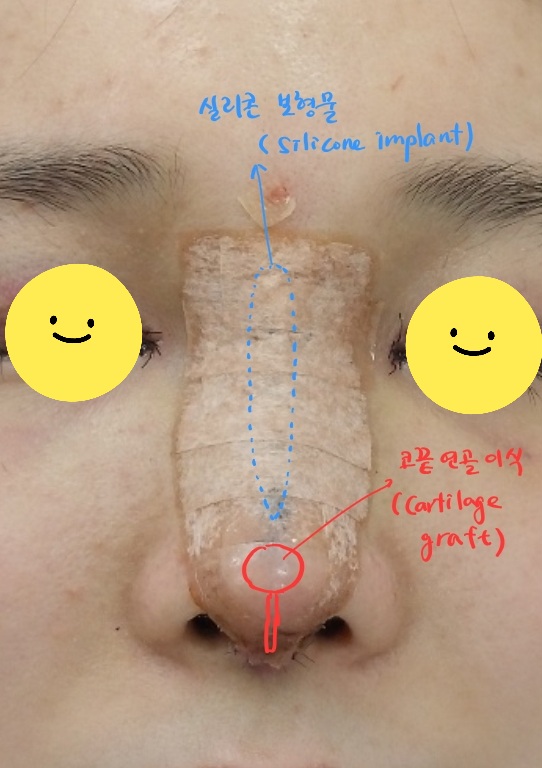
Taping after rhinoplasty
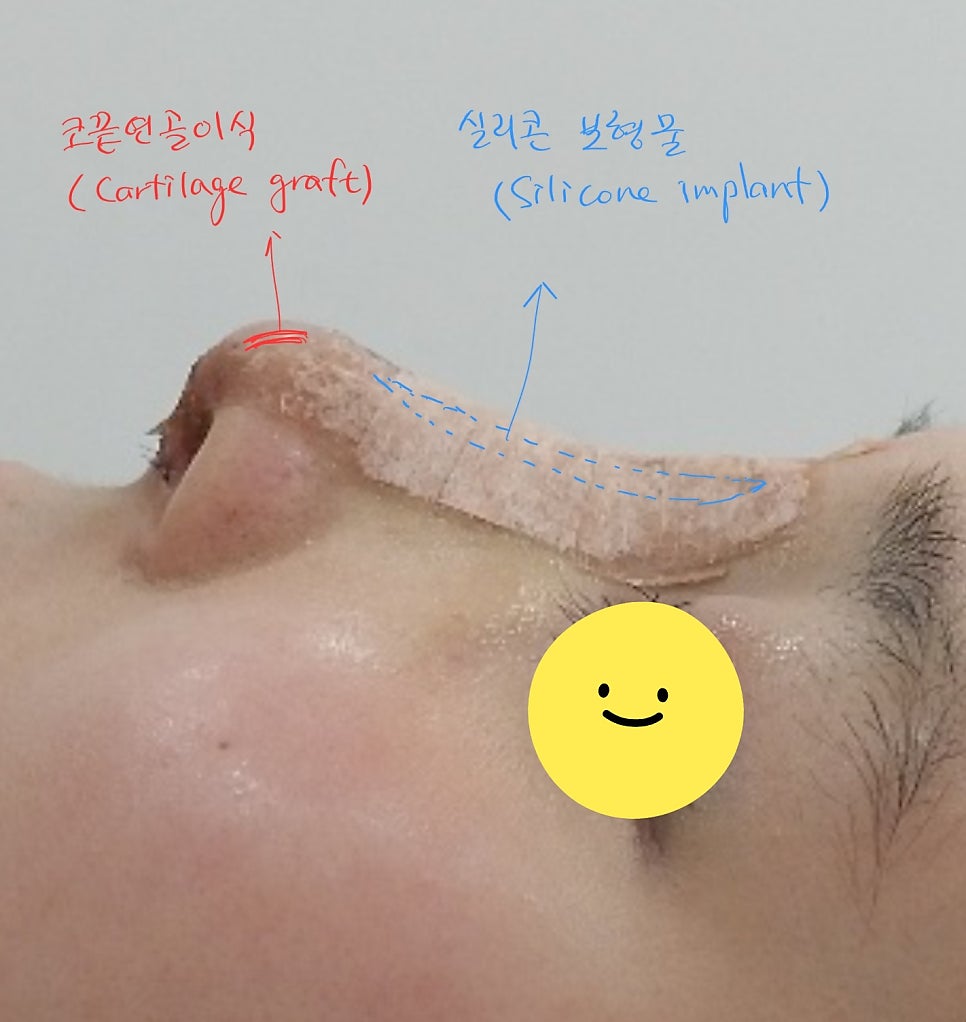
Taping after rhinoplasty
Taping helps prevent the implant from moving to the side and causing the nose to become crooked, so it is generally best to keep it on for about 5 to 7 days.
Rhinoplasty is not only about the surgery; the treatment process is also very important.
It is better to keep the cotton inside the nose for at least one day, and it is also advisable to maintain the taping or splint for a certain period.
In addition, if blood around the implant is removed through appropriate treatment, swelling can go down faster and side effects can be reduced.