There are various wrinkles on the face, and they worsen with age due to the continuous movement of facial muscles and sagging skin.
The most typical wrinkles caused by facial muscles are crow’s feet, glabellar wrinkles, and nasal bridge wrinkles, and they can be somewhat improved through Botox treatment.
However, because Botox reduces wrinkles by temporarily weakening muscle strength, horizontal wrinkles around the eyes and on the bridge of the nose caused by skin sagging are often not well resolved.
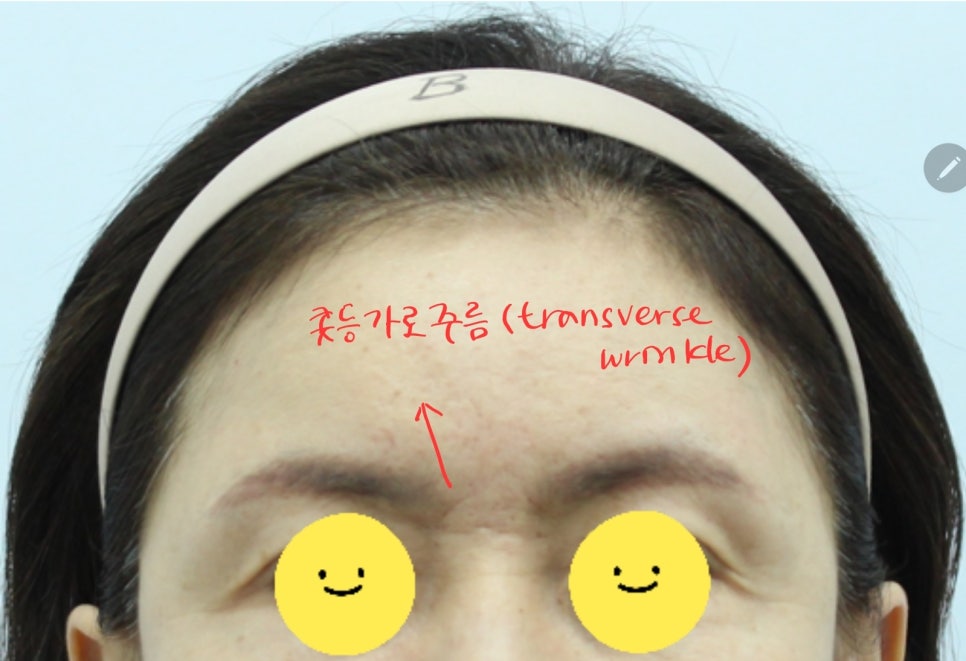
Horizontal wrinkles on the bridge of the nose
In the area extending from the forehead to the bridge of the nose, there are usually three facial muscles. The continuous action of these muscles worsens glabellar wrinkles and nasal bridge wrinkles, and over the long term it also causes the eyebrows to droop.
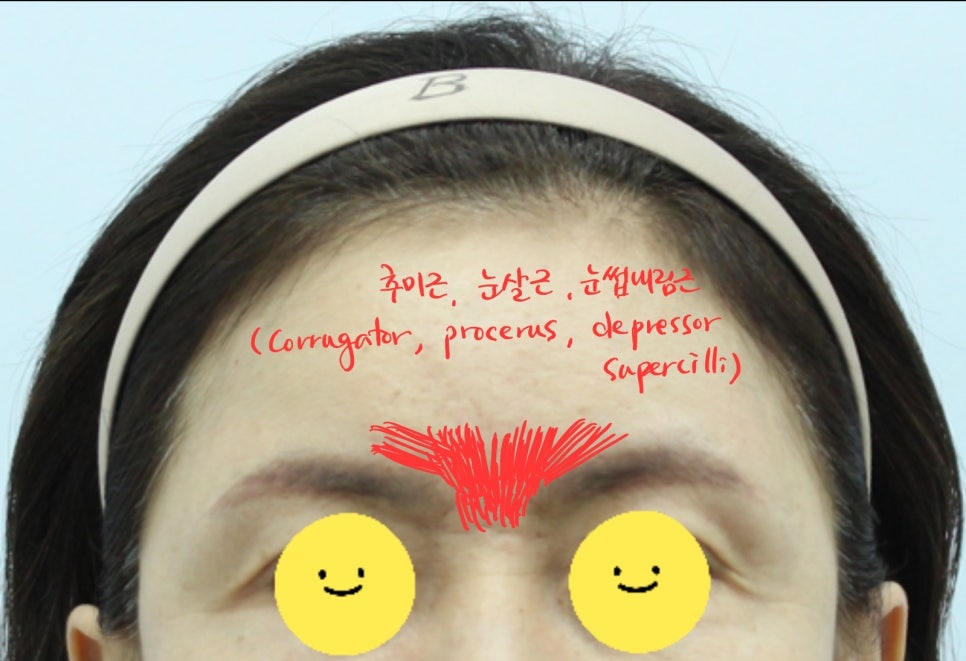
Facial muscles of the glabella and nasal bridge
-
Corrugator muscle
-
Procerus muscle
-
Depressor supercilii
These three muscles are the cause of wrinkles between the eyebrows and on the bridge of the nose, and the resulting skin sagging worsens horizontal wrinkles on the bridge of the nose.
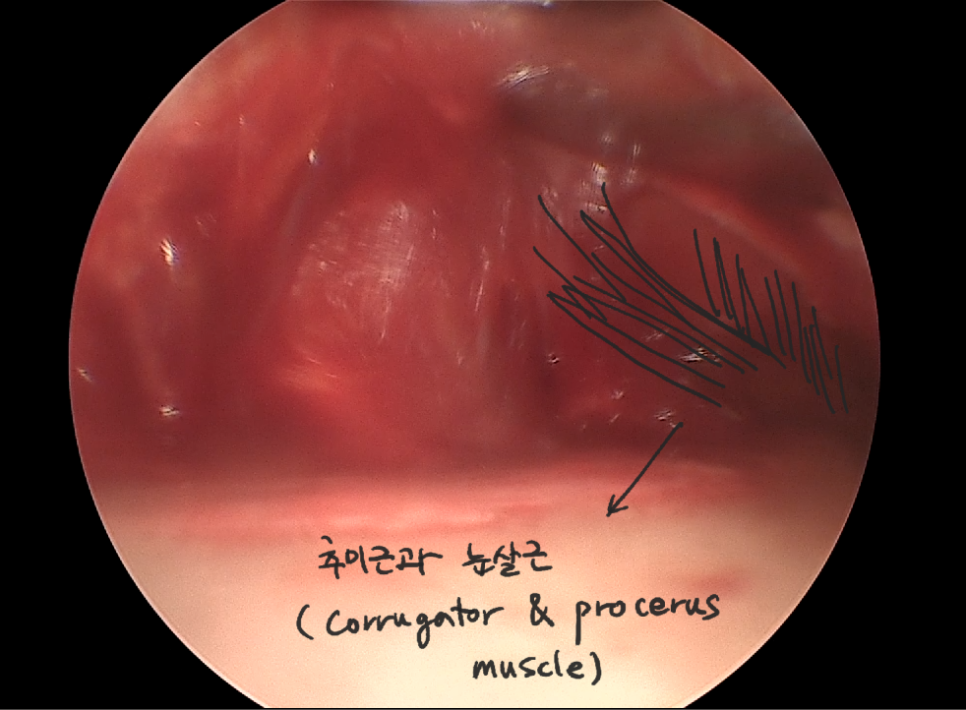
Facial muscles seen in the endoscopic field
In endoscopic forehead lift surgery, treatment of these muscles is important. While performing surgery through an endoscope, the above three facial muscles are weakened with radiofrequency, or in severe cases, they are excised.
In this way, weakening muscle strength is important, but in a forehead lift, the fixation method is also very important.
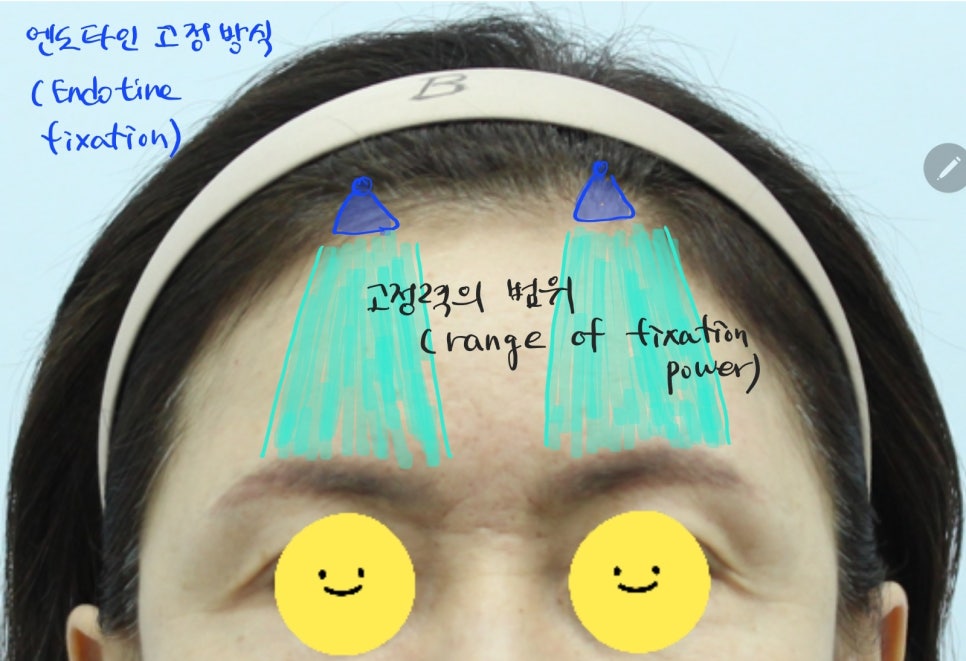
Range of fixation strength in an Endotine forehead lift
In general, the commonly used 2-point Endotine fixation method is an excellent method, but in terms of the range of fixation strength, there may be some shortcomings where the force does not fully reach.
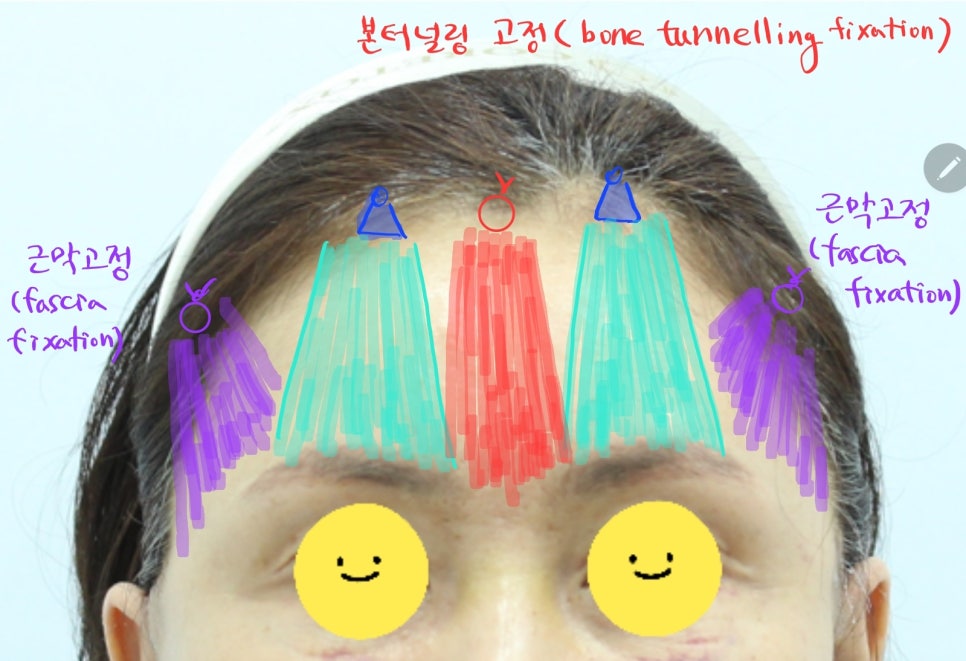
Fixation method and fixation strength range of a Pentafix forehead lift
Garnet Plastic Surgery’s Pentafix forehead lift is a method that further reinforces the existing 2-point Endotine approach. By adding a bone tunneling fixation method at the central point, it has increased the fixation strength range of the forehead flap even more.
That is why it delivers a stronger lifting effect on wrinkles in the glabellar area, especially the horizontal wrinkles on the bridge of the nose.
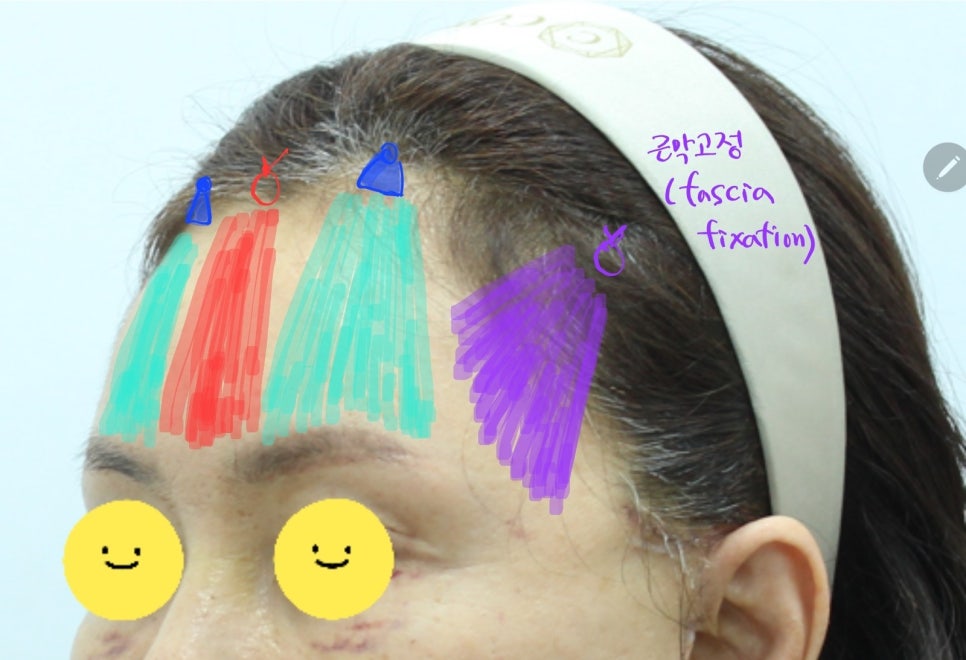
Range of fixation strength with additional temporal fixation
In addition, fascial fixation is added to the fascia on both sides of the temporal area, making it possible to create even stronger fixation strength and a broader fixation range for sagging skin in the temple area and the outer corners of the eyes.
And just as important as the fixation method is the dissection of the periosteum and retaining ligaments.
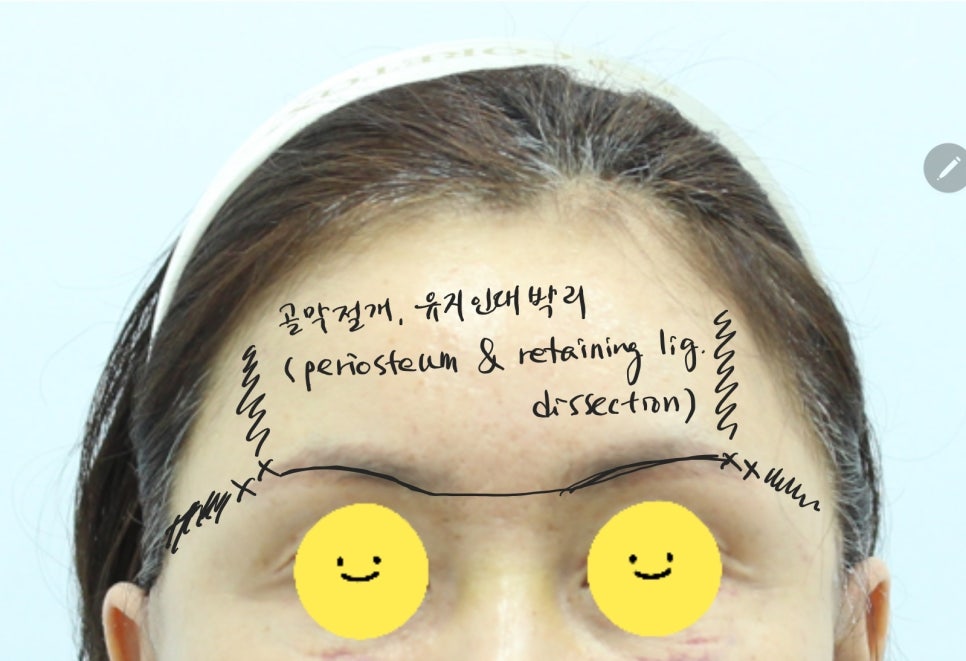
Dissection site of the periosteum and retaining ligaments
Through endoscopy, it is important to release the periosteum at the exact location and delicately dissect the retaining ligaments so that the forehead and temples can be lifted as a whole.
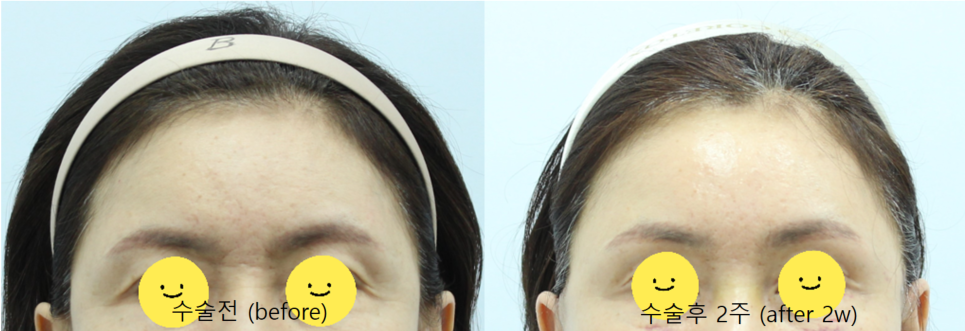
Before-and-after comparison of Pentafix forehead lift, 2 weeks
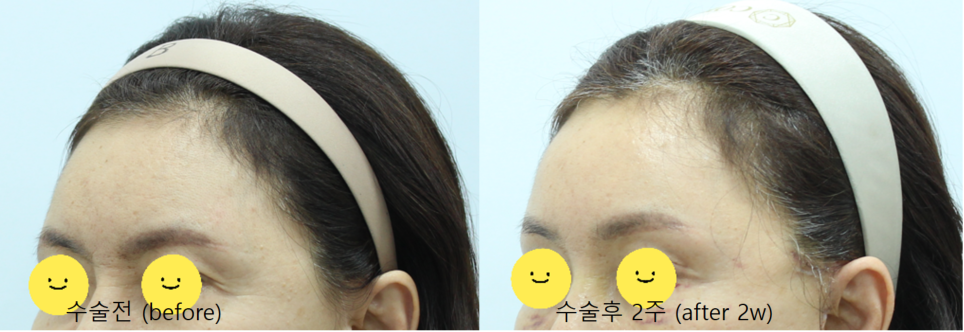
Before-and-after comparison of Pentafix forehead lift, 2 weeks
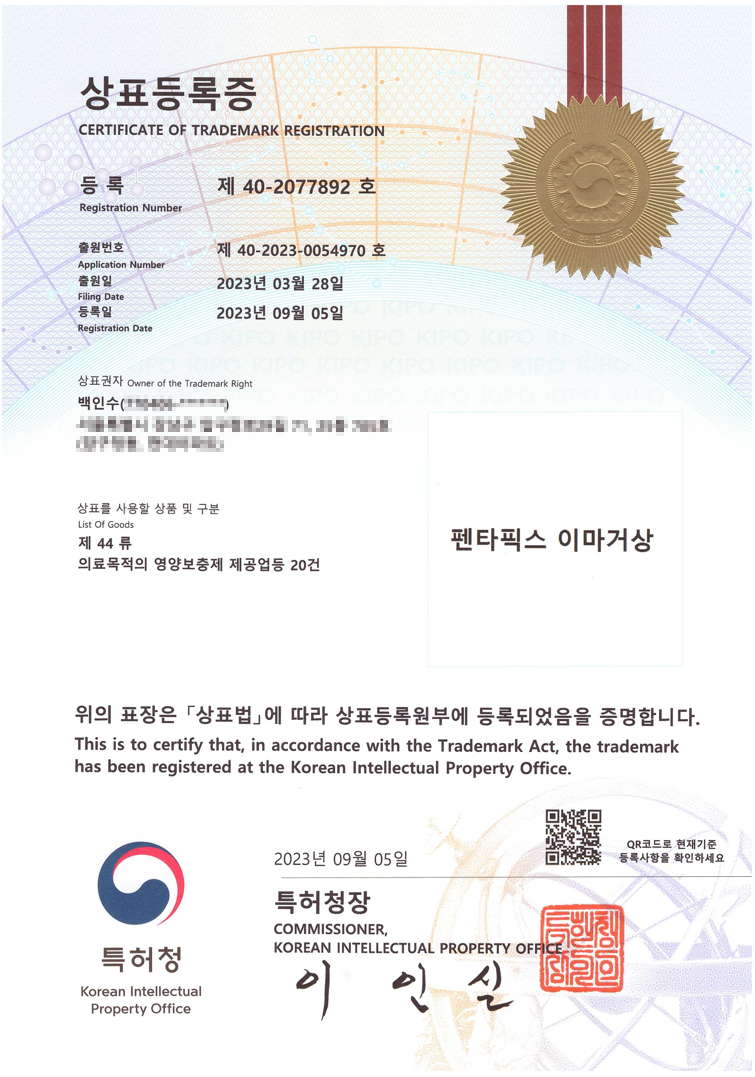
Pentafix forehead lift, patented by the Korean Intellectual Property Office
Unlike the conventional two-point Endotine fixation method, the Pentafix forehead lift is a surgical method that increases the fixation strength and fixation range of the forehead lift by using a five-point composite fixation method that secures a total of five points.