There is a surgical method for shaping the nasal tip that involves tying the alar cartilages together.
There are more than 10 different methods for tying the nasal tip, and they can be applied depending on the situation to raise the tip or change its shape.
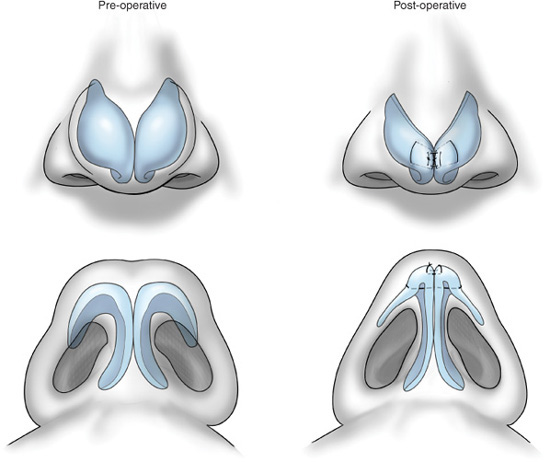
Methods of nasal tip cartilage suturing (from Plastic Surgery Keys)
Nasal tip cartilage suturing is often used in East Asian noses as one of the techniques to make a blunt nasal tip look more refined.
However, when trying to change the nasal tip using cartilage suturing alone, a pinched-looking tip may sometimes develop. This is called a pinched tip deformity.
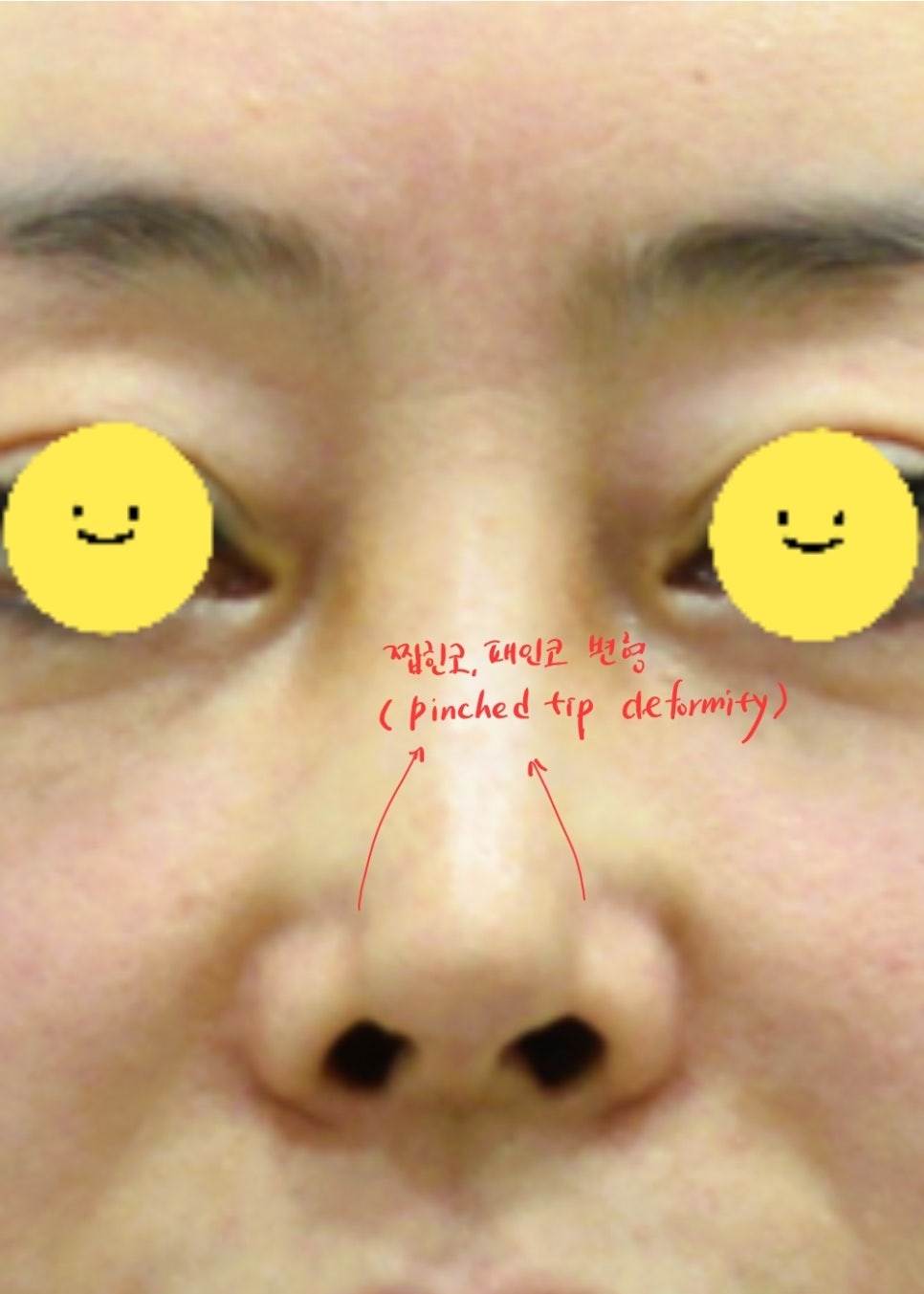
Pinched tip deformity
Of course, not everyone develops this deformity from nasal tip cartilage suturing.
It can also occur over time in people with thin skin, or as the skin becomes thinner with age.
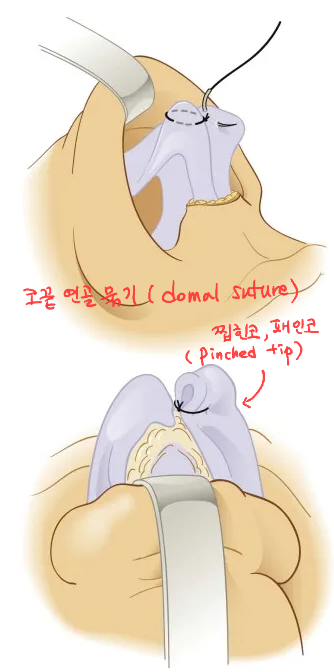
Deformity caused by nasal tip cartilage suturing (pinched tip deformity)
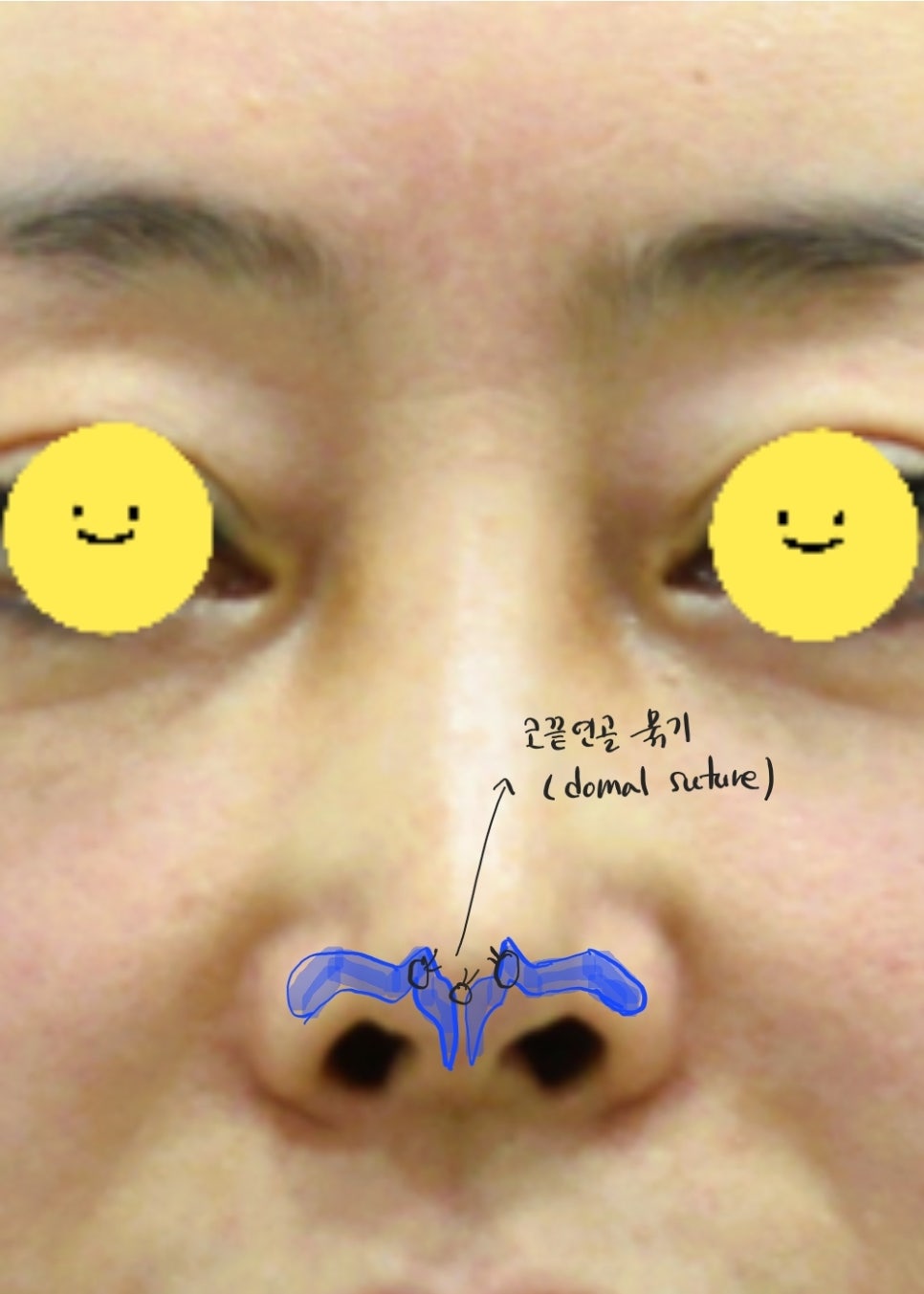
Nasal tip cartilage suturing (domal suture)
The shape of the nostrils may also change due to the sutured cartilage.
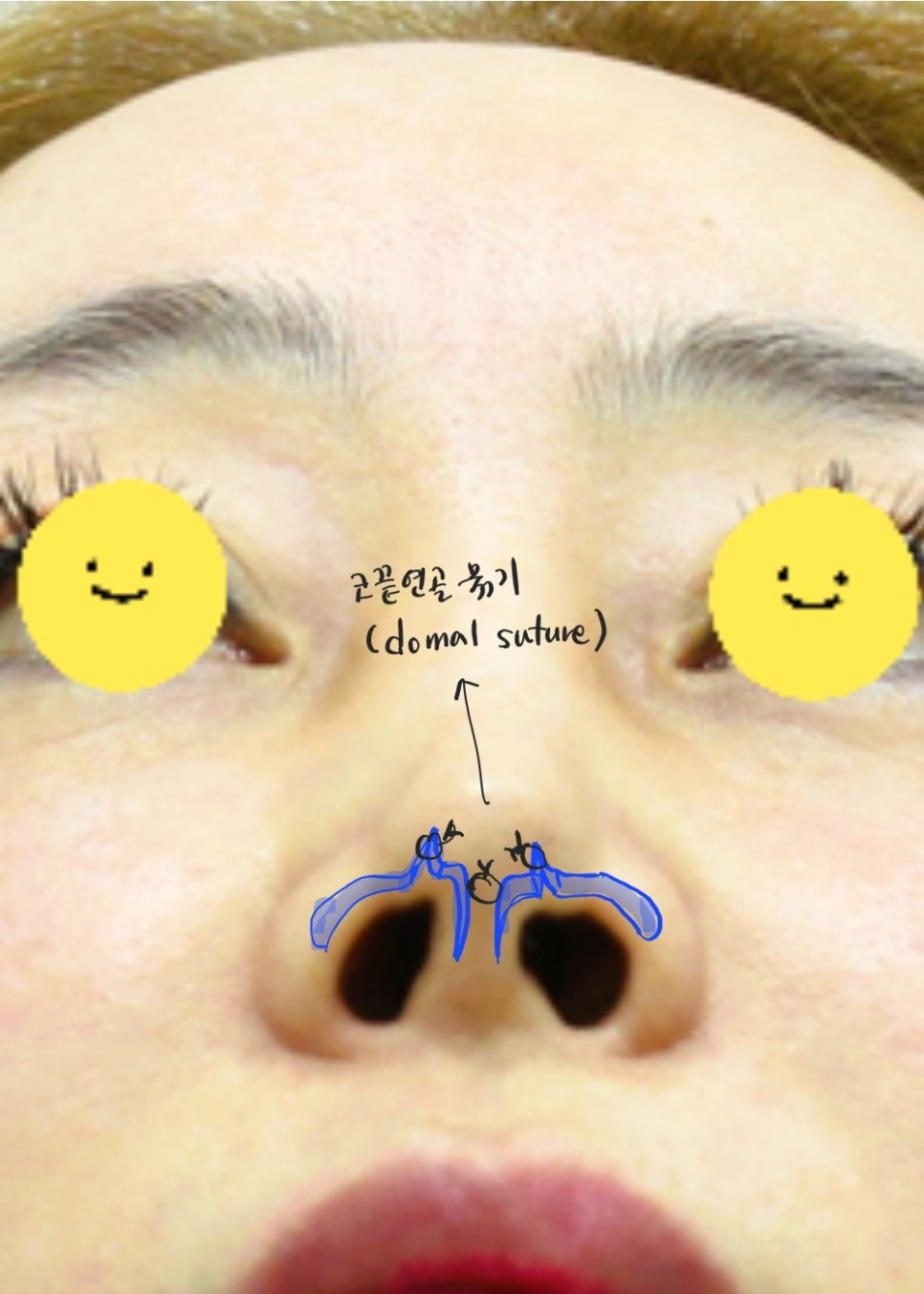
Method of nasal tip cartilage suturing
Also, when only nasal tip cartilage suturing is performed without adequate support for the tip, the tip may become slightly more elevated, but because the support is insufficient, it may not rise as much as expected, or asymmetry of the nostrils may develop.
This patient said that they also tried filler treatment for the pinched and indented areas on both sides of the nasal tip, but it did not improve.
When there is a pinched nose or indented nose deformity, it is necessary to carefully reopen and restore the folded part of the alar cartilage to its original position.
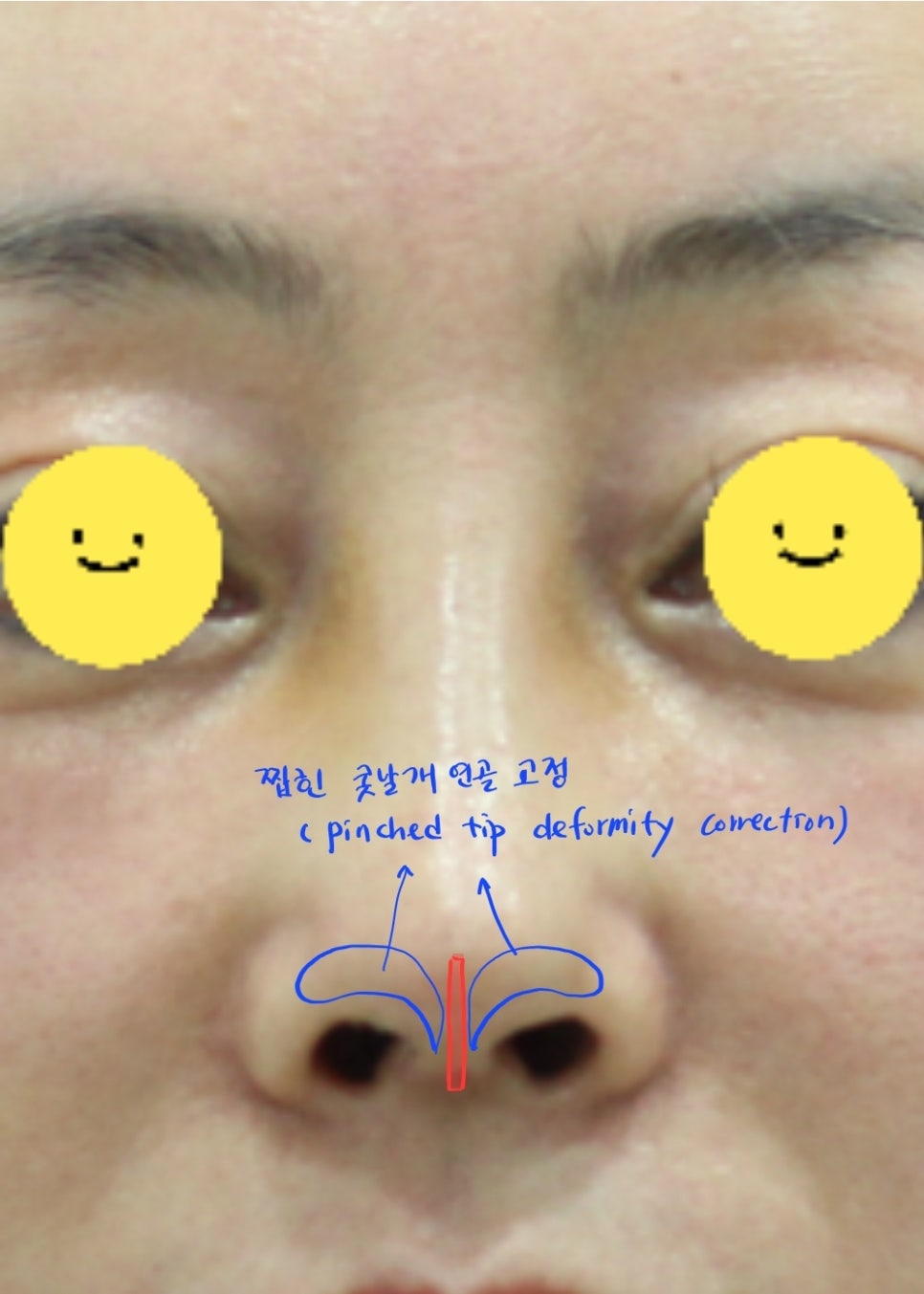
Correction of a pinched alar cartilage
And by creating support for the nasal tip through cartilage grafting, the tip can be corrected to look more refined and symmetrical.
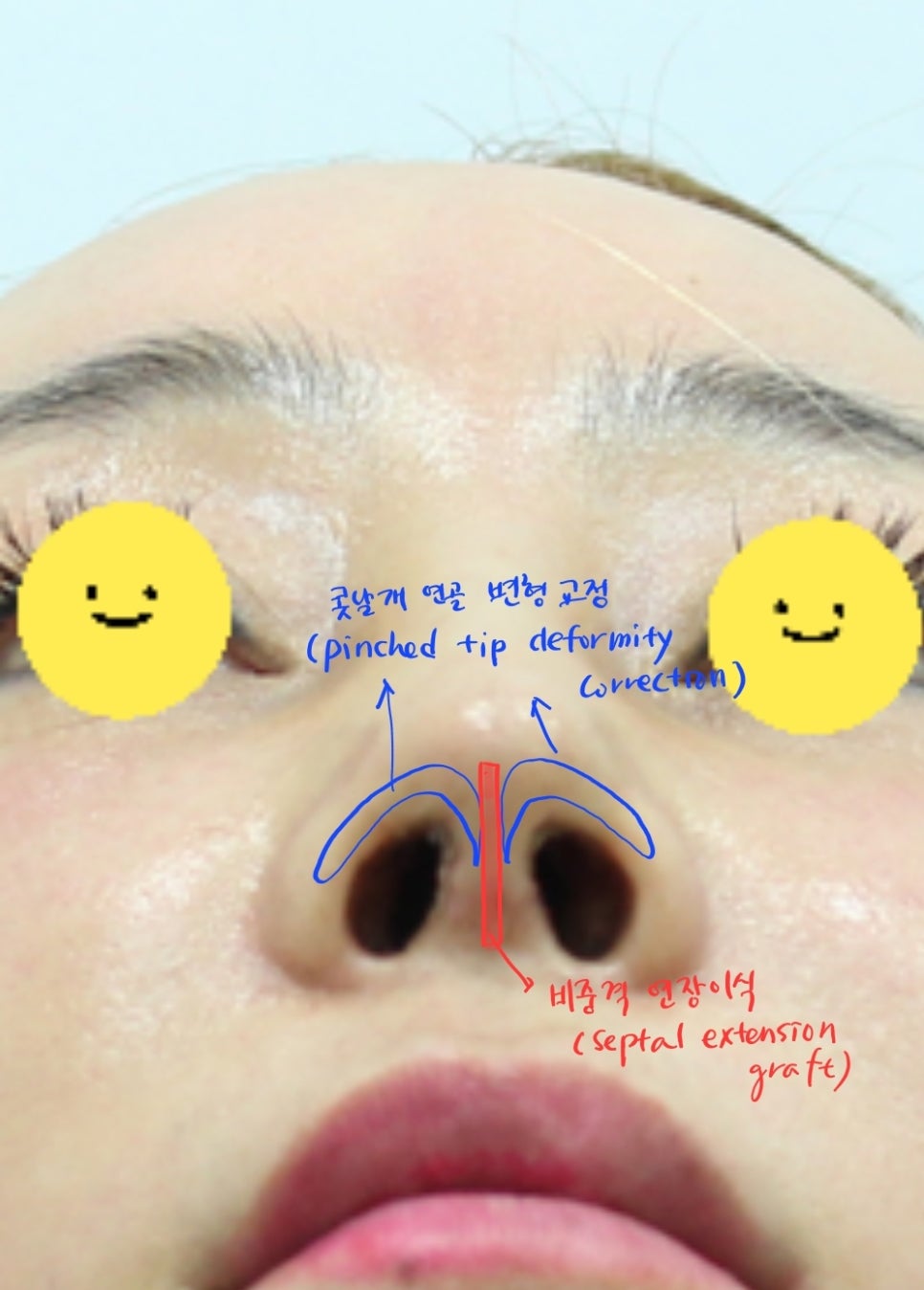
Correction of alar cartilage deformity and septal extension grafting
In some cases, if the alar cartilage has been cut or if the deformity has persisted for a very long time, it may be difficult to resolve with surgical dissection alone.
In such cases, it may also be necessary to graft a piece of ear cartilage above or below the dissected alar cartilage.
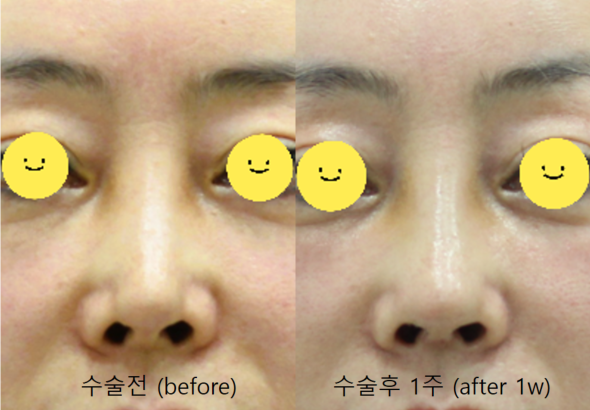
Before-and-after comparison of correction for a pinched nose and indented nose
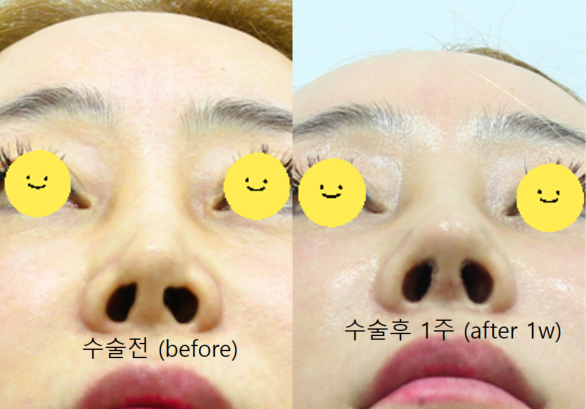
Before-and-after comparison of pinched nose and indented nose correction
When a pinched nose or indented nose deformity appears in revision rhinoplasty, some people say it looks unnatural because it is obvious that surgery was done.
Also, in the case of nasal tip cartilage suturing, if one tries to raise the tip using only the cartilage-tying procedure, the suturing can become too tight, and this may cause a pinched nose or indented nose deformity.
And in fact, it is quite difficult to resolve the pinched and indented parts of the nasal tip with filler treatment.
Therefore, it is better to use appropriate cartilage materials to raise the nasal tip, with cartilage suturing used only as an auxiliary technique.