The most common part of the eyelid aging process is sagging skin on the eyelids.
However, in many cases, sagging eyelid skin is accompanied by a hollowed upper eyelid area.
It may be that the upper eyelids were naturally hollow to begin with, or that facial fat was lost as part of the aging process, or that fat was removed in the past through double eyelid surgery.
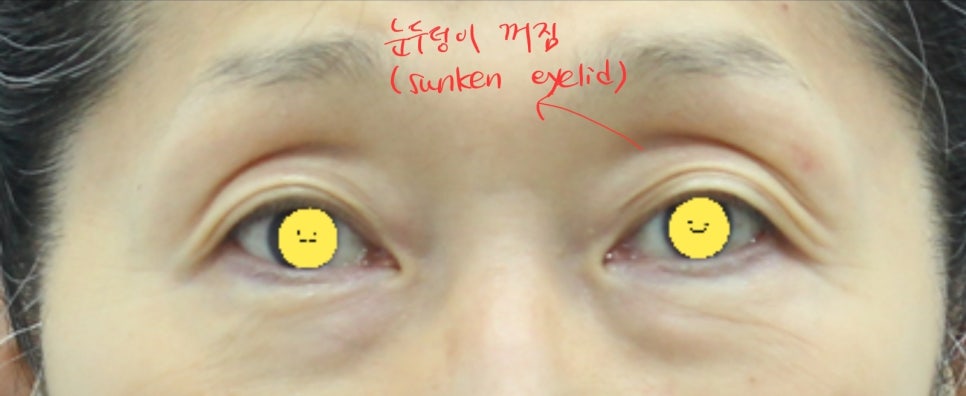
Sagging eyelid skin and a hollowed upper eyelid area
When there is insufficient fat in the upper eyelid area, the eyes can feel very tired. This is because the lubricating layer between the eyelid skin and the levator muscle, which opens the eyes, disappears.
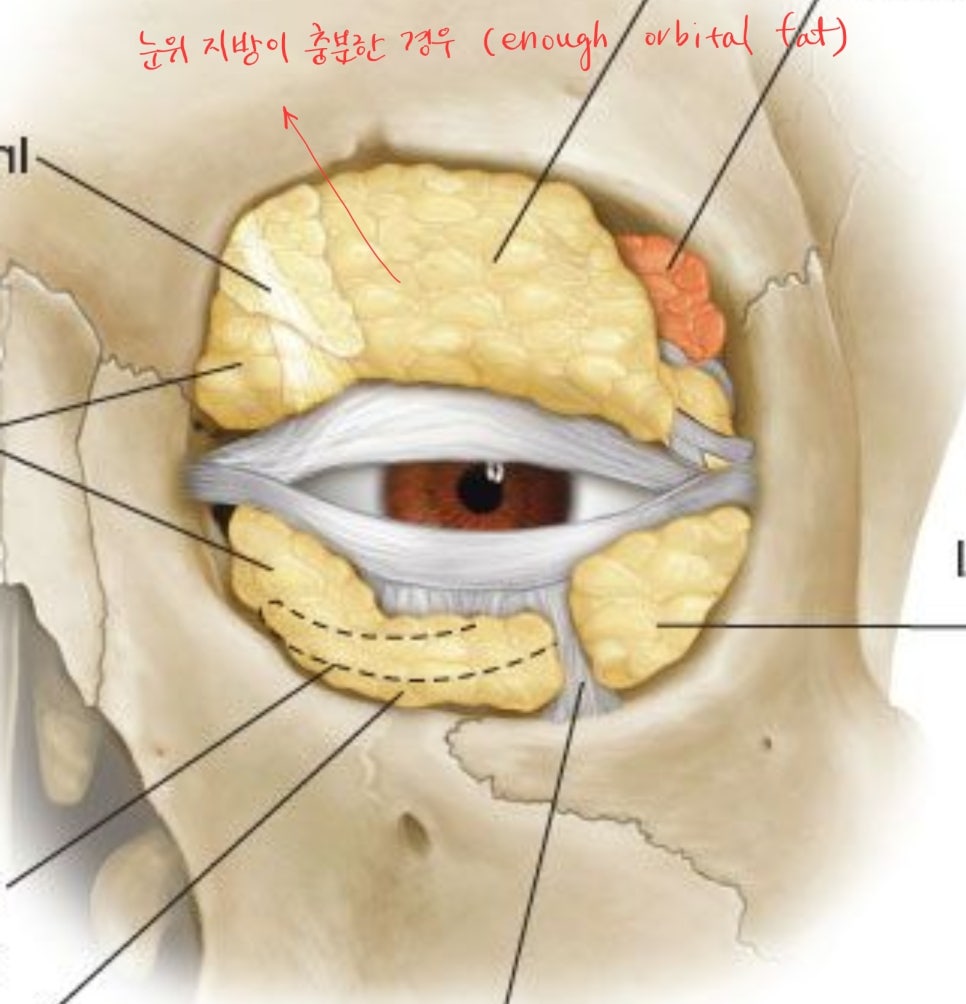
When there is enough upper eyelid fat to cover the levator muscle
When there is enough upper eyelid fat, it can cover the levator muscle, creating a sufficient lubricating layer between the skin and the muscle.
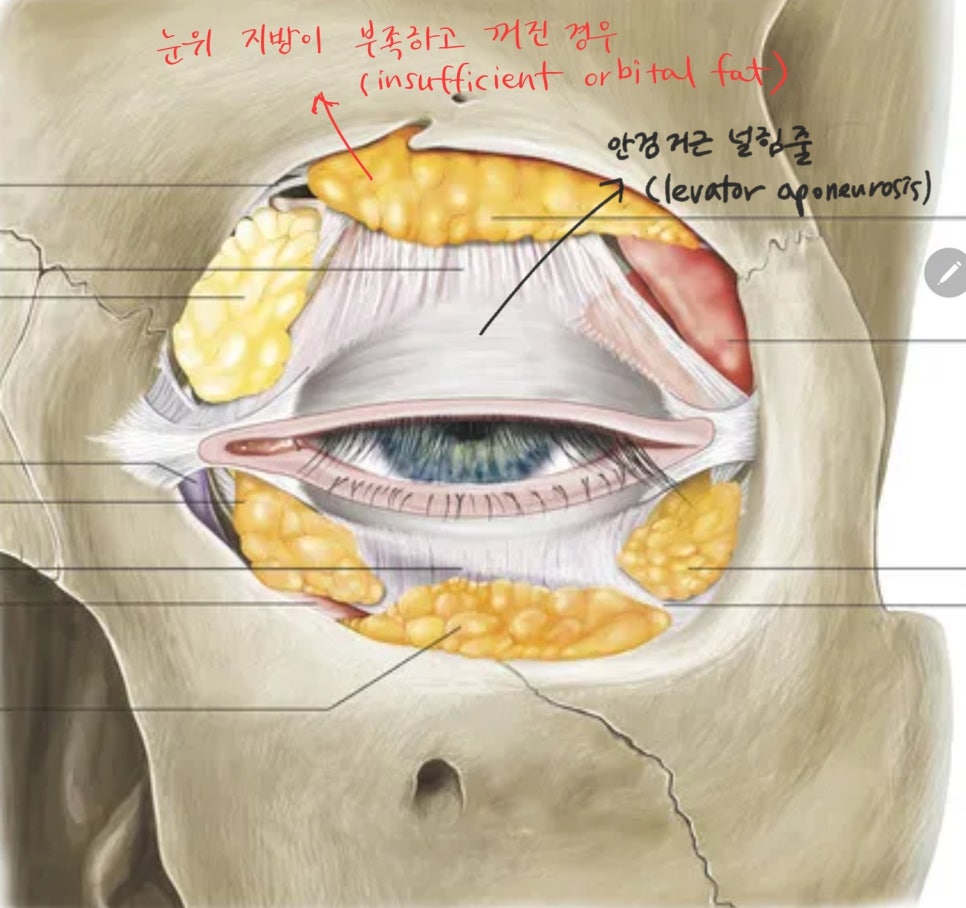
When there is not enough upper eyelid fat to cover the levator muscle
However, if there is insufficient upper eyelid fat, the eyelid skin and the levator muscle can adhere to each other, which may eventually lead to ptosis, making it difficult to open the eyes.
For this reason, early symptoms of ptosis can include a hollowed upper eyelid area and eye fatigue.
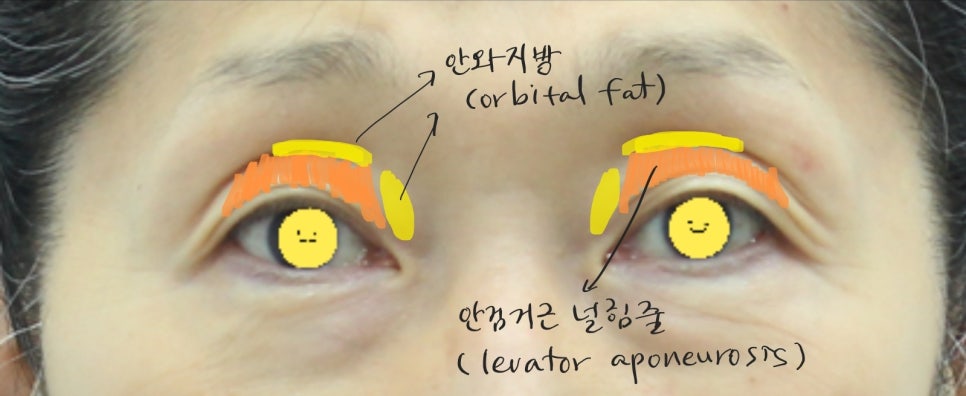
When upper eyelid fat is pulled upward toward the upper orbit
When there is sagging eyelid skin and hollowed eyes, it is better to directly address the sagging eyelid skin through upper eyelid surgery rather than improving it indirectly with a brow lift or a similar method.
The reason is not only to remove skin through upper eyelid surgery, but also because the incision in upper eyelid surgery can be used to move the upper eyelid fat downward.
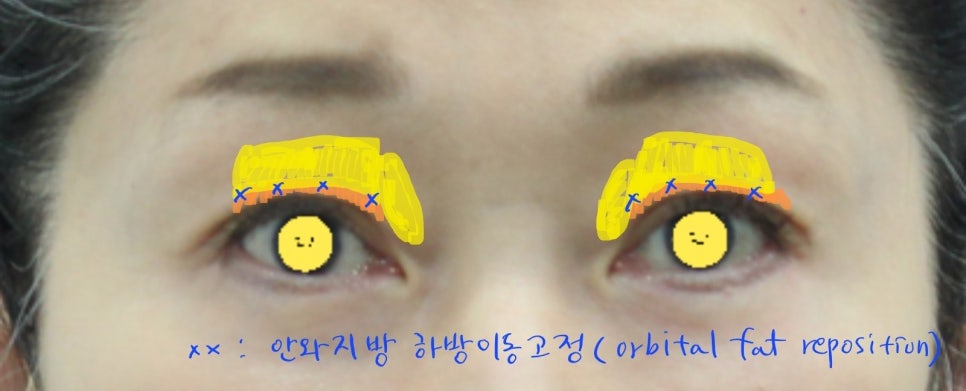
The method of upper eyelid fat repositioning surgery
Upper eyelid fat repositioning is a surgical method that delicately separates the orbital fat that has been pulled upward in a hollowed upper eyelid and moves it downward to secure it in place, thereby improving the hollowed appearance of the upper eyelid.
Through this surgery, the hollowed upper eyelid area can be improved while also creating a lubricating layer between the eyelid skin and the levator muscle, which can reduce eye fatigue.
In addition, if fat grafting to the upper eyelid is performed as an additional procedure, there is the advantage of reducing the total amount of fat that needs to be grafted.
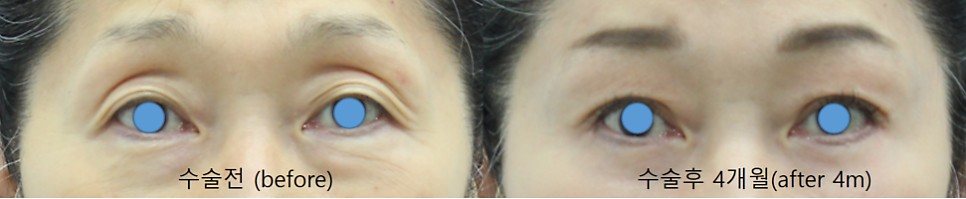
Upper eyelid fat repositioning performed together with upper eyelid surgery
Upper eyelid fat repositioning is a good surgical option for cases where sagging eyelid skin is accompanied by a hollowed upper eyelid, as it can improve the aesthetic appearance of hollow eyes, reduce eye fatigue, and help prevent ptosis.