The two biggest concerns for people considering a facelift consultation are usually the scar from the incision and whether the recovery period will be too long.
A facelift surgery takes about 3 hours, and the entire procedure is performed under sleep anesthesia, so you can undergo the surgery comfortably. There is no pain after surgery, but for those who want pain relief injections, PCA (Patient Controlled Analgesia) is also available.
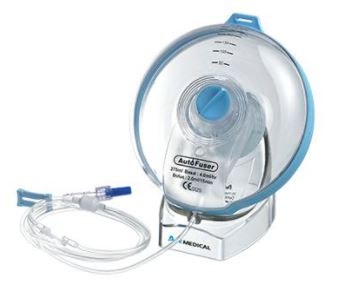
PCA pain relief injection
A facelift is performed by making an incision along a line that follows the shape of the ear, extending from the front scalp to in front of the ear, behind the ear, and then to the back scalp.
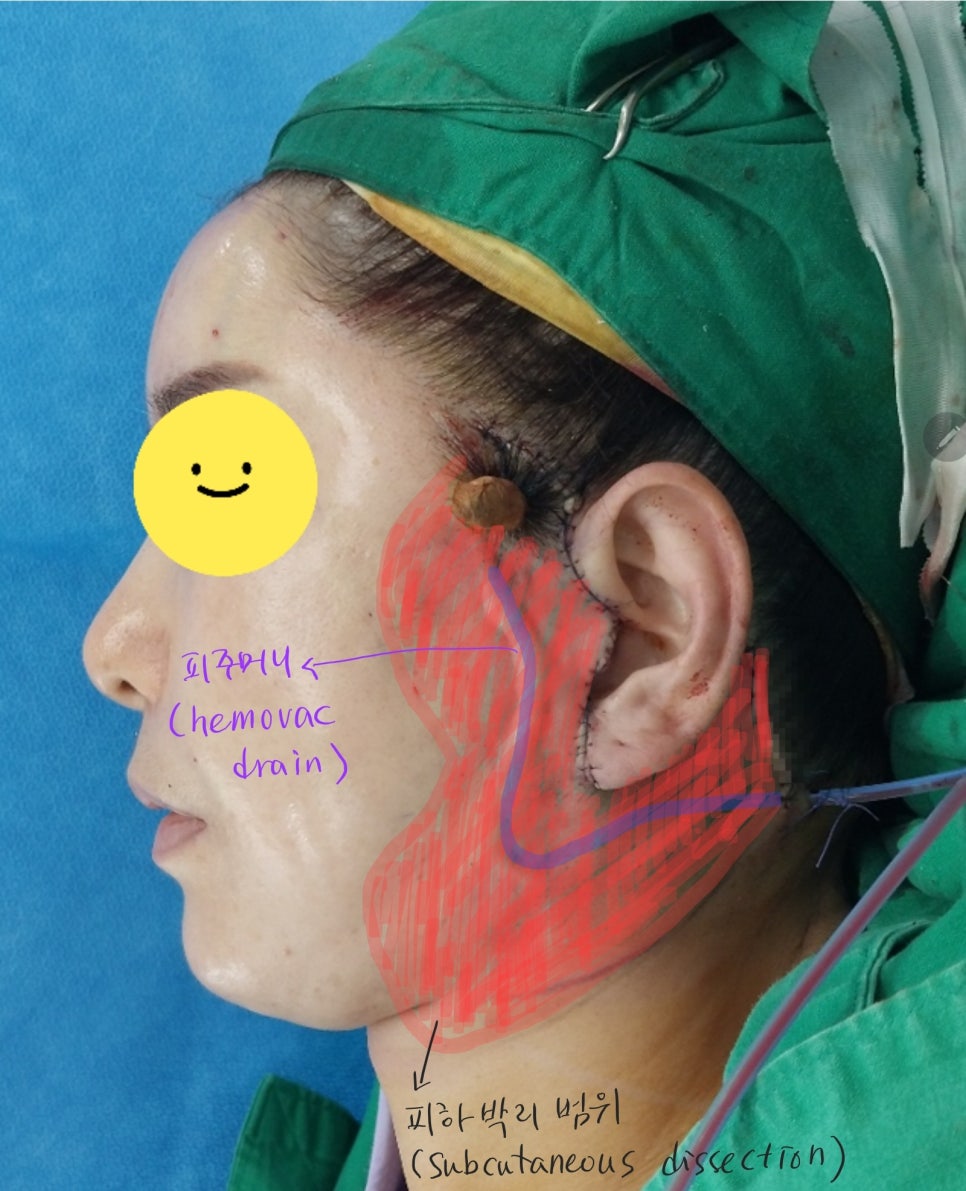
Extent of subcutaneous dissection after surgery and the drain
Because a facelift is a surgery that lifts a wide area of the face, the dissection area is large. For that reason, a drain is left in place for about one day after surgery, and it is removed the next day.
Usually, about 20 to 30 cc of accumulated blood is drained on the first day, which can help reduce swelling and bruising after surgery.
Starting around the third day after surgery, you can wash your face and hair, and we provide sufficient postoperative care and swelling management.
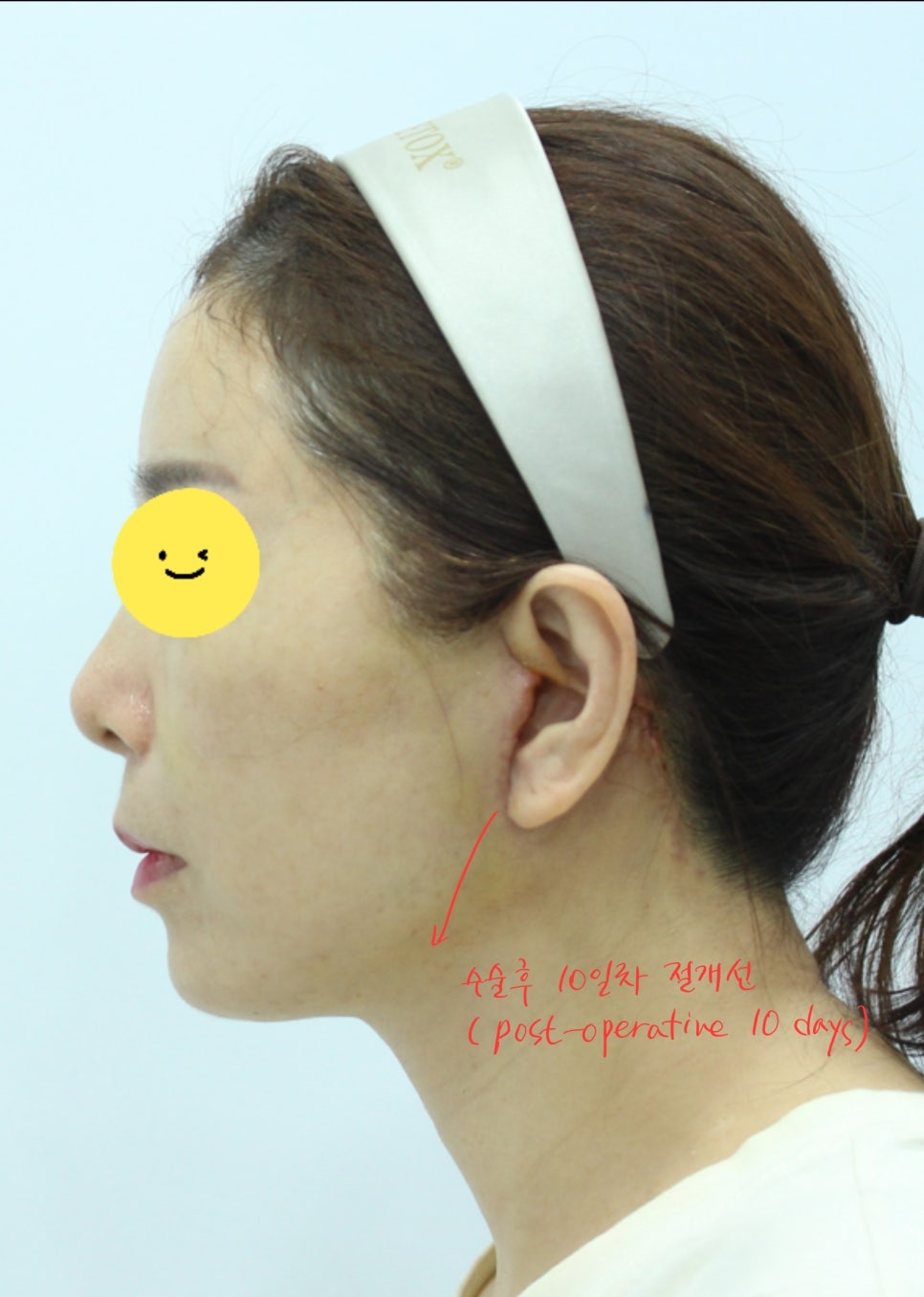
Stitch removal on day 10 after surgery
Also, depending on the situation, stitches can be removed starting around 10 days after surgery.
The incision line from a facelift may still have slight redness after stitch removal, but after the scar maturation period, the incision line becomes almost unnoticeable.
The reason the facelift incision scar is not very noticeable is because the incision follows the shape of the ear, preserving its contour, and because the most important part is minimizing the tension on the skin through dissection of the SMAS.
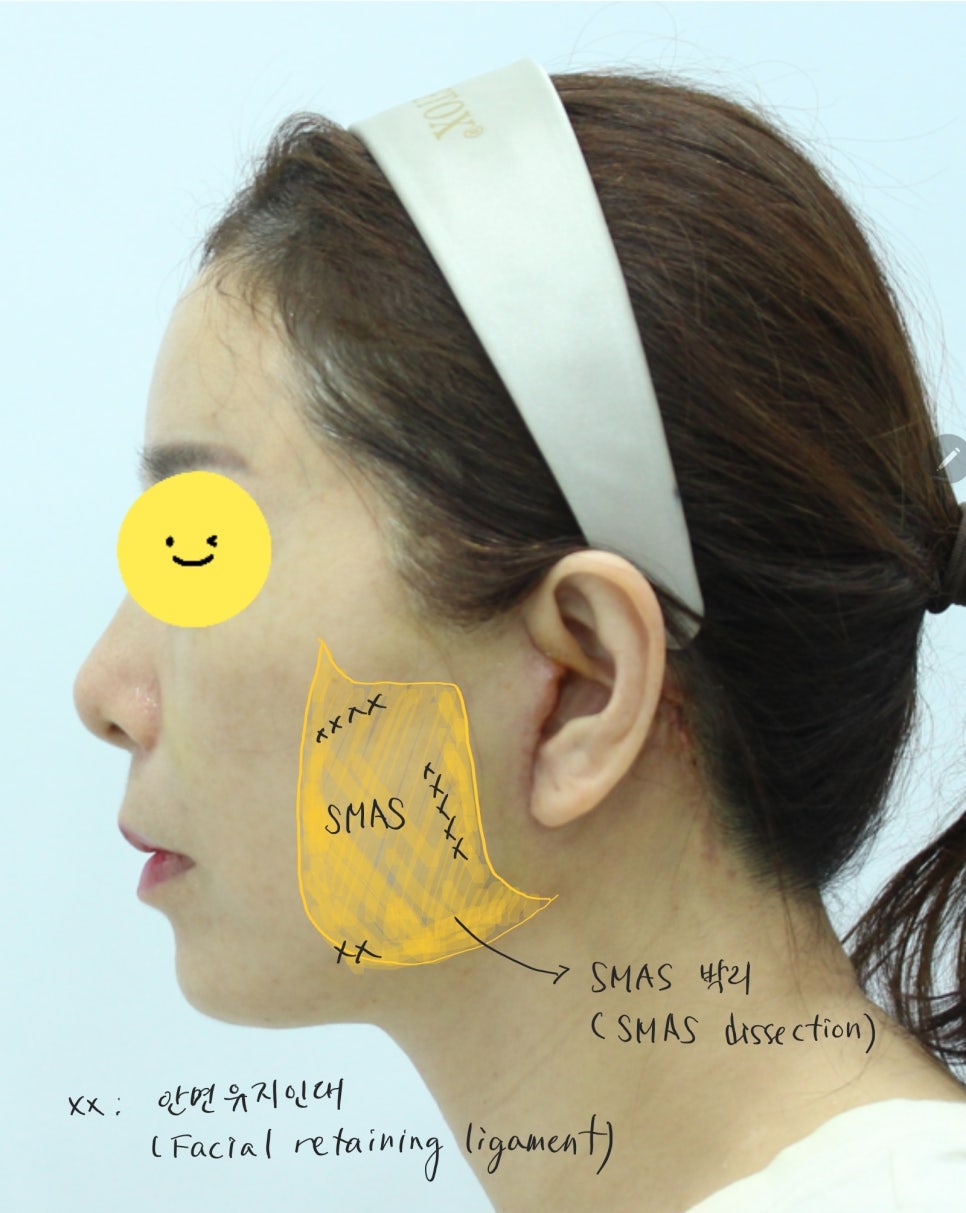
Extent of SMAS layer dissection and dissection of the facial retaining ligaments
People who come in for facelift consultations tend to worry a lot about the incision line, but the most important part is the dissection of the SMAS layer and treatment of the facial retaining ligaments.
This process is the core technique of a facelift, and because the lifting tension is applied to the well-dissected SMAS layer, the incision scar does not spread, and the ear shape can be maintained exactly as it was before surgery.
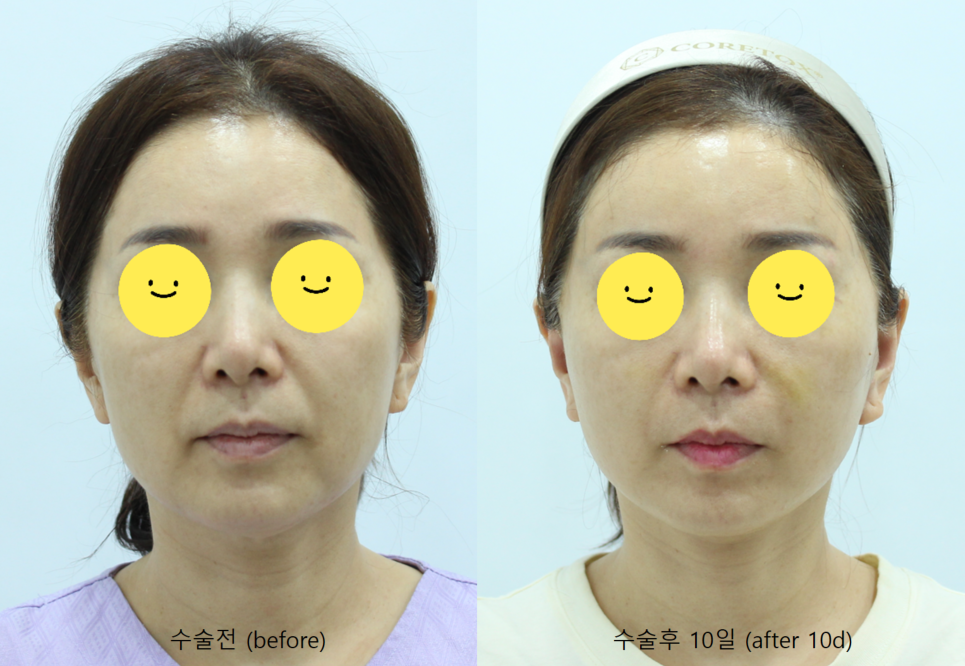
Comparison before and after upper blepharoplasty, lower blepharoplasty, fat grafting, and facelift on day 10. This is a real model who consented to disclosure.
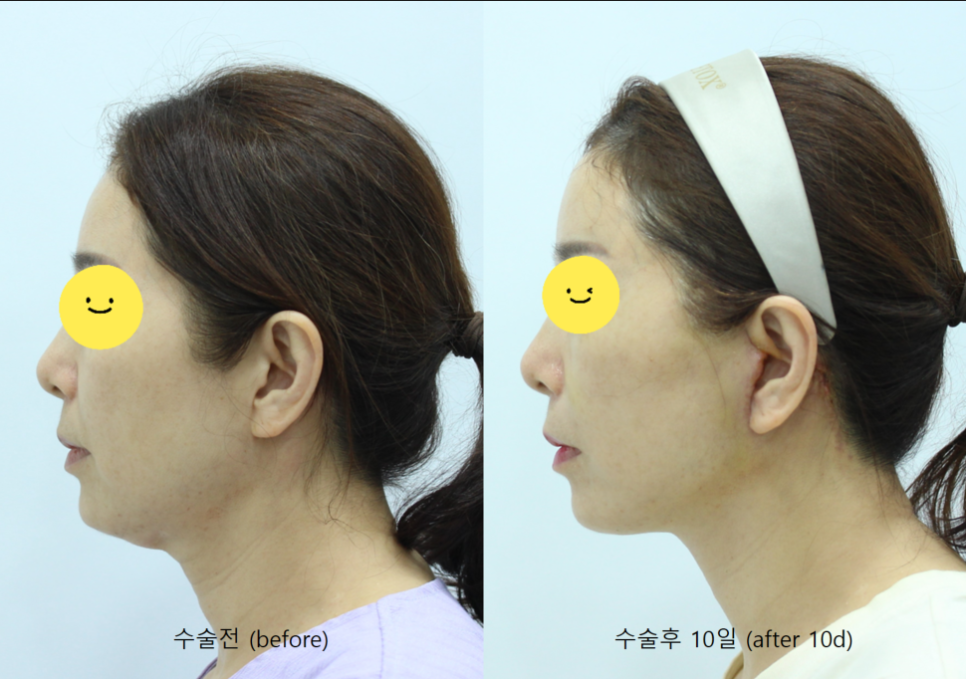
Comparison before and after upper blepharoplasty, lower blepharoplasty, fat grafting, and facelift on day 10. This is a real model who consented to disclosure.
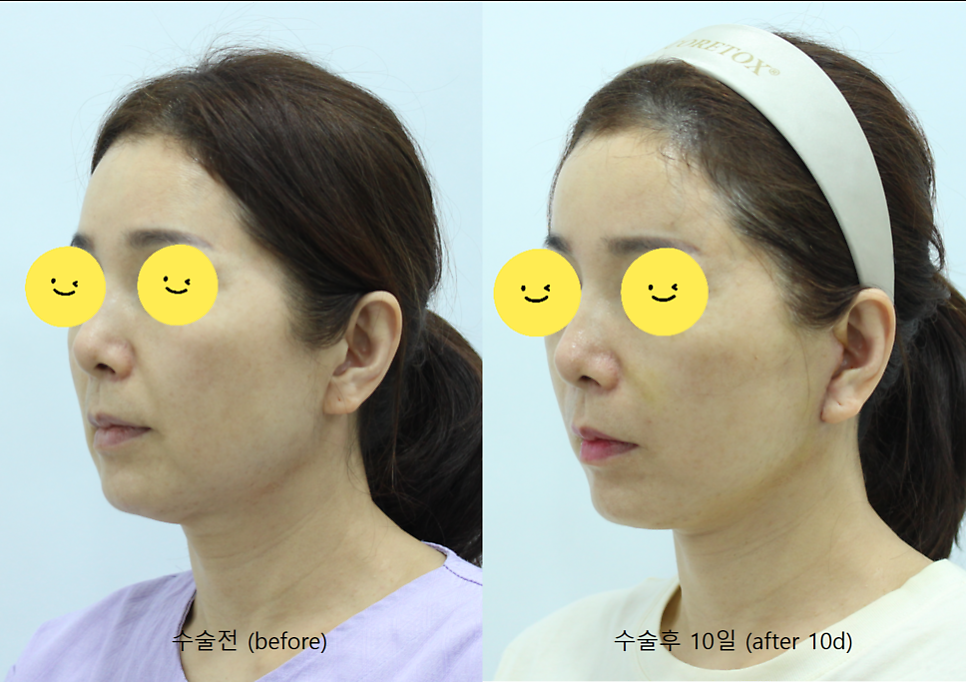
Comparison before and after upper blepharoplasty, lower blepharoplasty, fat grafting, and facelift on day 10. This is a real model who consented to disclosure.
People usually think that the recovery period after a facelift will be quite long, but if we consider the point at which daily life becomes possible to some extent, it can be thought of as about 10 days.
If you think of the recovery period for the most common anti-aging surgeries, upper blepharoplasty and lower blepharoplasty, as about one week, then the recovery period for a facelift is shorter than you might expect, around 10 to 14 days.
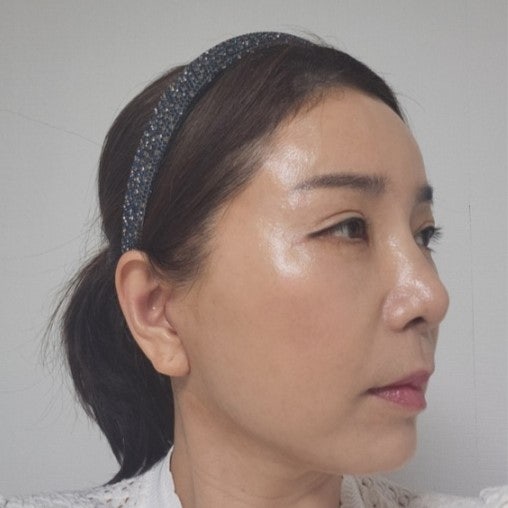
This is a real model who consented to disclosure.
As in the case of the real model, even if additional procedures such as upper blepharoplasty, lower blepharoplasty, or fat grafting are performed together with a facelift, there is no difference in recovery time.