When the bridge of the nose is raised through filler injections, the procedure is simple, but because filler is a viscous, semi-liquid substance, there is a limit to how much the nasal tip can be elevated.
For this reason, procedures that use barbed lifting threads to raise the nasal tip are being performed frequently.
They are usually performed under names that combine the product name of the thread, such as Hico, Y코, Misco, and Beko.
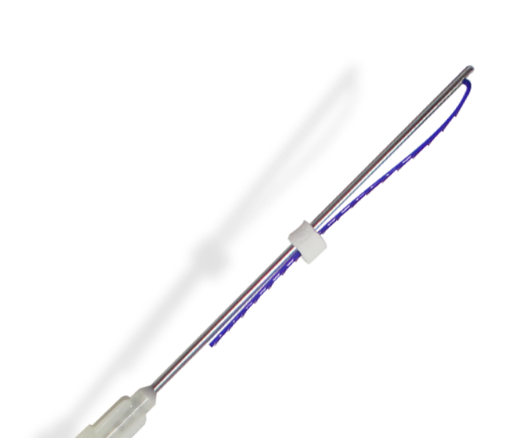
Threads for nasal tip lifting
This is a procedure that raises the nasal tip by inserting a lifting thread with barbs through a small hole in the tip of the nose. However, because the nasal tip is being elevated by the force of the thread itself, support is often insufficient, so multiple threads are inserted in many cases.
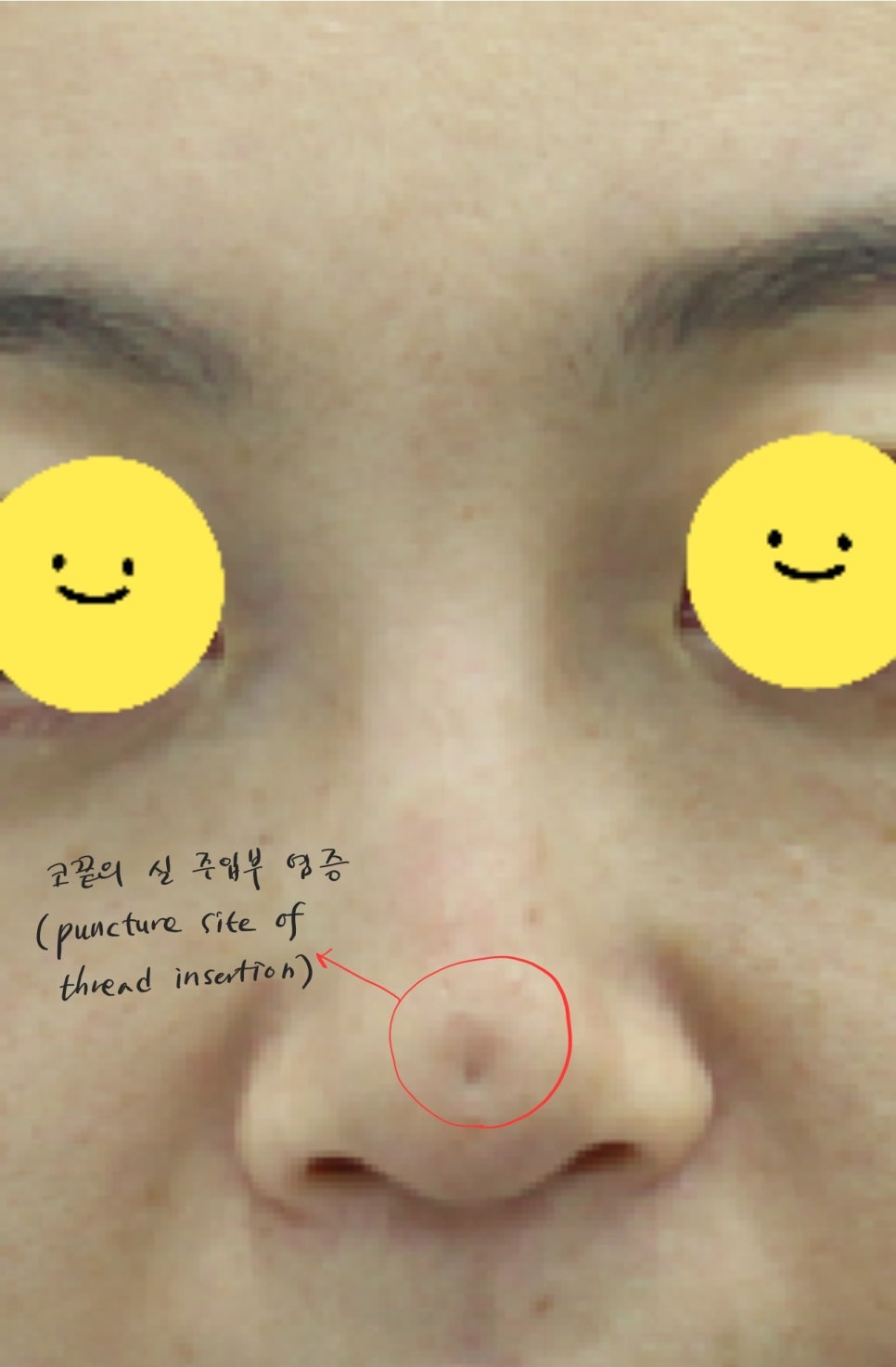
Hole at the thread insertion site in the nasal tip and inflammation
The thread inserted into the nasal tip can provide support for the tip for several months, but after that time it loses its support and remains in the nasal tip as a foreign body.
In addition, threads inserted into the nasal tip can make the skin of the nasal tip thinner, and together with the injected filler, they can also trigger an inflammatory reaction.
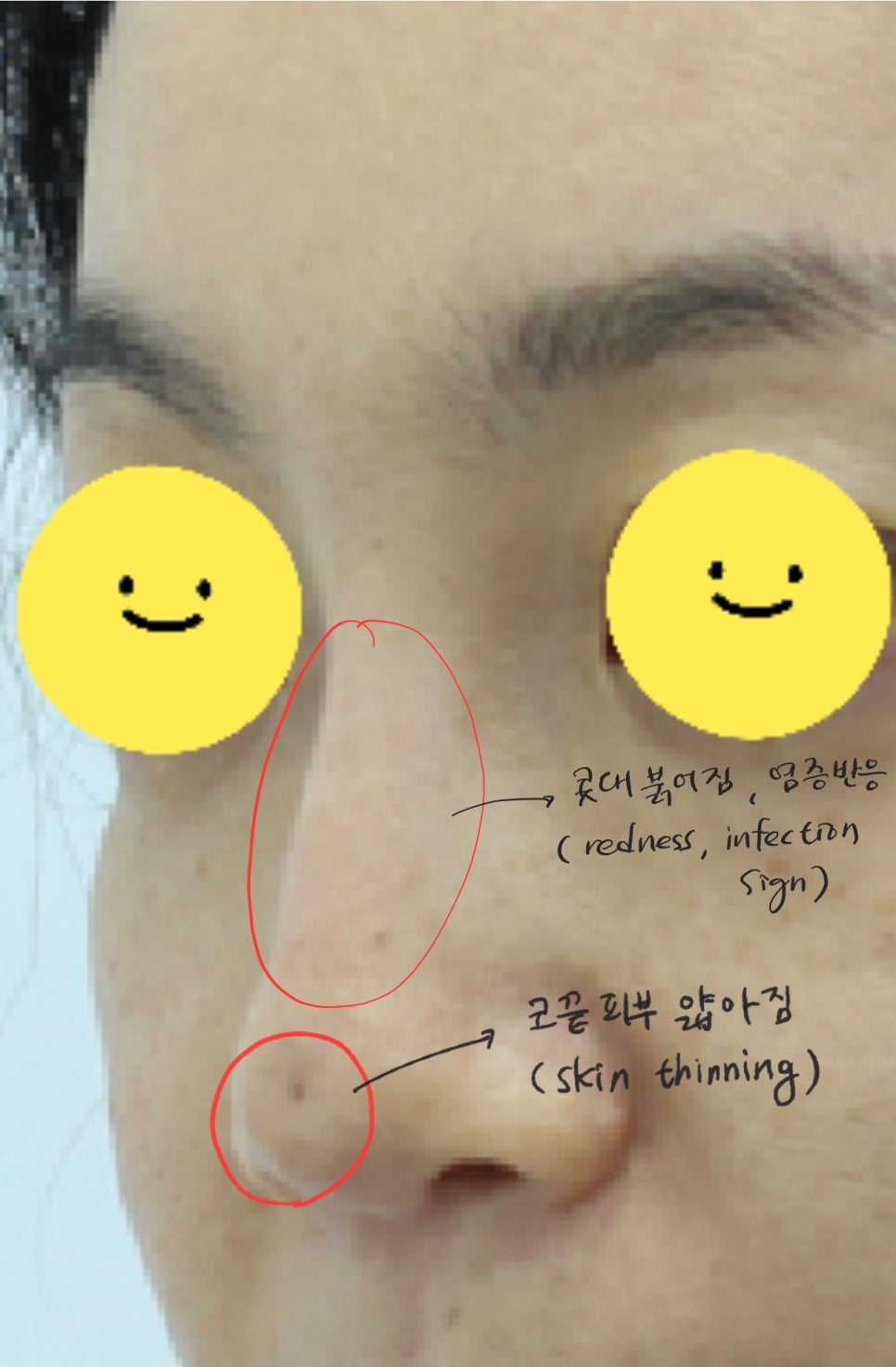
Thinning of the skin at the nasal tip and inflammatory reaction in the bridge of the nose
Among some people who have had thread procedures on the nasal tip, the insertion site of the thread at the tip does not heal well, becoming red or causing filler or pus to drain through that area.
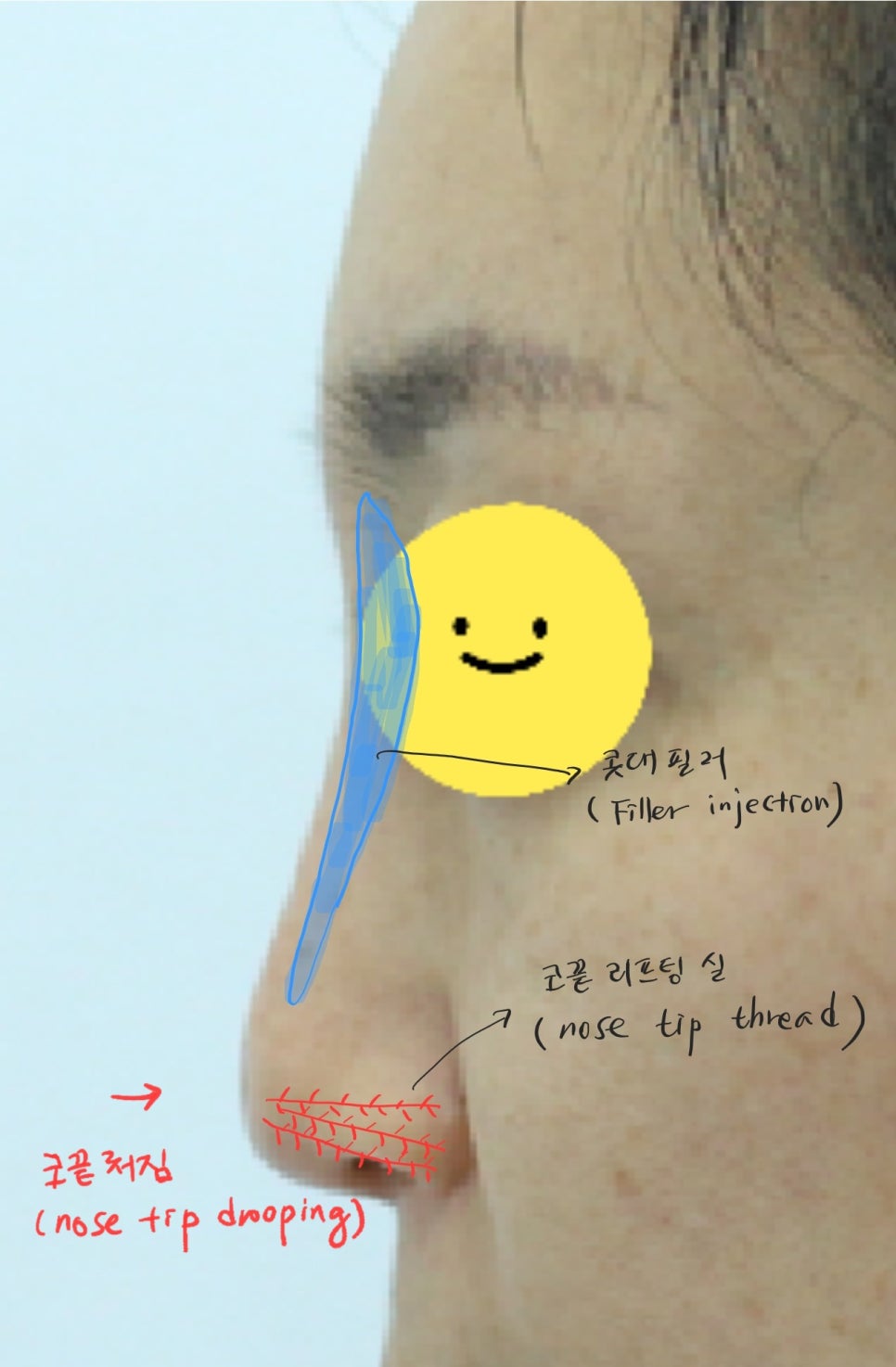
Diagram of bridge filler and nasal tip thread lifting
The barbed threads inserted into the nasal tip can temporarily provide support and raise the tip, but after the maintenance period of several months has passed, the nasal tip sags again, and in many cases complications occur after repeated procedures.
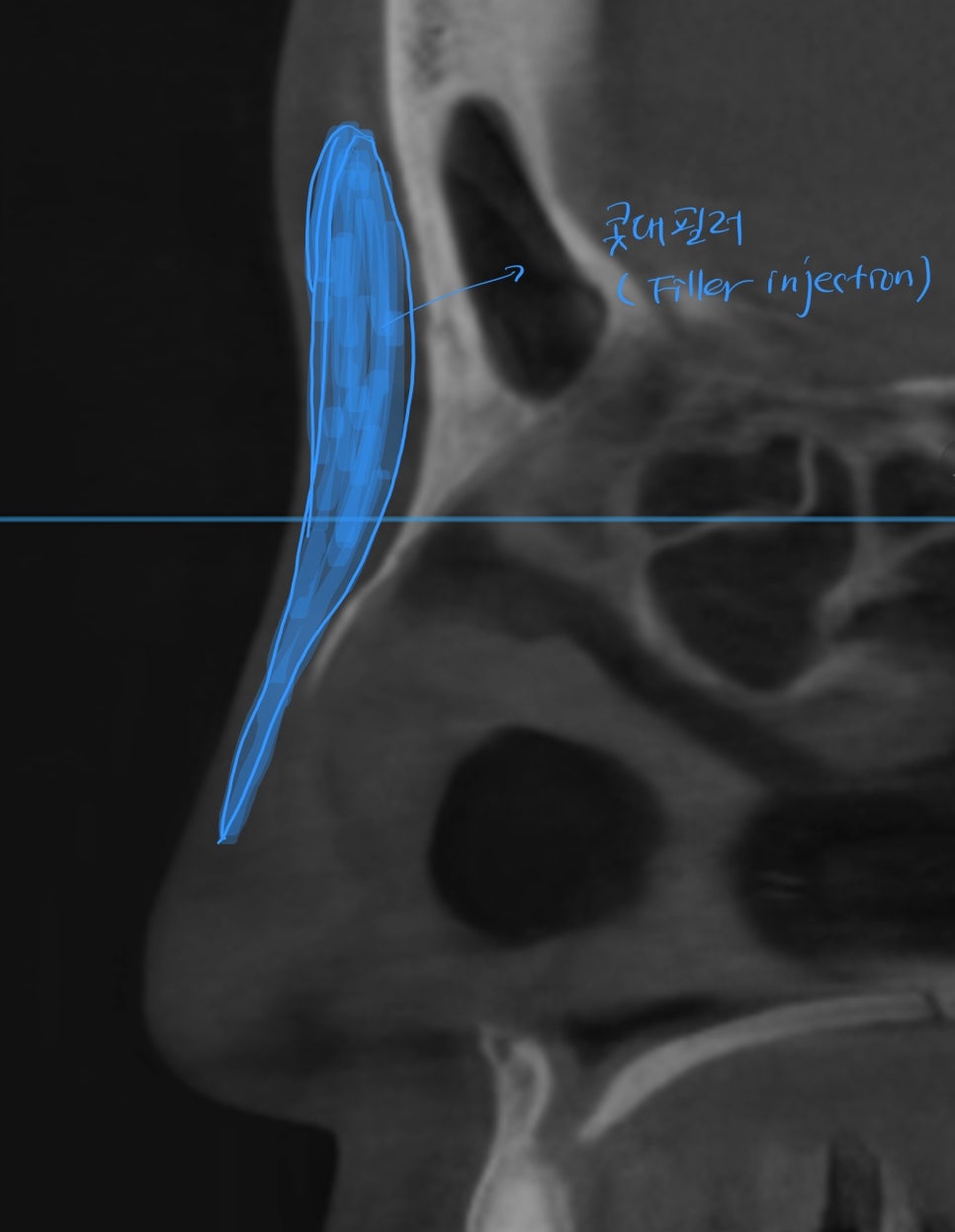
The shadow of filler seen on CT
Repeated filler procedures can spread the bridge of the nose, which is aesthetically undesirable, and repeated thread procedures can also sometimes cause inflammation.
To remove the threads inside the nose, surgical removal is essential, and if there is inflammation, the inflamed tissue must also be removed.
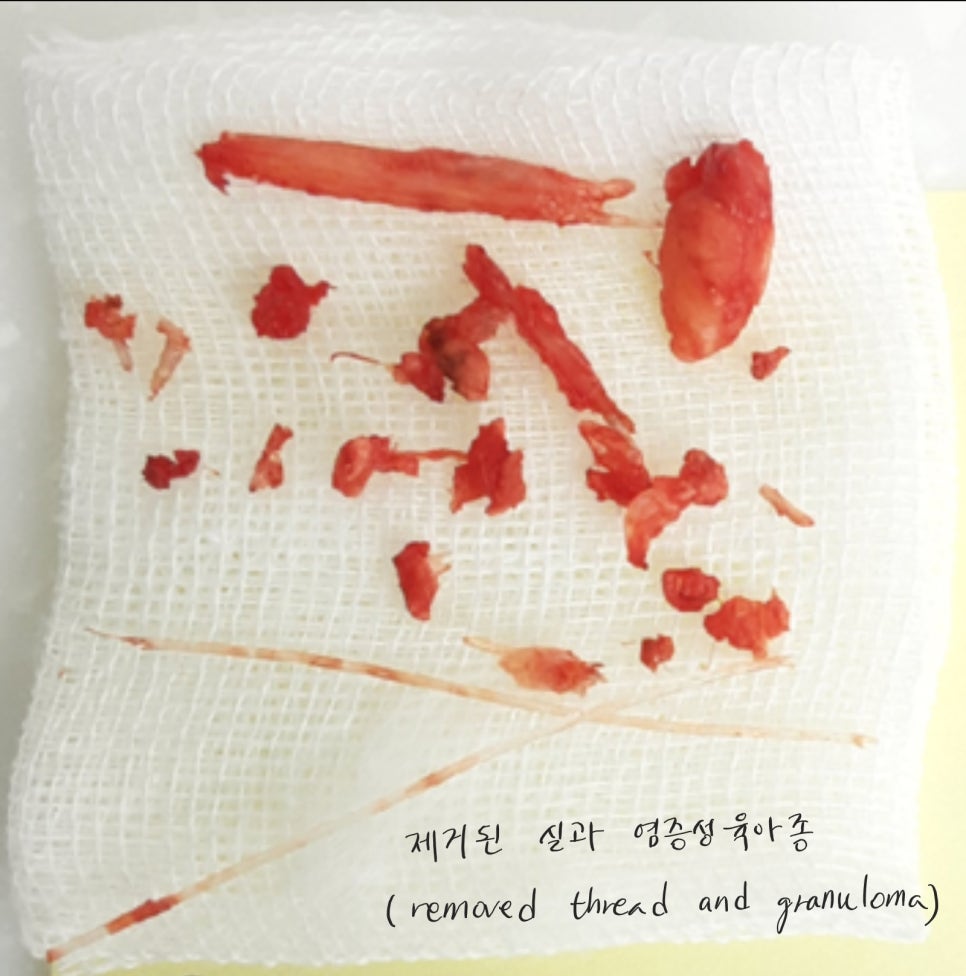
Threads and inflamed tissue removed from the nose
The lifting threads placed in the nose can inevitably remove some soft tissue along with the barbs of the thread during the removal process, and this can inevitably thin the skin of the nose.
If inflammation develops in the nose for various reasons, it is safer to use autologous tissue for rhinoplasty rather than an artificial implant such as a silicone prosthesis.
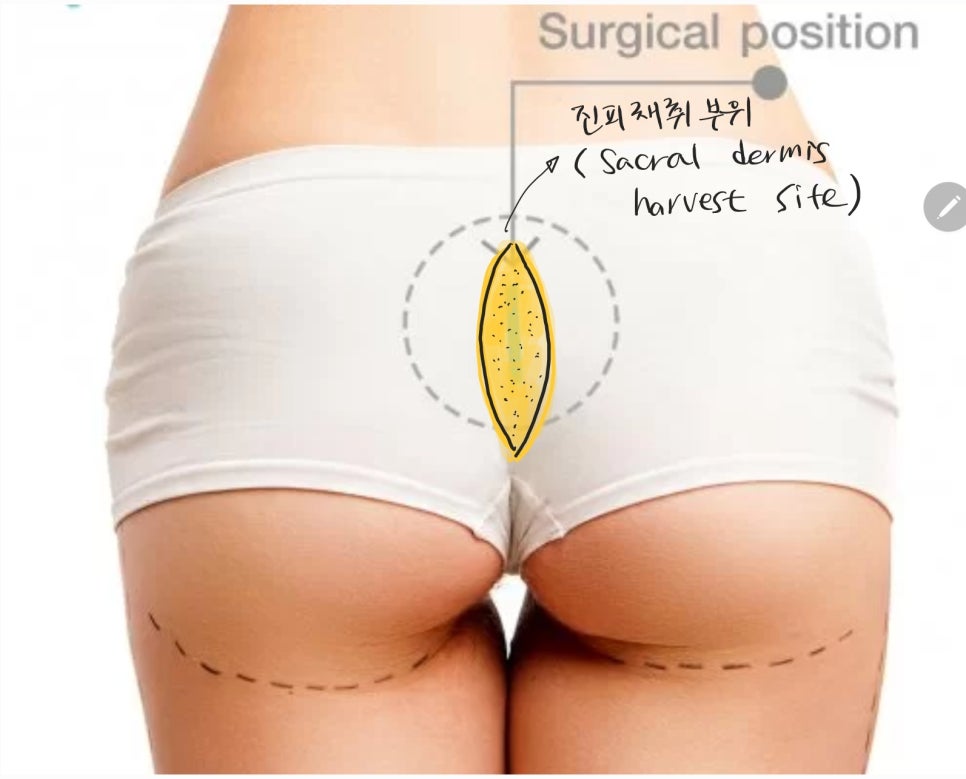
Harvest site of autologous dermis for rhinoplasty
The dermis used for autologous dermis rhinoplasty can be harvested from several sites, but the most commonly used site is the tailbone area between the buttocks.
Autologous dermis from the tailbone area is a dermis harvesting site that is used often in rhinoplasty because the dermis is relatively thick and the scar is not easily visible after harvesting.
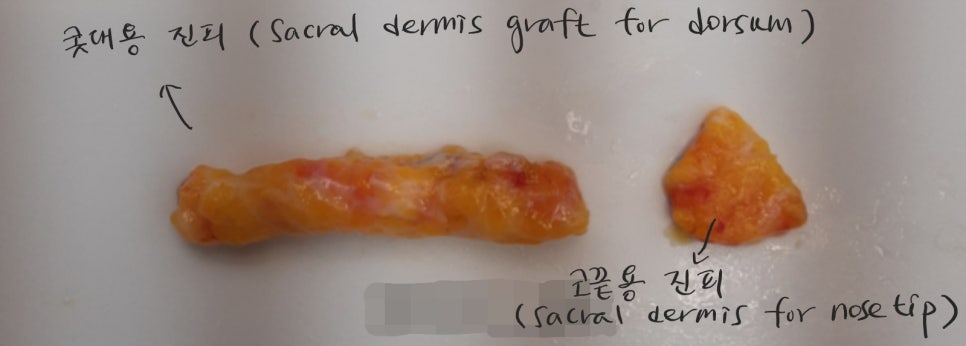
Processing the harvested autologous dermis
The harvested autologous dermis is folded appropriately and used to increase the height of the bridge of the nose instead of a silicone implant and to reinforce the thinned skin at the nasal tip.
If a soft and natural-looking nose is desired in rhinoplasty, using ear cartilage to raise the nasal tip is also a good option, and when combined with the soft characteristics of autologous dermis, a well-balanced rhinoplasty result can be achieved.
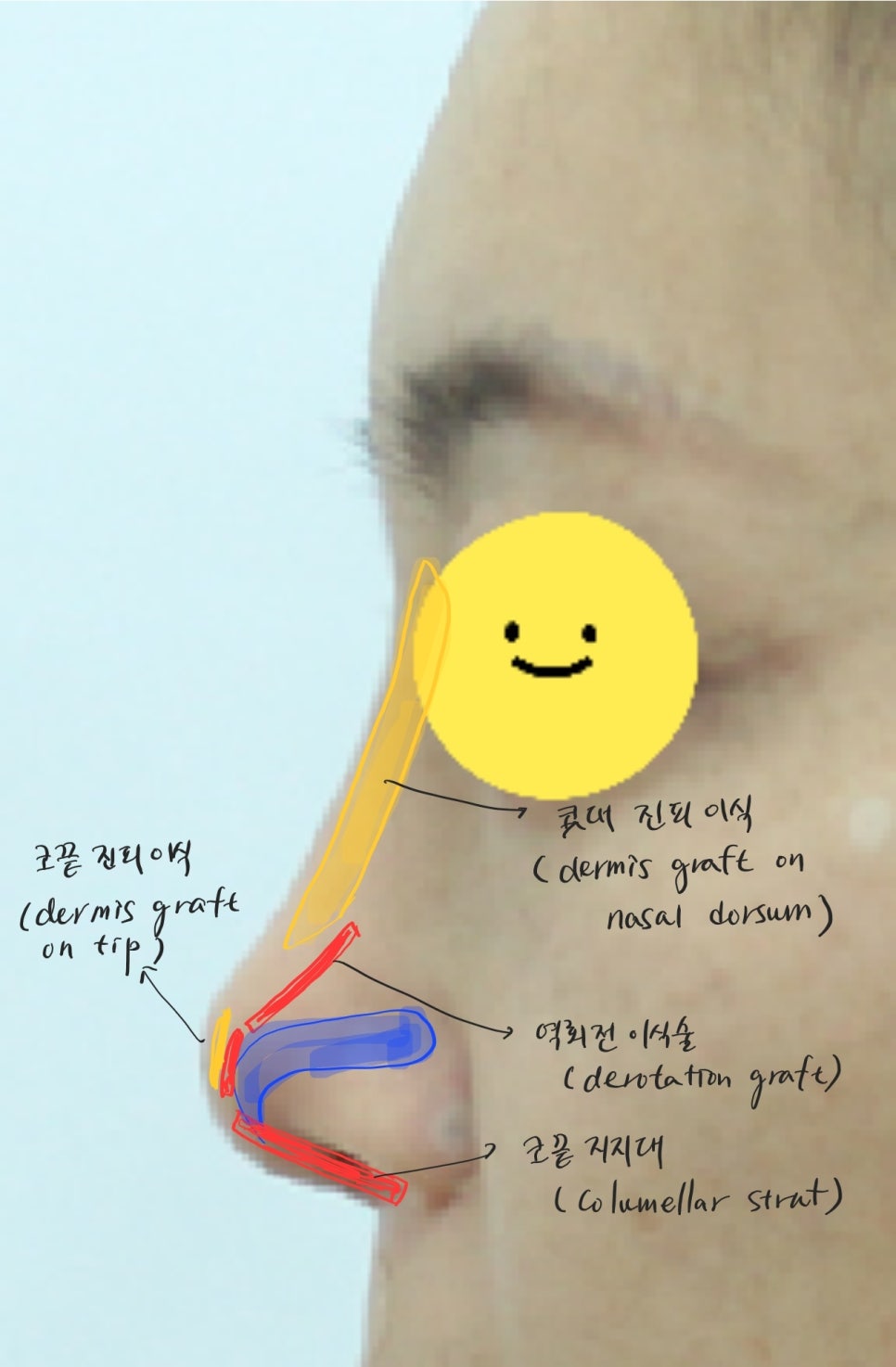
Rhinoplasty using autologous dermis and ear cartilage
When raising the nasal tip with ear cartilage, a derotation graft is usually placed in the upper part and a columellar strut graft is placed in the lower part of the nasal tip to adjust the height and length of the tip.
In the case of rhinoplasty using autologous dermis, some of the transplanted dermis is absorbed. Usually, the bridge of the nose lowers slightly for about two months, after which the height is maintained.
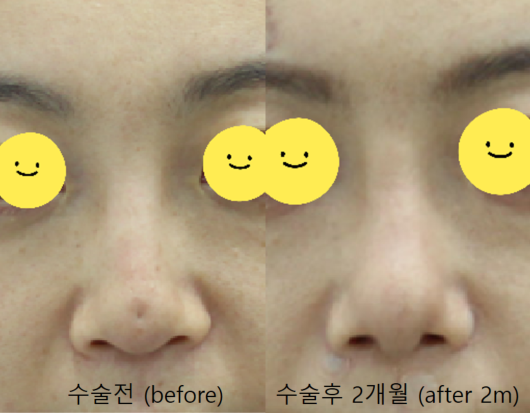
Comparison before and after two months postoperatively
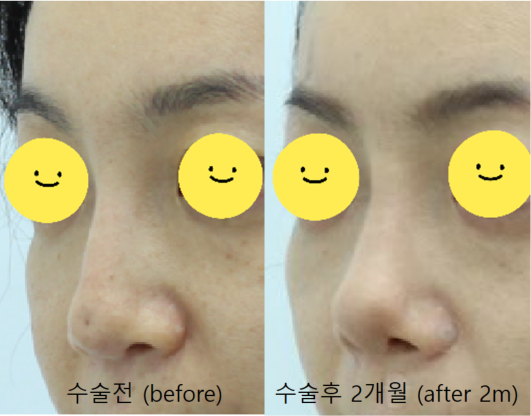
Comparison before and after two months postoperatively
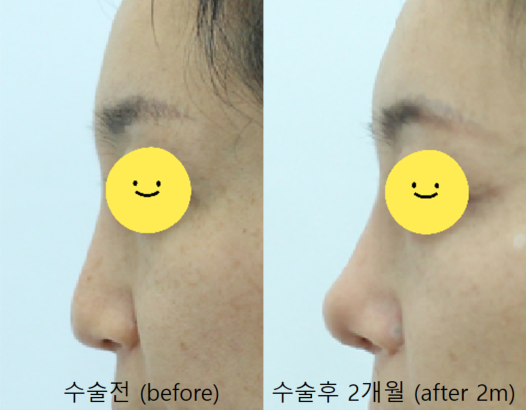
Comparison before and after two months postoperatively
Procedures that use lifting threads to raise the nasal tip are commonly performed.
However, after the short maintenance period has passed, the threads remain in the nasal tip as foreign material, and repeated procedures thin the skin of the nose and sometimes cause inflammation.
This type of inflammation does not respond well to antibiotics and continues as long as the foreign material remains. It can only be treated once the foreign material is removed.
However, if all filler and threads in the nose are removed, the nose suddenly becomes lower, which can make the aesthetic situation very difficult. Therefore, rhinoplasty that replaces them with autologous tissue must be performed in order to achieve aesthetic satisfaction.