The most important thing in eye plastic surgery is to check whether the strength to open the eyes is sufficient.
A lack of strength in opening the eyes is called ptosis, and this is unrelated to sagging skin of the eyelids.
During consultations for double eyelid surgery, there are times when ptosis is explained.
Usually, people think that if a double eyelid is created or the skin covering the eyelid is removed, the eyes will also open more easily. But that is not the case.
The surgery that helps the eyes open better is called eye-opening correction, and another term for it is ptosis correction.
In other words, from the perspective of people who are not doctors, it is fine to understand it as ‘ptosis correction = eye-opening correction.’
When consulting about the eyes, there are people who ask to be made to have a ‘kind-looking eye shape.’
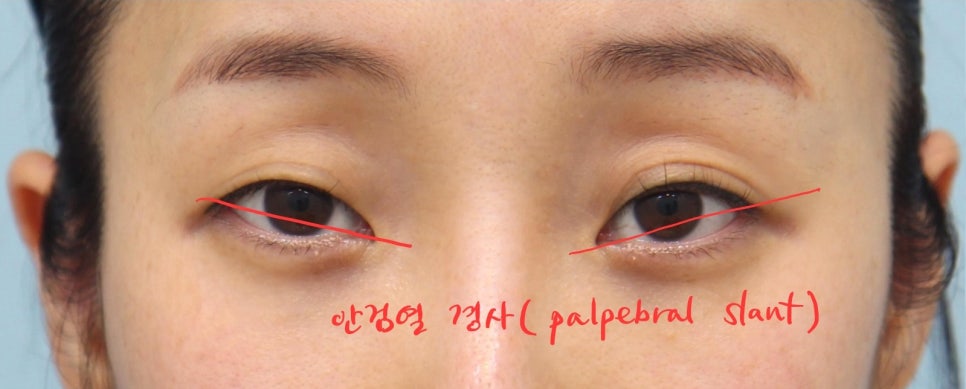
Palpebral slant in Asians
Expressions such as the eye shape looking kind or gentle are subjective, but it is true that, in the case of Asians, the slant of the eye opening is more upward than in other races.

Racist act seen in slanted-eye gesture
Even the ‘slanted-eye’ gesture that Westerners use as a racist act would be an action that mocks the upward slant of Asians’ eye openings.
So for those whose palpebral slant is too steep upward or who want a kind-looking eye shape, eye-opening correction can be used to correct a sharp-looking eye shape.
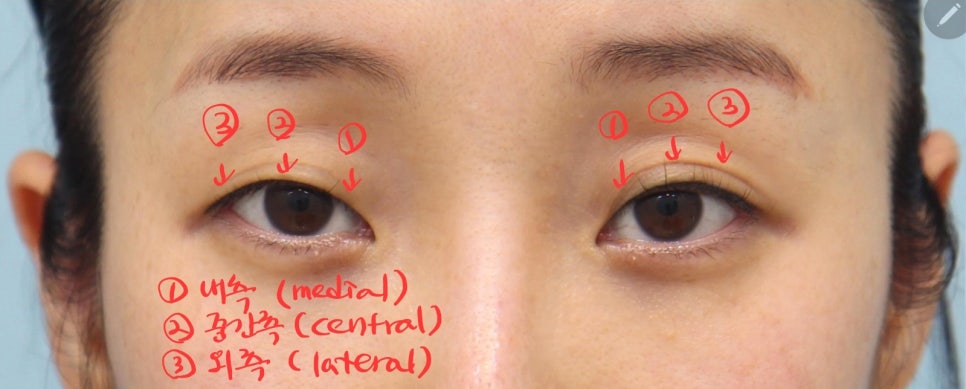
Classifying the strength of eye opening into inner, middle, and outer parts
First, the position where the strength to open the eyes is transmitted can roughly be divided into three areas: inner, middle, and outer.
The reason this strength is subdivided by position is that, in eye-opening correction, when the levator aponeurosis is advanced and fixed to the tarsal plate, it is fixed in three separate areas.
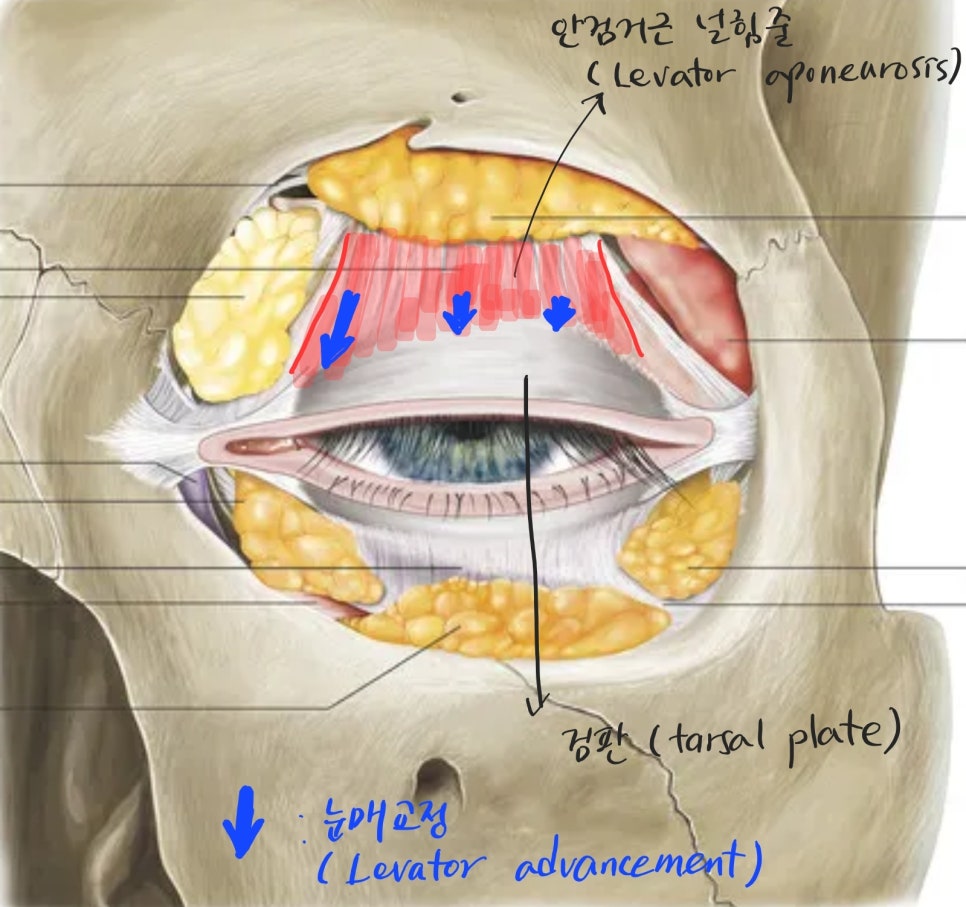
Method of eye-opening correction
Eye-opening correction refers to pulling down the levator aponeurosis, the tendon of the muscle that opens the eyes, and newly fixing it to the tarsal plate. Another term for this is ptosis correction.
Here, by adjusting how much the levator aponeurosis is pulled in the inner, middle, and outer areas, the eyes can be made to open in a clear, round shape.
In general, in eye-opening correction, dissection in the inner area is relatively more difficult than in the middle or outer areas, and inner-area eye-opening correction is a little more difficult.
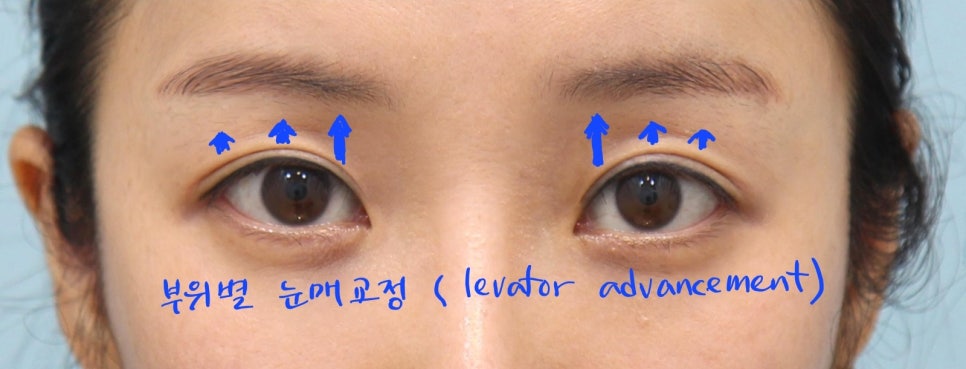
Round-eye eye-opening correction that adjusts the amount of correction by area

Round-eye eye-opening correction for a round eye shape. Trademark registered with the Korean Intellectual Property Office
After first making the eyes open in a round shape through eye-opening correction, epicanthoplasty and lower canthoplasty can be added, which can reduce a steep palpebral slant.
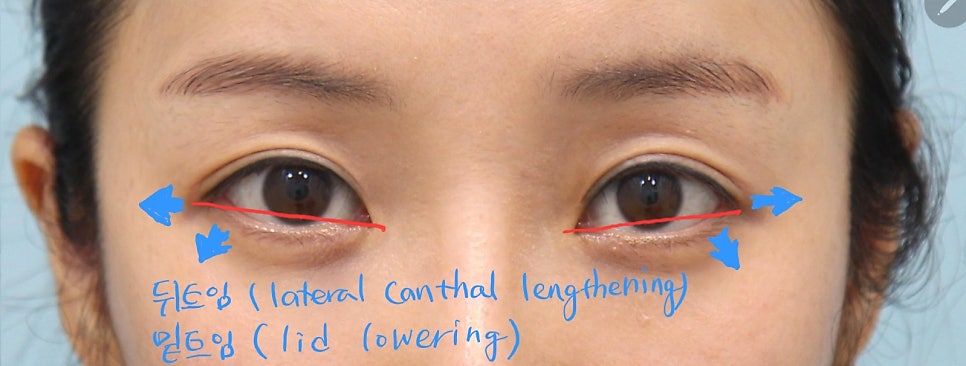
Adjusting palpebral slant with wide-angle epicanthoplasty and lower canthoplasty
Reducing the palpebral angle through epicanthoplasty and lower canthoplasty is also important, but the most important thing for creating a kind-looking eye shape is to use eye-opening correction to adjust the strength of eye opening in each area and give the eyes a rounder look.

Comparison before and after round-eye eye-opening correction surgery
To create a kind-looking or gentle-looking eye shape, the eyes are made to open roundly and well through detailed, area-specific eye-opening correction, and then epicanthoplasty and lower canthoplasty are added to lower the palpebral angle. This can help soften a sharp or fierce impression.
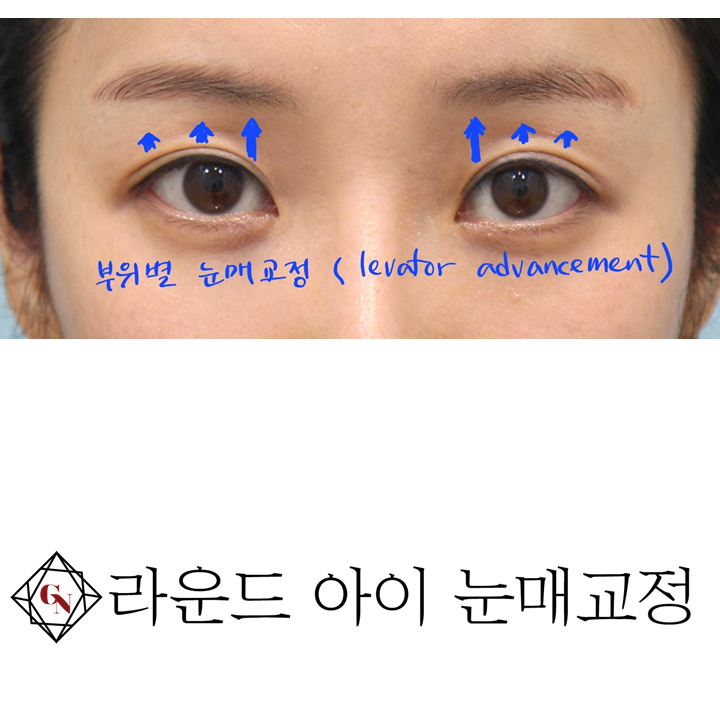
Area-specific eye-opening correction for round and kind-looking eyes