The nose is positioned at the center of the face, and especially when the nostrils are large and thick or the nostrils are wide, it can give an unsophisticated impression.
Nostril reduction (alar reduction) surgery can be performed together with rhinoplasty or separately.
When considering nostril reduction (alar reduction), the first thing to check is whether there is also a bulbous nose with a large or thick nasal tip.

When wide nostrils are accompanied by a bulbous nose
In cases where the nasal tip skin is thick and the tip is large, it is better to undergo nostril reduction (alar reduction) together with rhinoplasty rather than having nostril reduction (alar reduction) alone.
If the nasal tip is large and thick, reducing only the nostril area may make the nasal tip appear more prominent visually.
'Two Methods of Nostril Reduction (Alar Reduction)'
There are two methods for reducing the nostrils.
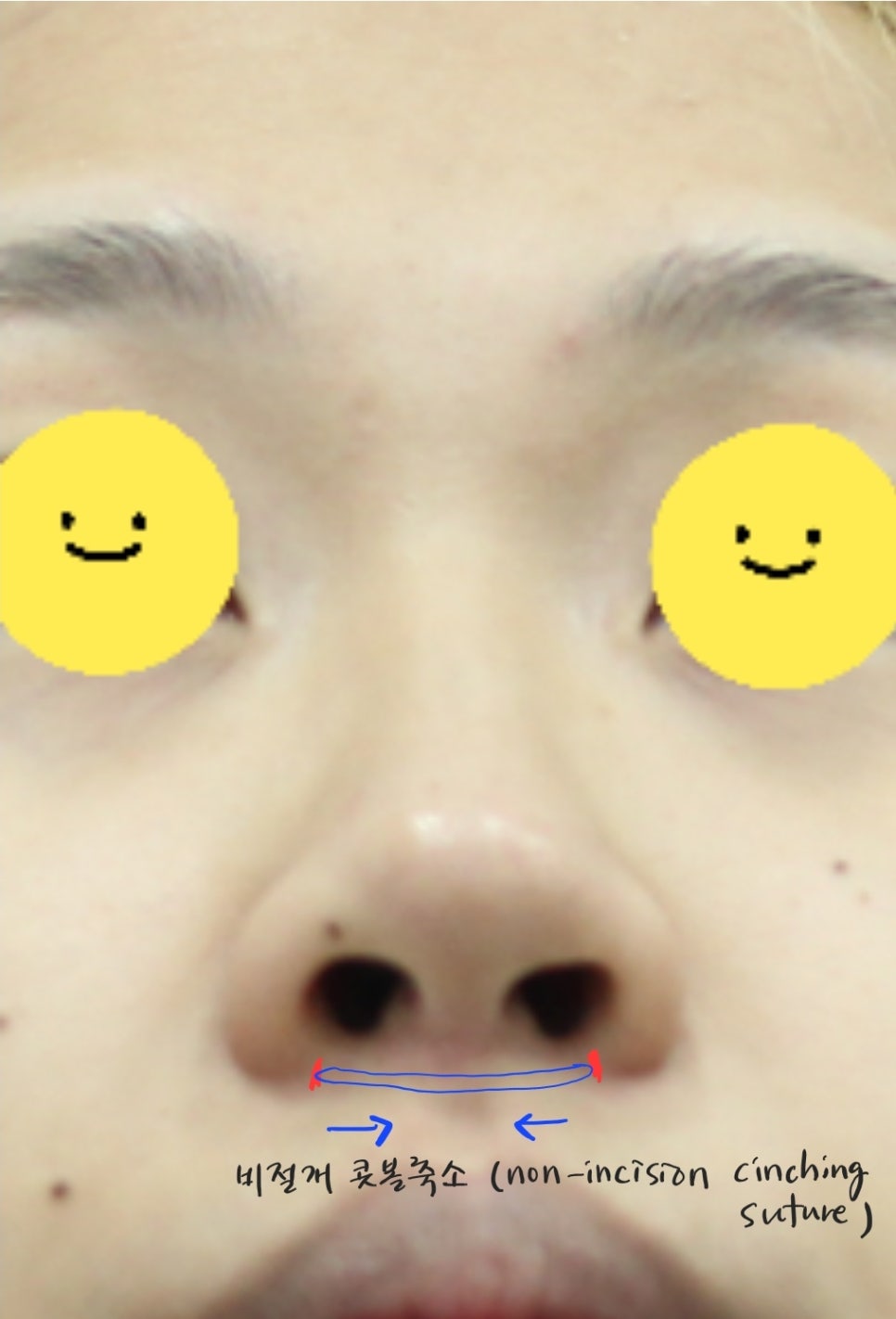
Non-incisional nostril reduction method
The first is the non-incisional nostril reduction method.
This method uses surgical sutures to tie together tissue through small micro-incisions at the base of the nose or on the outer sides of both nostrils.
This method is widely performed because its main purpose is to reduce a wide nasal base, and it has the advantage of leaving no visible incision.
However, because it is a non-incisional method, there is a tendency for the area to return to its original state, so it can be said to carry a certain risk of recurrence.
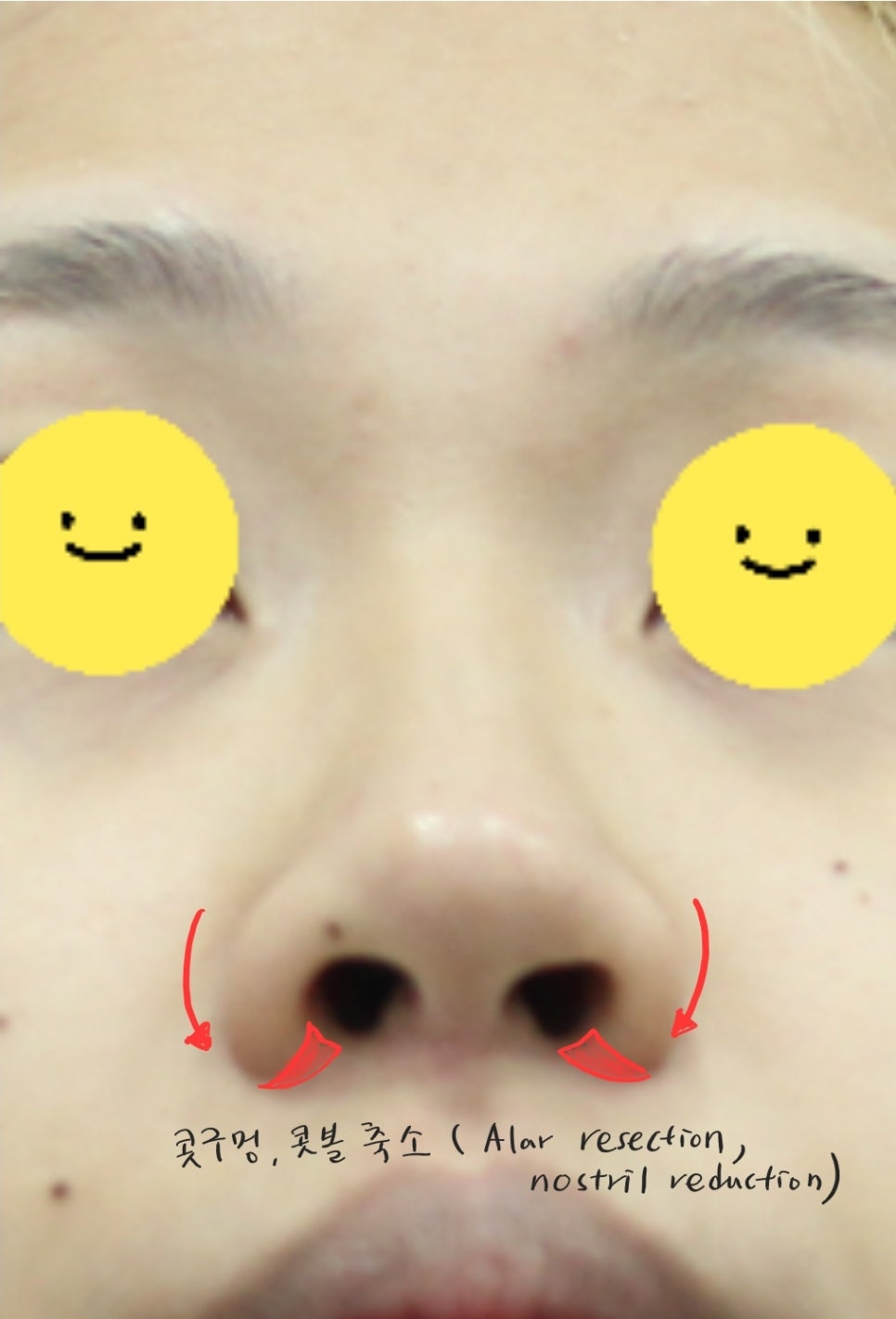
Skin excision method for nostril reduction
The second surgical method for nostril reduction involves excising the skin on the outer lower part of the nostrils.
This method removes the skin on the outer side of the nostrils to reduce the size of the nostrils, refine the shape, and improve the appearance of a flared nostril shape.
The two methods of nostril reduction (alar reduction) can be performed independently depending on the condition of the nose and nostrils, but in most cases, combining both methods produces better results.
'Method of combined nostril reduction (combined alar reduction) surgery'
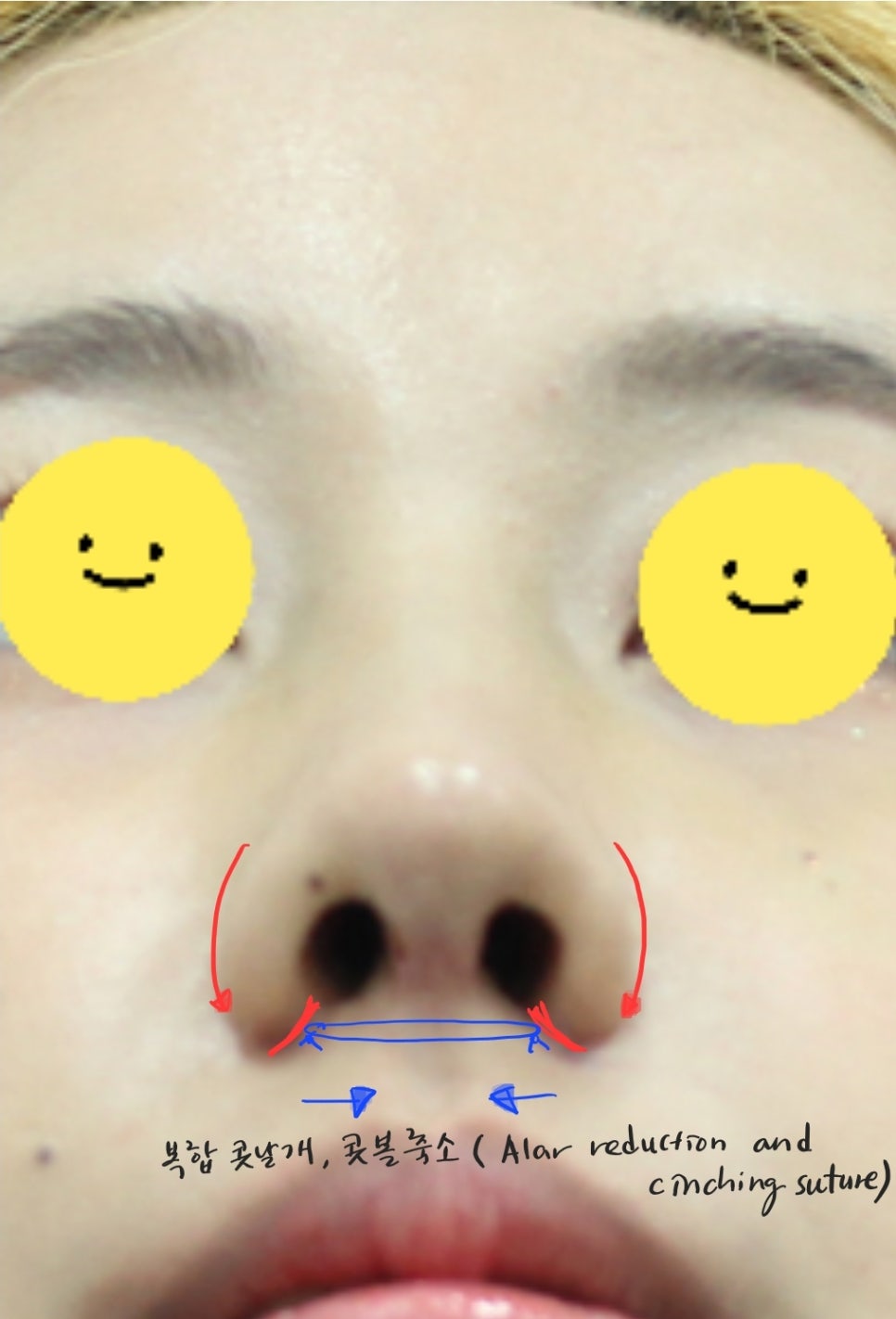
Combined application of incisional and non-incisional nostril reduction
First, the skin on the outer lower part of the nostrils is excised to adjust the size and shape of the nostrils, and then surgical sutures are used to tie the base of the nose, narrowing the nasal base and the overall shape of the nostrils.
This surgical method combines the two methods mentioned above, lowering the risk of recurrence, which is a drawback of the non-incisional method, while also allowing the size and shape of the nostrils to be refined.
In some cases, to enhance the effect of nostril reduction, too much skin may be removed or the excision may be extended to the outer alar area. However, the skin of the nose and alae has active sebaceous gland secretion, and this can leave significant scarring, so caution is necessary.
At Garnet Plastic Surgery, when performing nostril reduction (alar reduction), we minimize scar formation by avoiding making the incision too far outward.
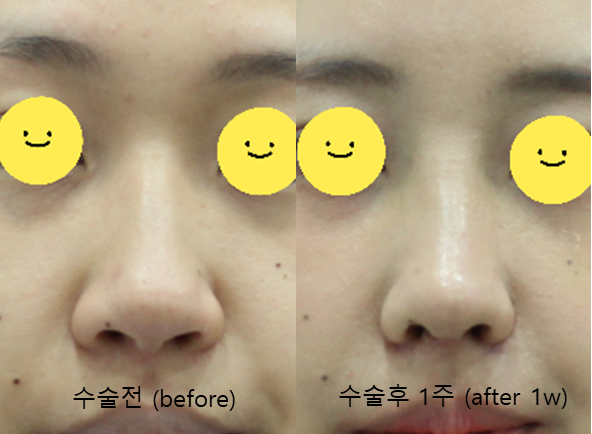
Before-and-after comparison 1 week after nostril reduction alar reduction surgery

Before-and-after comparison 1 week after nostril reduction alar reduction surgery
Of course, in cases of a bulbous nose with a large and thick nasal tip, we recommend combining the combined nostril reduction surgery with rhinoplasty or bulbous nose correction through nasal tip remodeling.

Review of nostril reduction (alar reduction) surgery. This is a real model with consent for disclosure.