The nose is located at the center of the face, and people with a low and small nose often also have a small and low midface.
�
Because the nose is also positioned in the midface of the face, people whose midface appears relatively sunken often also have a small and short nose.
�
�
'Midface Depression (Sunken Midface)'
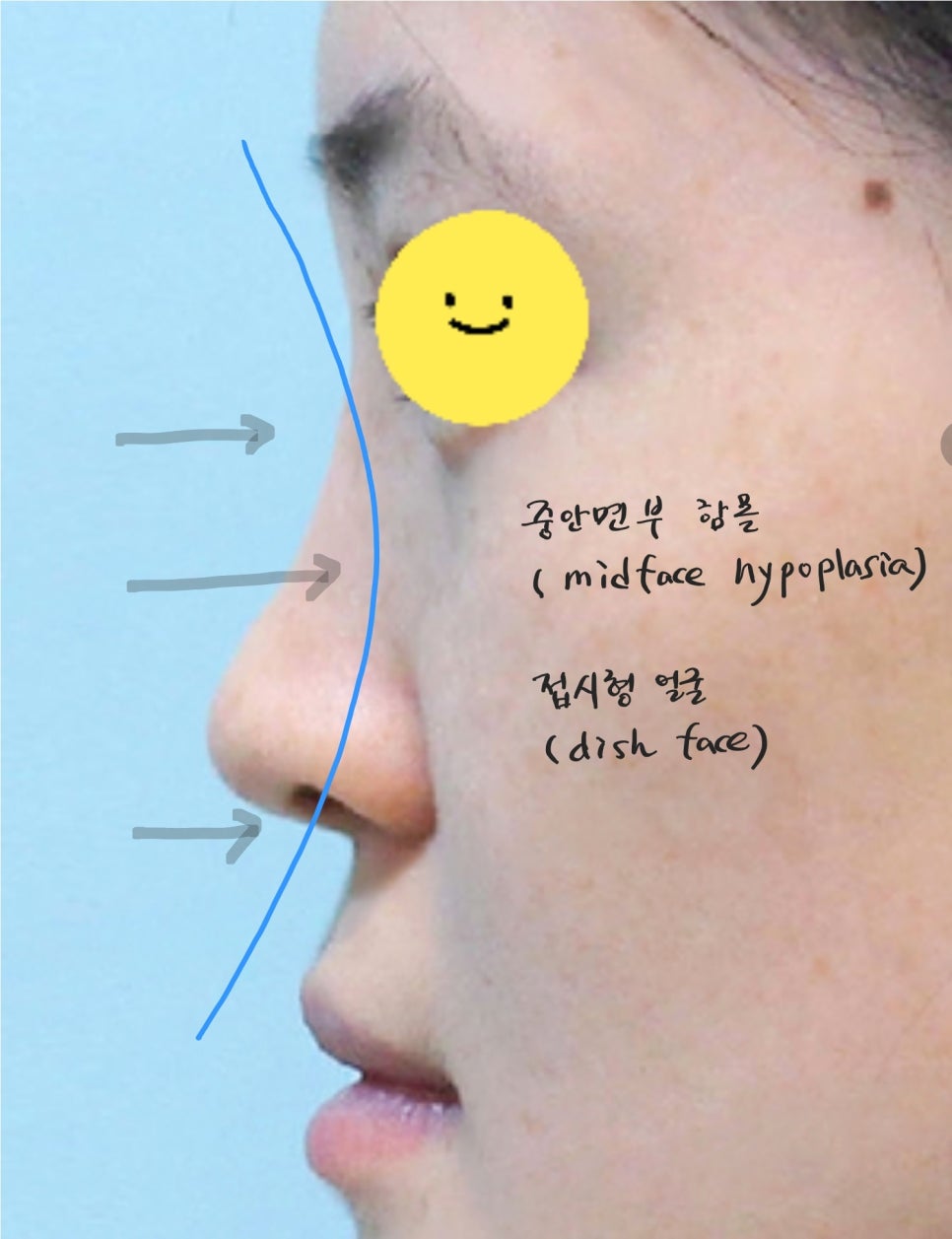
Midface Depression and a Flat Face
When midface development is insufficient, the midface appears relatively sunken compared to the upper and lower face, creating a flat, dish-like facial shape.
�
Since the midface serves as the base and support for the nose, when the midface is small and sunken, the nose also appears significantly under-projected.
�
�
'Columella Depression (Sunken Nasal Column)'
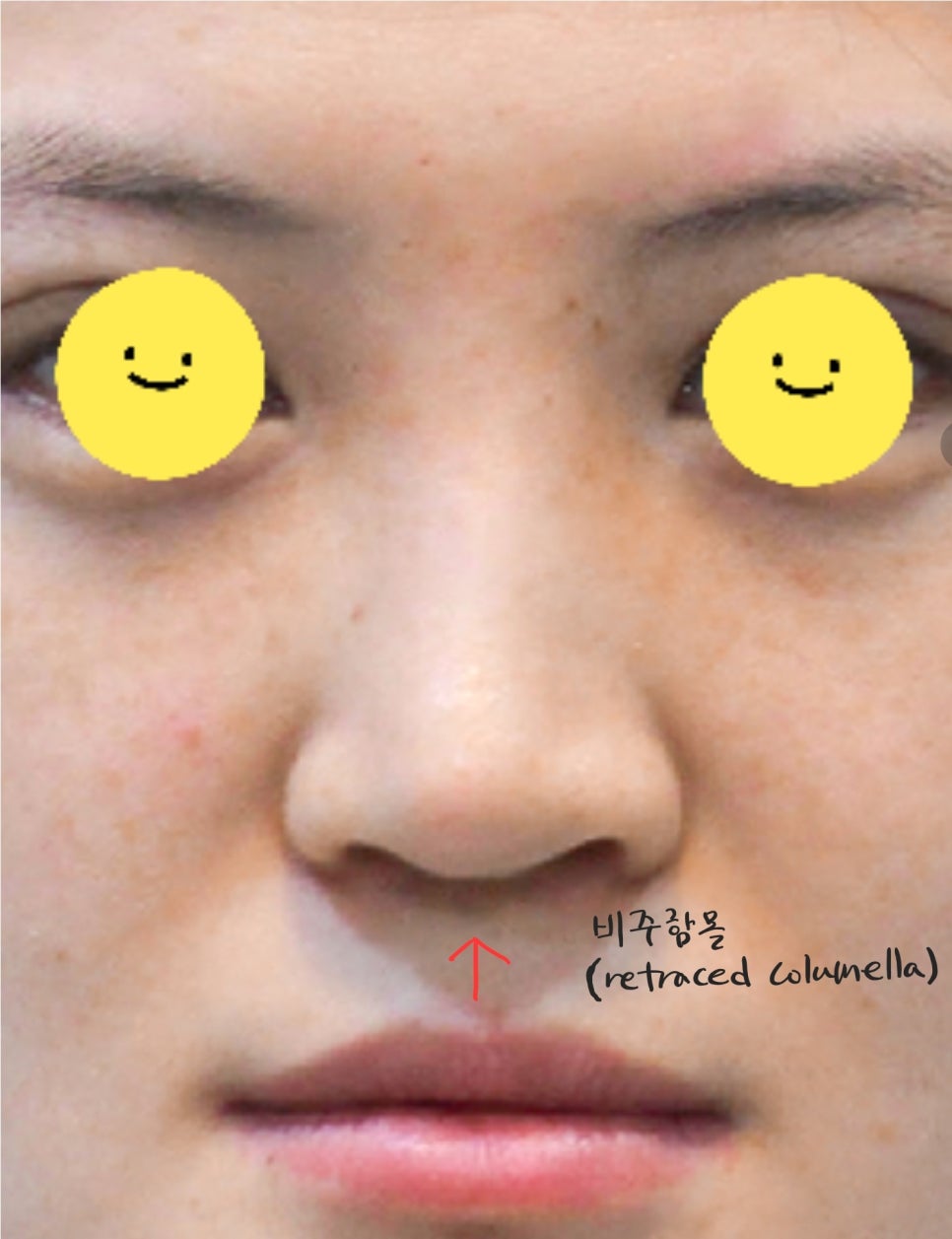
�
In cases of midface depression, the nose often has a columella that is curled inward.
�
When the columella is sunken, it is difficult to create a refined impression, and because of the angle and shape formed by the nose and philtrum, the mouth can easily appear relatively protruded.
�
�
'Rhinoplasty and the Selection of Various Cartilage Materials'
�
In rhinoplasty consultation, choosing the cartilage material is a very important factor.
�
Usually, in a first rhinoplasty, the tip is raised using septal cartilage and ear cartilage, while the bridge is augmented with a silicone implant.
�
However, when the nose is very small or short, or when the midface is sunken, I recommend using rib cartilage even in the first rhinoplasty.

Materials needed to build a house
�
The reason material selection is important in rhinoplasty is that rhinoplasty can be compared to building a house in certain respects.
�
If you have enough strong materials when building a house, you can build a taller house, but if the building materials are insufficient and weak, building a somewhat lower house is the more realistic approach.
�
�
'Rib Cartilage Rhinoplasty'
�
The strongest and most abundant material in rhinoplasty is rib cartilage. It has stronger support than other cartilage and there is also a greater amount available for harvest, so if you want a more definite result, autologous rib cartilage rhinoplasty is recommended.
�
In particular, rib cartilage rhinoplasty is necessary when there is midface depression, when nasal support has become insufficient after double jaw surgery, or when there is a shortage of septal cartilage.
�
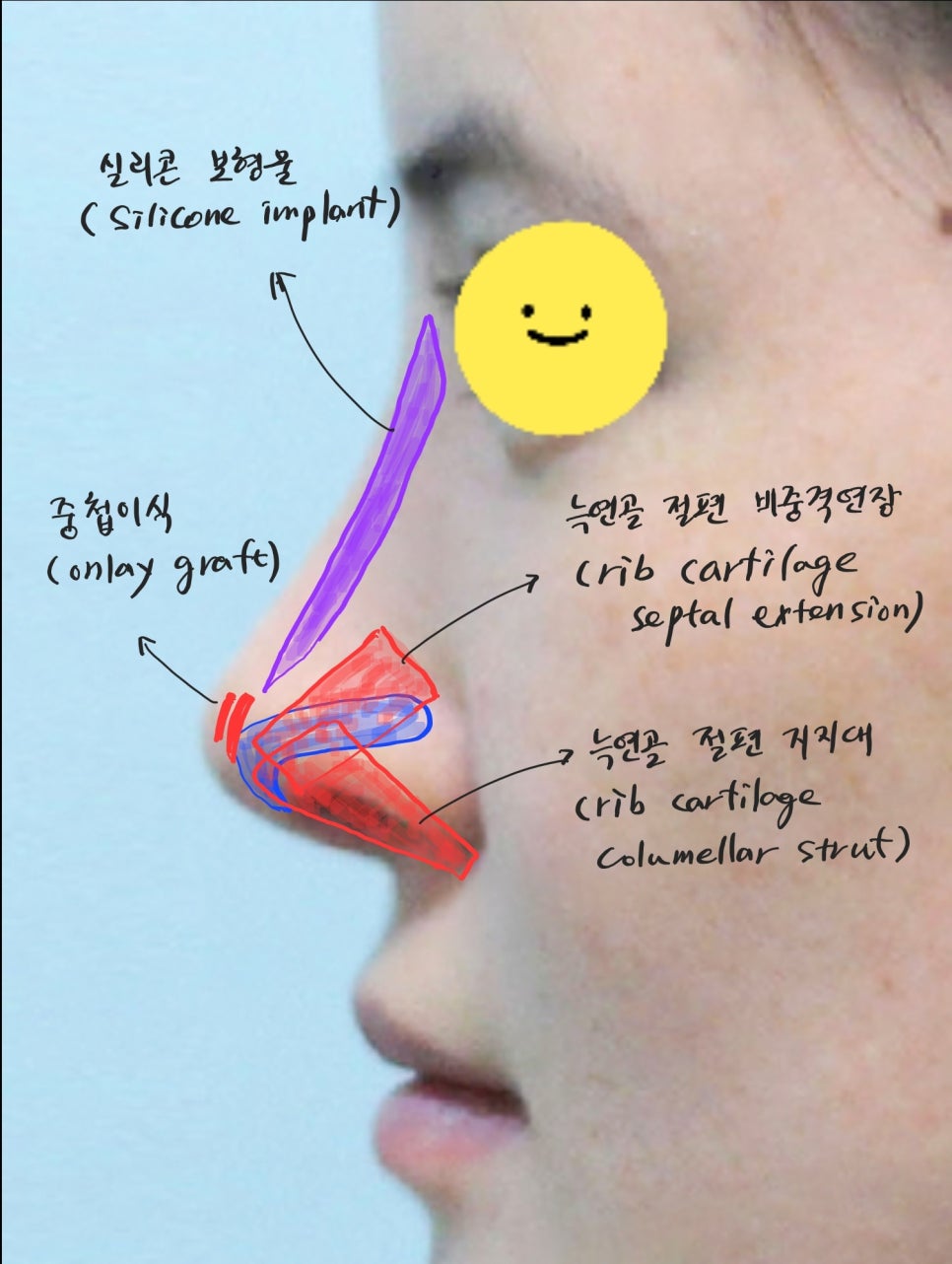
Diagram of rib cartilage rhinoplasty when the midface is sunken
When there is a sunken midface, using autologous rib cartilage makes it possible to create multiple rib cartilage segments and secure support for the nasal tip.
�
In particular, when the columella is sunken, in addition to the usual septal extension method using rib cartilage, an additional support can be inserted into the columella area to bring it downward.
�
And through this columellar support at the nasal tip, the nasolabial angle formed by the nose and philtrum can also be adjusted.
�
�
'Before-and-After Comparison of Rhinoplasty for Midface Depression'
�

Before-and-after comparison of midface depression surgery (correction of columella depression, lowering the columella)
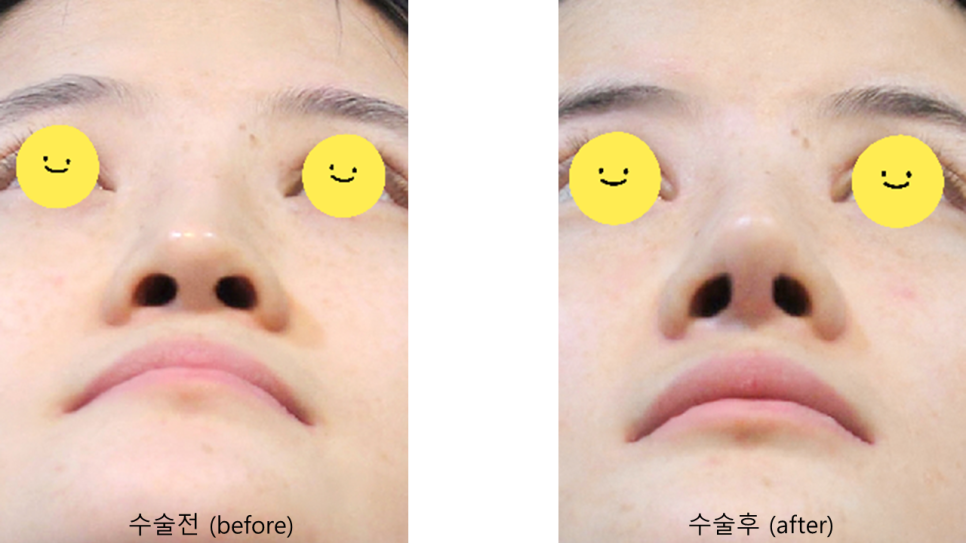
Before-and-after comparison of midface depression surgery (improvement of midface sunken appearance)
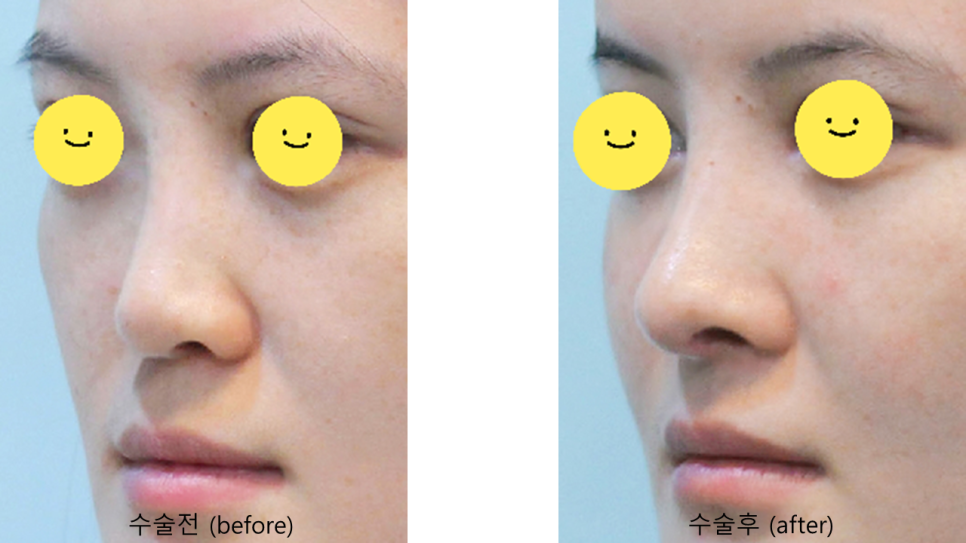
Before-and-after comparison of midface depression surgery (improvement of columella depression, lowering the columella)
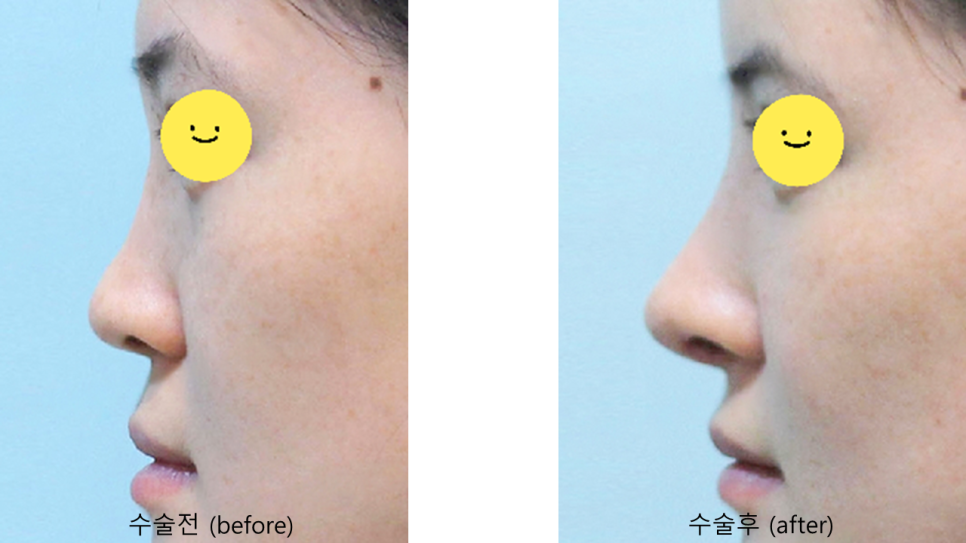
Before-and-after comparison of midface depression surgery (improvement in philtrum length, correction of the nasolabial angle, and correction of protruding mouth)
�
Many people planning rhinoplasty have a sunken midface or midface depression.
�
In such cases, when surgery is performed like a typical first rhinoplasty, it often leads to unsatisfactory results and a revision surgery.
�
If you have a sunken midface or midface depression, even if it is your first surgery, please consider rhinoplasty using rib cartilage.