Now that more than 10 years have passed since facial contouring surgery became popular, inquiries about skin sagging among people in their 30s and 40s who previously underwent facial contouring surgery are increasing.
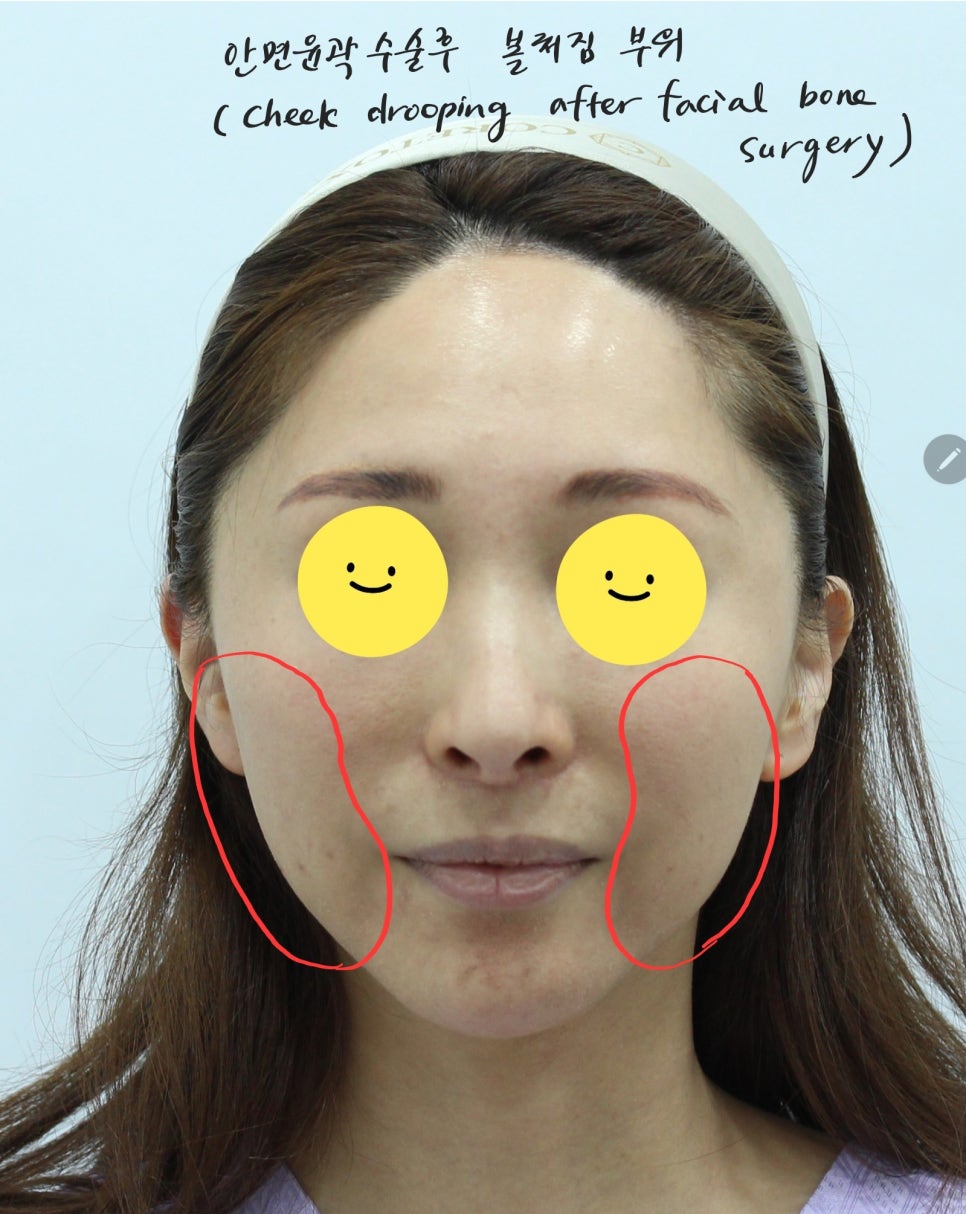
This is an overseas cosmetic model who has given consent for public use.
'Types of Facial Contouring Surgery and Skin Sagging'
Facial contouring surgery usually refers to cheekbone reduction, square jaw reduction, and chin reduction, and it also includes two-jaw surgery to align the dental occlusion.
Among these various facial contouring surgeries, excluding procedures such as lower jaw advancement in two-jaw surgery and chin advancement for a recessed chin, most facial contouring surgeries are procedures that reduce the size of the facial bones.
Many plastic surgeons make efforts to minimize skin sagging during facial contouring surgery, but sagging that occurs as the volume of the bones decreases is now something that even the general public recognizes to some extent.
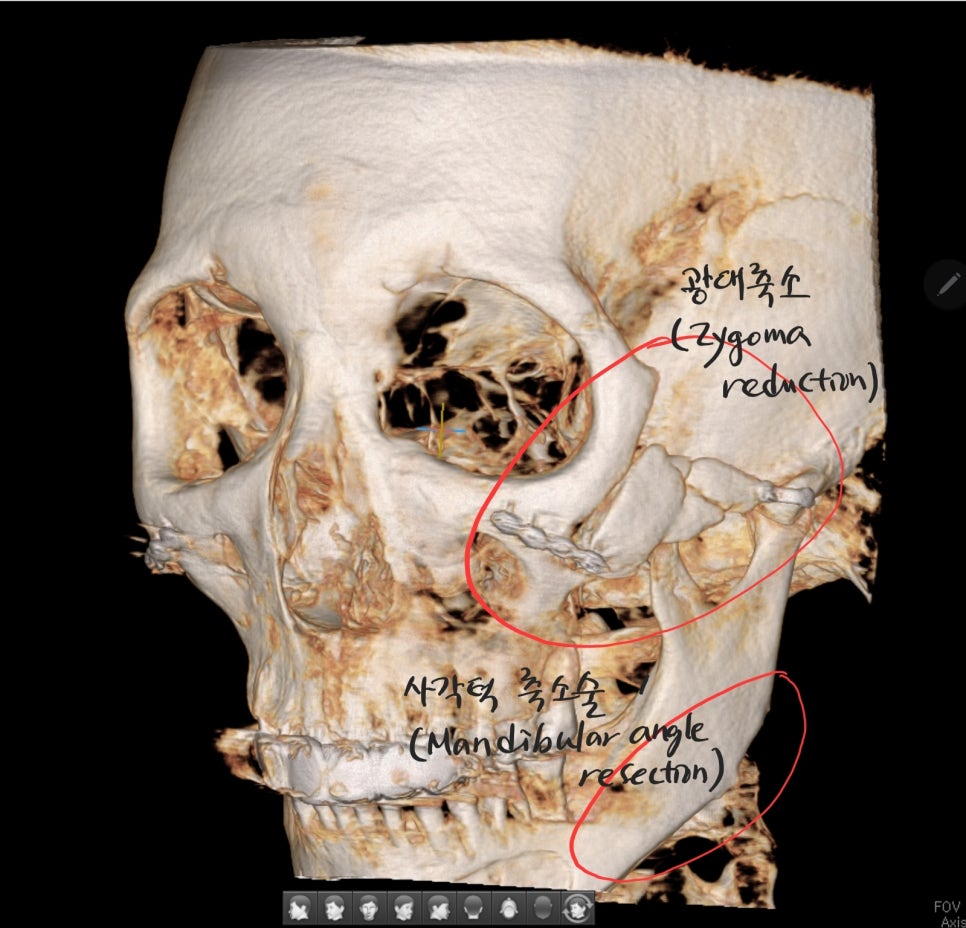
CT after two cheekbone reduction surgeries and square jaw reduction surgery
For cheek sagging caused by nonunion of the cheekbones or downward displacement of the bones after cheekbone reduction surgery, revision cheekbone surgery is necessary, and lifting-related procedures are best performed after all facial contouring surgeries have been completed.
In cases of skin sagging caused by excessive reduction of the square jaw or chin, facial contour reconstruction may be necessary.
However, most patients who visit for lifting surgery are people whose facial contouring surgery was completed without any major problems.
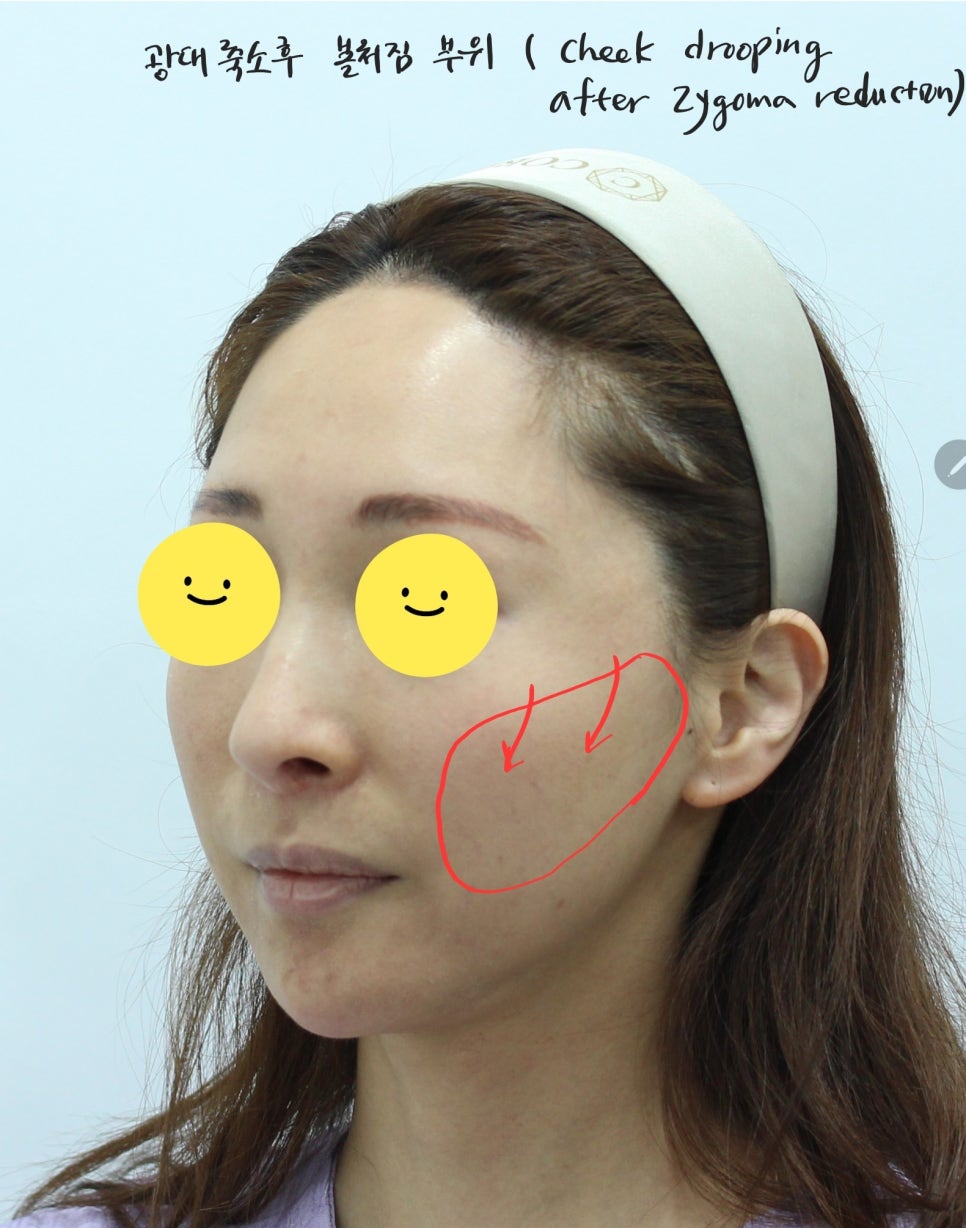
Skin sagging after cheekbone reduction surgery
In the case of cheekbone reduction surgery, skin sagging can occur toward the front cheeks and side cheeks in proportion to the volume of bone removed.
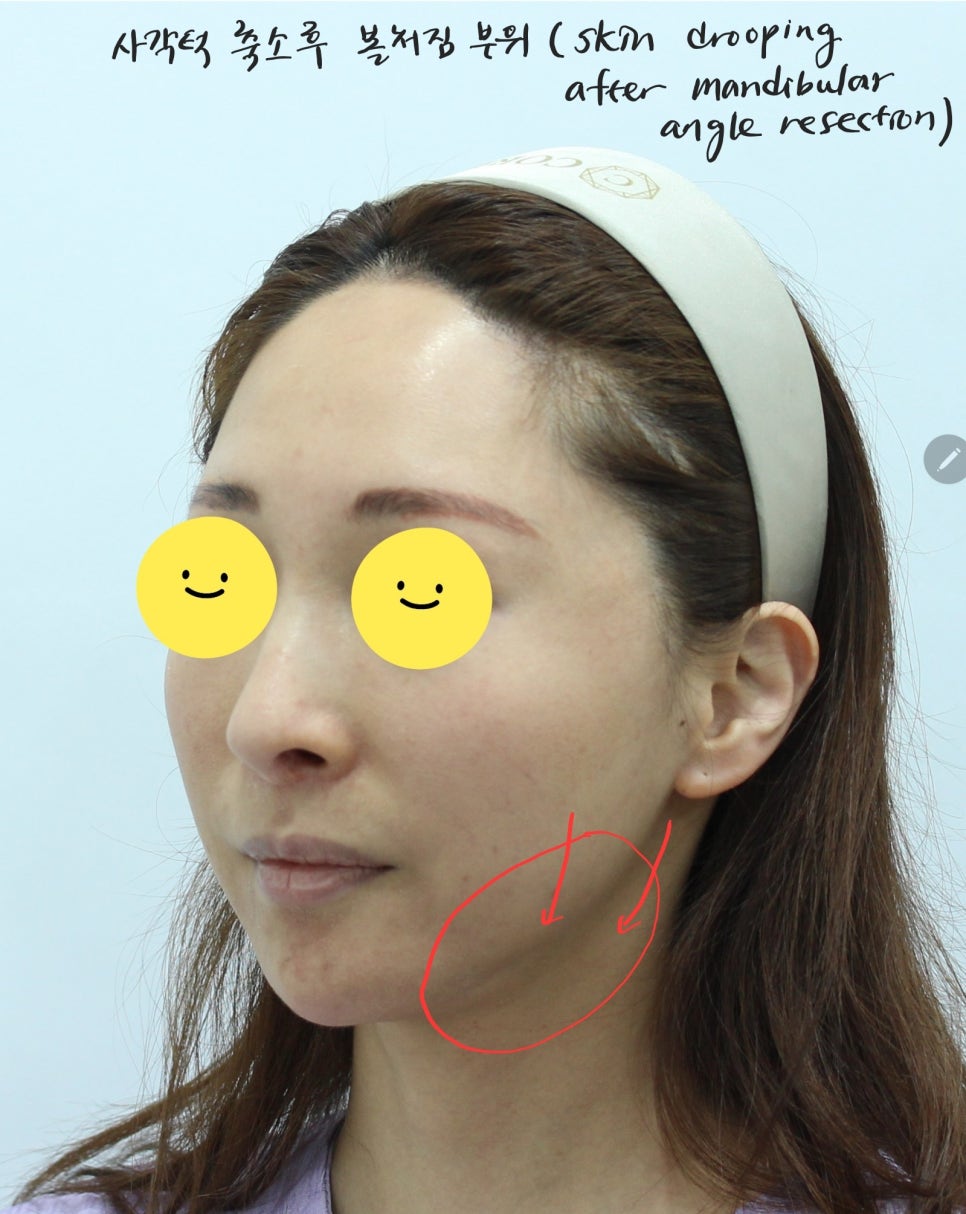
Skin sagging after square jaw reduction surgery
In the case of square jaw reduction surgery (mandibular angle reduction, long curved resection, or corticotomy), skin sagging often gathers toward the lower jaw in proportion to the amount of bone removed.
In fact, people in their 30s and 40s do not usually have much skin sagging, so many people in this age group maintain skin elasticity through skin care or aesthetic procedures.
'Facelift After Facial Contouring Surgery'
However, if skin sagging does not improve despite repeated thread lifting and various other procedures, it may be worth considering facelift surgery.
Among overseas patients, there are many who want to actively address skin sagging more than domestic patients do, so the number of people choosing facelifts is increasing.
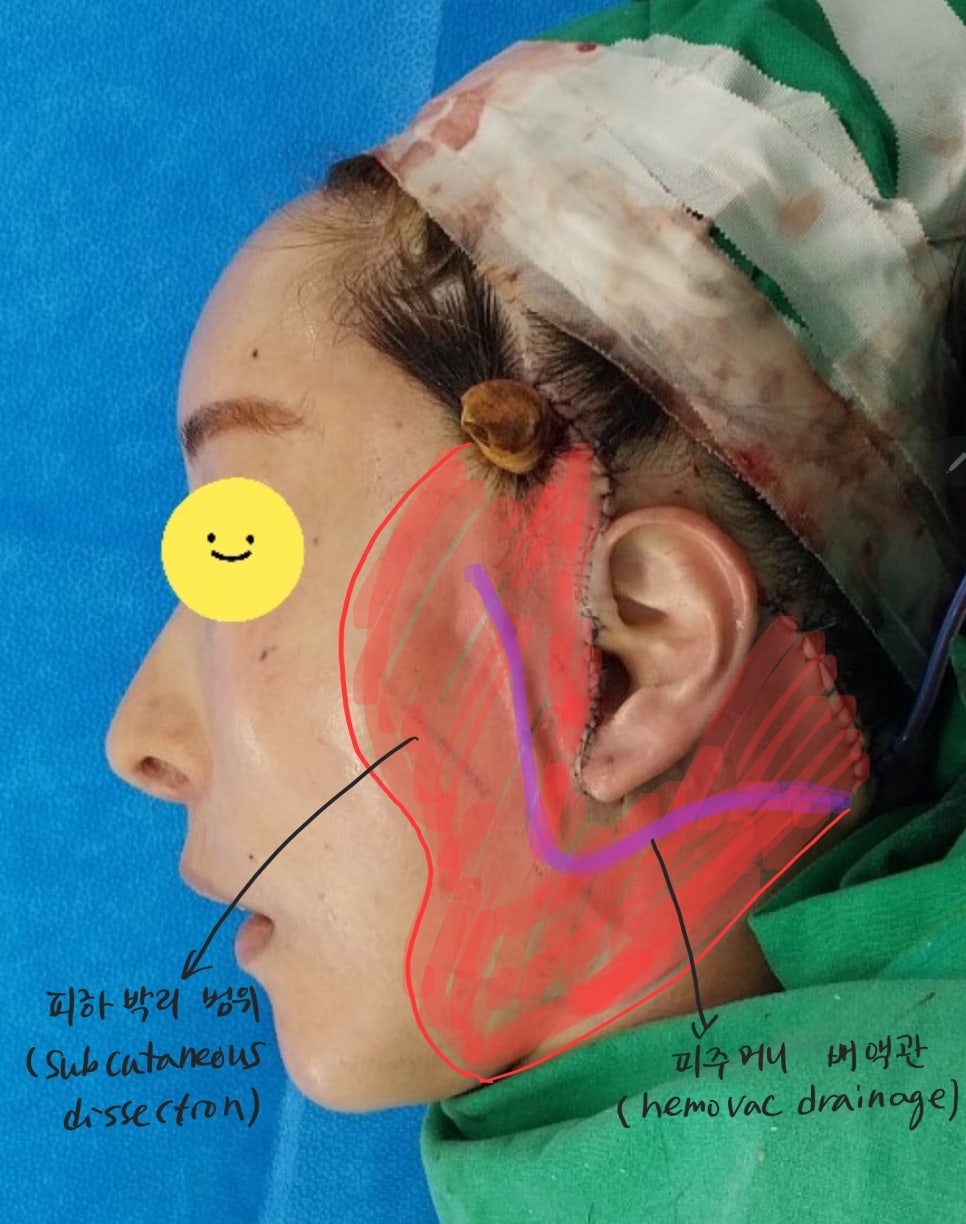
The subcutaneous dissection range and drain placement in facelift surgery
In cases of skin sagging that occurs after facial contouring surgery, the procedure is the same as a facelift, but it is important to lift the skin and SMAS layer so that the cheek area does not become bulky.
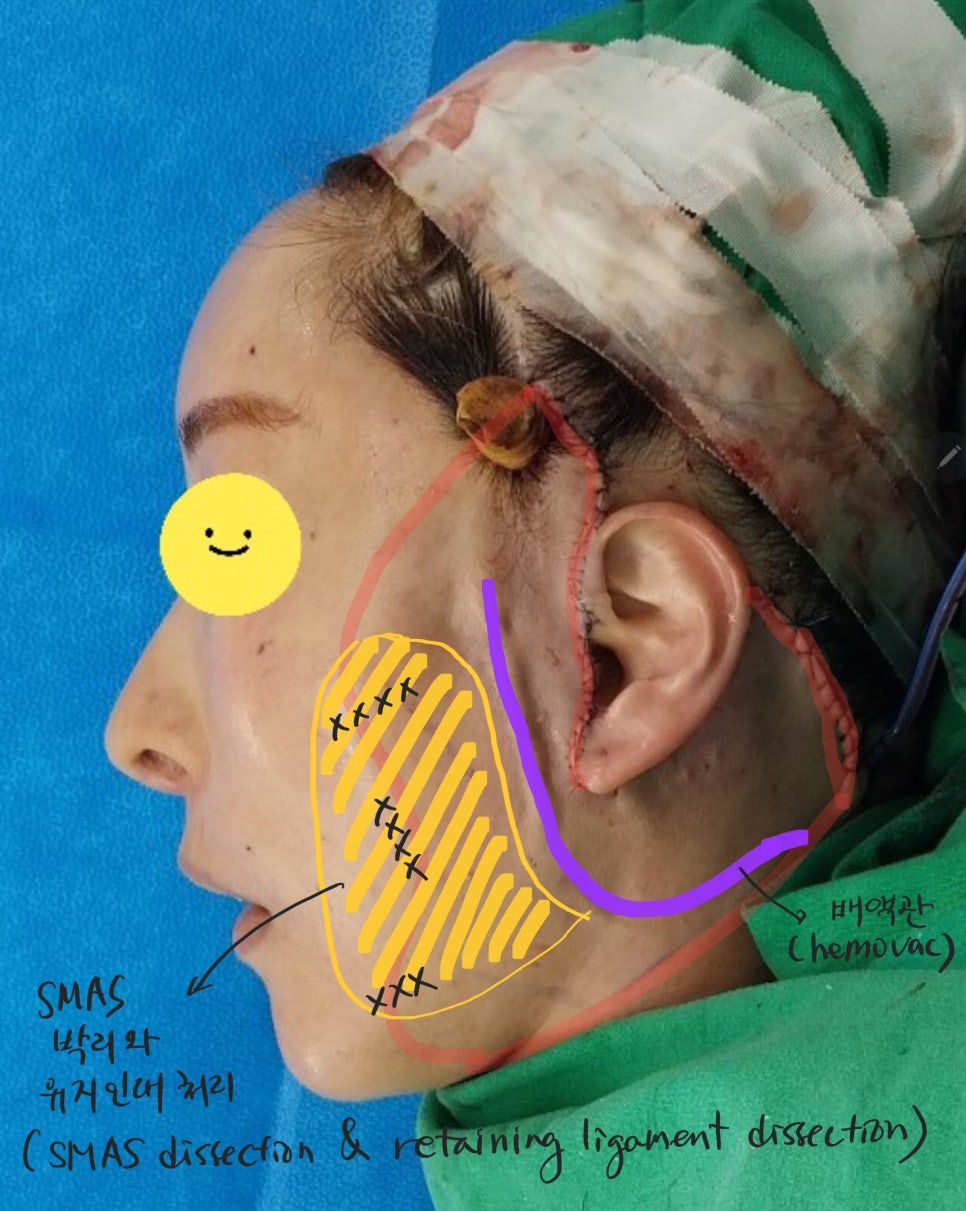
Dissection of the SMAS layer and treatment of retaining ligaments
In patients who have undergone cheekbone reduction surgery, careful dissection is necessary because there is significant adhesion between the subcutaneous tissue and SMAS tissue around the cheekbones.
When trimming and fixing the remaining SMAS tissue, it is important to design the fixation so that the reduced cheekbones do not appear large again.
For facelifts performed on patients from overseas, many usually stay for about a week, and if postoperative swelling is minimized, there is no problem with leaving through the airport or boarding a plane.
In some cases, for those who want a stay of at least 2 to 3 days, postoperative care is provided accordingly.
Compared with people who undergo a typical facelift, those receiving a facelift after facial contouring surgery are often younger, so special attention must be paid to the incision and suturing in front of the ear.
However, above all else, the outcome of a facelift and the presence or absence of scars are closely related to the dissection and fixation of the SMAS layer and the treatment of the retaining ligaments.
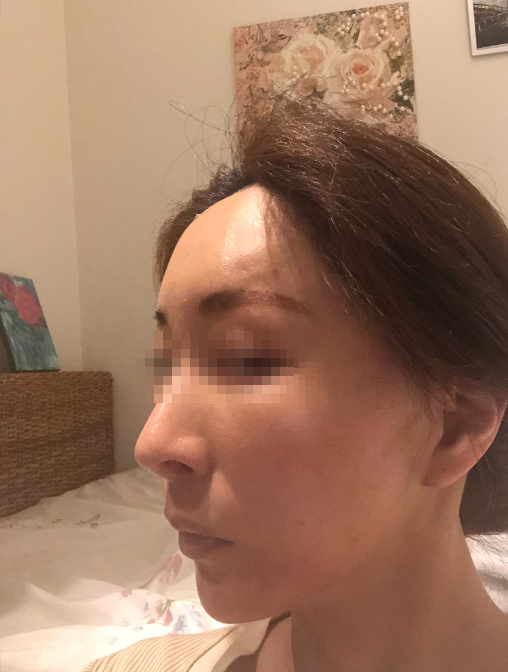
This is an overseas cosmetic model who has given consent for public use. Facial sagging after facial contouring, facelift review