There are many different anti-aging surgeries, but facelift surgery is often thought of as having the longest recovery period.
Facelifts do involve relatively long recovery times because the incision line is long and the surgery lifts a wide area by dissecting the tissue.
So many patients assume that there will be a lot of swelling and bruising after surgery.
Today, with the help of an overseas aesthetic model, I’ll introduce what the day after facelift surgery looks like.
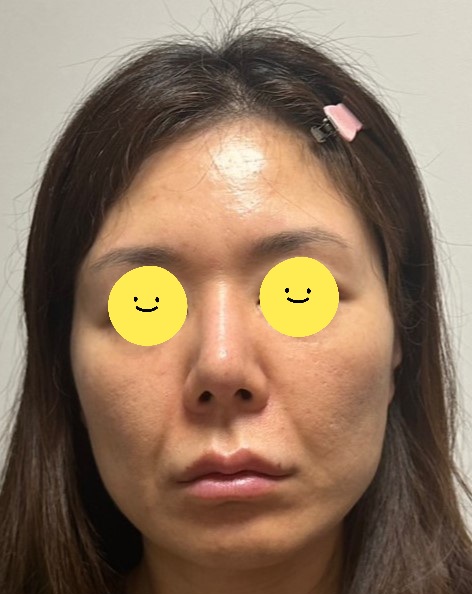
This is an overseas aesthetic model who agreed to have the photos shared publicly.
She visited for a facelift and said that in the past she had received many different procedures for lifting.
She had undergone many treatments such as laser, ultrasound, and radiofrequency procedures, as well as thread lifting and collagen injections, but skin sagging was not resolved.
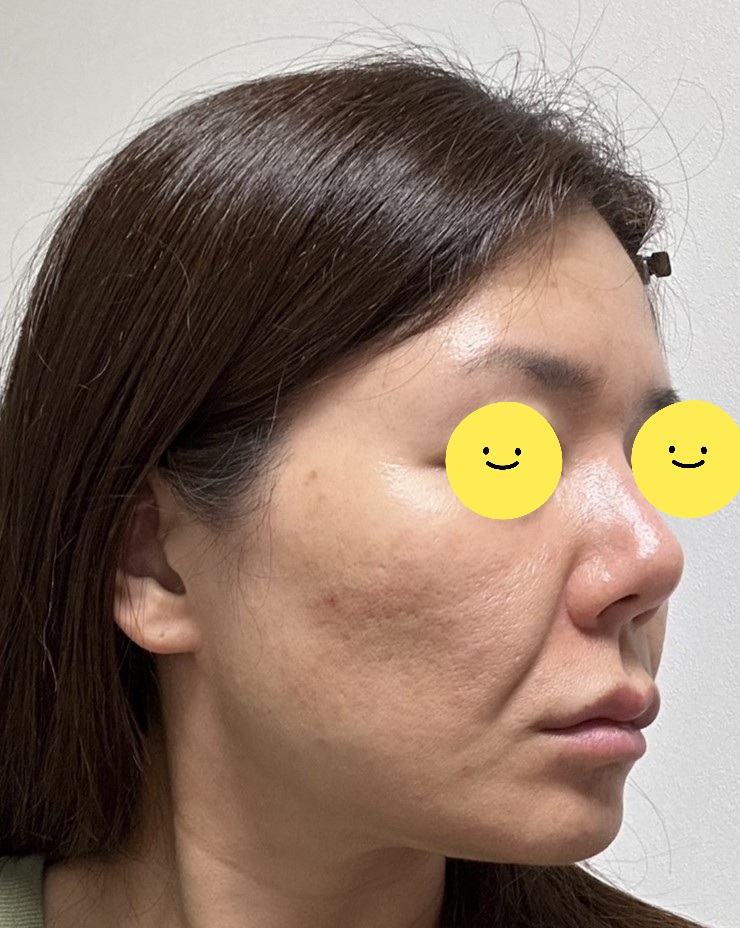
Skin sagging and nasolabial folds before surgery
She said she had undergone excessive facial liposuction to improve sagging around the cheeks and jawline, which caused adhesion of the skin, hollow cheeks, and skin discoloration.
Sometimes people undergo excessive facial liposuction in an attempt to address sagging tissue, but if too much fat is removed from the face, adhesion between the skin and subcutaneous tissue can become severe, hollow cheeks may develop, and skin sagging does not improve.
'Facelift surgery method'
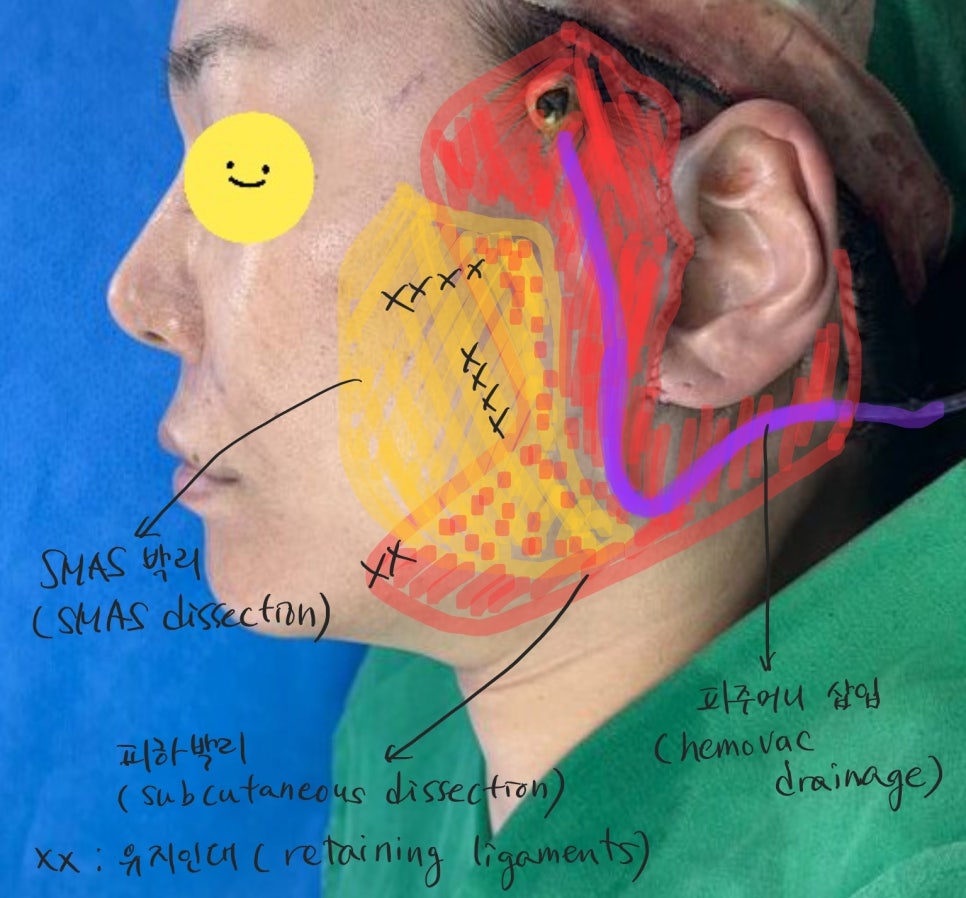
Deep plane facelift procedure
The incision for a facelift is made inside the scalp and around the ears, and the scar is hidden as much as possible behind the ear and inside the hairline. The incision in front of the ear is performed so that it is as inconspicuous as possible, following the natural preauricular crease and the cartilage of the ear.
The most important part of a facelift is the dissection of the SMAS layer, and the surgery is performed by dissecting the deep plane through a dual-plane method that lifts the skin and SMAS layer separately.
To maintain the lifting effect for a long time, dissection of the retaining ligaments is essential, and the effect of a facelift can last longer only when the retaining ligaments are properly addressed at the appropriate layer.
'Discharge on the day of facelift surgery'
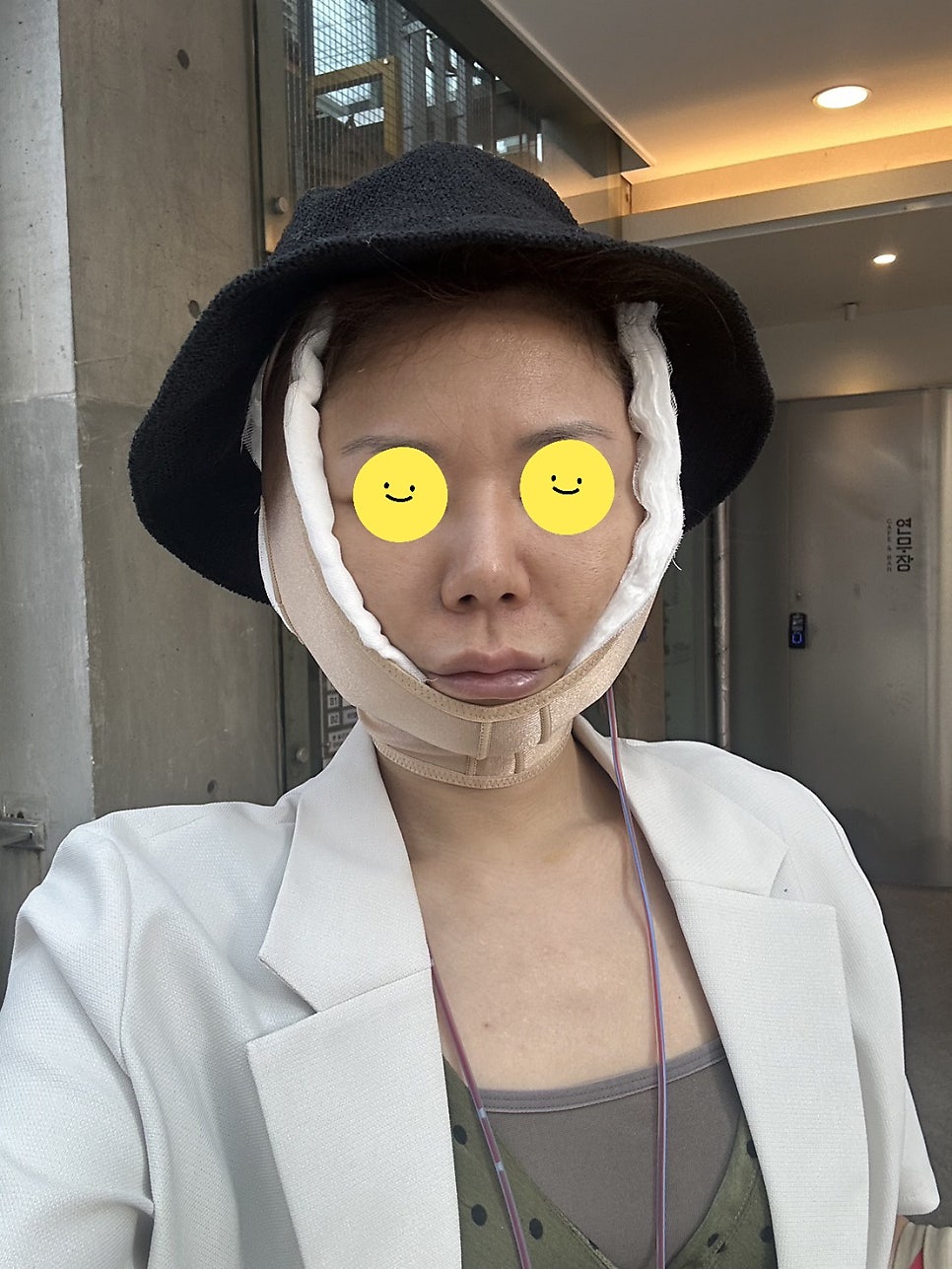
Appearance on the day of facelift surgery
After a facelift, a small amount of blood may drain, so a drain is attached. Usually, by the day after surgery, only a small amount of blood, about 20 to 30 ml, is drained, which can help reduce swelling and bruising.
Also, if the areas prone to swelling are secured to the underlying tissue using surgical sutures, additional swelling or hematoma can be prevented.
'Appearance the day after facelift surgery'
The swelling after a facelift is usually mild for the first 2 to 3 days and then gradually decreases.
Of course, if you want additional swelling management at the clinic, we provide thorough care.

Day 1 review after facelift surgery
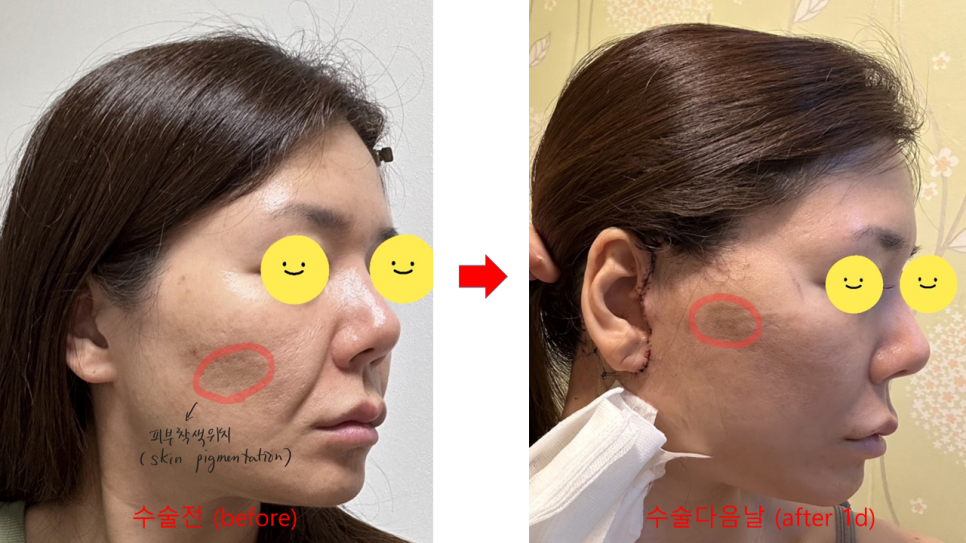
Day 1 review after facelift surgery
The patient said that after the facelift there was hardly any swelling, bruising, or pain, so she felt comfortable, and after a simple treatment she moved to the airport to prepare for departure.
Through her own selfie camera, she also expressed satisfaction that the position of the skin discoloration that had been below the cheekbones before surgery had moved to above the cheekbones, and she even said that she regretted the many procedures she had received previously.
Many people worry about swelling and bruising after a facelift, so with the help of an overseas aesthetic model, I showed what the early postoperative period looks like.
In a facelift, swelling and bruising can be reduced through a drain used to prevent hematoma, and additional fixation of the flap to the underlying tissue helps minimize swelling and bruising.