Among the many wrinkles that appear on the face, nasolabial folds are one of the wrinkles that concern both younger and older people a great deal.
In fact, nasolabial folds are wrinkles that appear with age, but they are also expression lines that are present from birth, so there is no need to associate them too strongly with aging.


Source: Munhwa Ilbo newspaper article
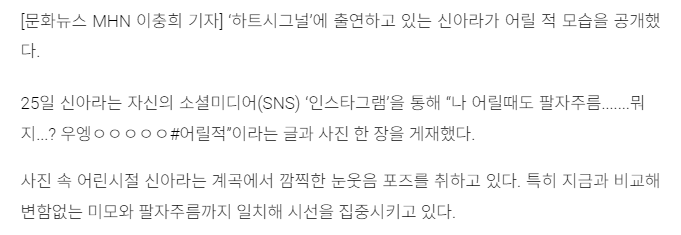
Even in the case of Miss Korea, who could be called one of Korea's most beautiful women, nasolabial folds are present from childhood, and nasolabial folds that appear when smiling brightly are not actually a problem.
'Causes of Nasolabial Folds'
The causes of nasolabial folds can be broadly divided into three categories.
First, nasolabial folds caused by the facial expression muscles mentioned above
Second, nasolabial folds caused by a sunken paranasal area of the maxilla among the facial bones
Third, nasolabial folds caused by sagging skin and soft tissue on the face
Nasolabial folds occur due to these three causes, and among them, nasolabial folds caused by the second and third factors can be corrected.
'Nasolabial Folds Caused by a Sunken Area Beside the Nose'
In cases where nasolabial folds are caused by a sunken paranasal area of the maxilla, the depressed area can be filled in through various methods.
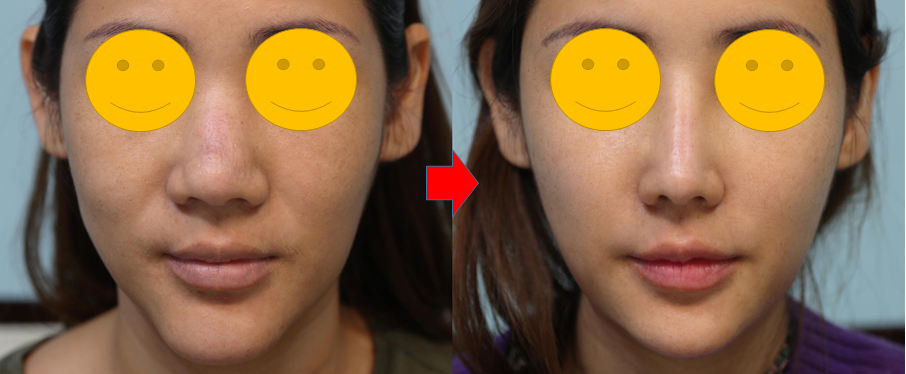
Before and after fat grafting for nasolabial folds
First of all, there is a procedure called paranasal augmentation, which inserts an implant into the sunken area beside the nose of the maxilla.
Usually, this is a surgery in which a silicone implant of appropriate height is inserted through an incision inside the mouth, and its advantage is that it can provide a permanent effect in a simple way.
If silicone implants feel burdensome or uncomfortable, the sunken area around the nasolabial fold can be filled with fat grafting or fillers.
In the case of nasolabial fillers, the procedure is simple and the recovery period is short, but the drawback is that they are absorbed after a certain period of time.
In the case of fat grafting, fat is harvested from the abdomen or thighs and transplanted into the sunken area. One advantage is that fat grafting can also be performed on various other sunken areas of the face, not just the nasolabial folds.
'Nasolabial Folds Caused by Sagging Skin and Soft Tissue'
Nasolabial folds that become bothersome with age are usually caused by sagging skin, and they are nasolabial folds that require lifting of the sagging area.
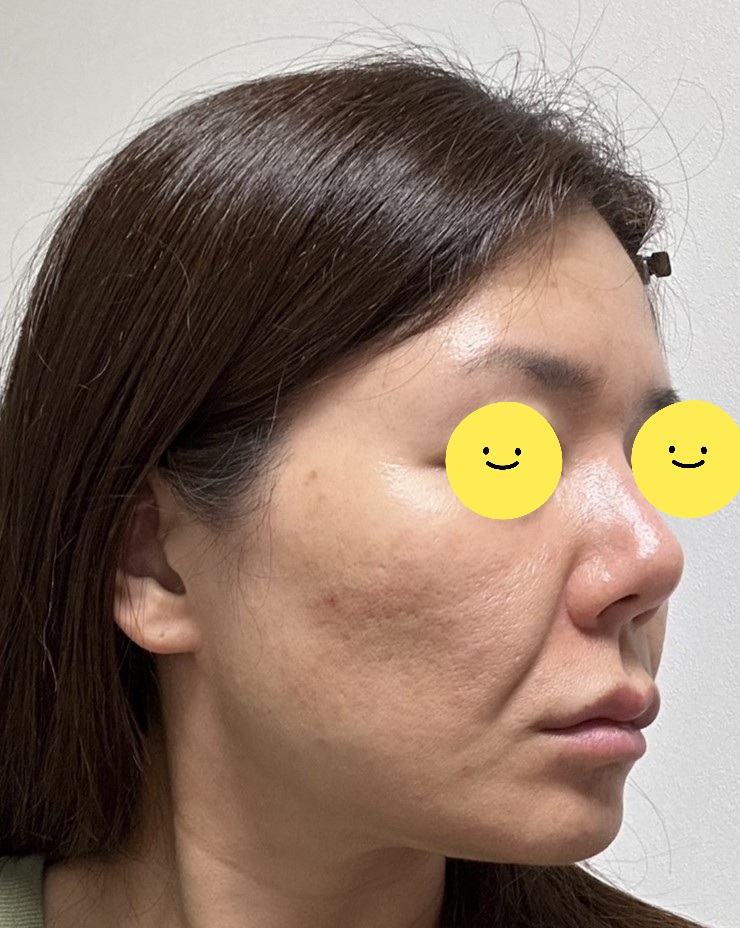
Nasolabial folds that did not improve with various procedures
There are various procedures that claim to improve nasolabial folds, but in reality, it is often difficult to achieve truly proper results.
Collagen injections, which are said to generate collagen, and thread lifting, which is said to lift the skin, often have only modest effects, and because their maintenance periods are not long, satisfaction is often low.
'Facelift or Deep Mini Facelift to Improve Nasolabial Folds'
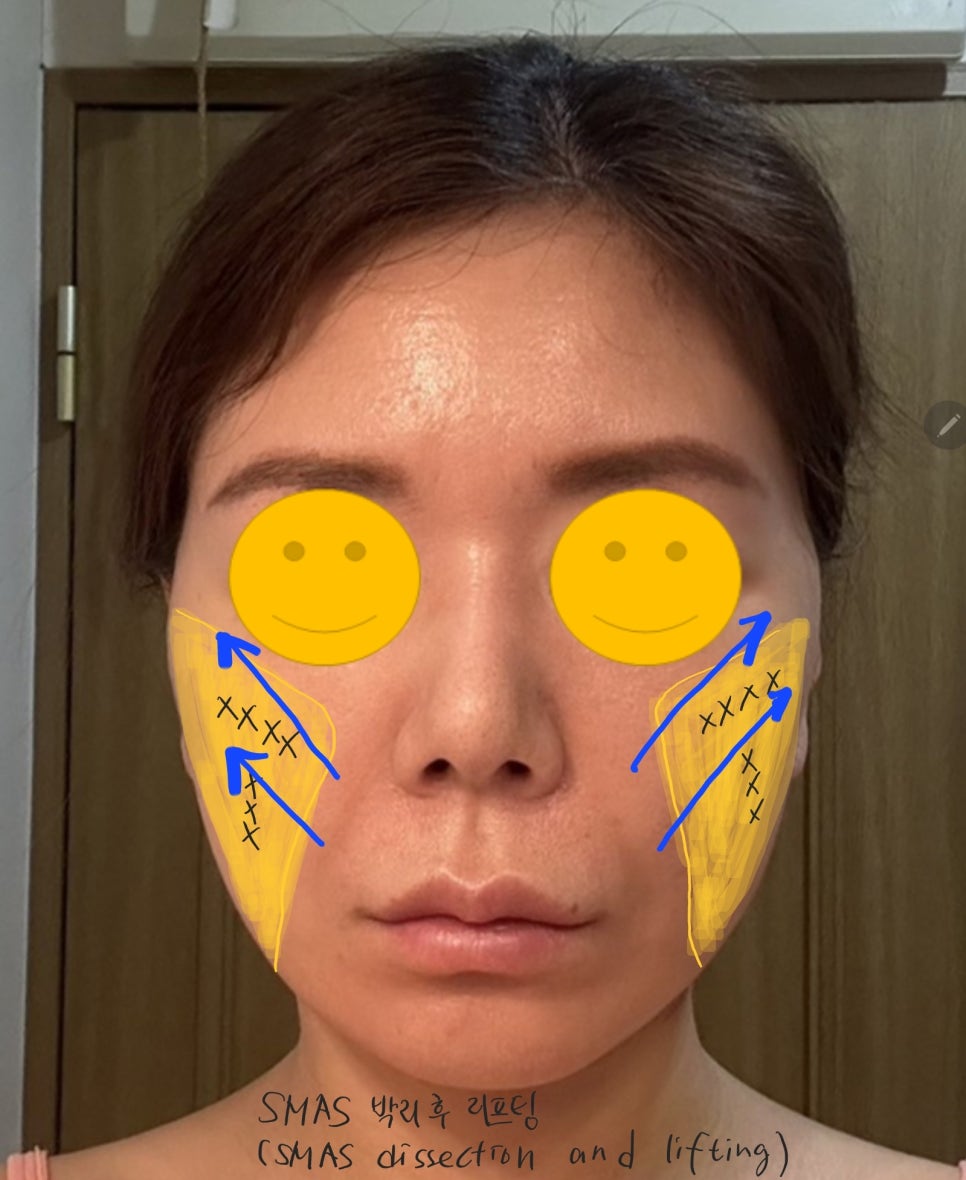
Facelift to improve sagging nasolabial folds
To lift sagging skin and soft tissue, proper dissection of the SMAS layer and treatment of the retaining ligaments of the face are important.
For improving nasolabial folds, a facelift is more effective, and a deep mini facelift, which has a similar dissection range to a facelift, can also improve sagging nasolabial folds.
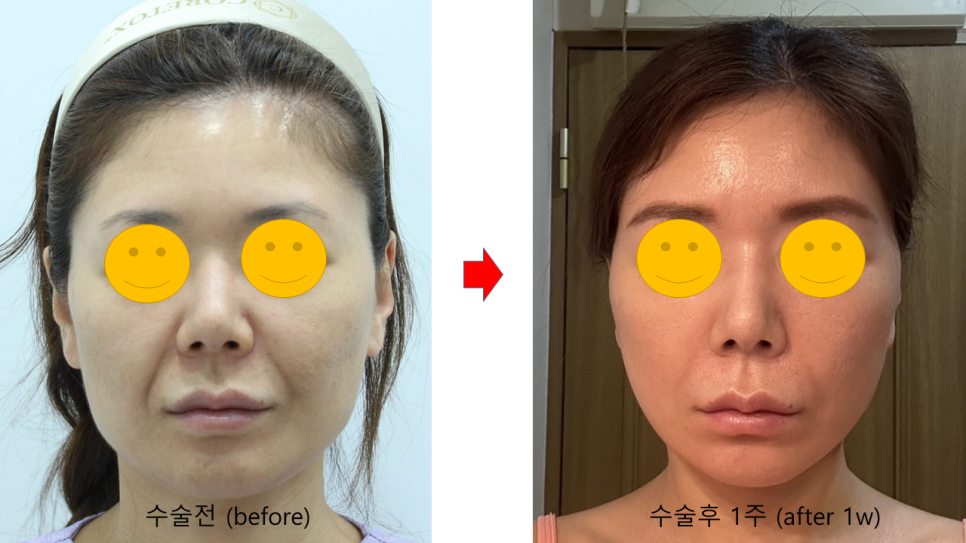
A review of improvement in nasolabial folds through a facelift
The surgical way to address nasolabial folds is to fill in the sunken area or lift the sagging skin.
The sunken part of nasolabial folds can be addressed through paranasal augmentation using implants, fillers, or fat grafting.
The sagging part of nasolabial folds can be addressed through a facelift or deep mini facelift.
In the case of nasolabial folds, it is also possible to carefully identify the cause and apply a combination of surgeries that address the underlying cause.