A mini facelift is a lifting surgery that uses a reduced incision from a facelift for partial treatment, and in fact, there is no separately defined surgical method.
For that reason, the surgery referred to as a mini facelift can differ from hospital to hospital, and many people say they feel confused during consultations.
'Incision lines for a full facelift'
The incision methods for facelifts can also be divided into several approaches, but the most commonly used method is as shown in the figure below.
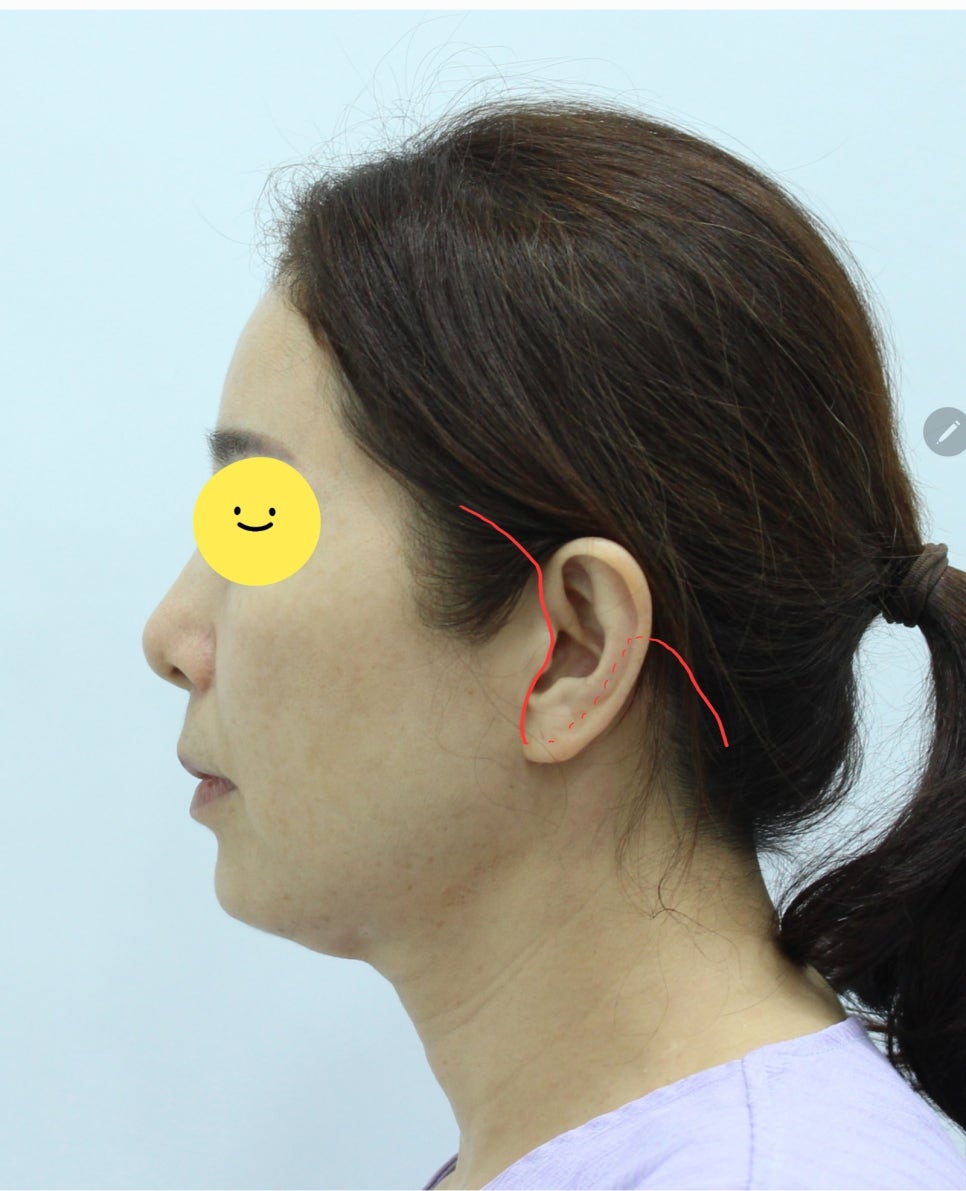
Incision lines for a facelift
The incision lines for a facelift can broadly be divided into 1) the front scalp, 2) the area in front of the ear, 3) the area behind the ear, and 4) the back scalp. Considering the location where the skin is handled for each area, the parts that can be lifted by each incision area are as follows.
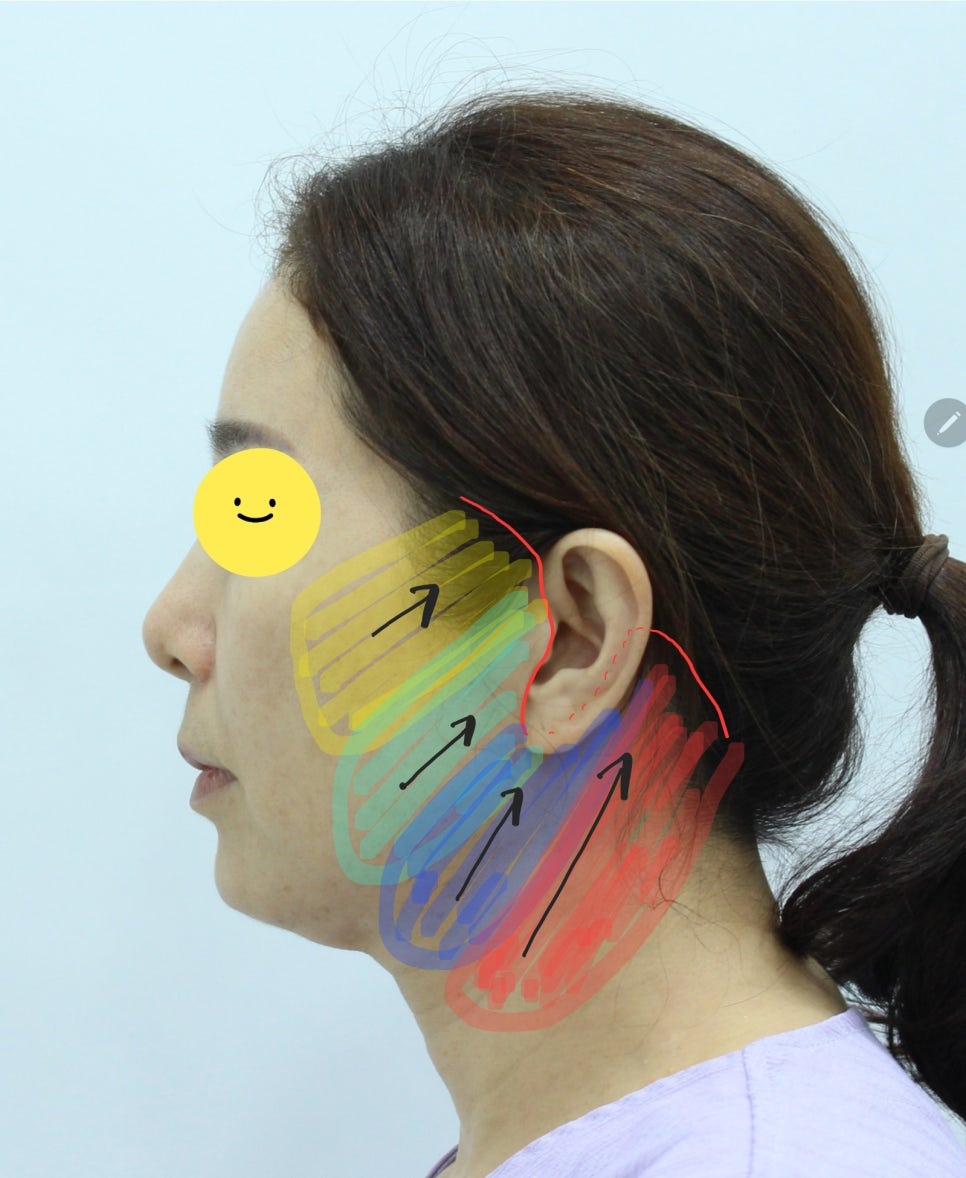
Facelift incision lines and the range and direction of skin handling
The approximate lifted areas are marked according to the location of the incision lines.
Therefore, a mini facelift can be said to be a surgery that lifts sagging areas of the face partially by using only part of the long incision line of a facelift.
Types of mini facelifts
If the incision methods of surgeries currently called mini facelifts are classified, they can roughly be divided into four types.
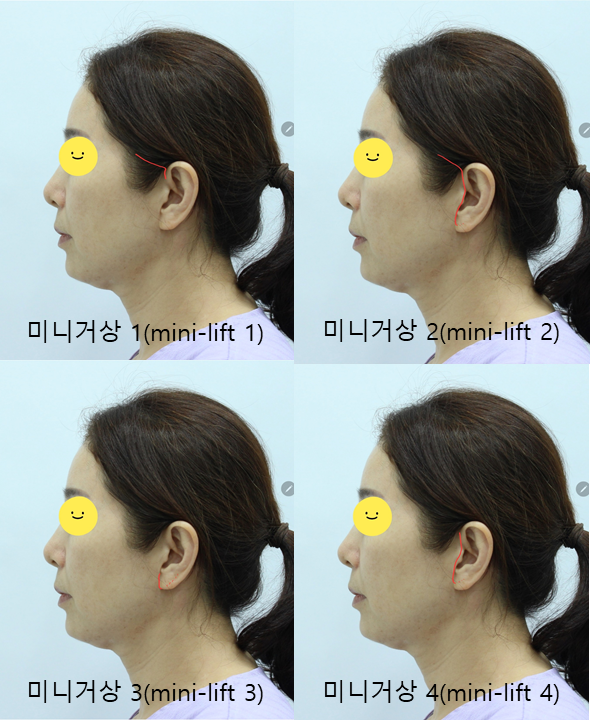
Types of mini facelifts
The first and most commonly used mini facelift is the 'hidden mini facelift,' which uses the front scalp and part of the upper ear.
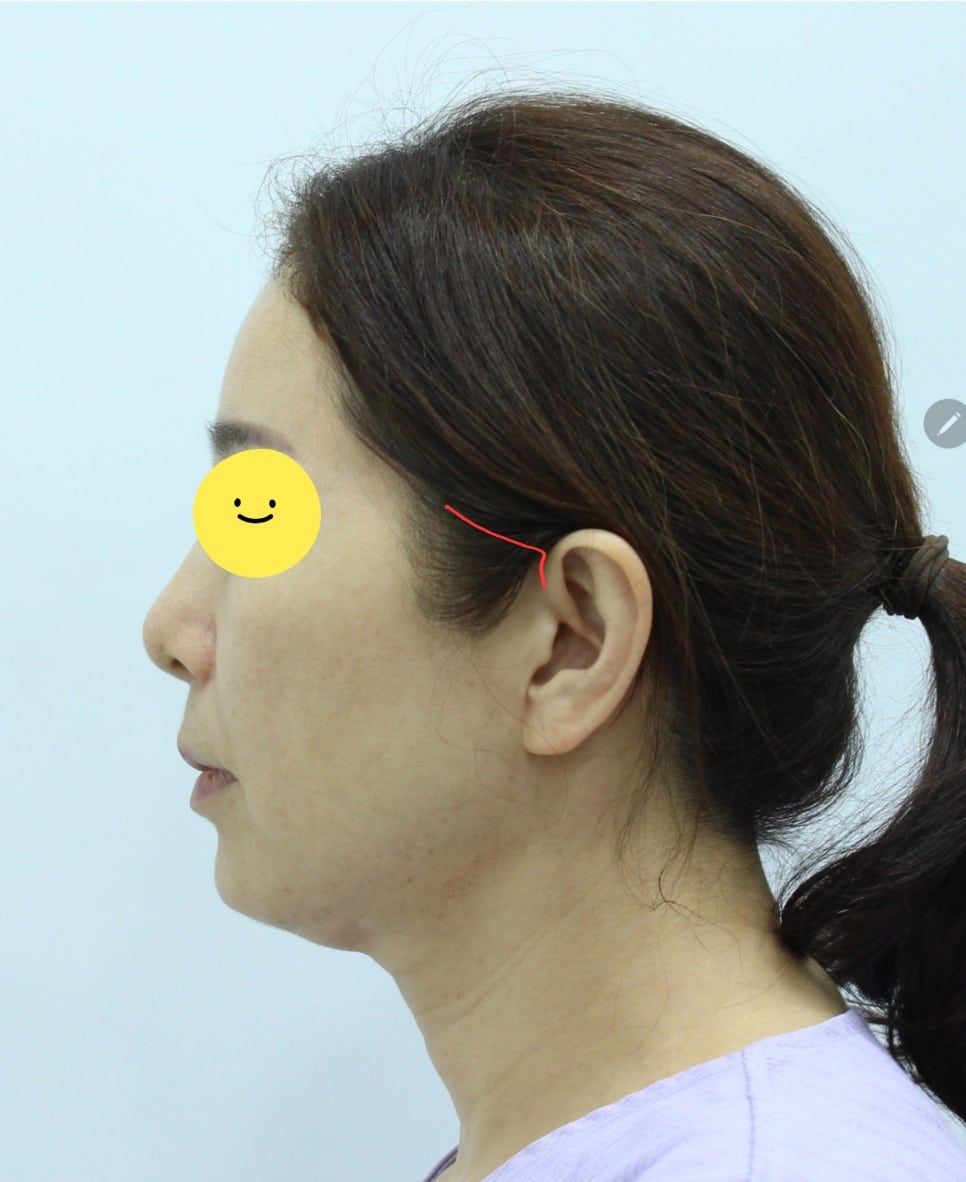
Hidden-incision mini facelift incision line
This method has the advantage of avoiding the incision in front of the ear among facelift incisions, but because the incision line is short and the dissection area is narrow, the lifting effect may be limited.
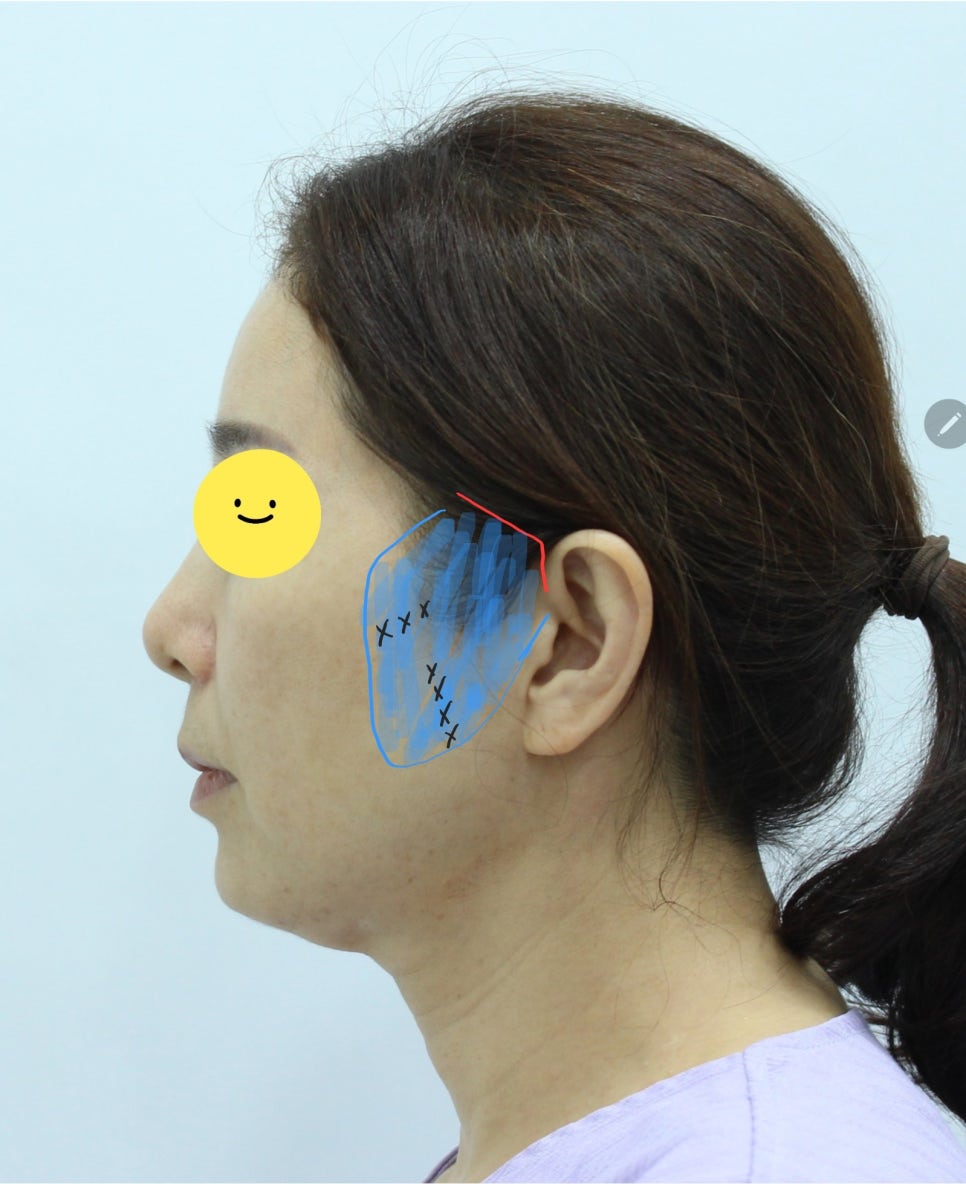
Dissection range of the hidden mini facelift
However, to achieve the maximum effect even through a short incision, the surgery proceeds by dissecting the subcutaneous tissue and SMAS tissue in a composite facelift manner, treating the retaining ligaments, and then fixing the lifted tissue to the deep temporal fascia.
The second mini facelift method is the 'deep mini facelift,' which has an incision line connecting the front scalp and the area in front of the ear.
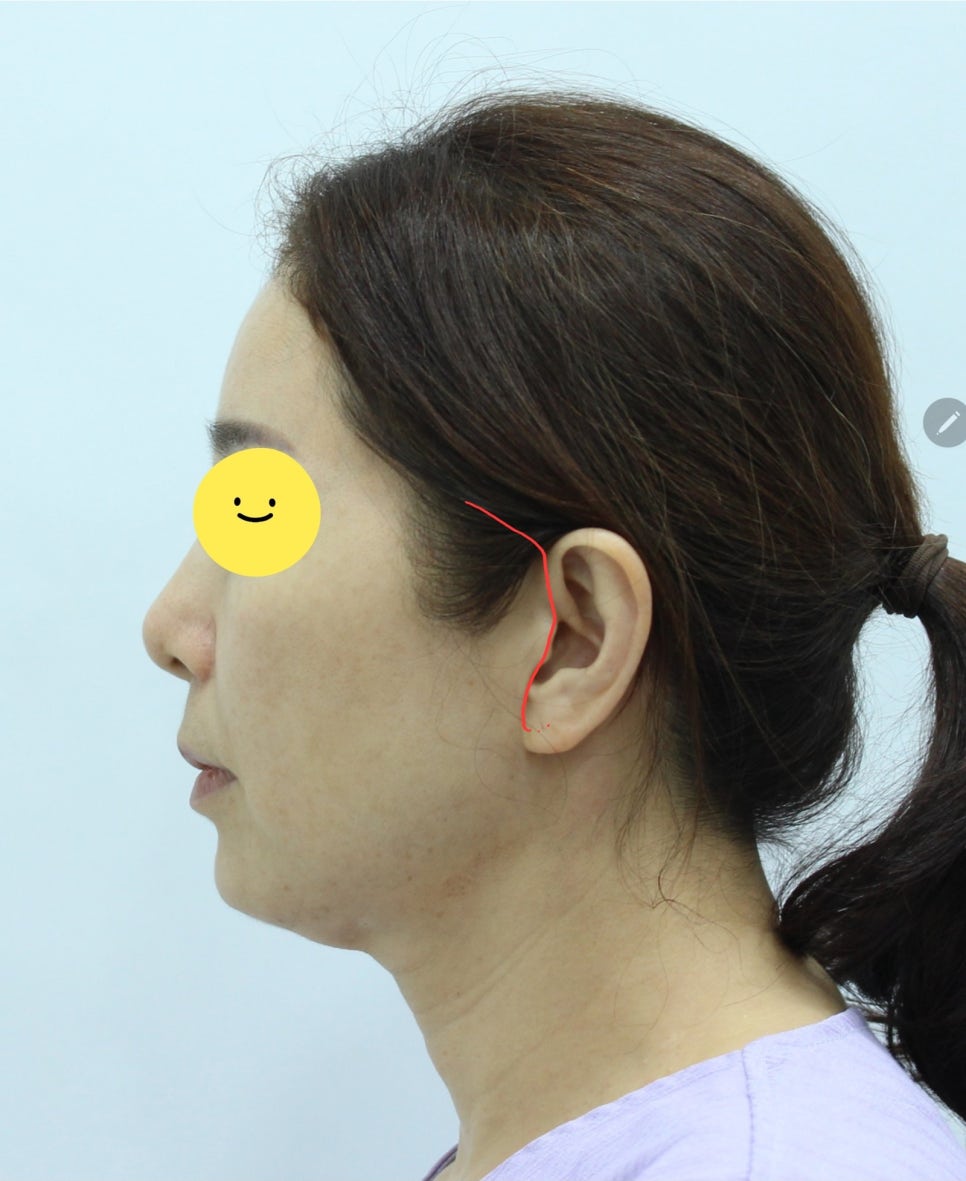
Deep-plane mini facelift incision line
This method can provide a definite lift to the midface, and like a full facelift, it can lift the deep layers of the face using a dual-plane method for the subcutaneous layer and SMAS layer, which is why it is called a deep-plane mini facelift (deep mini facelift).
This type of mini facelift has the advantage of being more effective among mini facelifts and having a longer-lasting result.
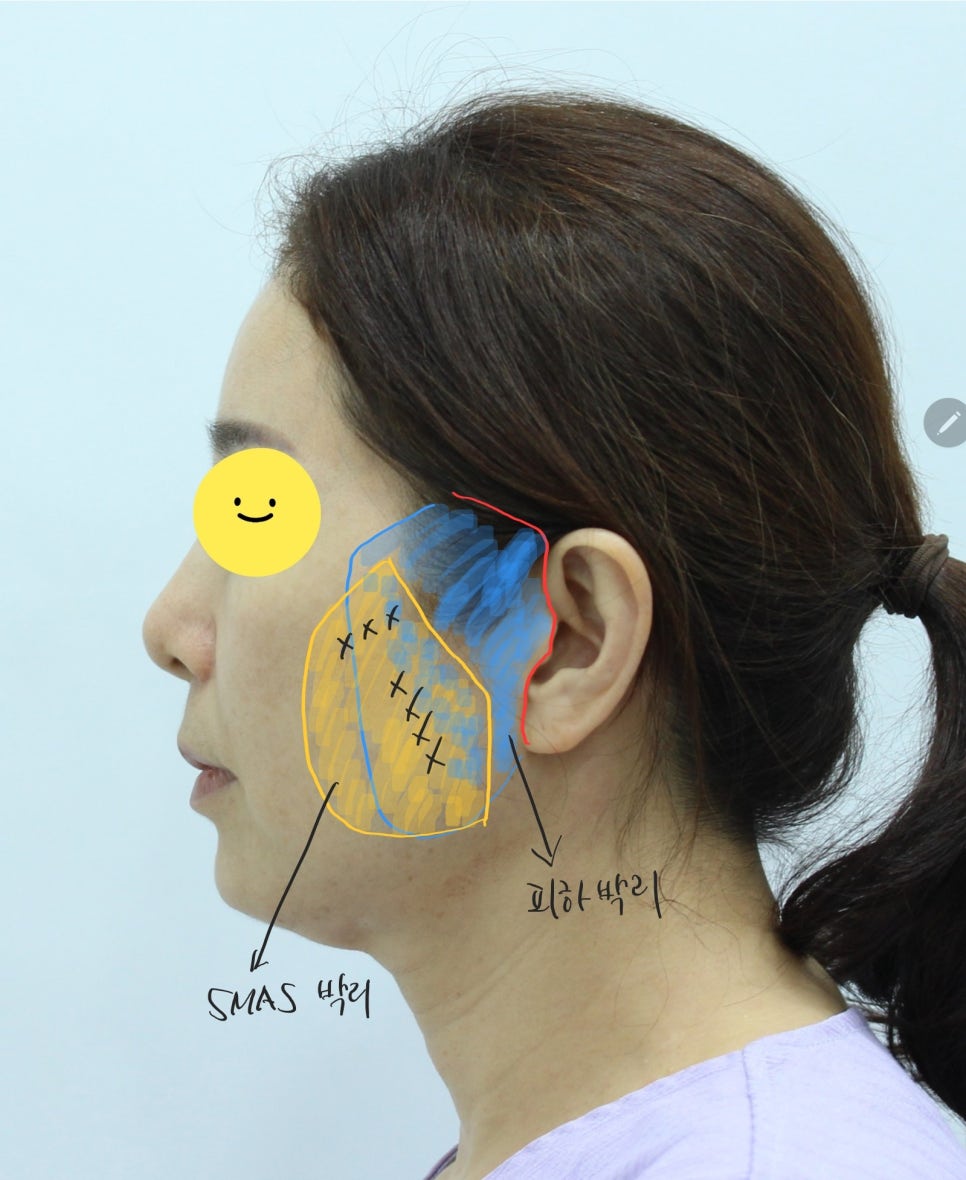
Subcutaneous dissection and SMAS dissection in a deep mini facelift
In the case of a deep mini facelift, the SMAS layer can be separately dissected in the deep layer of the midface, and it is an excellent mini facelift method because it can create sufficient space to properly address the retaining ligaments.
The third method is a mini facelift that lifts the jawline and chin line.
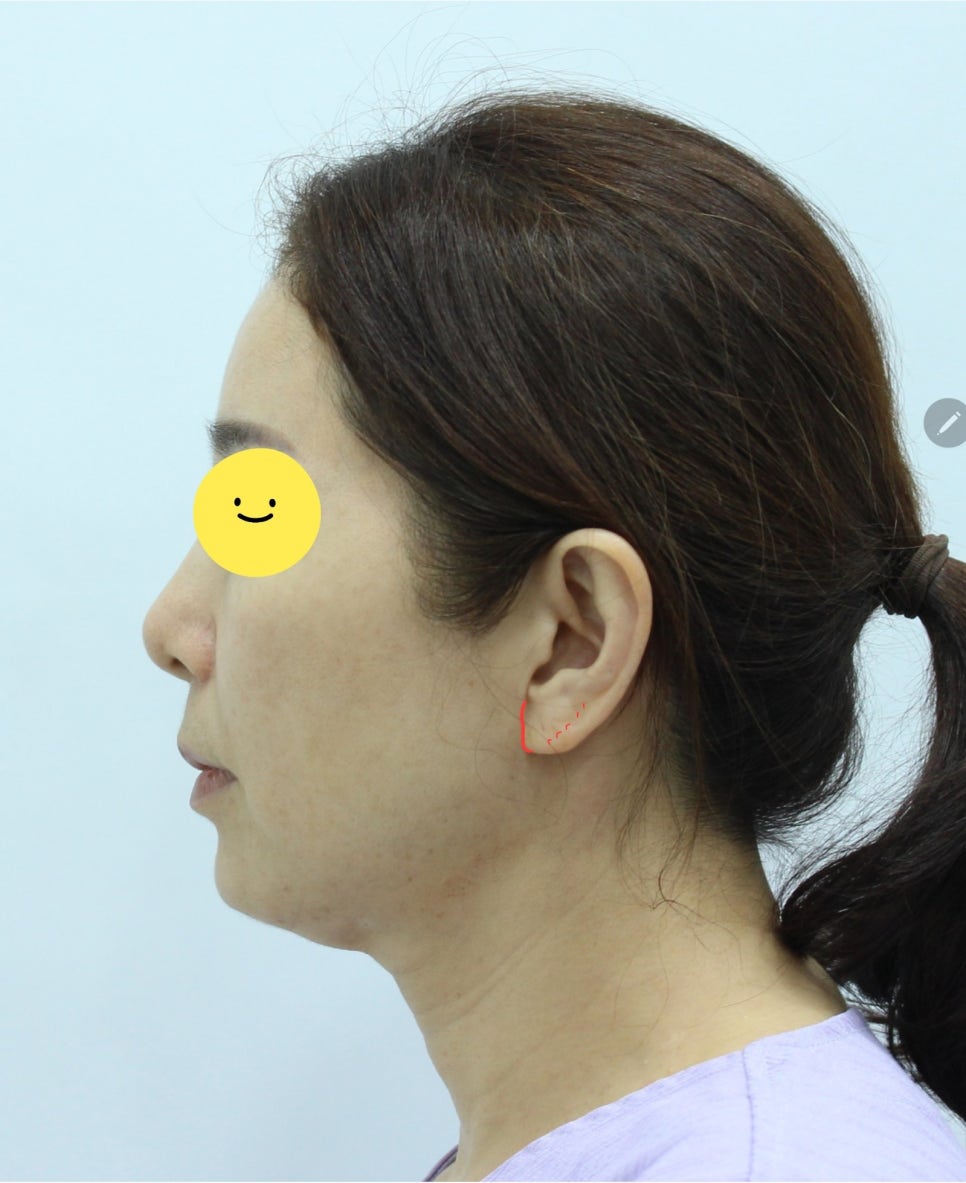
Jawline-lifting mini facelift
This is a mini facelift method that can lift the jawline through a V-shaped incision in the earlobe area, and it is often performed together with double chin treatment and cheek fat liposuction.
The fourth is a mini facelift that extends the V-shaped incision of the earlobe toward the area in front of the ear.
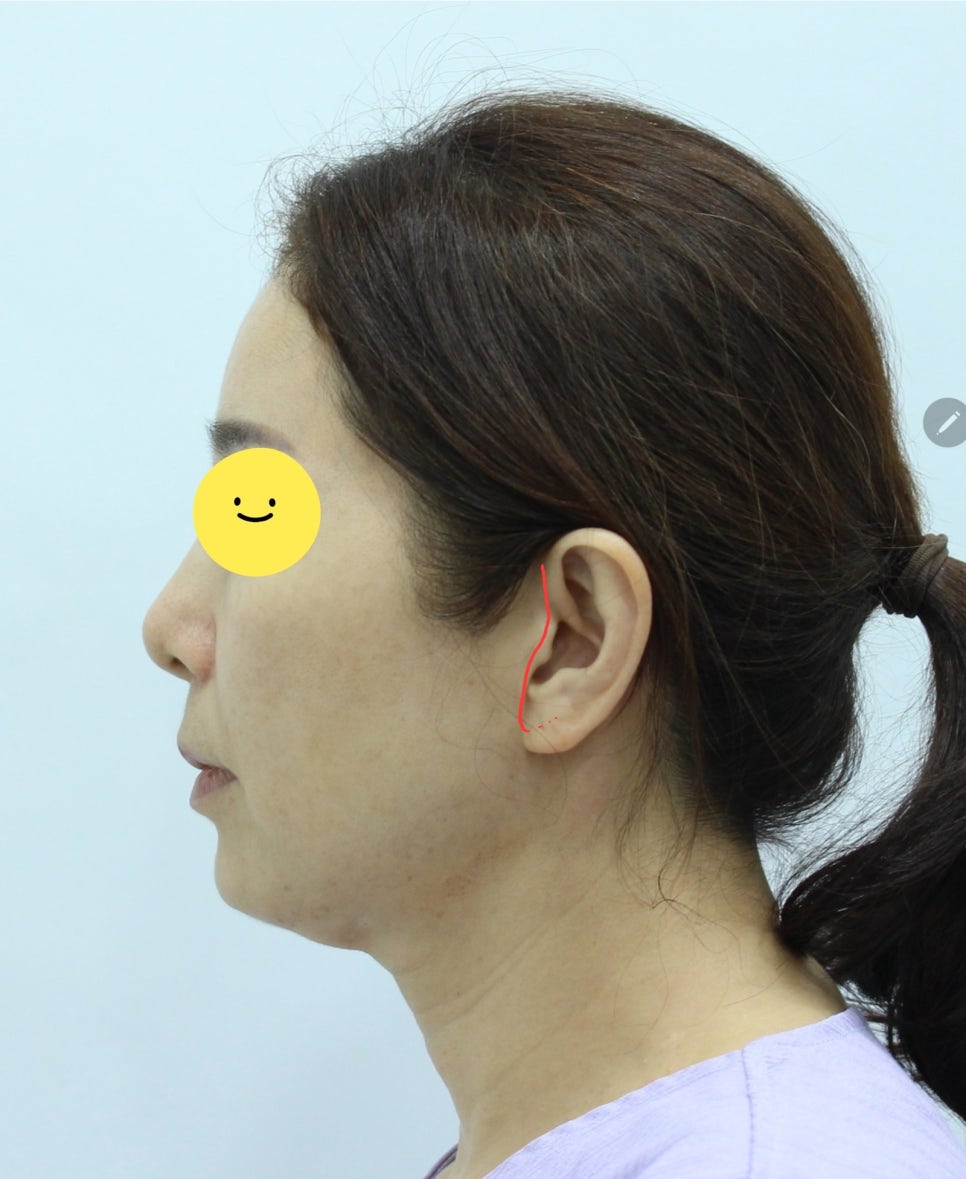
Incision for a lower-face mini facelift
This method extends the V-shaped incision of the earlobe upward and is a mini facelift that can pull up the lower face from the lower part of the midface.
Since mini facelifts can differ both in their incision lines and in the areas that are lifted, when learning about mini facelifts, it is best to carefully consult with the medical staff about which area of the face will be lifted and decide on the surgery only after thorough consultation.

Mini facelift review. This is a real model with consent for disclosure.