The ideal appearance under the eyes can be said to be a moderate amount of aegyo-sal and an under-eye area without dark circles or irregular contours.
If there is aegyo-sal under the eyes, the face looks brighter and more smile-like. If there is no aegyo-sal, the face may look expressionless, or it may lose the bright and cheerful impression.
This is because the muscle corresponding to aegyo-sal is part of the orbicularis oculi, a facial muscle, and it contracts mainly when smiling.
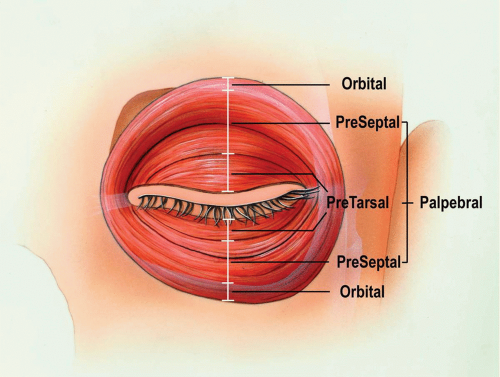
Orbicularis oculi, the facial muscle that creates aegyo-sal
In addition, hollows or dark circles under the eyes can make a person look tired or dark and can also make them appear older.
'Causes of dark circles under the eyes in people in their 20s'
Dark circles under the eyes are not necessarily caused by aging, and even younger people often have prominent dark circles because of under-eye fat pads.
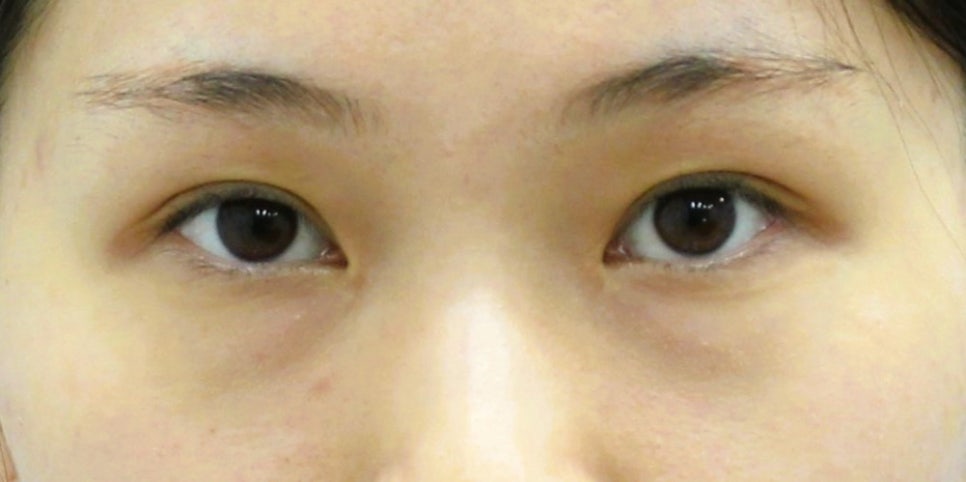
Dark circles under the eyes in your 20s
There are many causes of dark circles under the eyes, but the most common cause is often the hollowness created by under-eye fat pads and the tear trough.
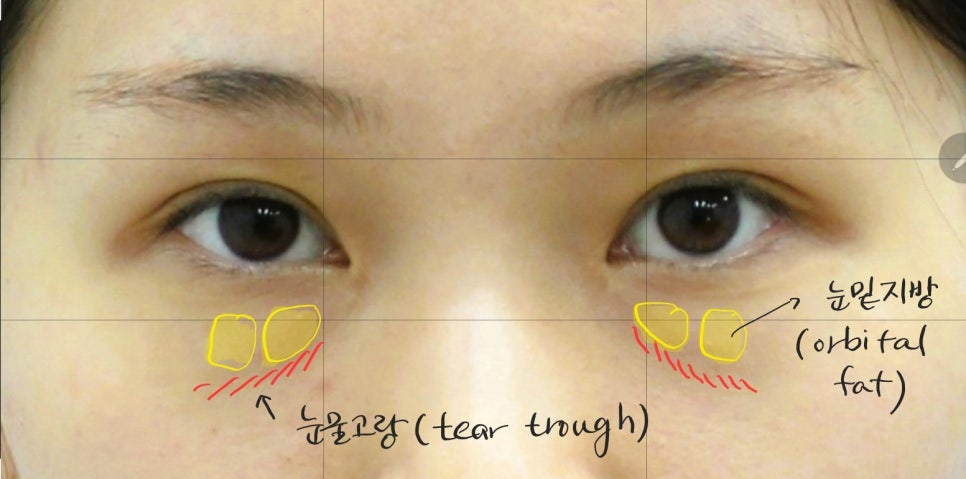
The tear trough and orbital fat that cause dark circles
'Surgical method for under-eye fat repositioning'
Under-eye fat repositioning refers to a procedure that uses an incision on the inner conjunctiva of the eye, so there is no external incision, and after dissecting the tear trough, the under-eye fat pad is moved and fixed downward.
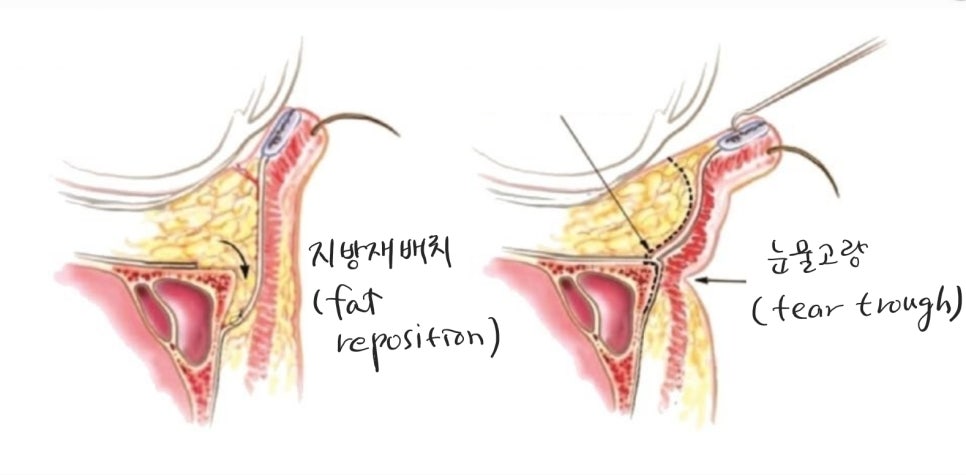
Surgical method for under-eye fat repositioning
Under-eye fat repositioning is a completely different procedure from under-eye fat removal, and it refers to a surgical method that maintains the continuity of the fat pad to fill the sunken tear trough under the eyes.
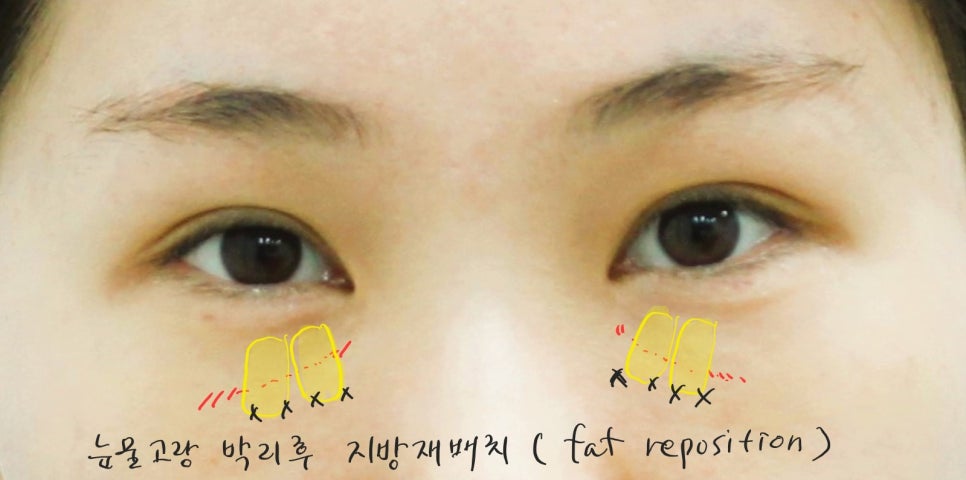
The process of dissecting the tear trough and then repositioning the under-eye fat
Under-eye fat repositioning is a relatively simple procedure that takes about 30 minutes, but because the surgical field is narrow, it is not an easy operation. It is a relatively delicate procedure that requires minimizing bleeding in a limited field of view while securing the under-eye fat in the desired position.
'Aegyo-sal micro fat grafting'
The most common methods for creating aegyo-sal are filler and fat grafting. Each has its own pros and cons, but fat grafting has more advantages in terms of natural appearance, compatibility with skin tone, and duration.
The fat grafting used for aegyo-sal uses fine microfat particles, and the transplanted fat survives semi-permanently after taking hold.
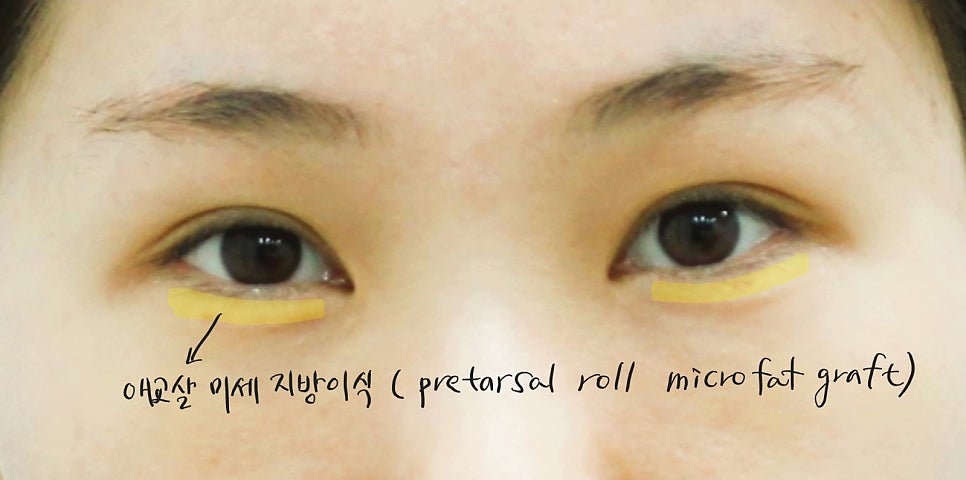
Review of aegyo-sal micro fat grafting
Aegyo-sal fat grafting requires delicate technique, and microfat must be grafted into the proper layers of the skin and muscle for the results to look natural and for there to be no side effects.
'Under-eye fat repositioning and aegyo-sal fat grafting in your 20s'
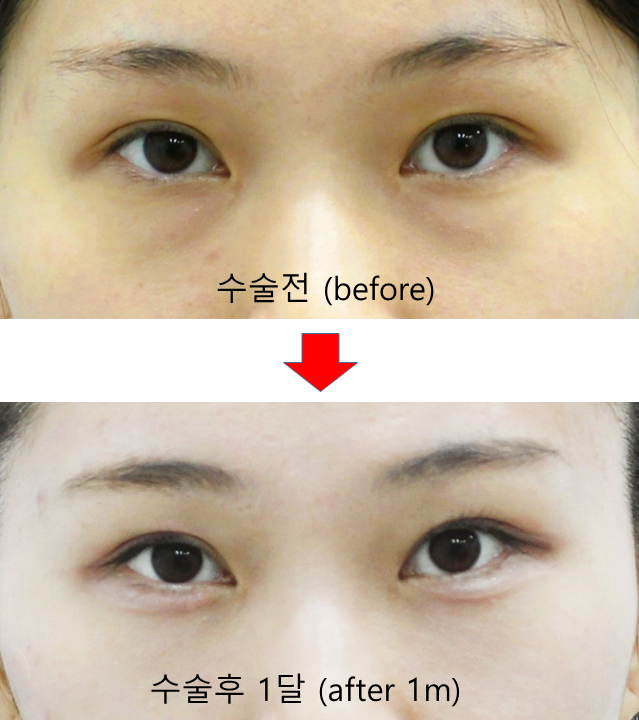
One-month review of under-eye fat grafting and aegyo-sal fat grafting
Because under-eye fat repositioning is performed through a conjunctival incision, there is no external incision and recovery is fast, which is an advantage.
It usually requires a short recovery period of within one week, and for the dressing tape under the eyes, removal is possible after three days, so many people undergo the procedure over the weekend.
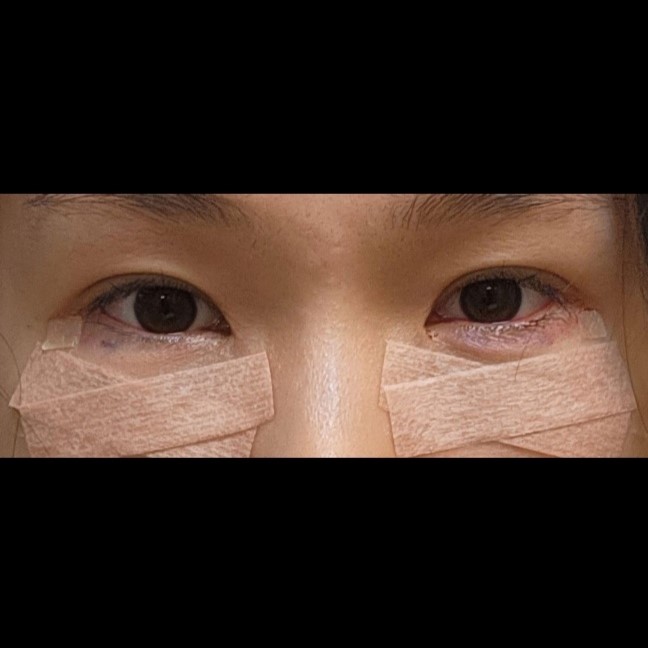
Partially disclosed real model review
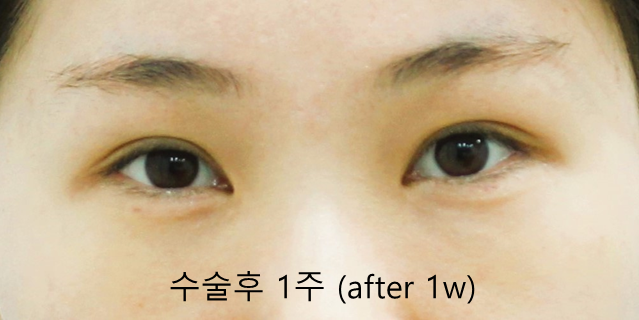
One-week review of under-eye fat repositioning and aegyo-sal fat grafting