During the consultation process for double eyelid surgery, after choosing between incision and non-incision methods, the next concern is whether to add ptosis correction.
Ptosis correction, simply put, refers to surgery that adjusts the strength of eyelid opening for cosmetic purposes.
'Blepharoptosis and Ptosis Correction Surgery'
To understand ptosis correction surgery, it is best to first understand the term 'blepharoptosis.'
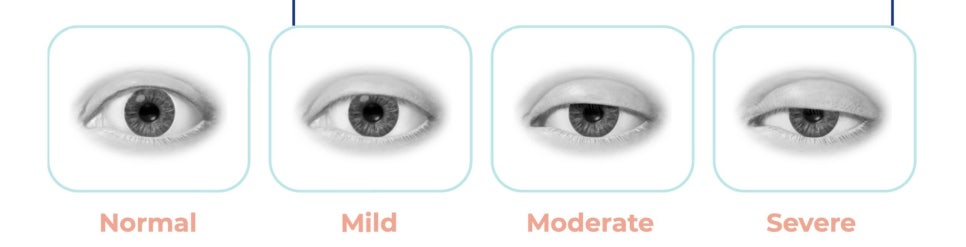
The degree of normal pupil exposure and blepharoptosis
In a normal eye, having sufficient pupil exposure when the eyes are open is desirable from both a functional and cosmetic standpoint.
'Blepharoptosis' refers to a condition in which the strength to open the eyes is insufficient, and this is unrelated to sagging skin of the eyelids.
Sometimes the skin of the upper eyelid becomes lax and covers the eyeball, but this is not blepharoptosis. It is called 'pseudoptosis,' so it is important to distinguish between the two during consultation.
Blepharoptosis is classified as mild, moderate, or severe depending on the degree of pupil exposure.
In general, cases that cause functional discomfort or visual field obstruction occur at the moderate level or above. In such cases, 'blepharoptosis correction surgery' should be performed for functional recovery rather than cosmetic purposes.
However, in most people, the condition is often mild, and in that case blepharoptosis correction surgery is needed for cosmetic rather than functional purposes. This is called 'ptosis correction surgery.'
In other words, ptosis correction surgery refers to surgery that strengthens eyelid opening for cosmetic purposes in mild blepharoptosis.
'Double Eyelid Surgery and Ptosis Correction Surgery'
Double eyelid surgery refers to surgery that creates a fold in the eyelids of East Asians, who have a single eyelid, at a certain position.
Some people mistakenly think that double eyelid surgery also improves eyelid-opening strength, but in fact, while double eyelid surgery can make the eyes look more refreshed by folding or removing the overhanging skin of the upper eyelid, it does not improve the strength of eyelid opening.
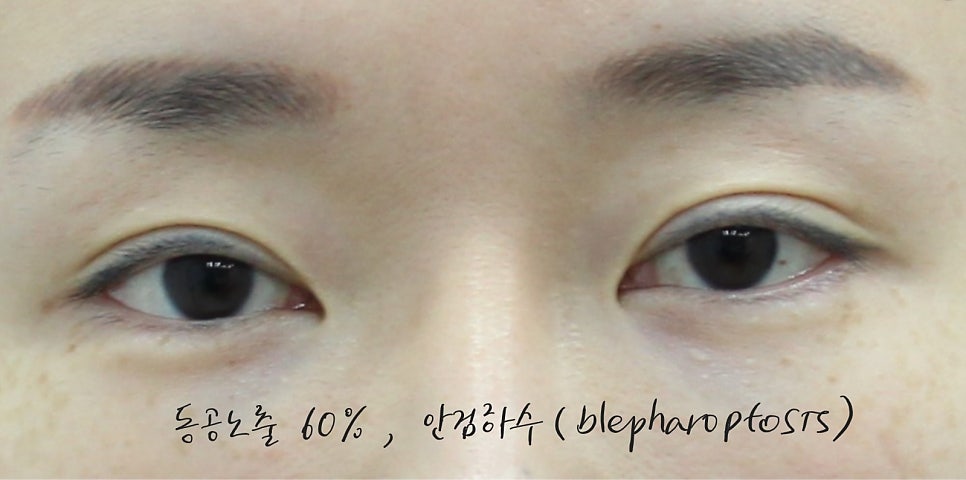
Cases requiring reoperation because eyelid-opening strength is insufficient after double eyelid surgery
This patient had previously undergone double eyelid surgery and came in for reoperation because a fold had formed but eyelid-opening strength had not improved.
They wanted a clear semi-out line for the double eyelid crease and, above all, wanted to improve the sleepy-looking appearance.
Ptosis correction can be performed using either incision or non-incision methods, but if the goal is to clearly improve eyelid-opening strength, it is better to perform it together with incision-based double eyelid surgery.
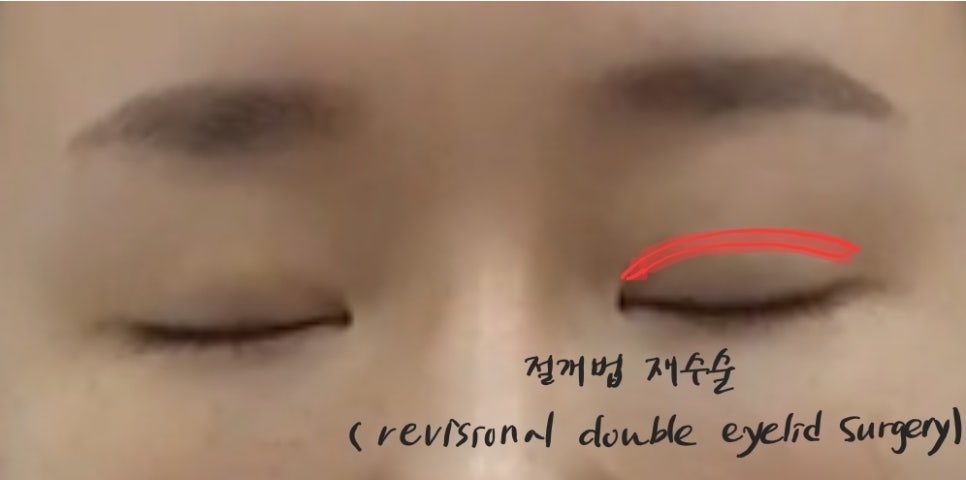
Incision-based double eyelid revision surgery
We performed incision-based double eyelid revision surgery by removing some skin along with scar tissue from the scar area of the previously created incision-based double eyelid.
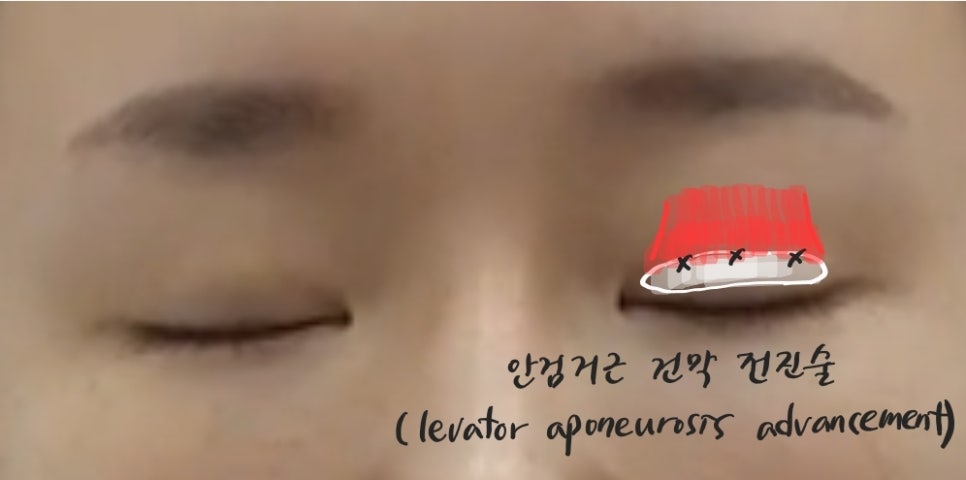
Levator aponeurosis advancement for ptosis correction
Then, to strengthen eyelid-opening strength, the levator aponeurosis is advanced and fixed to the tarsal plate near the double eyelid line.
When advancing the aponeurosis, fixation is usually performed at three points: inner, center, and outer. By adjusting the amount of advancement at each position, ptosis correction can be done with a more rounded look. (Round eye ptosis correction)

Round eye ptosis correction for a rounded eye shape. Trademark registration for Round Eye Ptosis Correction by the Korean Intellectual Property Office
Then, an additional fixation to create the double eyelid fold at the advanced aponeurosis end and the tarsal plate is performed, and the surgery is completed by carefully suturing the skin.
In addition, epicanthoplasty, canthoplasty, or lower canthoplasty can be performed to create a more refreshed eye shape.
However, the most important part of achieving bright-looking eyes is performing ptosis correction well together with double eyelid surgery, and it is best to think of the other canthoplasty procedures as supporting roles.
'Before and After Incision-Based Double Eyelid Revision Surgery and Ptosis Correction Surgery'
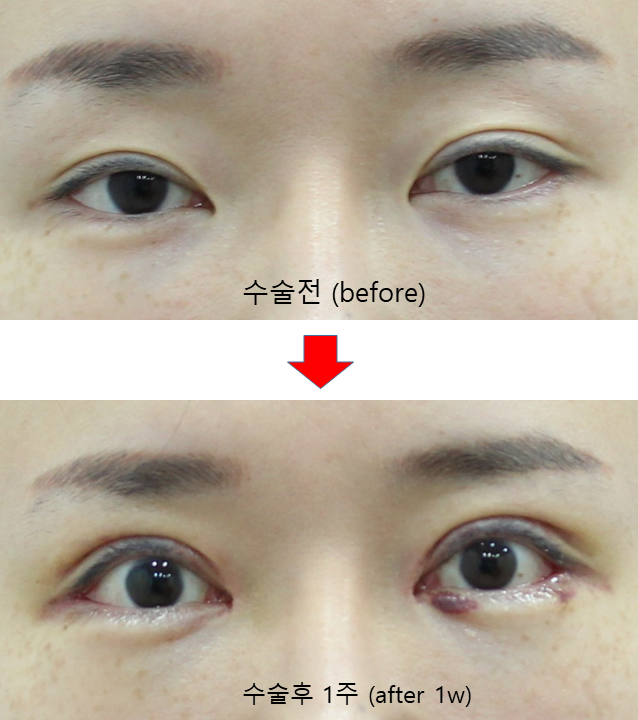
1 week after incision-based double eyelid ptosis correction surgery
Because ptosis correction is performed together with double eyelid surgery, the recovery period is the same as that of double eyelid surgery.
Even if other canthoplasty procedures are performed at the same time, the recovery period is the same.
After the stitches are removed, light makeup is possible, and after about a month, the results begin to look more natural.
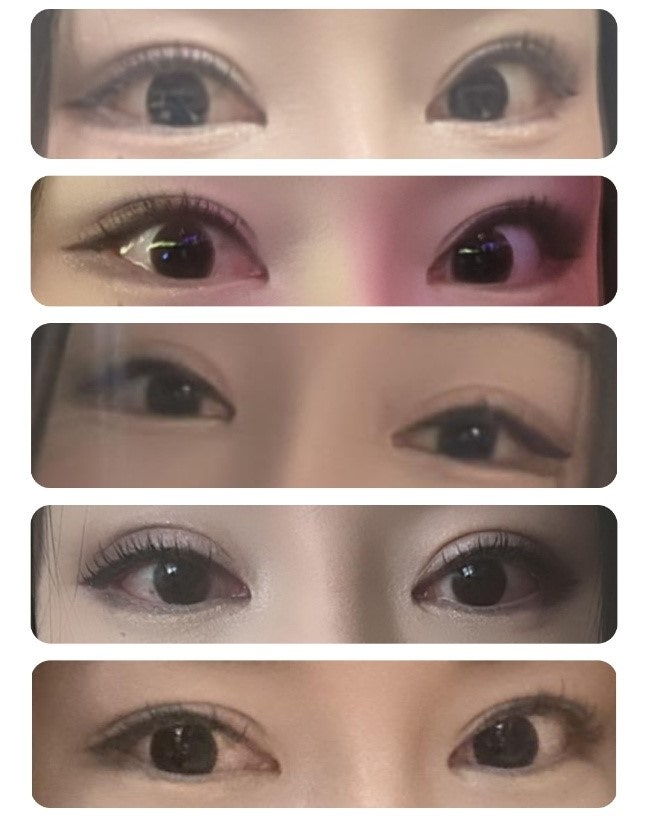
1 month review after double eyelid revision surgery and ptosis correction
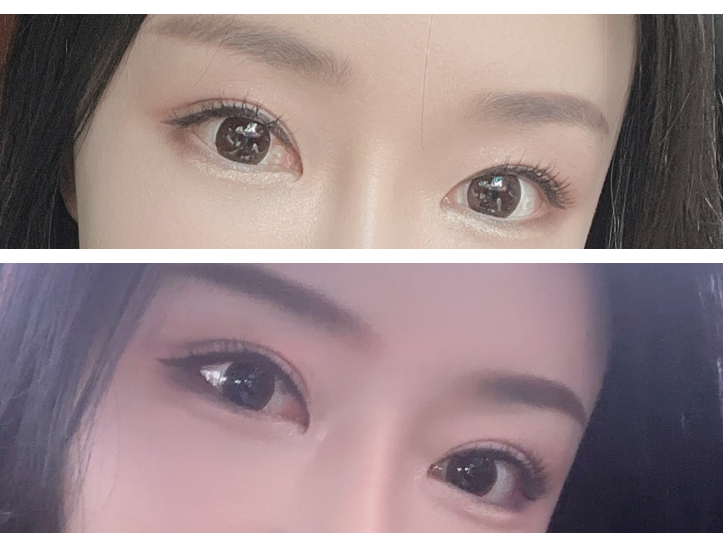
3-month review after double eyelid revision surgery and ptosis correction