Aesthetic procedures using fillers are widely performed because the recovery period is short and the procedure is relatively simple.
In the case of commonly used dissolvable fillers, the maintenance period is known to be about 6 months to 1 year, and once that period has passed, they lose their shape and spread.
With nose fillers, people are often satisfied because the nose becomes higher and more defined immediately after the procedure. However, after the maintenance period passes, the filler spreads, and many people undergo repeated procedures.
When nose fillers are repeated, the skin of the nose can become thinner, which can cause the filler to become visible through the skin.
'Filler Spreading and the Tyndall Effect in Nose Fillers'
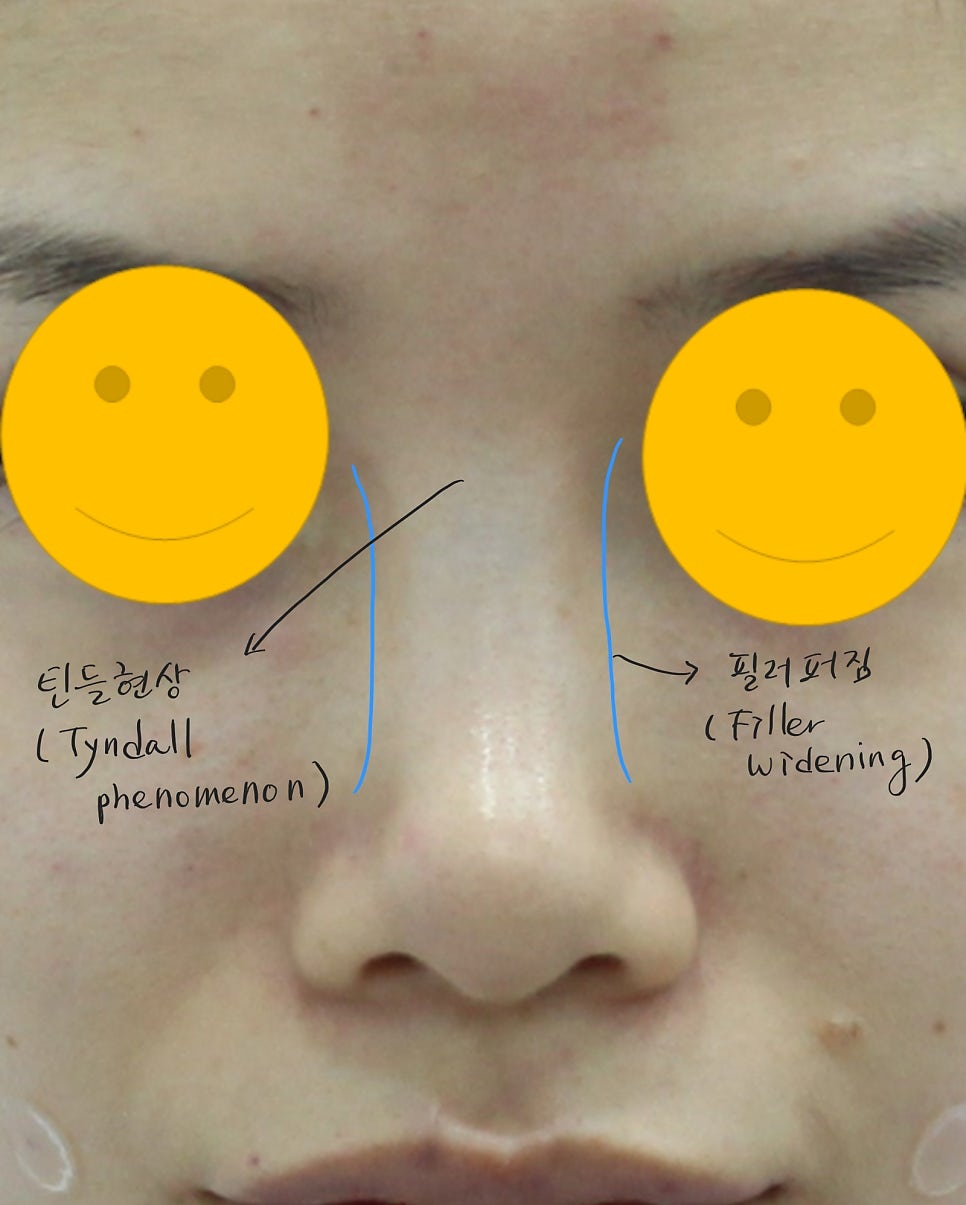
Side effects of nose fillers: filler spreading and the Tyndall effect
When the nose is low, people often try to raise it with fillers, and in many cases, too much is injected.
Then, when the maintenance period passes after excessive injection, the filler loosens and some of it is absorbed. At this point, if filler is injected repeatedly, the skin of the nose becomes thinner and the filler starts to show through.
'The Tyndall Phenomenon of Fillers'
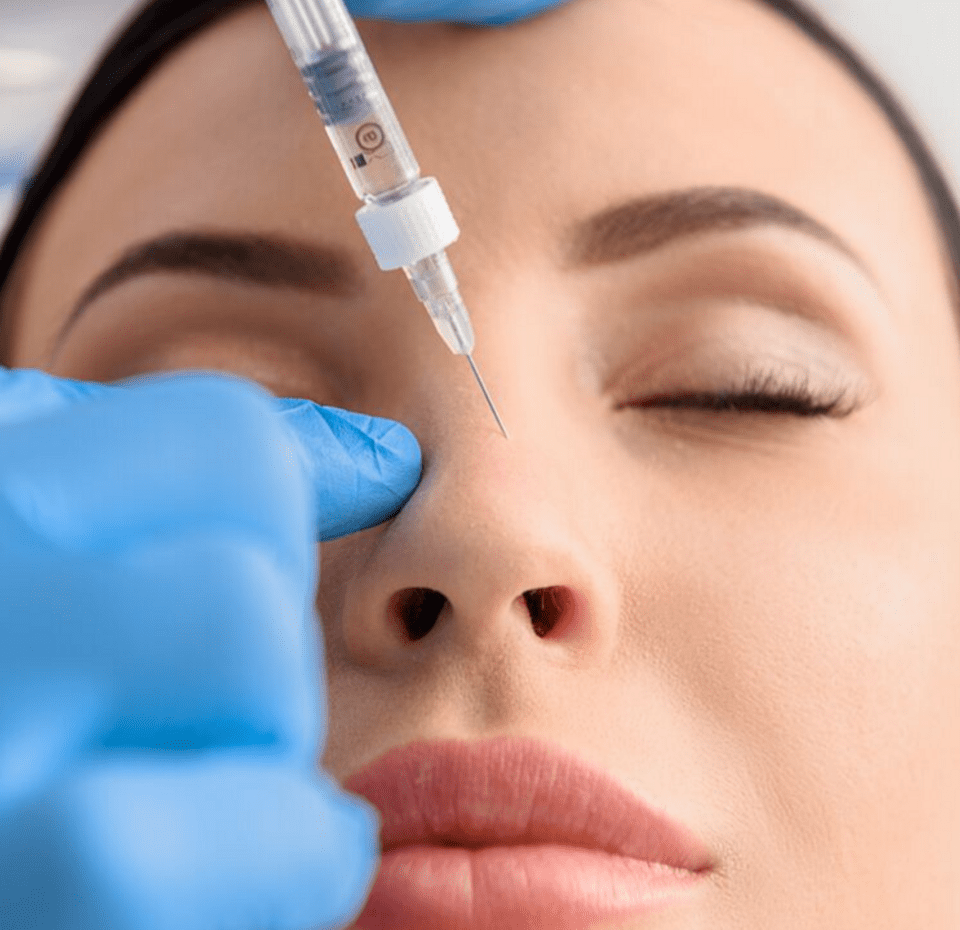
Transparent hyaluronic acid filler injected into the nose
The components of commonly known dissolvable fillers are made of hyaluronic acid (Hyaluronic acid, HA) and have a transparent appearance.
When this transparent hyaluronic acid filler (HA filler) is injected into areas of the face where the skin is thin, a visible-through effect can appear. This is called the Tyndall effect.
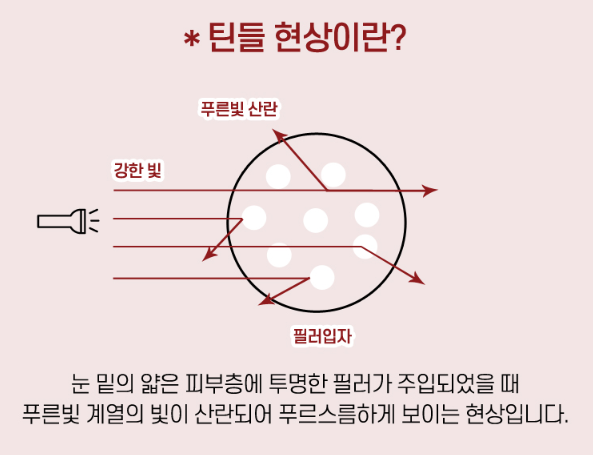
The principle behind filler becoming visible due to the Tyndall effect
In general, the Tyndall effect, a side effect of fillers, is often seen in thin-skinned areas of the face such as under the eyes (tear troughs) and the under-eye area.
However, it can also occur not infrequently after nose filler injections. Although the skin of the nose is thicker than the skin around the eyes, repeated procedures are common.
If the Tyndall effect or filler spreading occurs after nose filler injection, it can create an artificial and awkward appearance.
Also, because the filler itself is in a colloidal, semi-liquid state, it does not have the strength to raise the nasal tip.
That is why it is mainly used to raise the bridge of the nose, and it inevitably lacks the power to control the height and length of the nasal tip.
Sometimes a lifting thread is inserted into the nasal tip together with filler, but the thread also loses support once its short maintenance period ends.
In the end, there are limits to repeated filler procedures, and performing semi-permanent rhinoplasty at the appropriate time often leads to higher aesthetic satisfaction.
'Rhinoplasty While Dissolving Nose Filler'
If you have previously received nose filler, when undergoing rhinoplasty the filler can be dissolved in advance, or the surgery can be performed while dissolving it all at once during the operation.
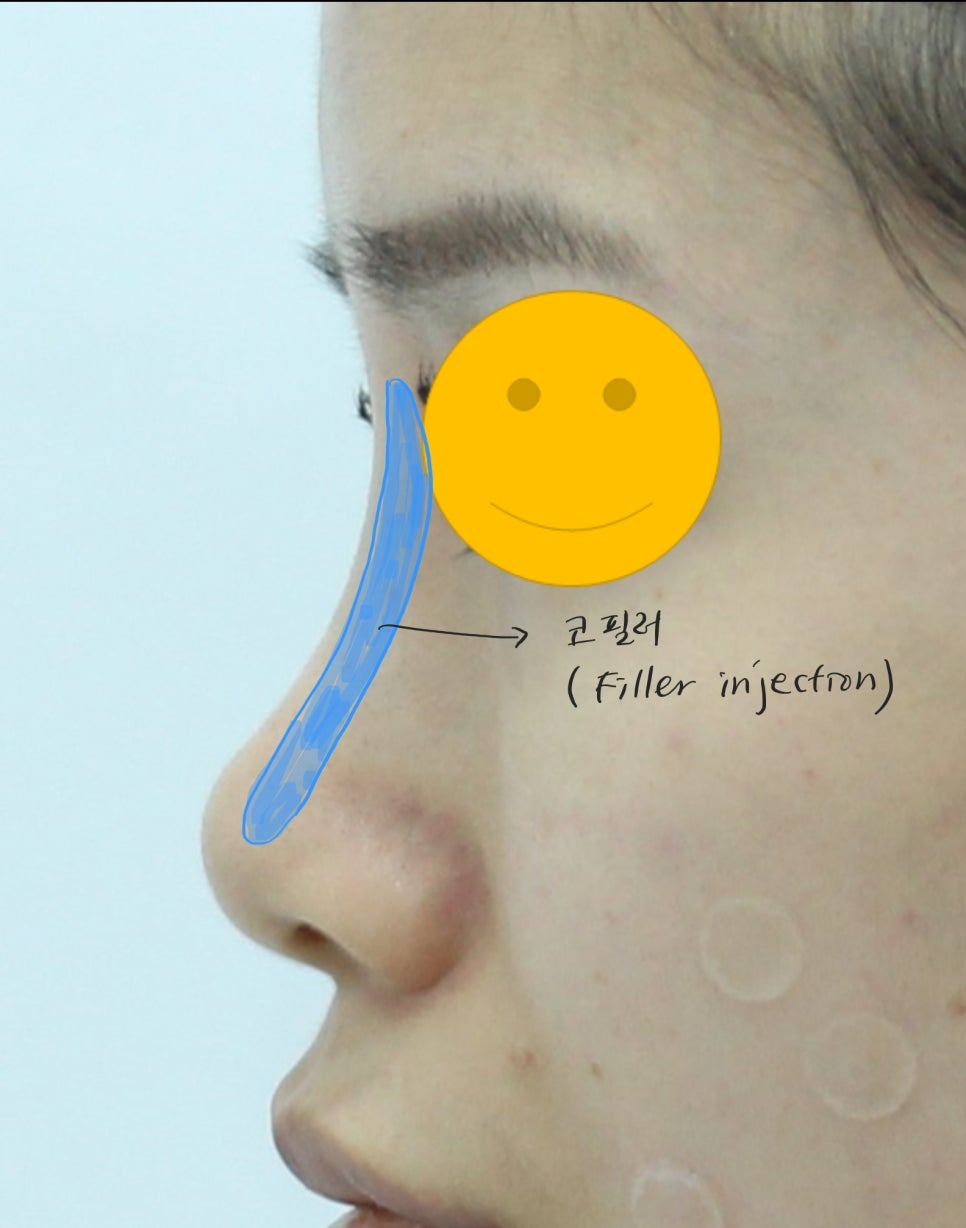
Condition after nose filler injection
The medication used to dissolve hyaluronic acid filler (HA filler) is called hyalase (hyaluronidase), and it must be injected at an appropriate depth into the area where the filler was placed for it to dissolve properly.
Because some people may have an allergic reaction to hyalase, it is important to perform pretreatment with medication that reduces allergic reactions before injecting hyalase.
After the nose filler is dissolved, the surgery proceeds in the same way as general rhinoplasty.
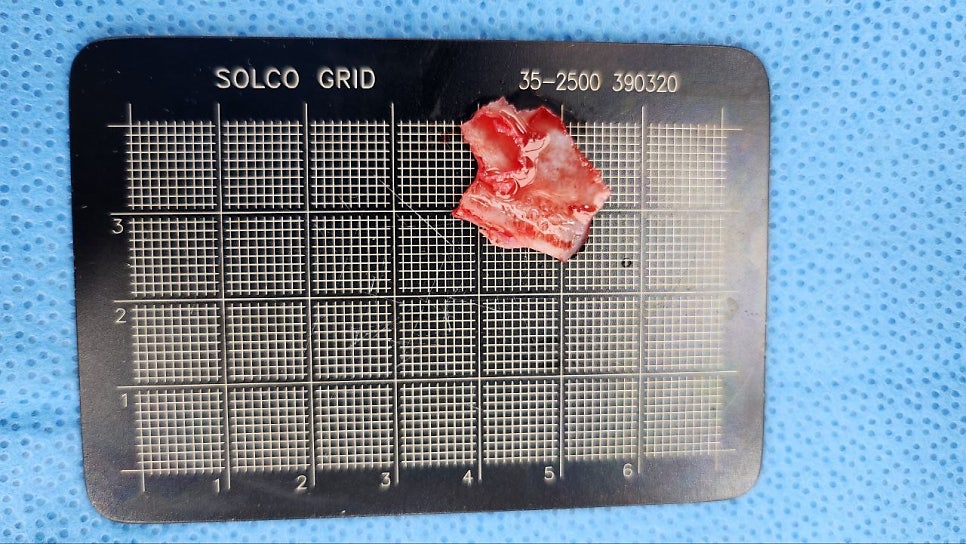
Harvested septal cartilage
Septal cartilage is the cartilage structure that separates the left and right nostrils from the mucosal area inside the nose. Because it has a flat shape, it is a good cartilage material for creating support for the nasal tip.
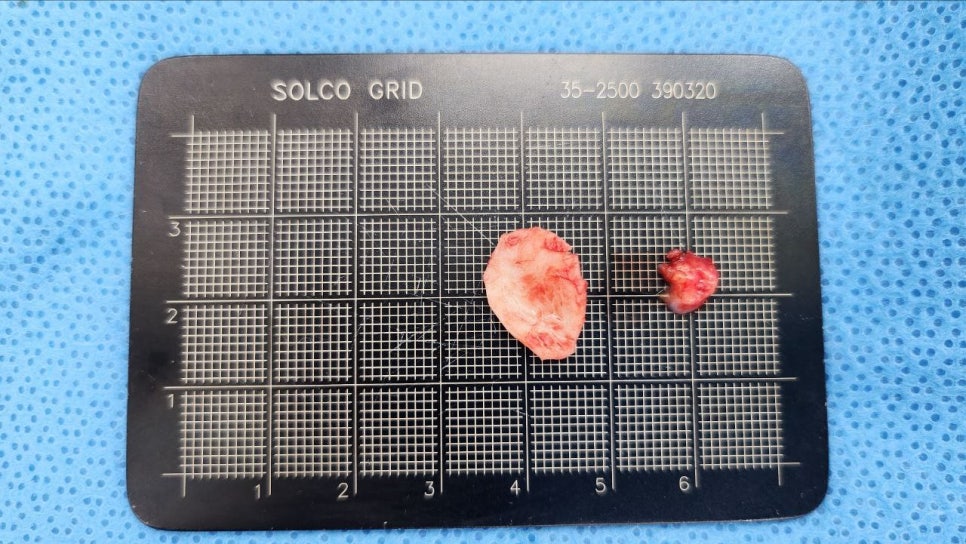
Harvested ear cartilage and dermis
Ear cartilage can usually be harvested through an incision behind the ear, and because it has good elasticity and a slightly curved shape, it is often used in the form of an onlay graft, placed on top to raise the nasal tip.
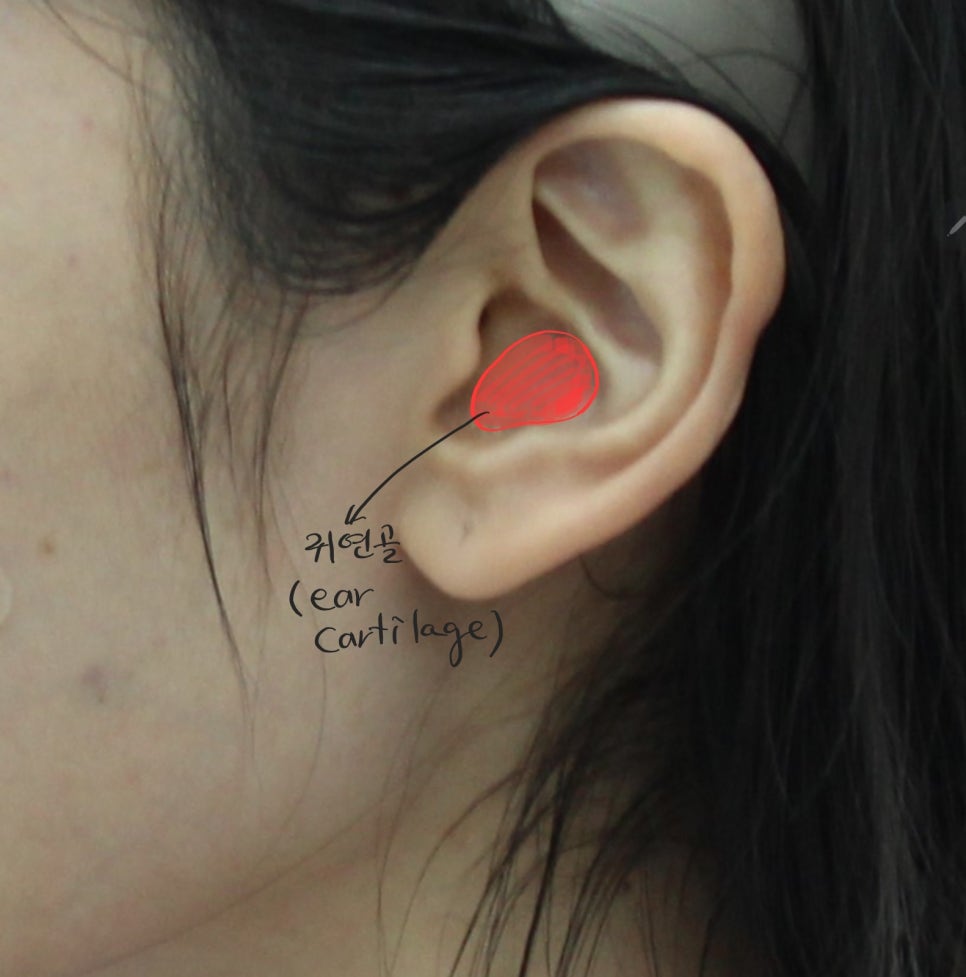
Harvest site of ear cartilage
The ear cartilage needed for rhinoplasty is harvested from the concha, the flat inner part of the ear rather than the outer rim. The concha can be broadly divided into the cavum and the cymba.
When harvesting ear cartilage, it must be taken while preserving the cartilage structures that form the framework of the ear so that the ear’s shape and form can be maintained even after harvest.
And if the skin of the nasal tip is thin, a small amount of dermis can also be harvested together with the cartilage.
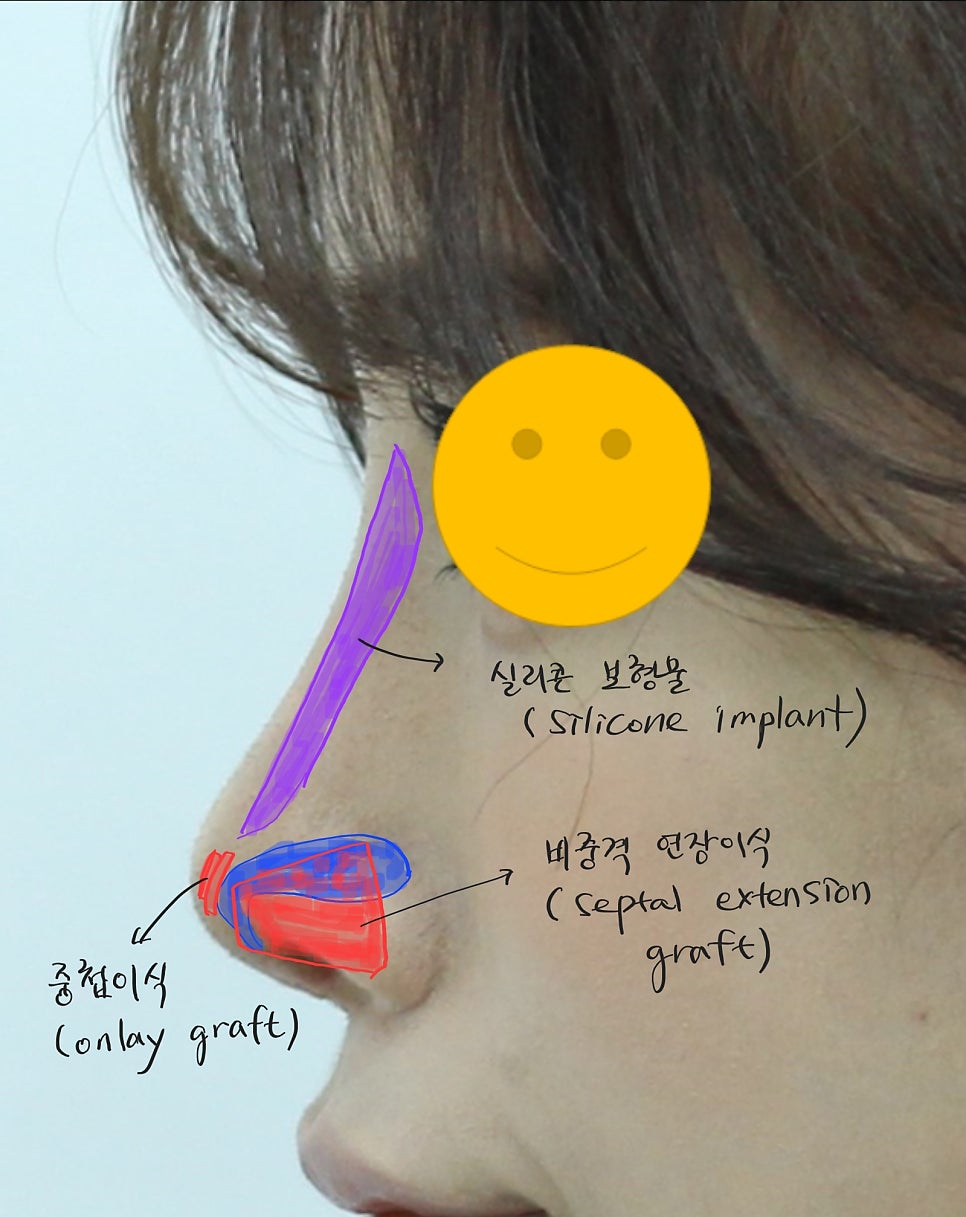
Rhinoplasty using septal cartilage, ear cartilage, and silicone implants
In general rhinoplasty, the most commonly used method is to raise the nasal tip with autologous cartilage and raise the bridge of the nose with a silicone implant of an appropriate height.
For the nasal tip, the first priority is to create a strong support structure through septal extension grafting, and because the septal cartilage is often small in East Asians, ear cartilage is additionally used to make up for the 부족한 부분 and raise it further.
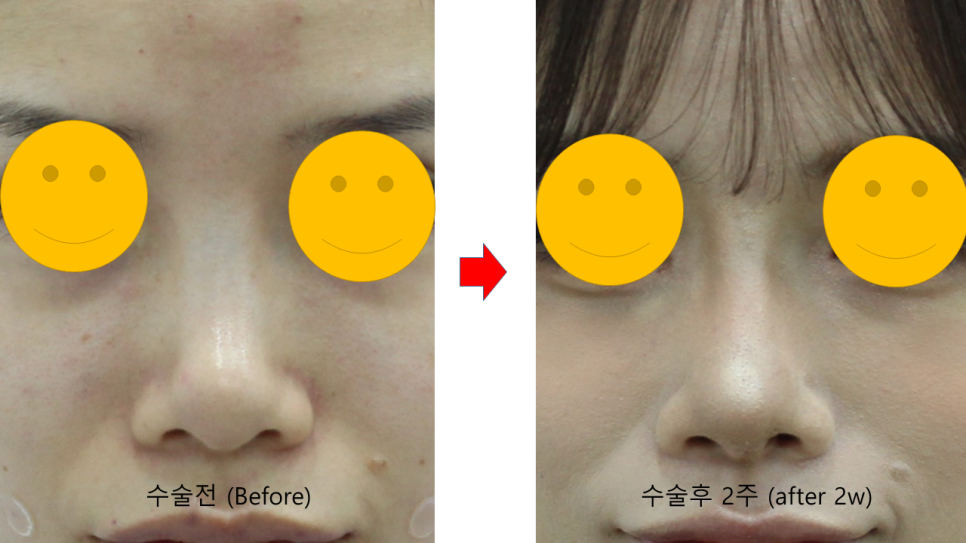
2-week post-op review after surgery for the Tyndall effect from nose filler
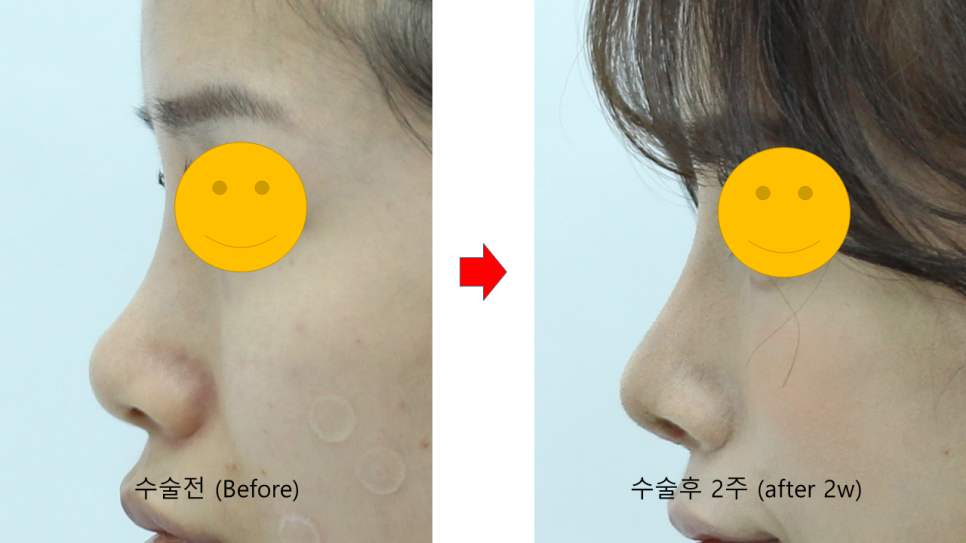
2-week post-op review after surgery for the Tyndall effect from nose filler
If filler is repeatedly injected into the nose, filler that has passed its maintenance period can spread and create an avatar nose or lion-like nose shape, and it can also thin the skin of the nose and cause the Tyndall effect, where the filler becomes visible through the skin.
Therefore, when these filler-related side effects occur, choosing rhinoplasty rather than repeated minor aesthetic procedures often leads to greater aesthetic satisfaction.