When the skin is thin after rhinoplasty, it is common for the cartilage at the tip of the nose to show through.
Unless it occurs together with inflammation or contracture, the simple symptom of the tip cartilage showing through does not cause problems.
However, if you are considering correction because the tip cartilage is visible for cosmetic reasons, it would be good to check the inside of the nose with a preoperative CT scan.
'The case where the tip cartilage shows through'
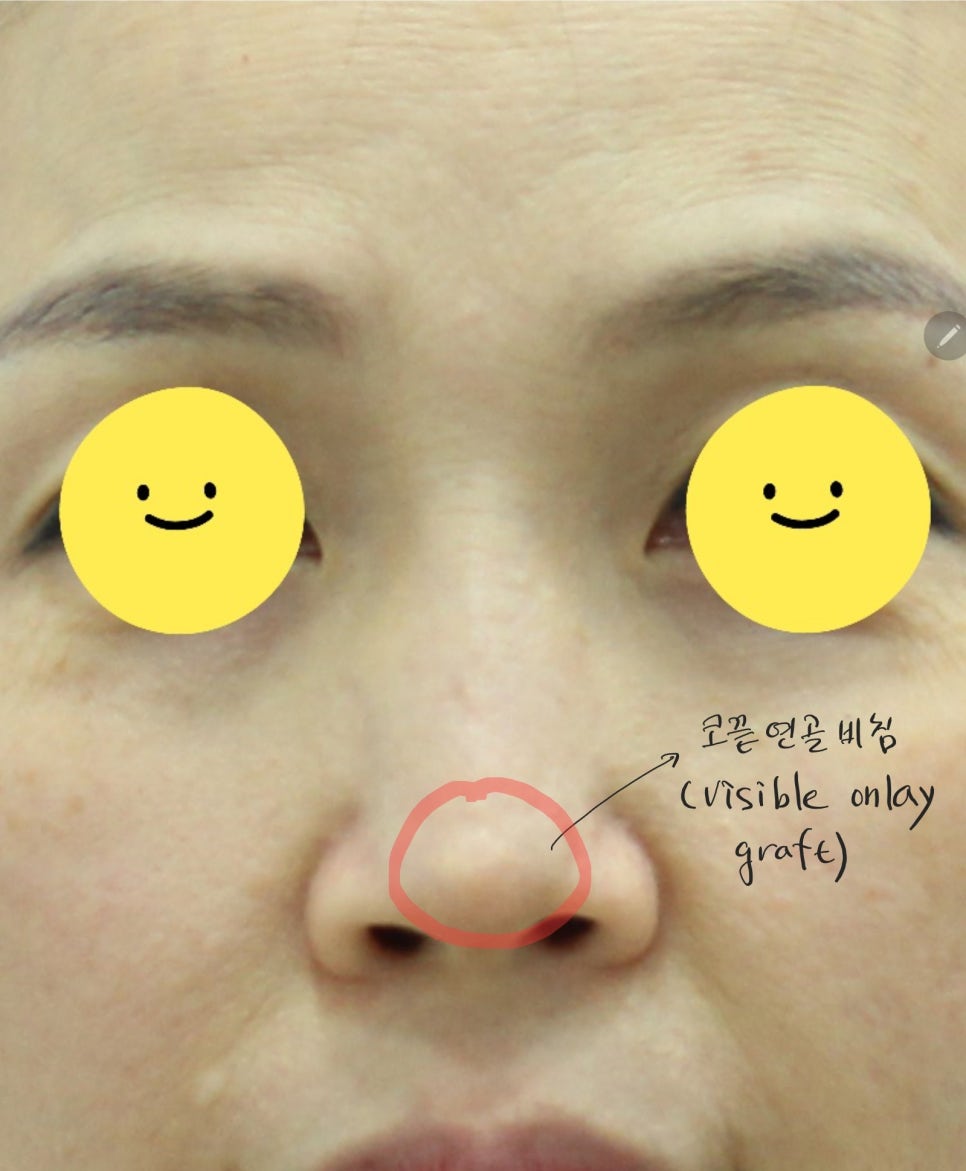
Nose revision surgery when the tip cartilage shows through
There are usually two causes when the tip cartilage shows through.
First, when the tip was operated on with autologous cartilage and the skin became thin because the tip was raised too much
Second, when silicone was inserted far down to the tip, or when cartilage was added on top of an L-shaped silicone implant
In both cases, reinforcement of the thinned skin is needed, and the reason the cartilage is visible can be confirmed through a preoperative CT scan in either of the two cases above.
'To plan nose revision surgery, CT scanning'
During the consultation process for nose revision surgery, CT scanning is often essential for making a surgical plan.
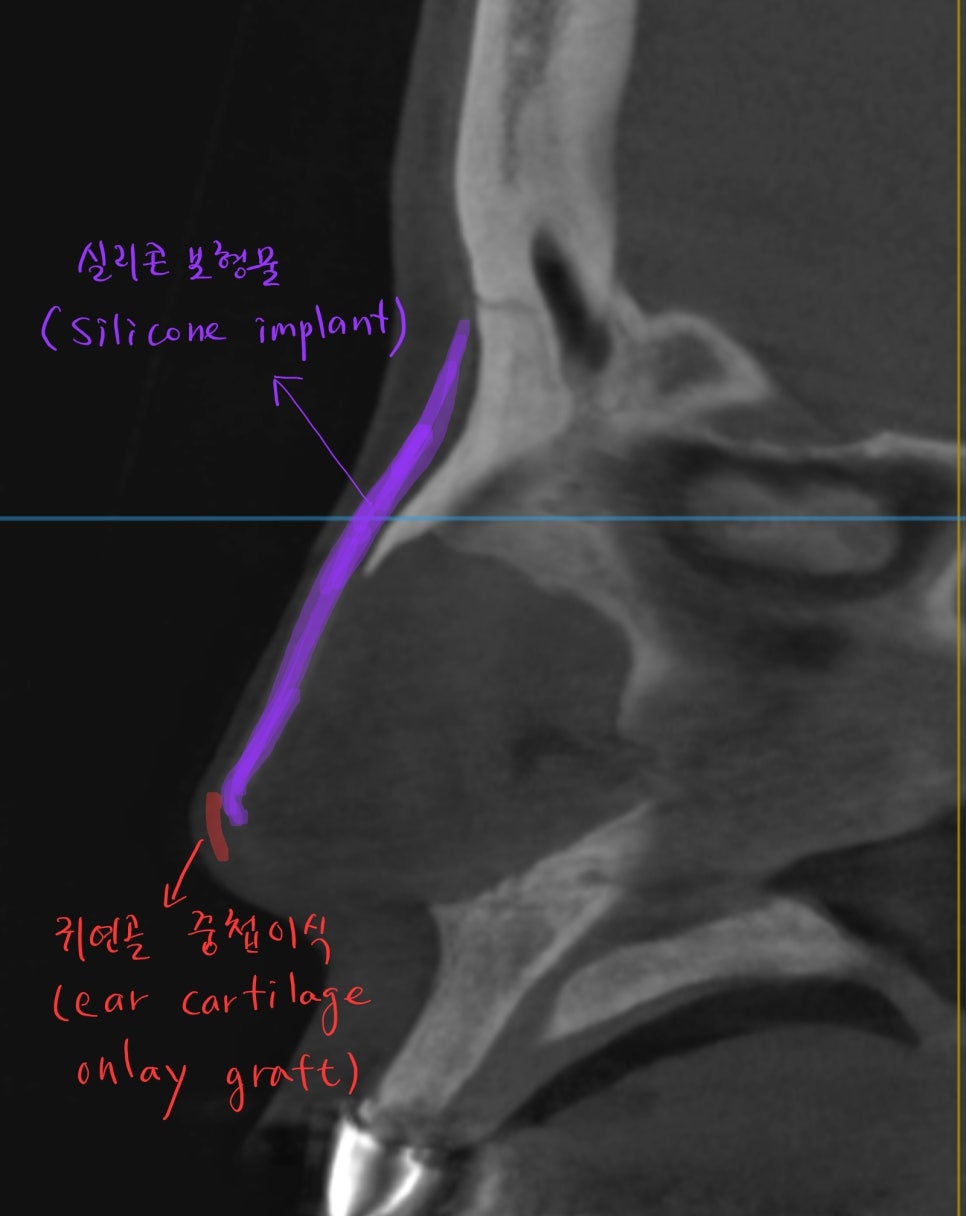
Information that can be obtained from CT scanning for nose revision surgery
Through a preoperative CT scan, you can check the type, height, length, and shape of the implant currently inside the nose.
It is also possible to estimate the amount of septal cartilage that can be harvested from inside the nose, and if there is a deviated septum, a correction plan can be made before surgery.
'The advantages of combining anti-aging surgery and rhinoplasty'
When considering anti-aging surgery in middle age and beyond, some people want only a solution for sagging skin on the face or around the eyes,
but if you want an overall more refined image when you have the opportunity to undergo surgery, it is a good idea to consider rhinoplasty as well.
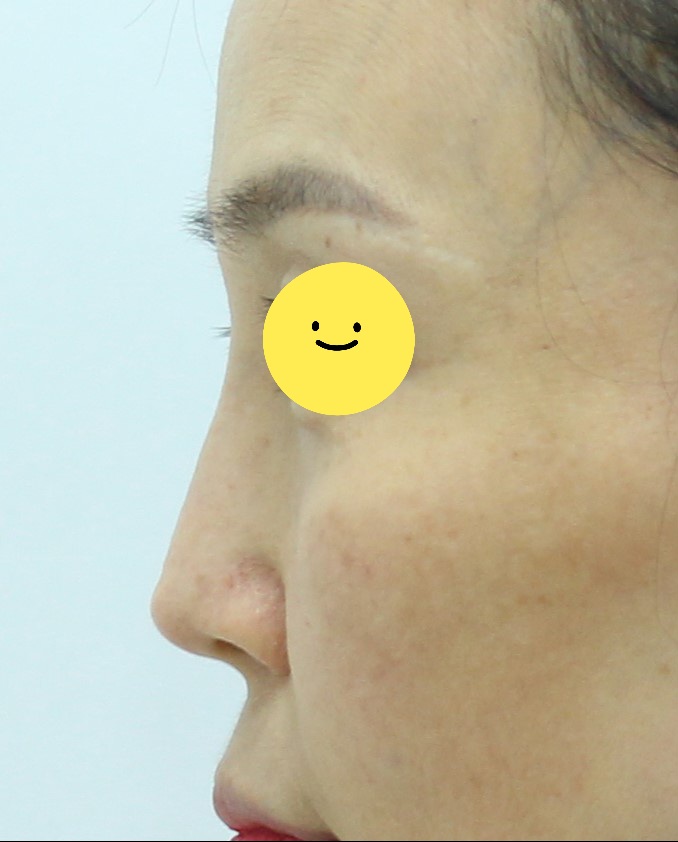
The appearance of rhinoplasty in the past, focused mainly on the bridge of the nose
Rhinoplasty 15 to 20 years ago was mainly aimed at raising the nasal bridge, and in many cases the height and shape of the tip were relatively unsatisfactory.
Current rhinoplasty has shifted toward surgical trends that make the height and shape of the nasal tip more attractive, and many people are considering nose revision surgery to match today’s changed aesthetic standards.
And when rhinoplasty is performed together with a brow lift, there is the advantage that temporal fascia, one of the materials used in rhinoplasty, can be harvested from the incision area of the brow lift.
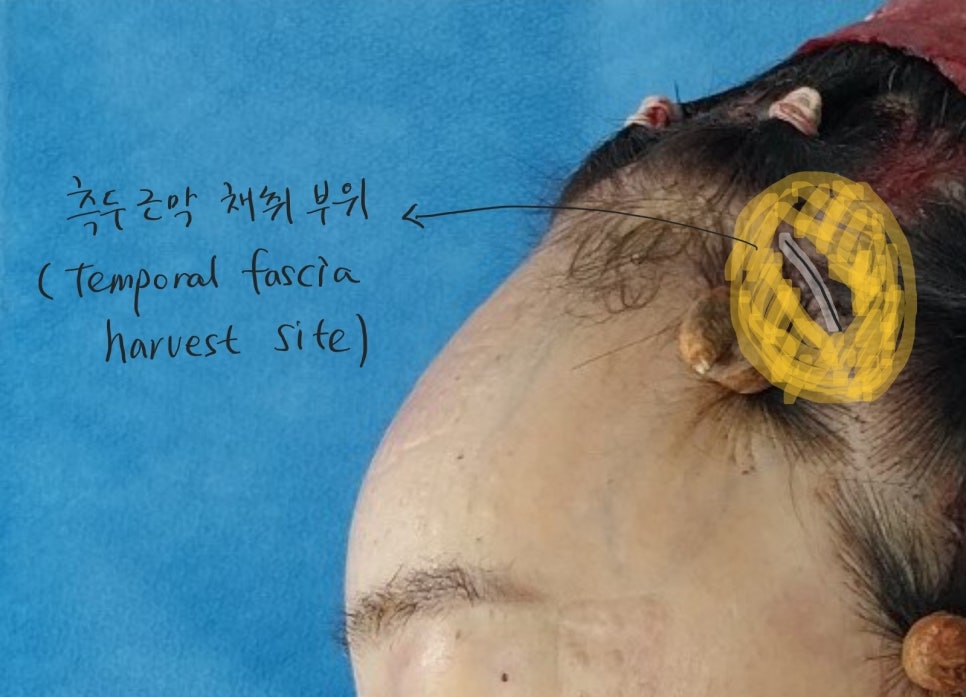
The incision area for brow lift and harvesting temporal fascia
Because the incision area for endoscopic brow lift and the incision area for harvesting temporal fascia are the same, if brow lift and rhinoplasty are performed together, it is easy to harvest temporal fascia, a good material for reinforcing thinned skin.
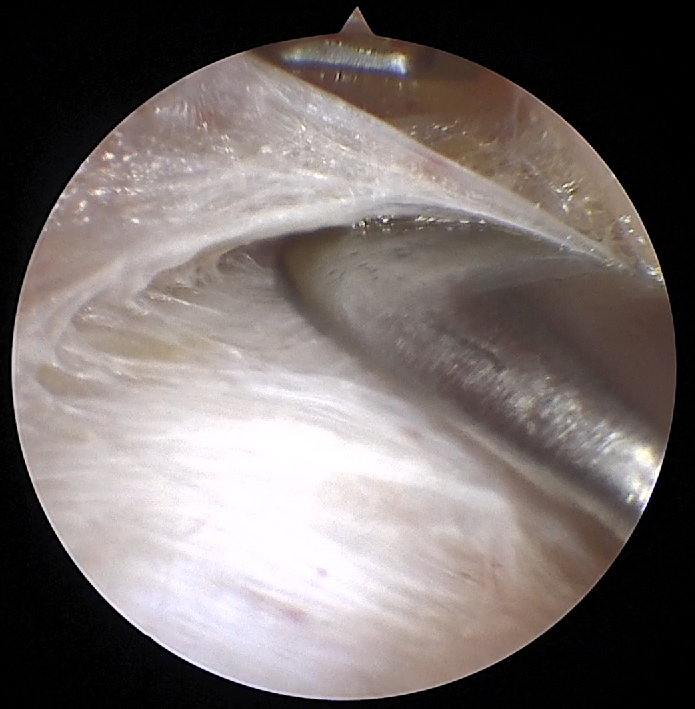
Temporal fascia confirmed with an endoscope
'The case of thin tip skin: midlife nose revision surgery'
After harvesting temporal fascia together with a brow lift, rhinoplasty is performed in the same way as general nose revision surgery.
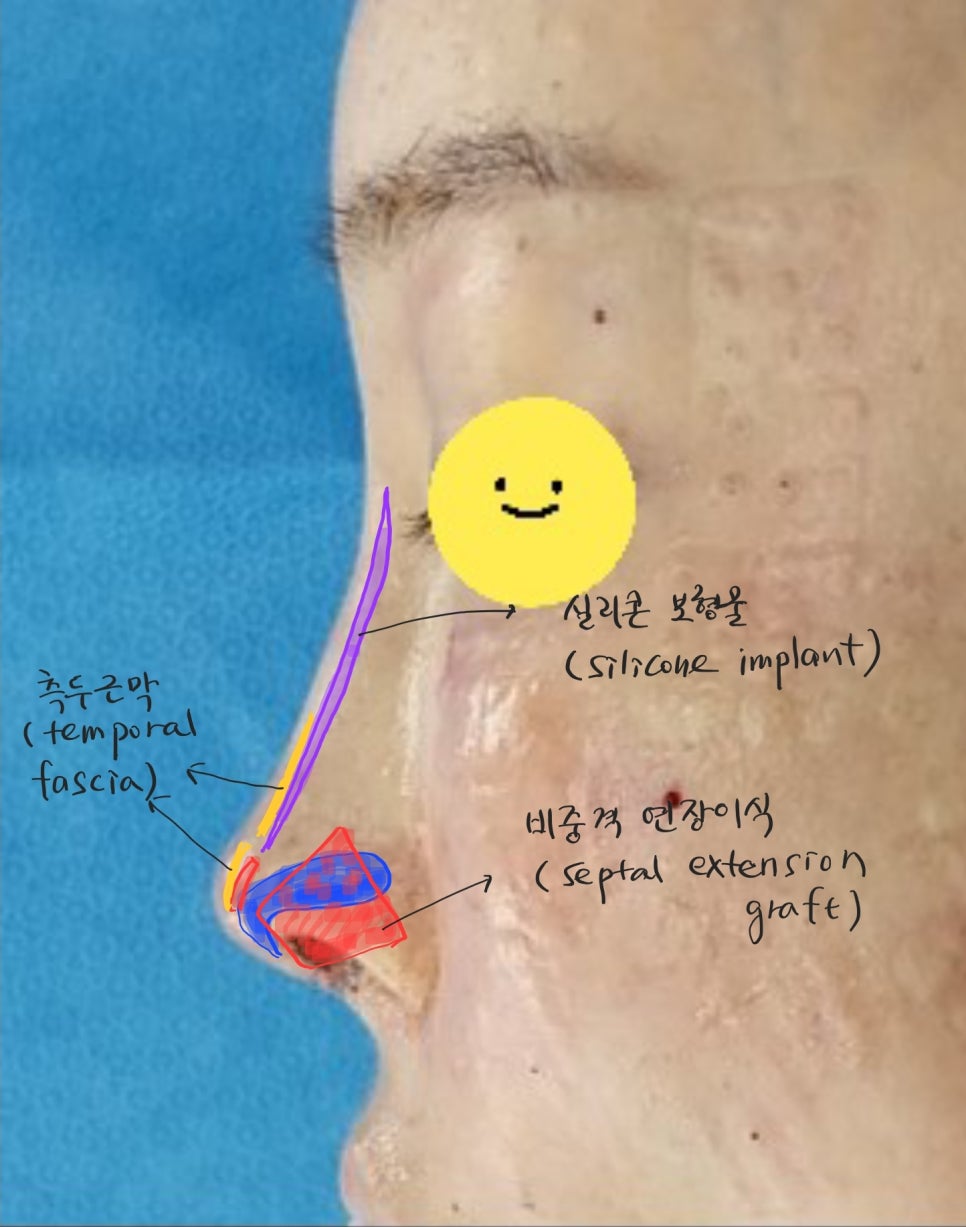
How nose revision surgery is performed using temporal fascia
Of course, after a brow lift, the skin around the nasal bridge is also lifted, so care must be taken when choosing the height of the implant in the glabella area.
And after a brow lift, it is also important to perform natural midlife rhinoplasty that suits the overall changed image of the face.
In cases where the skin on the tip or bridge of the nose is thin, it is also necessary to reinforce the thinned nasal skin using the harvested temporal fascia.
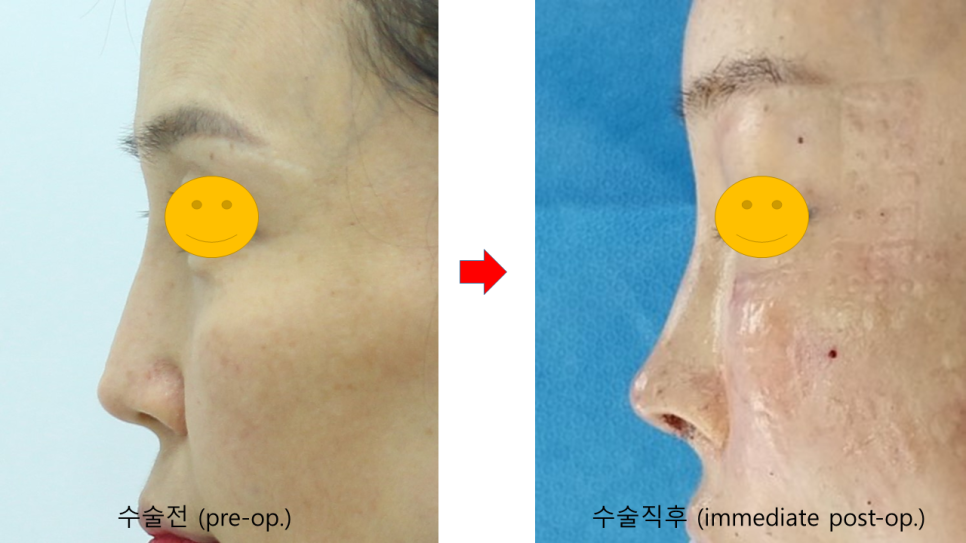
Before and after nose revision surgery when the tip cartilage shows through. This is a plastic surgery model who consented to disclosure.
When consulting about midlife plastic surgery, that is, anti-aging-related procedures, you can often meet people who had rhinoplasty long ago.
And if you undergo rhinoplasty together with anti-aging surgery, you can correct the shortcomings from the past and have surgery while maintaining overall balance.
There is another advantage when performing rhinoplasty together with lifting surgery.
That is, materials for reinforcing the skin in rhinoplasty can be harvested during the lifting surgery.
In the brow lift process, temporal fascia can be harvested, and in the facelift process, SMAS, which is similar to dermis, can be harvested. With these materials, it is possible to reinforce the thinned skin of the tip or bridge of the nose in midlife rhinoplasty.
Many people do not realize how much rhinoplasty techniques have advanced compared to the past, but current rhinoplasty has a wide range of surgical methods that can harmoniously raise both the nasal bridge and tip, and it would be good to know that there are various nose revision surgery methods that can make up for results that were lacking in the past.
Also, in the case of midlife rhinoplasty, the recovery period is not significantly different from that of younger patients, and in fact, recovery is often faster because they follow the hospital’s instructions well and avoid smoking and drinking.