Because the incision and surgical method for a mini facelift vary by hospital, many people ask how much the sagging areas of the face can actually be improved.
A mini facelift refers to a facial lifting method that partially uses the incision line of a full facelift, and the results can vary depending on the incision area and the dissection method.
In the case of lifting surgery, a facelift offers the best effect. However, many people choose a mini facelift when they cannot undergo a facelift for various reasons, such as when the skin sagging is not severe or when it is difficult to have a long recovery period.
'Facial Changes in the Mid-40s'
The mid-40s is the period when skin sagging begins, and compared with the 20s and 30s, nasolabial folds and wrinkles around the mouth become noticeable and can be bothersome.
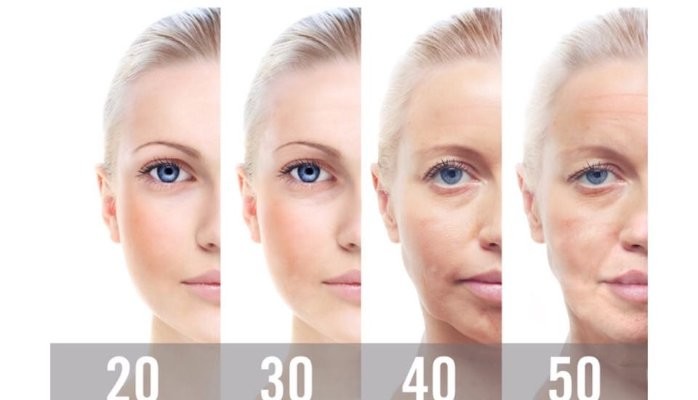
Facial changes in the 20s, 30s, 40s, and 50s
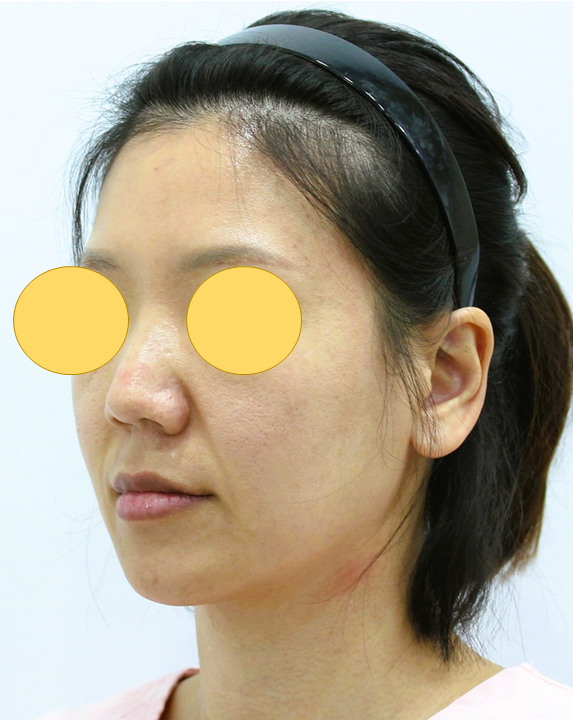
40s deep mini facelift review. Real model with consent for disclosure.
A woman in her mid-40s visited for lifting.
She said her biggest concern was that her nasolabial folds had become deeper, and that wrinkles around her mouth were also beginning to appear. She also felt that her jawline had become more saggy compared with her 30s.
She had tried various lifting-related procedures, but there was little improvement, so she was looking for an effective method. However, she said a facelift felt too burdensome, and among mini facelifts, she chose the 'deep mini facelift,' which has a more pronounced effect.
'Incision and Surgical Method of the Deep Mini Facelift'
The incision for a deep mini facelift can be divided into a temple incision that goes inside the hairline and a preauricular incision that carefully follows the shape of the ear.
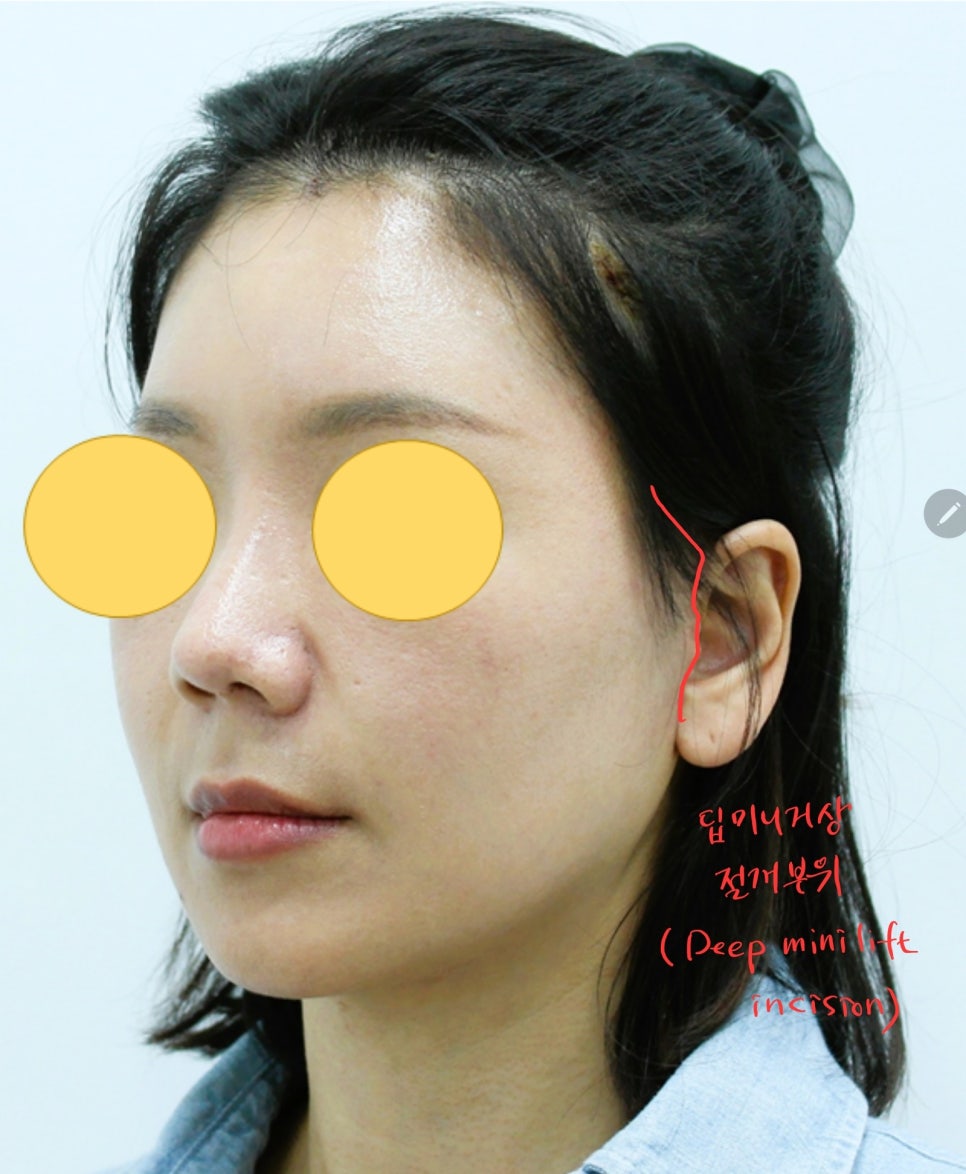
Incision area of the deep mini facelift
Through the incision area, skin dissection (subcutaneous dissection) is first performed appropriately, and the depth of the subcutaneous dissection must be kept consistent for dissection of the most important SMAS layer to proceed more easily.
The dissection of the SMAS layer uses the same deep plane method as facelift dissection, and in some cases it can also be applied as a dual plane method, separating the subcutaneous layer and the SMAS layer into two layers.
Dissection of the SMAS layer using the deep plane method or dual plane method is an essential process for improving the results of a facelift or deep mini facelift, but safe dissection is only possible with an accurate understanding of facial anatomy.
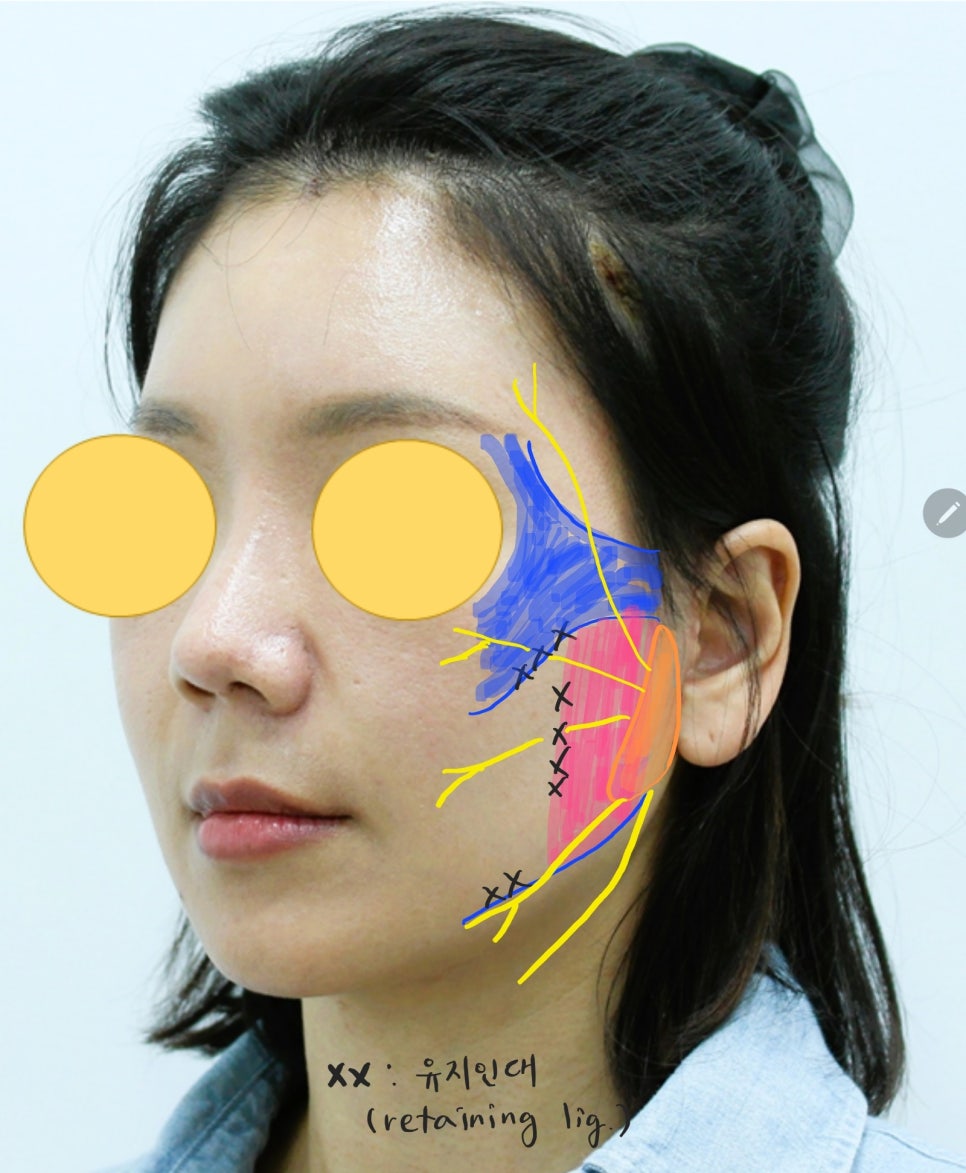
Locations of facial retaining ligaments, facial nerves, chewing muscles, and salivary glands
During the process of dissecting the SMAS layer, facial retaining ligaments are encountered in several areas, and these ligaments must be properly released for the lifting effect to be good and for the results of the surgery to last longer.
To properly release the facial retaining ligaments, it is necessary to understand facial anatomy, especially the course of the facial nerve.
During dissection of the SMAS layer, one may encounter the chewing muscles, salivary glands and salivary ducts, and facial nerves, all of which must not be injured. Maintaining a safe dissection plane while appropriately dissecting the SMAS layer within the proper range is the core of lifting surgery.
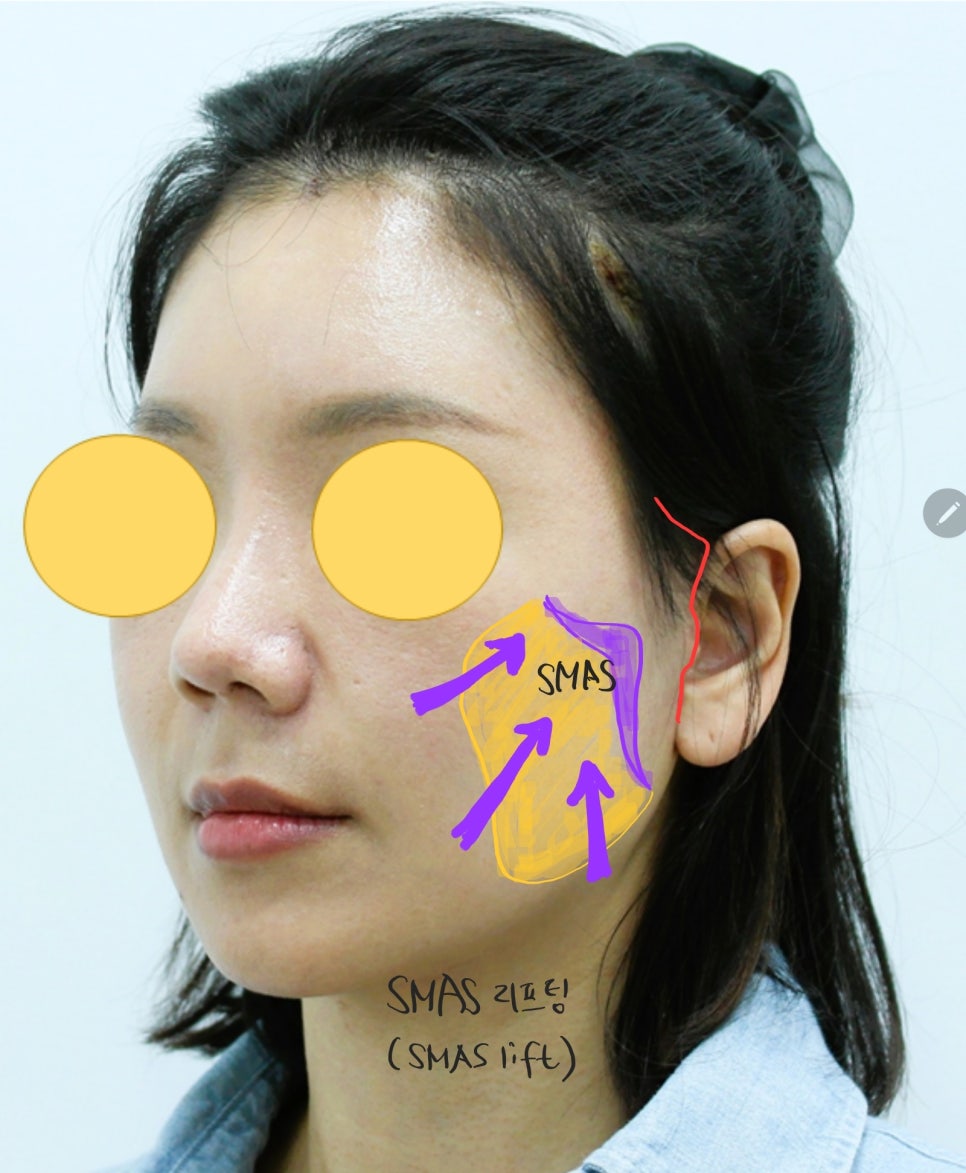
SMAS dissection and lifting vector in the deep mini facelift
After appropriately dissecting the SMAS layer and facial retaining ligaments, the direction in which the SMAS layer is pulled should be slightly adjusted according to the specific areas of the face that need improvement.
First, to improve the jawline area, vertical lifting is helpful, and to lift the nasolabial folds and wrinkles around the mouth, lifting at a slightly oblique angle is needed.
If the lifted tension of the face is firmly fixed to the SMAS layer in this way, there is no lifting tension on the skin layer, so there is almost no scarring and no deformation of the ear shape.
'Before and After a Deep Mini Facelift in the 40s'
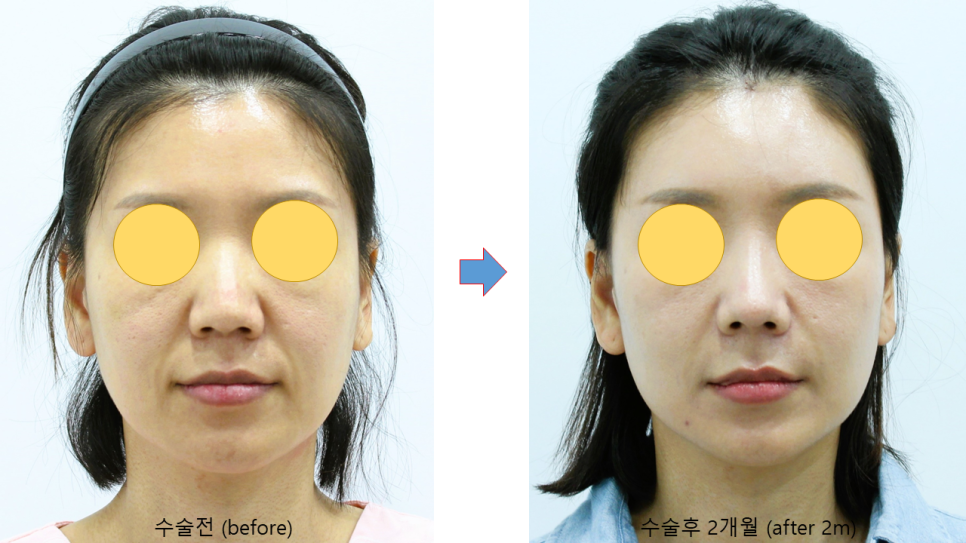
40s mini facelift review. Real model with consent for disclosure.
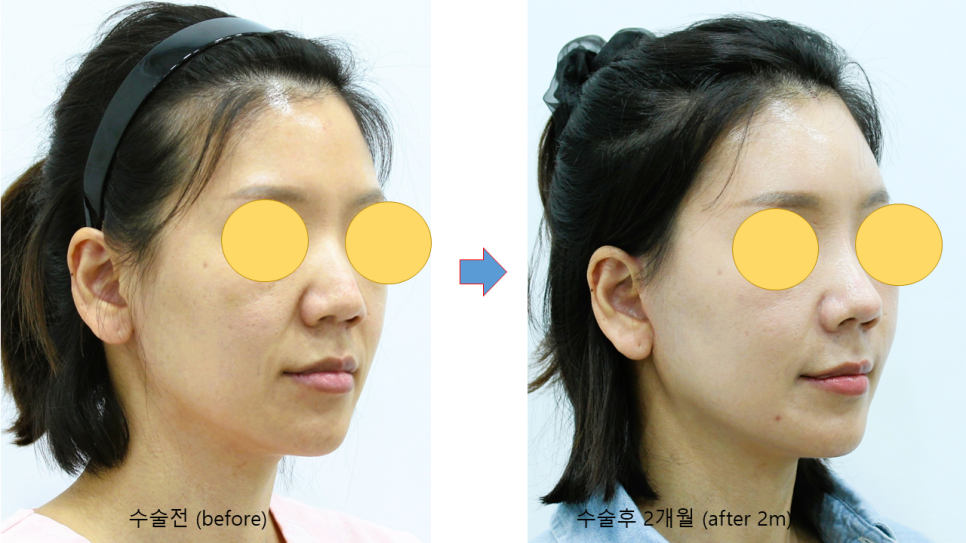
40s deep mini facelift review. Real model with consent for disclosure.
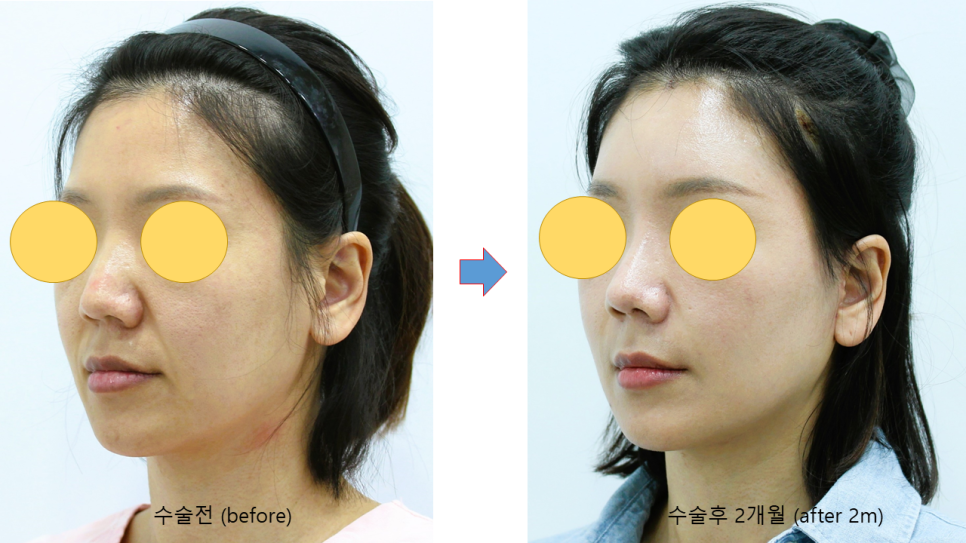
40s deep plane mini facelift review. Real model with consent for disclosure.
If there is not much skin sagging in the 40s to 50s, a deep mini facelift can be chosen.
Of course, it does not provide the same effect as a facelift, but when appropriately selected, it can help improve nasolabial folds, wrinkles around the mouth (marionette lines), and the jawline, and its short recovery period is an advantage.
Of course, we do our best to minimize visible scarring in front of the ear through delicate incision closure, and after a certain period of scar maturation, the scar becomes almost unnoticeable.
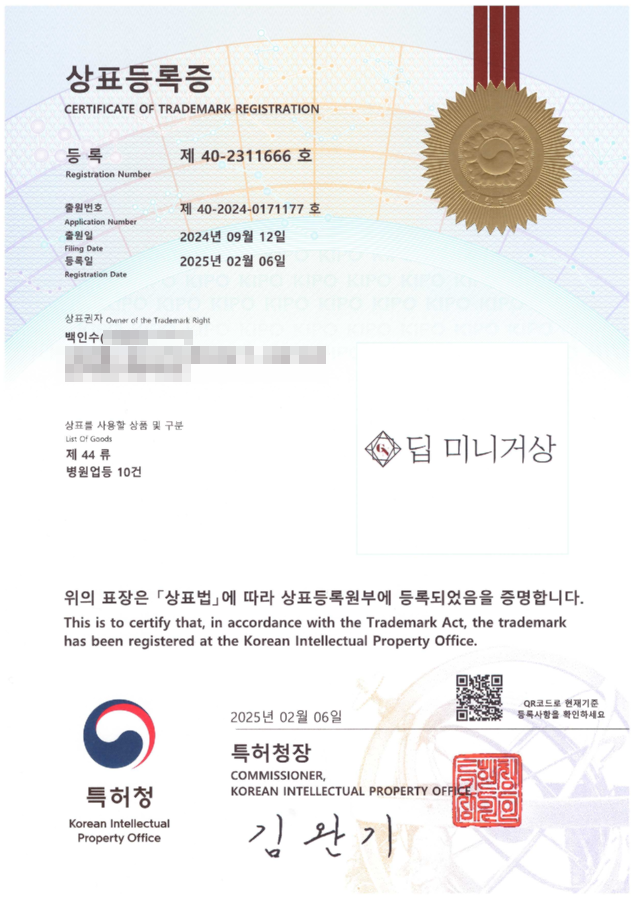
Garnet Plastic Surgery deep mini facelift trademark registration certificate from the Korean Intellectual Property Office