Among signs of aging under the eyes, some people worry because the under-eye fat becomes bulgy, while others are stressed by hollowness under the eyes.
Some people are born with naturally less under-eye fat, and some have had under-eye fat removed in the past or had fat reduced through laser procedures. So if under-eye hollowness is present, it is also important to check previous procedure history and the cause.
Cases of under-eye hollowness can generally be divided into two types: those with severe adhesion of the tear trough ligament and those without it.
'When the adhesion of the tear trough ligament is severe'
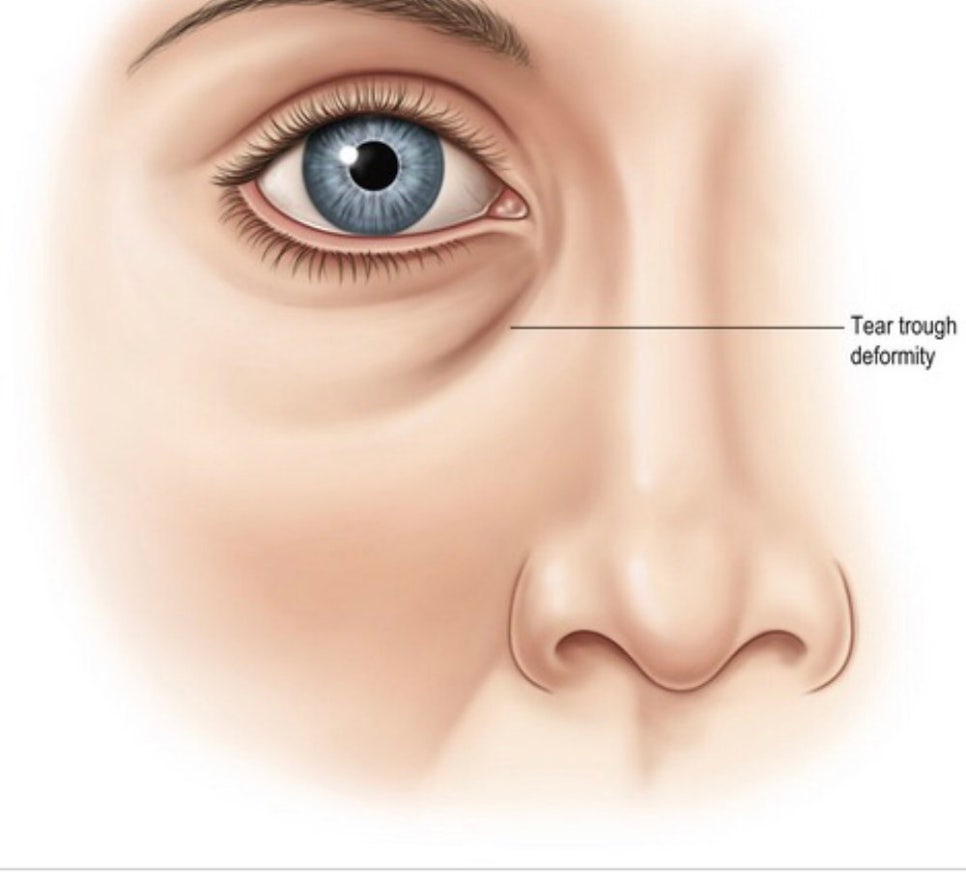
The location of the tear trough ligament
In the area where the tear trough is formed, there is ligament tissue called the tear trough ligament. If the adhesion of this ligament tissue is strong, more creasing occurs around the tear trough ligament when making facial expressions.
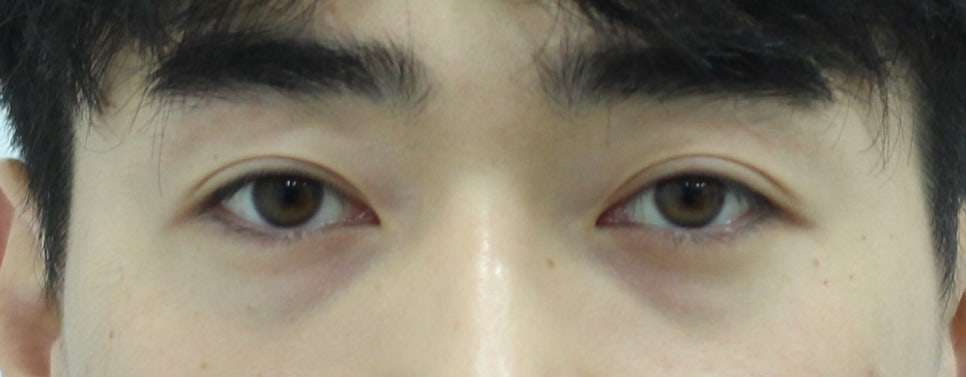
Under-eye hollowness and the tear trough. Under-eye fat repositioning partial-disclosure model review
This was a man with under-eye hollowness who visited because of dark circles that became more noticeable when smiling or making facial expressions.
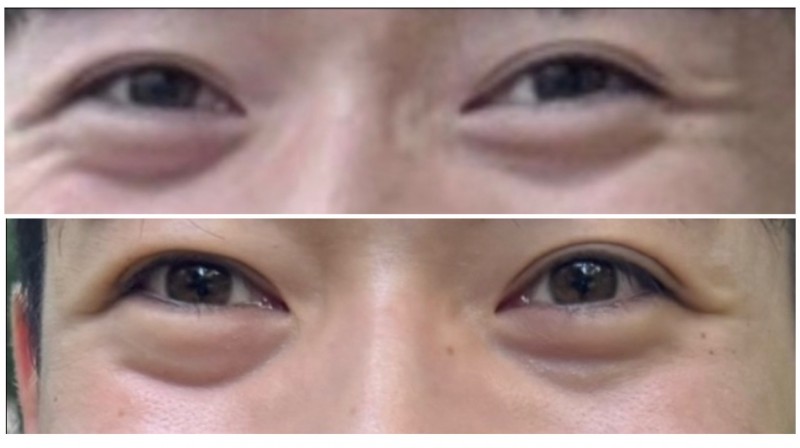
The tear trough becomes more pronounced when making facial expressions
In cases like this, where the adhesion of the tear trough ligament is severe, under-eye fat repositioning is needed even if there is not much under-eye fat.
The effect of under-eye fat repositioning is generally more advantageous as a surgical method when there is abundant and protruding under-eye fat, but it is also a major surgical option for sunken eyes with severe adhesion of the tear trough ligament.
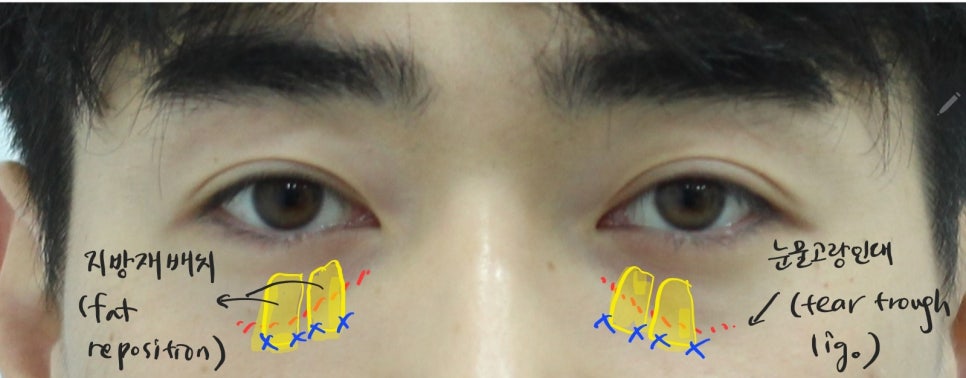
The surgical process of under-eye fat repositioning for sunken eyes
The firmly attached tear trough ligament must be thoroughly released, and the limited under-eye fat must be used as effectively as possible and securely fixed in the dissected area to prevent re-adhesion of the tear trough ligament.
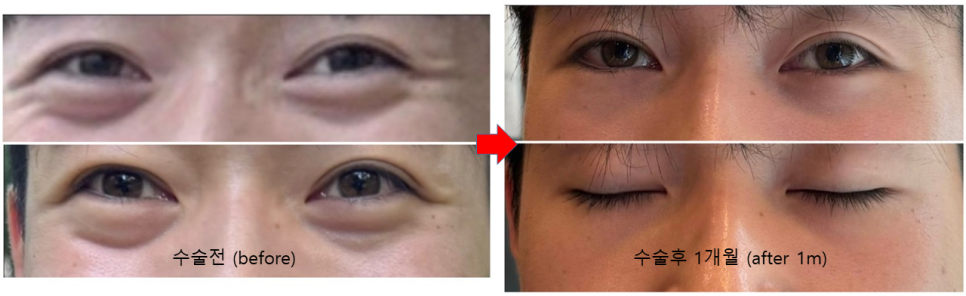
Men's under-eye fat repositioning review. Partial-disclosure model under-eye fat repositioning review. Before-and-after men’s under-eye fat repositioning
'When the adhesion of the tear trough ligament is weak'
If there is under-eye hollowness and the adhesion of the tear trough ligament is not severe, the issue can sometimes be addressed with micro fat grafting without performing under-eye fat repositioning.
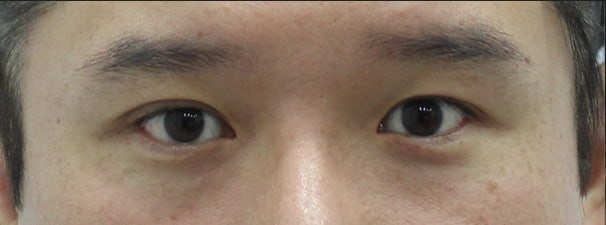
Men's under-eye fat grafting review. Under-eye fat grafting partial-disclosure review
This was a man with little under-eye fat and a slightly dark type of dark circles under the eyes.
Because he had a type with little under-eye fat and the tear trough was not severe, the dark circles were corrected with micro fat grafting rather than under-eye fat repositioning.
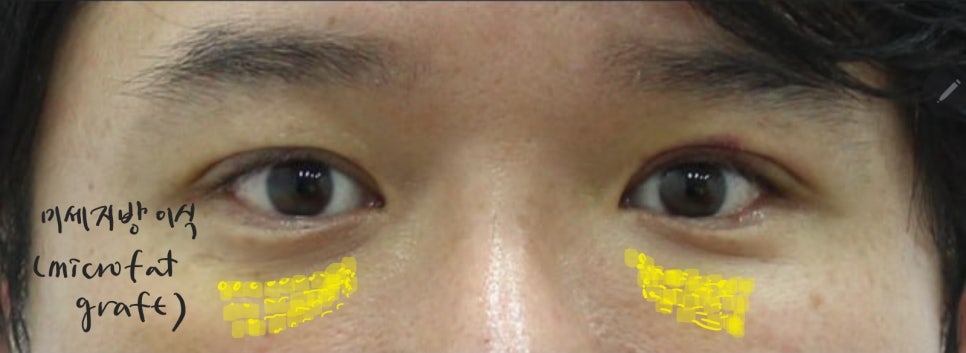
Under-eye hollow fat grafting. Under-eye fat grafting review. Men's under-eye hollow fat grafting.
Because the skin under the eyes is thinner than in other areas of the face, it is better to use a micro fat filter when grafting fat so that finer fat particles are transplanted.
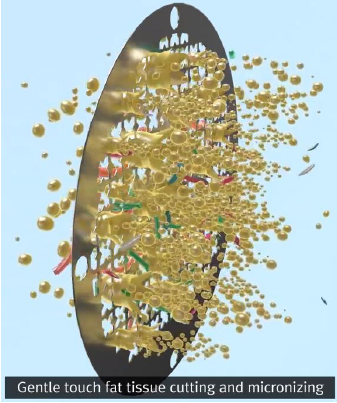
Micro fat filter. Micro fat grafting
When fat harvested from the abdomen or thighs is centrifuged and refined, it takes on a lighter color. Therefore, if the skin under the eyes is dark, grafting it under the eyes can improve the sunken area while also helping improve the darker skin under the eyes.
Under-eye fat grafting is important when using micro fat, and it is also important not to inject too much.
Because the skin under the eyes is thin, care should be taken not to inject too much, and care must be taken to avoid side effects from injecting into a layer that is too shallow and becoming palpable.

Men's under-eye hollowness review. Under-eye hollowness fat grafting review. Under-eye fat grafting review.
If the area under the eyes is sunken, it can be treated depending on the situation with either 'under-eye fat repositioning' or 'under-eye micro fat grafting.'
Of course, the surgical method should be decided after an in-person consultation, and if you have a history of fillers or collagen injections, or if you have had under-eye fat removed in the past, it is best to make sure to inform the medical staff about your previous procedure history.