Facial contouring surgery refers to plastic surgery related to the facial bones. Zygoma reduction, square jaw reduction, and chin reduction are called the three contouring procedures, and they are the most commonly performed.
In addition, orthognathic surgery, which aligns the dental occlusion, is also a type of facial contouring surgery.
Through facial contouring surgery, it is possible to achieve a smaller, more refined face and improve facial symmetry, but unwanted cheek sagging may occur, or asymmetry in the soft tissue may remain.
Because facial contouring surgery is mainly performed by people in their 20s and 30s, if skin sagging occurs after facial contouring surgery, there is a saying that they end up receiving many lifting-related procedures from a young age.
'What to check with CT during Deep Mini Lift consultation'
For people who have previously undergone facial contouring surgery, CT scans may sometimes be necessary during the consultation process for lifting surgery.
Sometimes, cheek sagging may worsen due to nonunion of the zygomatic bone, and the step-off at the secondary angle after lower jaw surgery may be mistakenly interpreted as skin sagging.
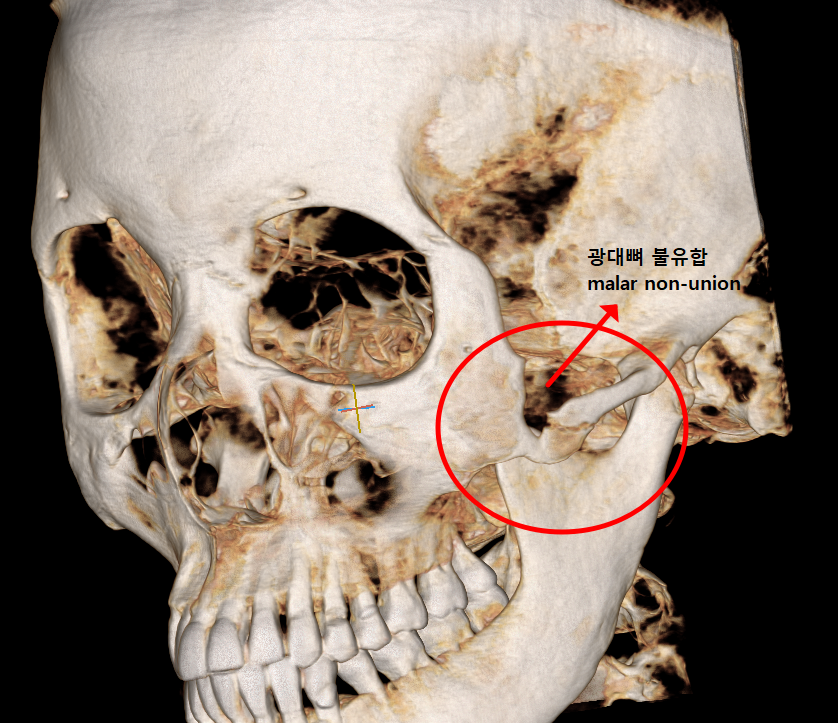
Nonunion of the zygomatic bone that can be confirmed by CT scan
However, in most cases, there are no problems with the facial contouring surgery, and in many hospitals recently, follow-up CT scans after facial contouring surgery are used to sufficiently monitor these areas.
'Cheek sagging and soft tissue asymmetry after facial contouring surgery'
Several years ago, the face was made smaller and more refined, and asymmetry was corrected through facial contouring surgery and orthognathic surgery.
After facial contouring surgery, the face became smaller and asymmetry improved to some extent, but asymmetry still remained and cheek sagging occurred, so improvement was desired.
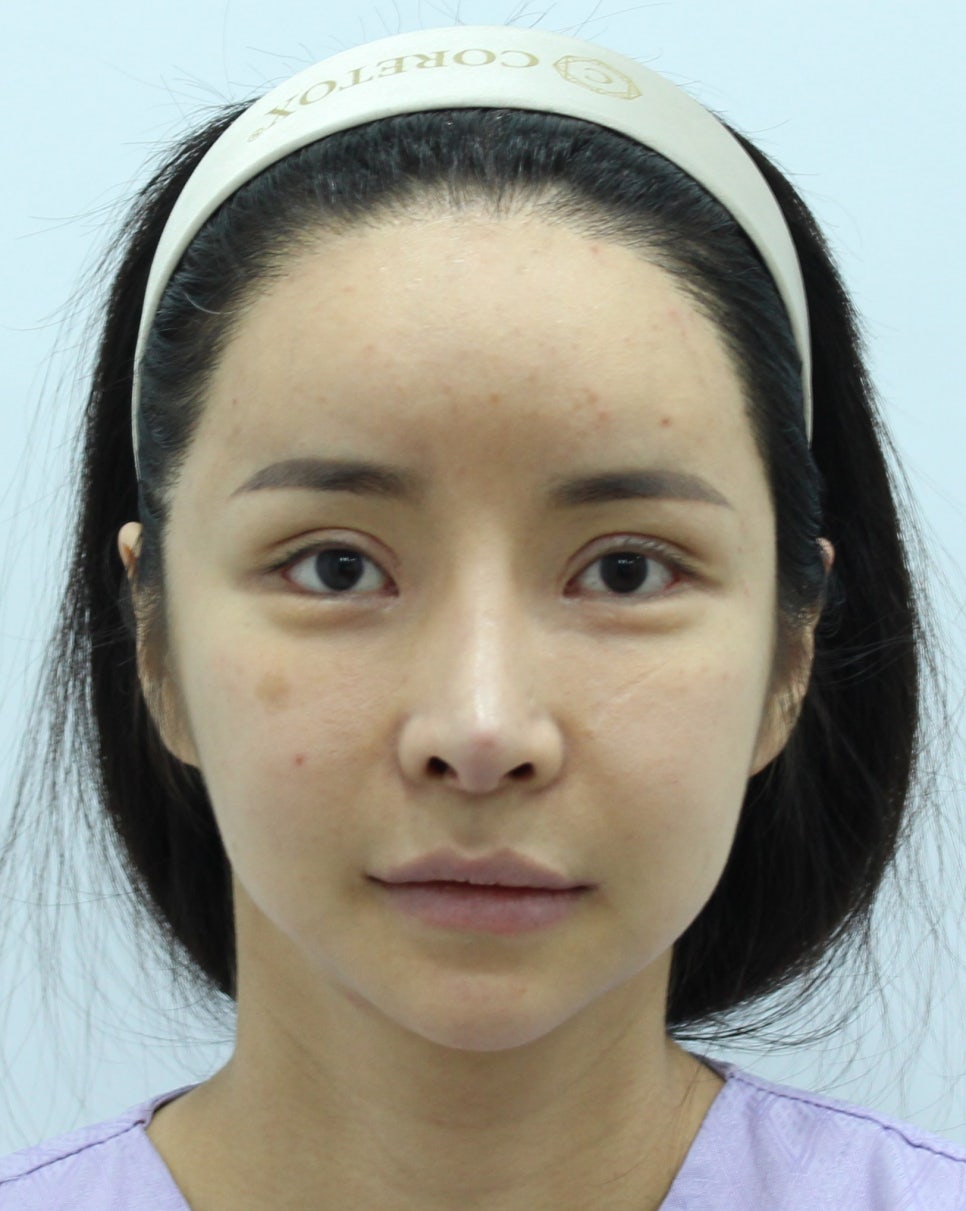
Cheek sagging after facial contouring surgery. Sagging skin after facial contouring surgery. A real model whose disclosure was agreed to.
Even when the facial bone surgery looks well done on CT scans and symmetry is well matched, soft tissue asymmetry may still remain. If one side of the face is larger and the other side is smaller, even if the larger side is reduced further through facial contouring surgery, the skin and soft tissue on the originally larger side may also be larger, so asymmetry can remain.
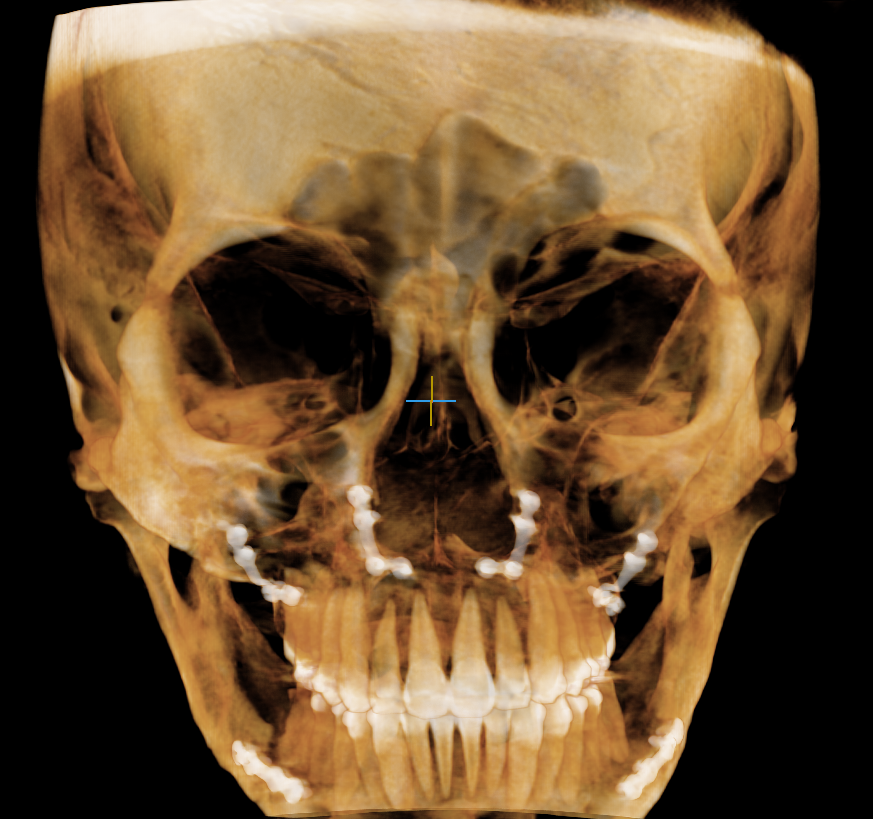
CT after facial contouring surgery
'The surgical method of Deep Mini Lift for improving cheek sagging'
In people in their 20s and 30s, there is almost no skin sagging due to aging, so the goal of lifting surgery should be to restore the firmness that existed before facial contouring surgery and slow the pace of aging.
And if soft tissue asymmetry remains, the surgery is performed in a way that improves it.
Deep Mini Lift is the most effective among various mini lift methods, and as a deep-plane technique that is an excellent method in facelift surgery, it has the advantage of dissecting the SMAS layer and releasing the retaining ligaments.
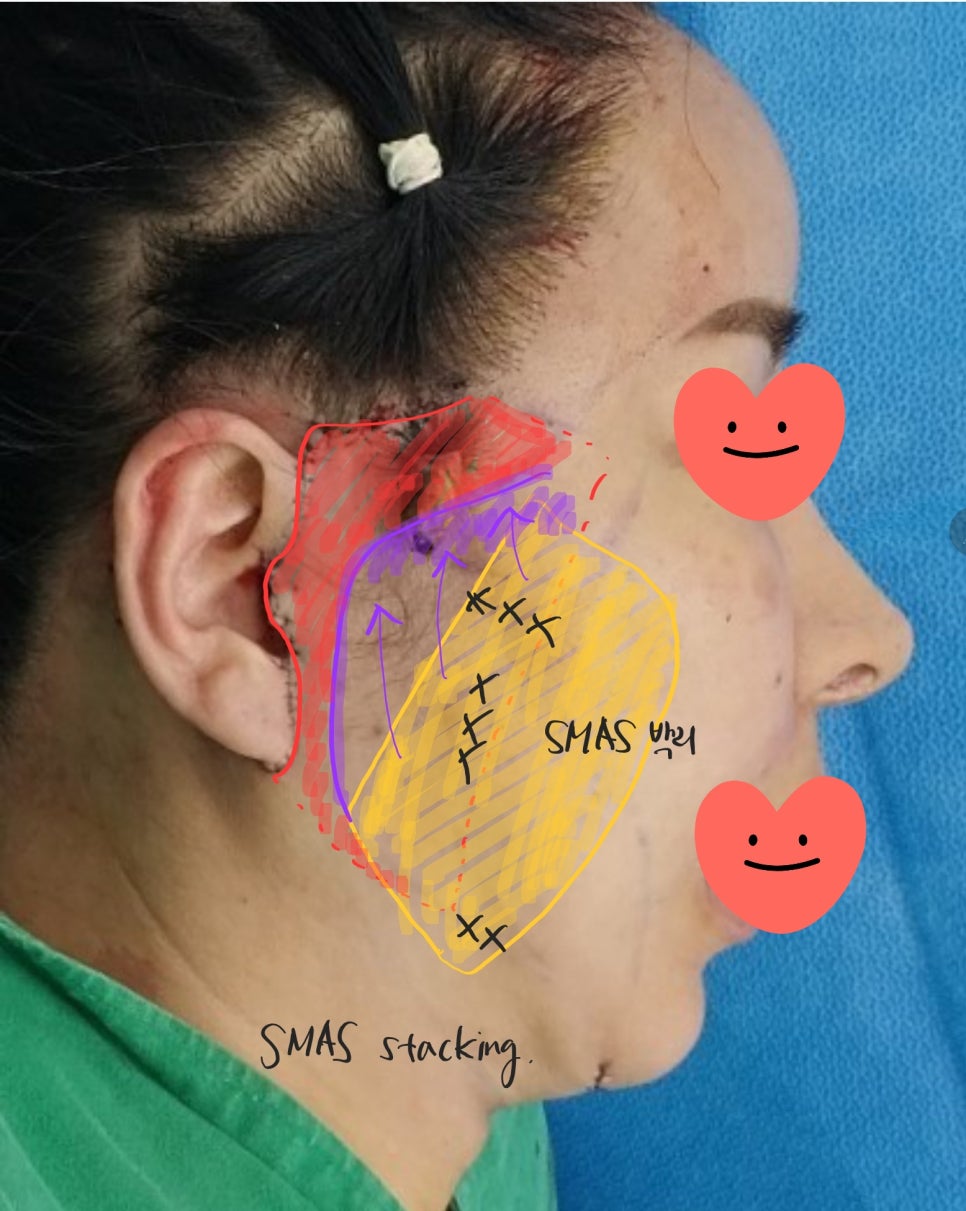
SMAS treatment in a Deep Mini Lift on the right side of the face (the smaller side)
First, because the patient's right side of the face is smaller than the opposite side, after dissecting and lifting the SMAS layer, fixing the lifted SMAS to the temporalis fascia above the zygoma can reinforce the reduced volume on the zygoma side through the SMAS stacking method.
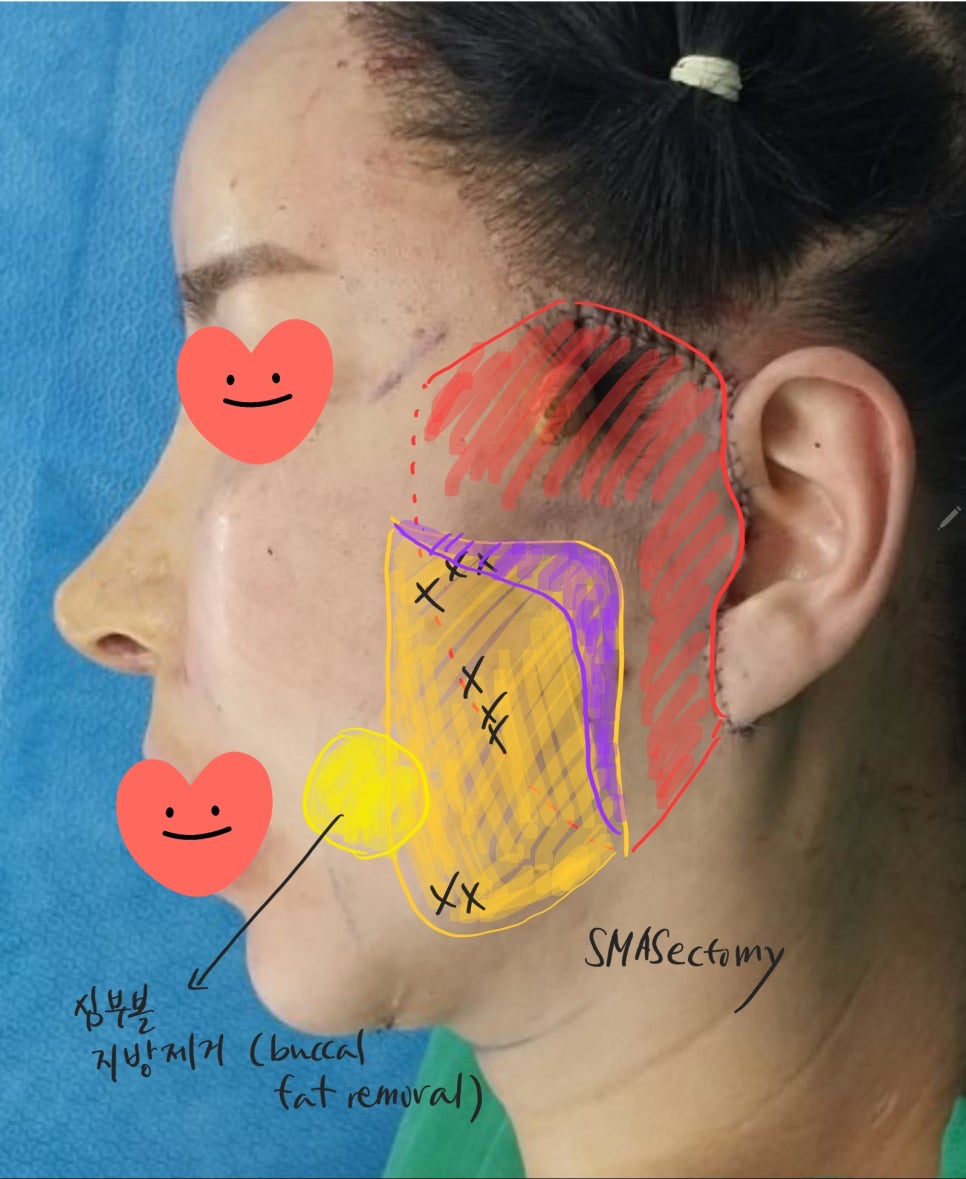
SMAS treatment in a Deep Mini Lift on the left side of the face (the larger side). Buccal fat pad removal.
And on the left side of the face, because the zygoma is relatively larger than the opposite side, it is important to treat the skin and SMAS so that the zygoma does not become larger.
By performing more subcutaneous dissection than on the opposite side, dissecting the SMAS and releasing the retaining ligaments, then cutting out the SMAS and fixing it just below the zygomatic bone, it is possible to lift the sagging face without making the zygoma look larger.
And although the Deep Mini Lift is a mini lift, it can approach the deep layer (deep plane) almost the same way as a facelift, so the buccal fat pad can also be reached during the SMAS dissection process.
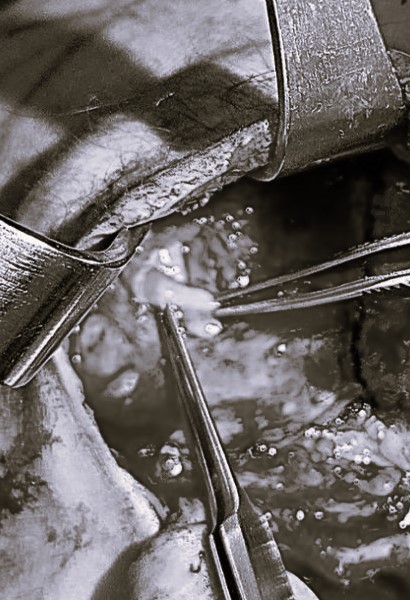
Deep-plane dissection and the buccal fat pad
If one side of the buccal fat pad is sagging or larger, removing the buccal fat pad can improve soft tissue asymmetry.
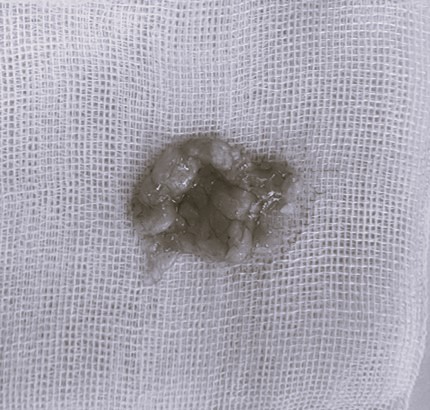
Buccal fat pad removed from the left side of the face
'Improving cheek sagging and soft tissue asymmetry through Deep Mini Lift'
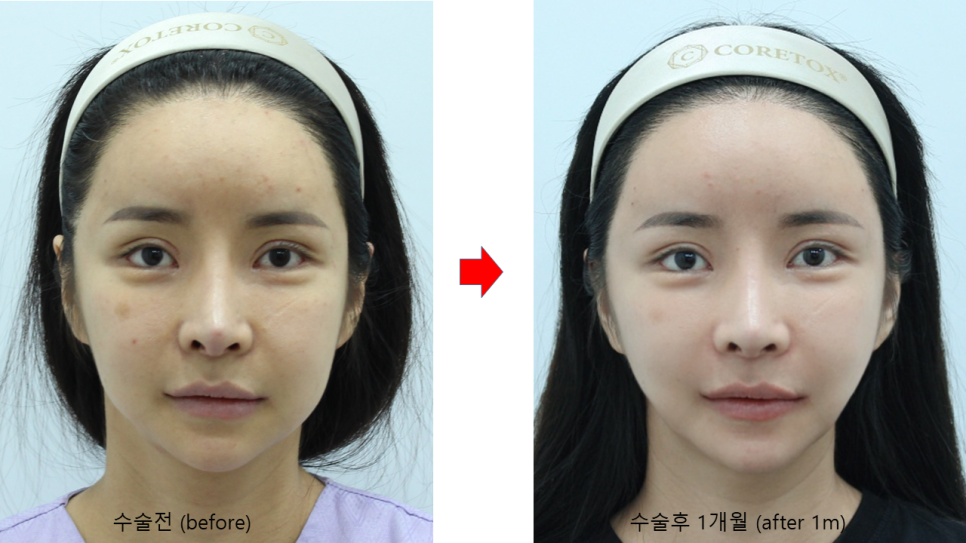
Treatment of sagging skin and asymmetry after facial contouring surgery. A real model whose disclosure was agreed to.
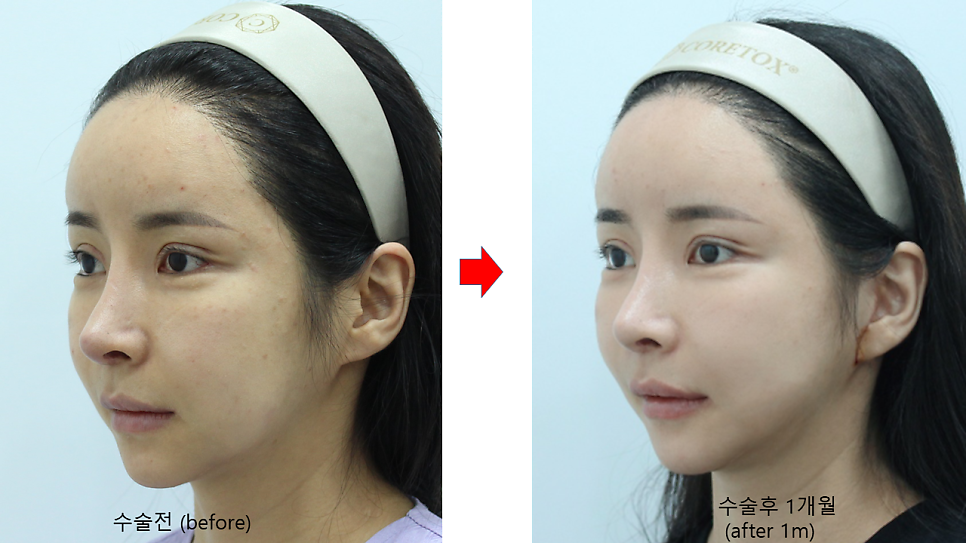
Lifting for cheek sagging after facial contouring surgery. A real model whose disclosure was agreed to.
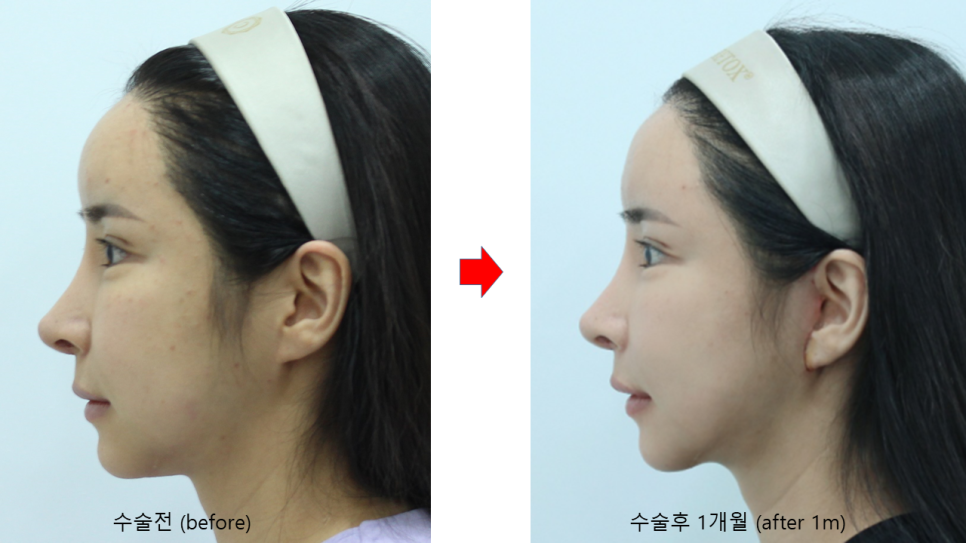
Treatment of sagging skin and double chin lifting after facial contouring surgery. A real model whose disclosure was agreed to.
It is one month after surgery, and the preauricular incision from the Deep Mini Lift is still at a stage where the scar tissue has not yet matured, but as more time passes, the red color of the scar stabilizes and the soft tissue becomes softer, so the incision scar becomes almost unnoticeable.
If there is cheek sagging, sagging skin, or skin laxity after facial contouring surgery, people are often reluctant to undergo lifting surgery because they are still young.
Not everyone needs lifting surgery after facial contouring surgery. However, if ultrasound, radiofrequency lifting procedures, skin booster procedures, or thread lifting are not enough to improve skin laxity, a Deep Mini Lift can be considered.

Deep Mini Lift review in people in their 20s. Deep Mini Lift review in people in their 30s. A real model whose disclosure was agreed to.