Silicone implants used in rhinoplasty should only be used in the bridge area, but in the past, there were many cases where silicone implants were extended all the way to the nasal tip to make the nose appear higher. That is why many people who had rhinoplasty 15 to 20 years ago had surgery using L-shaped silicone.
�a0
Even if L-shaped silicone is inside the nose, it does not always cause problems, but as time passes, the skin at the nasal tip may gradually become thinner.
�a0
�a0
�a0
'Skin irritation caused by silicone implants'
After rhinoplasty, thinning of the nasal tip skin can sometimes occur.
If the nasal tip was made higher with cartilage, thinning of the nasal tip skin would not be a major issue, but if a silicone implant is placed at the nasal tip, the skin may continue to become thinner over time, so it is better to address the problem.
�a0
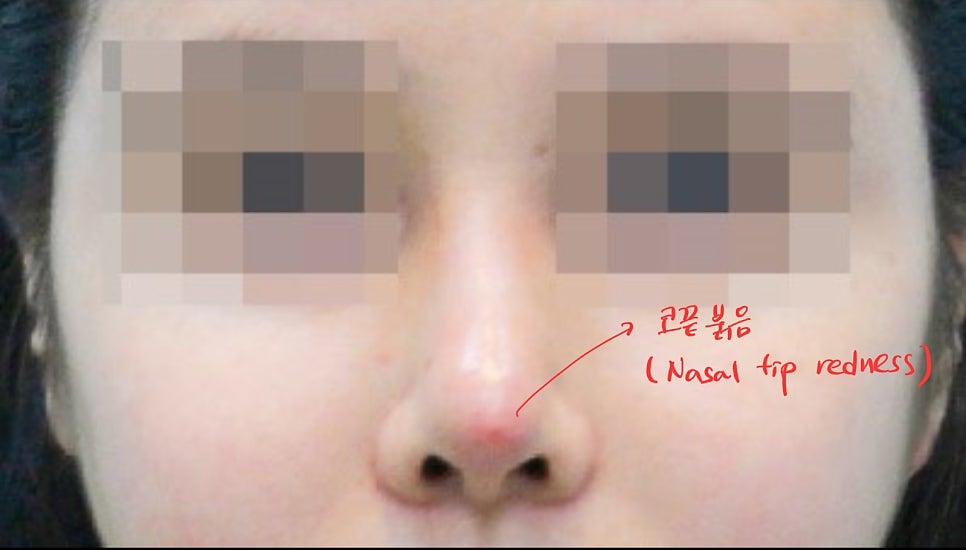
Redness at the nasal tip caused by L-shaped silicone. Silicone skin irritation.
A woman in her 40s visited the clinic because her nasal tip turned red whenever she felt tired or her condition worsened.
It was a chronic nasal tip redness symptom with a pattern of worsening and improvement, so she had been living with it without visiting a hospital. However, over time, she said that acne or pimples formed on the nasal tip and did not go away.
�a0
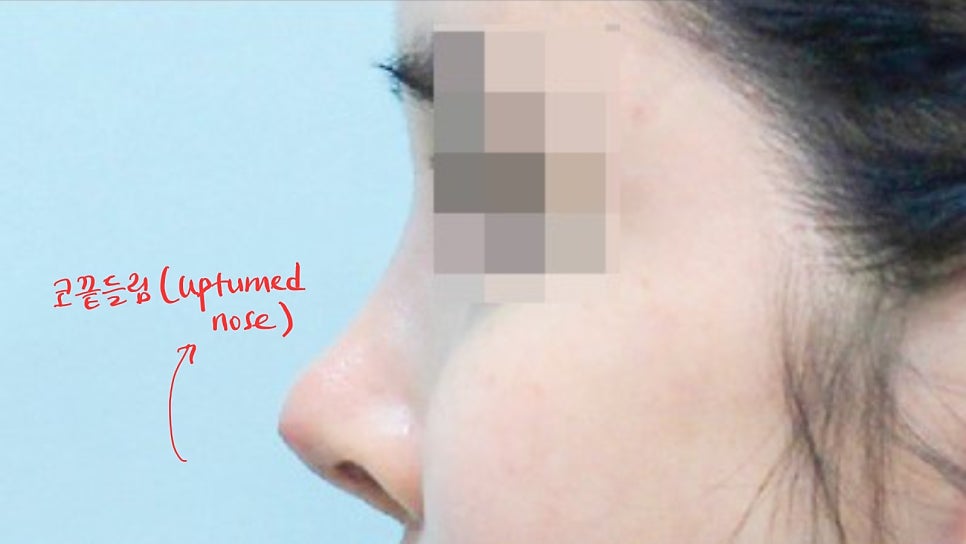
Nasal deformity caused by L-shaped silicone. Upturned nose deformity. Contracted nose deformity
Because L-shaped silicone changes the shape of the nose into an L shape over the long term, an upturned nasal tip deformity can easily occur gradually.
�a0
Since the nasal tip rises slowly over a long period of time, many people do not even realize that their nose has become shorter.
�a0
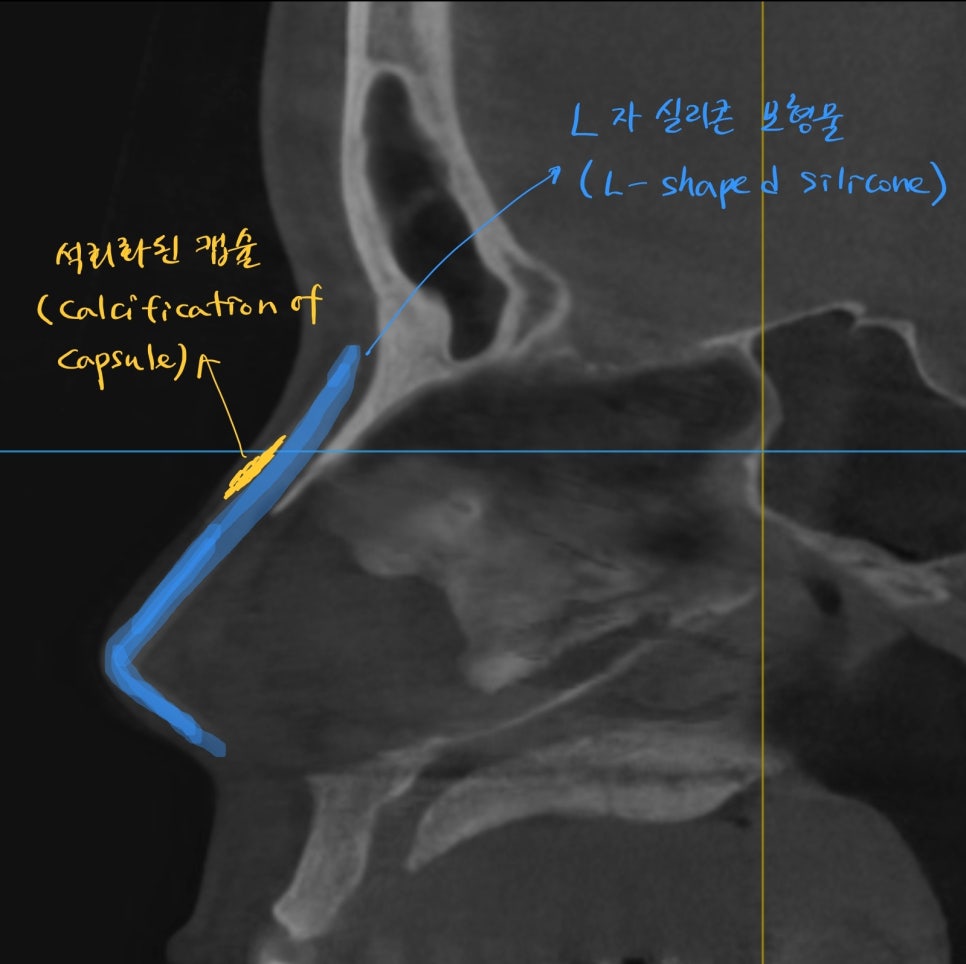
L-shaped silicone implant confirmed by preoperative CT scan
The shape of the silicone inside the nose can be checked through a preoperative CT scan.
Calcification around the silicone implant was also confirmed, and it could be seen that the skin at the nasal tip had become very thin.
�a0
�a0
'Deep mini lift combined with rhinoplasty'
In cases where rhinoplasty is performed after middle age, it is also common to have nose surgery together with a lifting procedure.
When rhinoplasty is performed while doing a mini lift or facelift, one advantage is that no additional dermis harvesting is needed.
�a0
When the SMAS layer is dissected through a deep mini lift, the remaining SMAS tissue is removed, and this can be used for rhinoplasty.
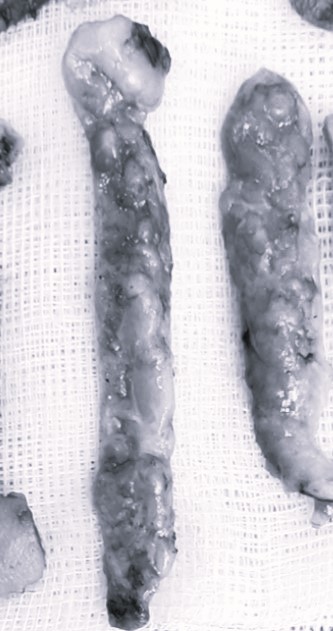
SMAS tissue harvested in a deep mini lift
If side effects occur due to a silicone implant, it can be a good option to have rhinoplasty using autologous tissue rather than using an implant.
�a0
Silicone implants do not always cause problems, but once side effects or inflammation have occurred, the chance of recurrence tends to increase, and many people who have suffered emotionally from implant-related problems are reluctant to use silicone implants.
�a0
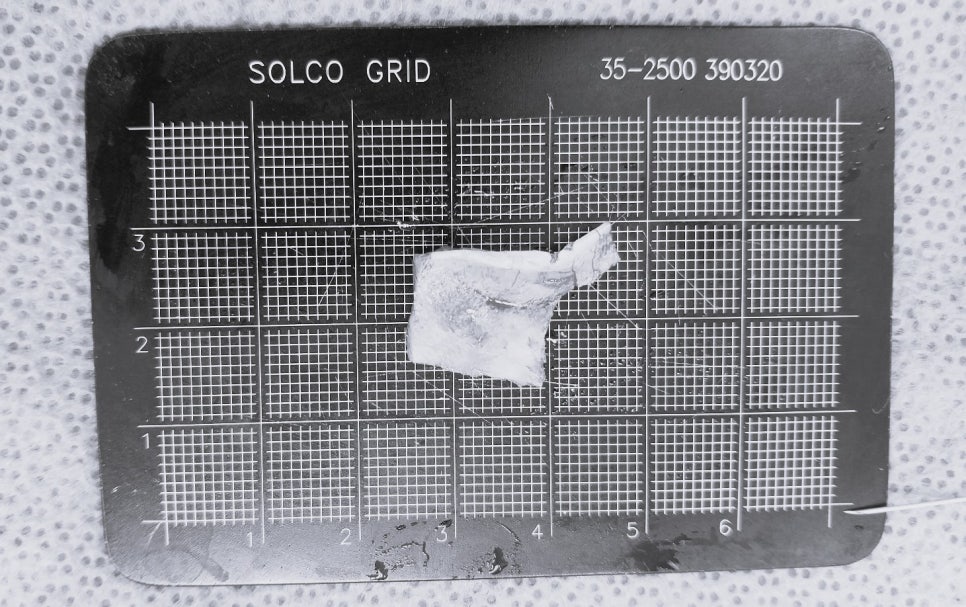
Septal cartilage harvested during the rhinoplasty procedure
There are several methods for autologous tissue rhinoplasty. A representative method is to use one’s own septal cartilage or ear cartilage for the nasal tip and use autologous dermis to raise the bridge.
�a0
The typical method is to harvest dermis from the buttock area and place it in the bridge instead of silicone, but in this case, SMAS was harvested during the deep mini lift procedure and could be grafted into the bridge.
�a0
Because SMAS harvested from facial lifting surgery was used, no additional dermis harvesting was necessary.
�a0
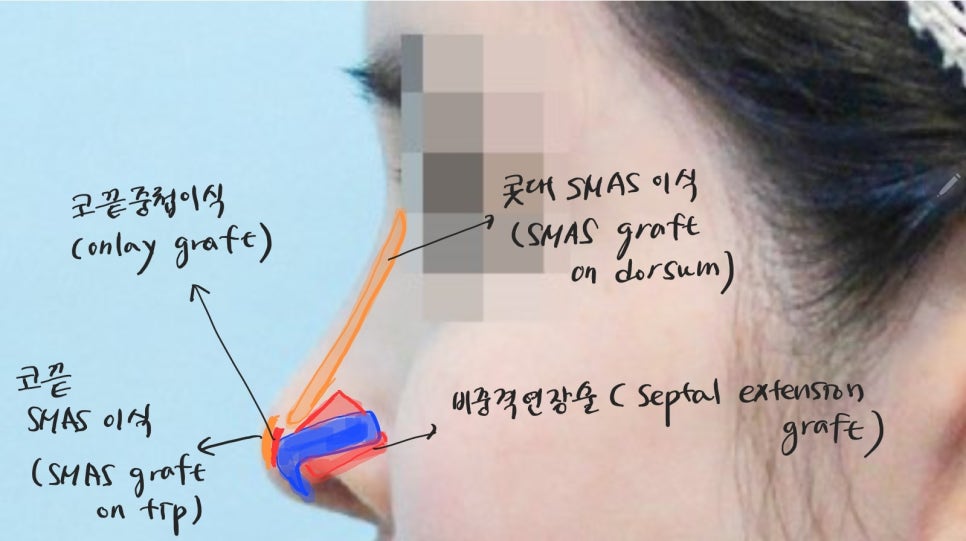
Methods of autologous tissue rhinoplasty. SMAS graft rhinoplasty. Short nose lengthening
If the nasal tip is upturned, it can be lowered through septal extension surgery. In cases of a not-severe contracted nose, good results can be achieved without necessarily using rib cartilage if the scar tissue is carefully dissected.
�a0
'Standardized comparison before and after surgery'
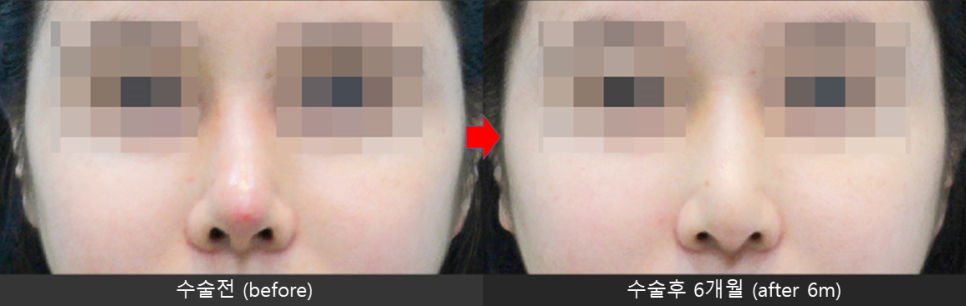
Side effects of L-shaped silicone. Nasal tip redness. Contracted nose surgery review
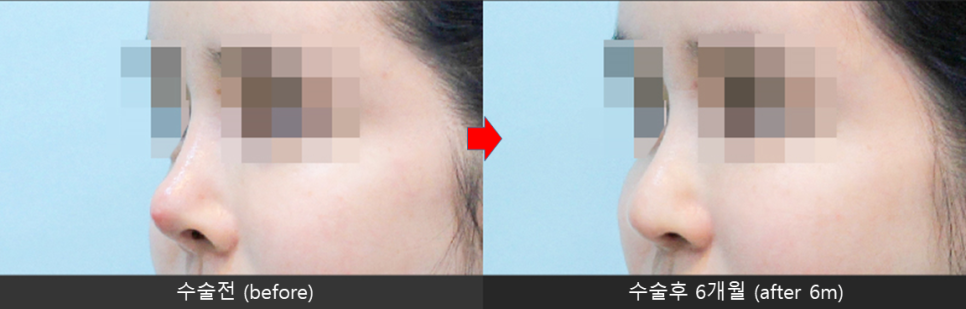
Nasal implant removal. L-shaped silicone removal. Contracted nose correction
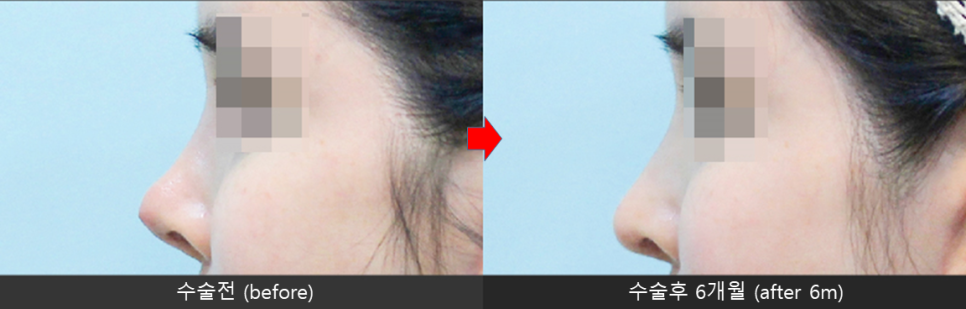
Short nose lengthening. Nasal tip lengthening. Implant side effect review