Buried-method double eyelid surgery is also known by several names, such as non-incisional double eyelid surgery and natural adhesion double eyelid surgery, and because the results are natural and recovery is fast, it is often used for a first eyelid surgery.
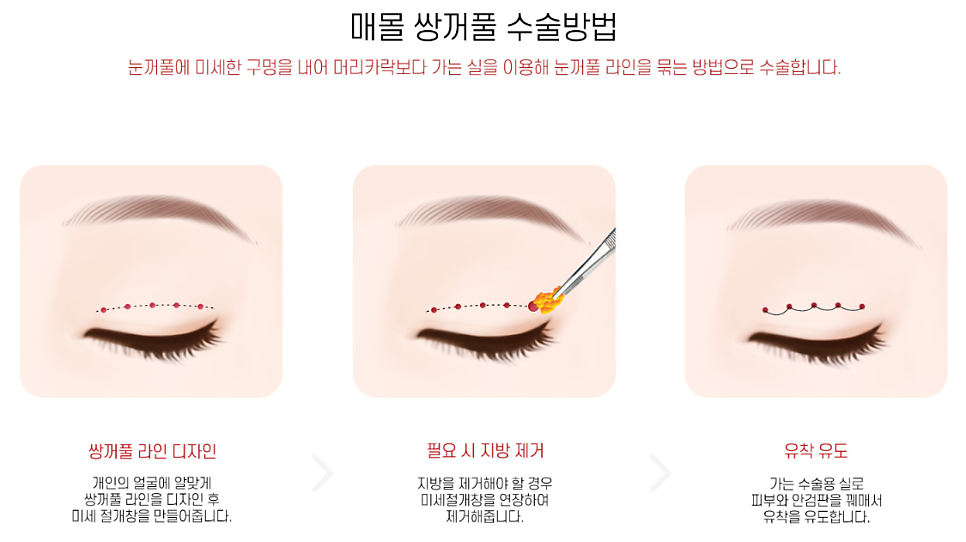
Buried-method double eyelid surgery is a surgical method that induces adhesion by using buried sutures through small openings between the eyelid skin and the tarsal plate.
While buried-method double eyelid surgery has the advantage of fast recovery, as time passes the tension of the sutures between the eyelid skin and the tarsal plate may decrease, or the tissue may loosen due to the so-called cheese wiring effect, which tends to loosen the skin adhesion of the double eyelid.
So after some time has passed since buried-method double eyelid surgery, some people undergo revision surgery because the line has become lower or the double eyelid no longer appears clearly defined.
'Eye correction during non-incisional double eyelid surgery'
Several years ago, the patient had double eyelid surgery and recently visited because the line had become lower and less distinct.
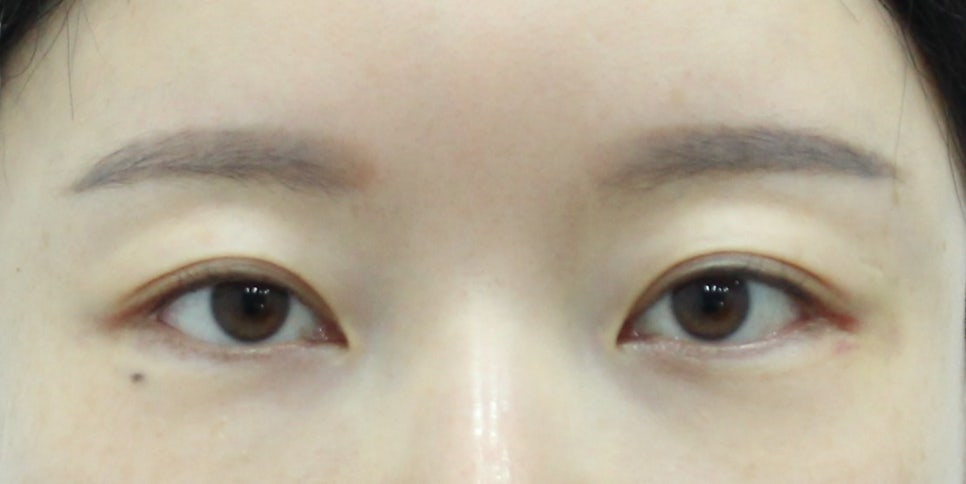
A patient in their 30s. Buried method. Non-incisional eye correction. This is a partially disclosed model with consent for disclosure.
If someone had double eyelid surgery in their early 20s, about 10 years later, as they enter their 30s, some skin sagging can occur, so they may undergo incisional double eyelid surgery. But if they want to keep the recovery period short, a non-incisional revision double eyelid surgery can also be a good option.
And eye correction is needed to make the double eyelid line more distinct and help the eyes open better.
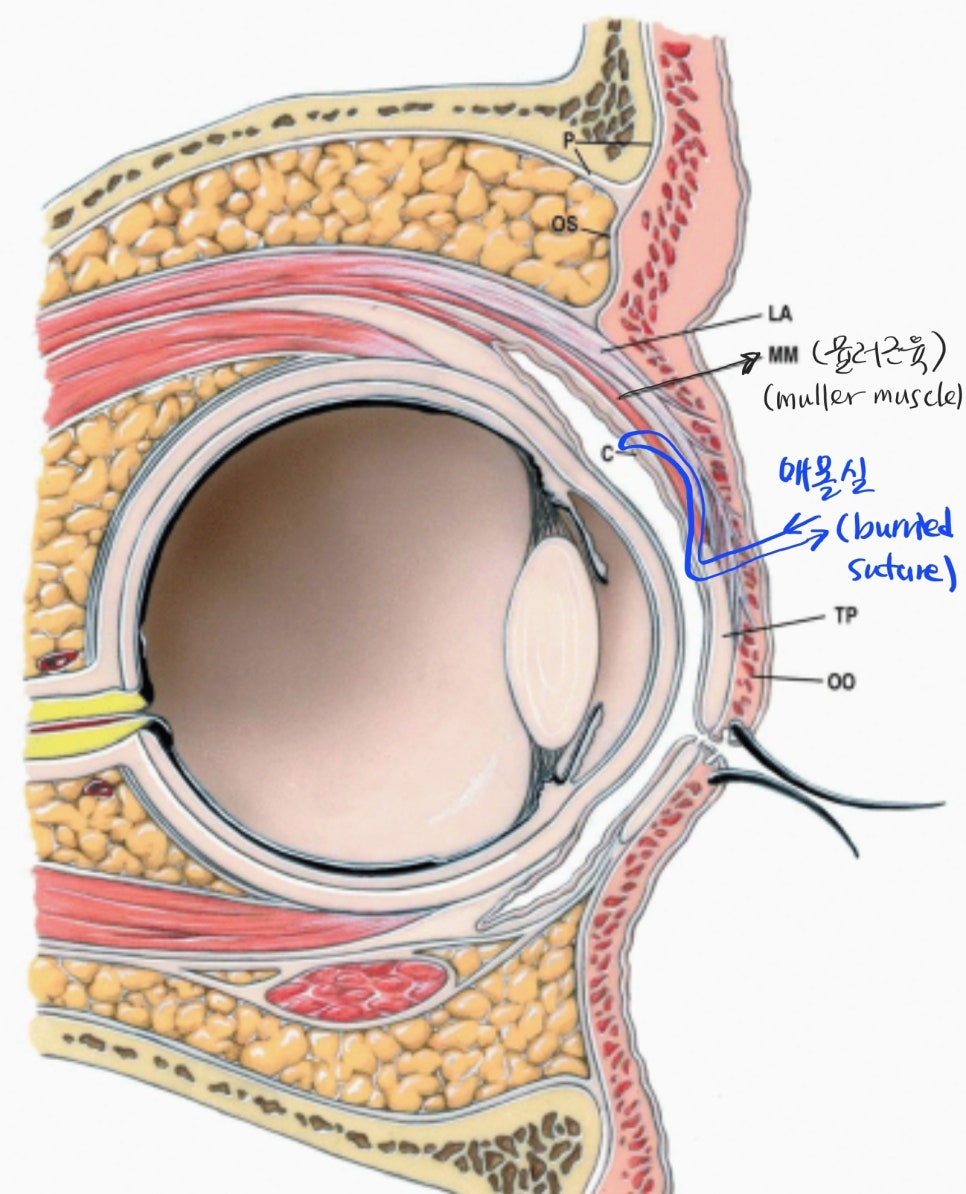
Surgical method of non-incisional eye correction. Buried-method eye correction.
Non-incisional eye correction is a surgical method in which, during non-incisional double eyelid surgery, buried sutures are used to pull the Müller muscle toward the conjunctival side to improve the strength of eye opening.
Trademark registration for Round Eye eye correction by the Korean Intellectual Property Office
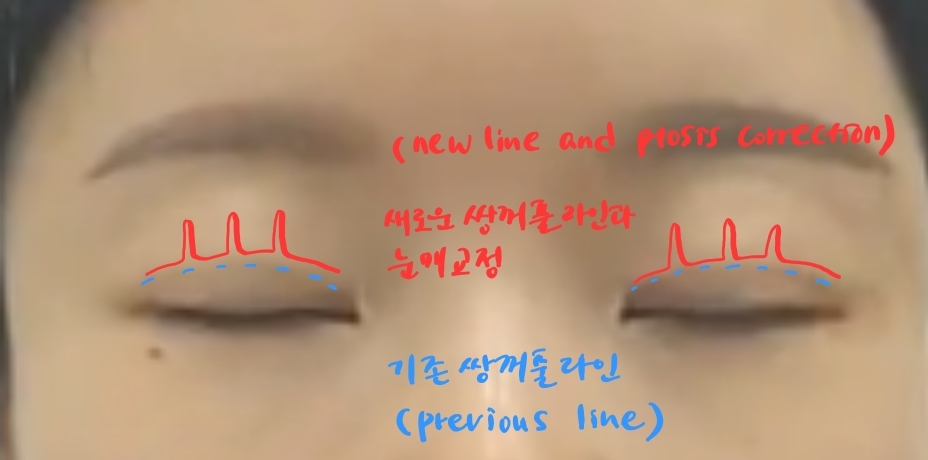
Raising the double eyelid line. Non-incisional double eyelid surgery and eye correction.
By raising the existing double eyelid line by about 1.5 mm and strengthening the ability to open the eyes through non-incisional eye correction, a more distinct double eyelid can be created.
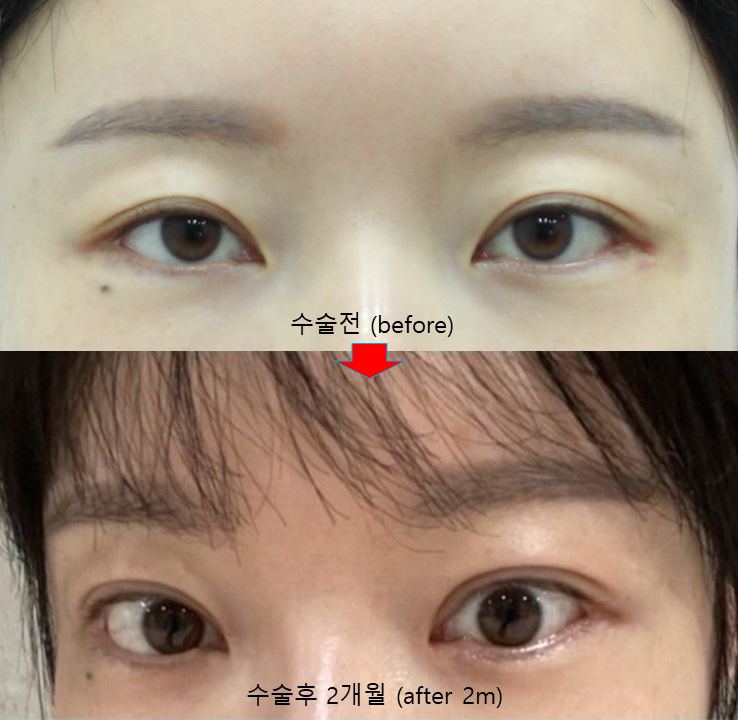
Review of buried-method double eyelid surgery. Raising the buried-method line. Review of non-incisional eye correction.
'Correcting slight asymmetry with non-incisional eye correction'
This is a woman in her late 20s who had buried-method double eyelid surgery in her early 20s, but visited because her eyes had weak opening strength and there was slight asymmetry.
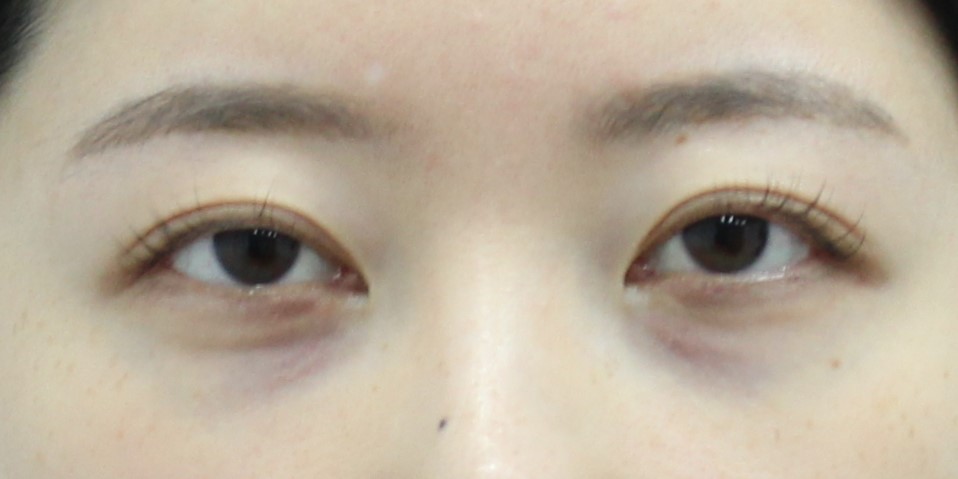
Review after buried-method revision surgery. This is a partially disclosed model with consent for disclosure.
Ptosis refers to a condition in which the eyes have insufficient strength to open, and surgery to correct ptosis is called ptosis correction surgery.
In fact, because the term ptosis is a disease name, even when the strength to open the eyes is insufficient, it is very rare for someone to be so severely limited in opening their eyes that they would be given the medical diagnosis of ptosis.
For that reason, ptosis correction surgery for cosmetic purposes is called eye correction.
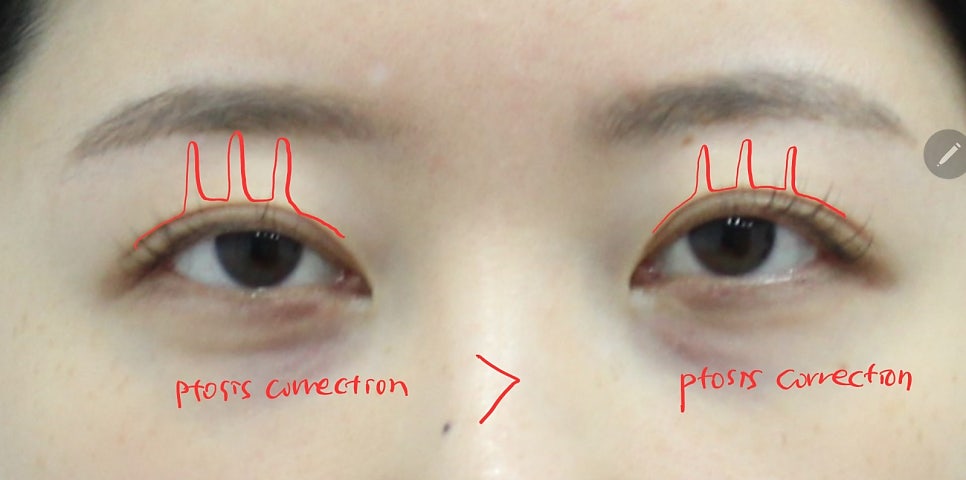
Correcting asymmetry with non-incisional eye correction.
Because the right eye (left side in the photo) has slightly weaker eye-opening strength, asymmetry can be corrected by performing a greater amount of non-incisional eye correction on that side and a smaller amount on the left eye (right side in the photo).
Of course, non-incisional eye correction has a limited ability to correct ptosis, so it is difficult to apply in cases of moderate to severe ptosis or severe asymmetry.
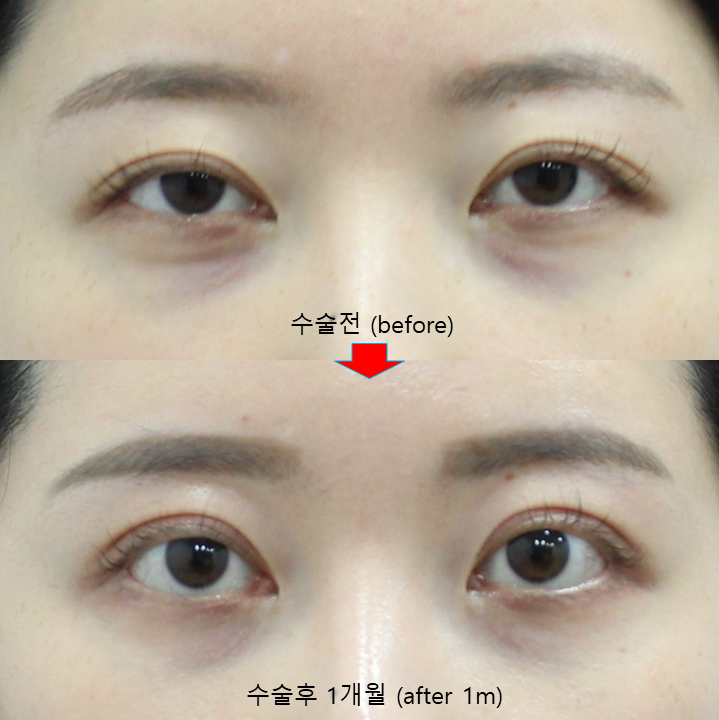
Review of non-incisional eye correction. Review of non-incisional asymmetry correction. This is a partially disclosed model with consent for disclosure.
In mild ptosis or slight asymmetry, non-incisional eye correction can offer fast recovery and good results.
'Raising the non-incisional double eyelid line and eye correction'
If the double eyelid created in the early 20s or during high school is too natural, one may want to make the double eyelid line more prominent.
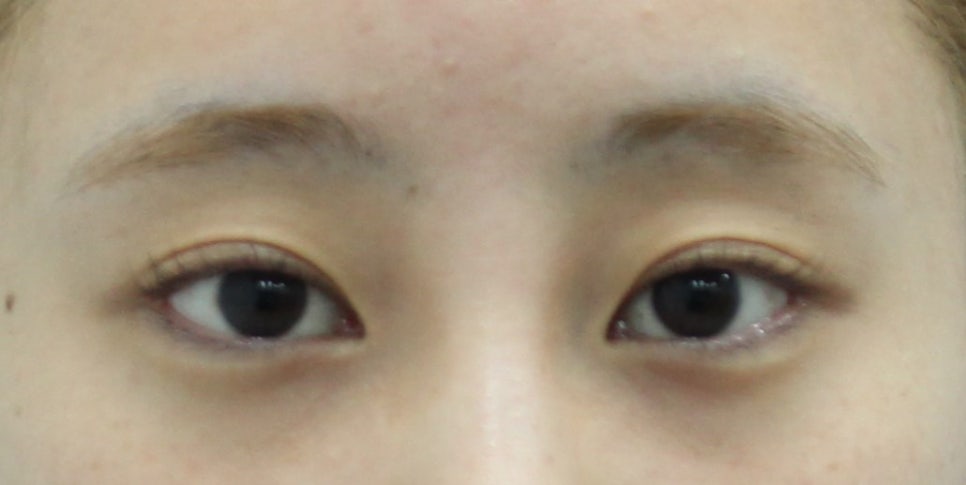
Review of buried-method double eyelid revision surgery. This is a real model with consent for disclosure.
When someone is young, especially if they undergo double eyelid surgery as a minor, it is better to have the surgery with a natural-looking line. However, as their personal style becomes more established and they learn makeup techniques, if they want a more prominent line, the line can be raised with non-incisional double eyelid surgery.
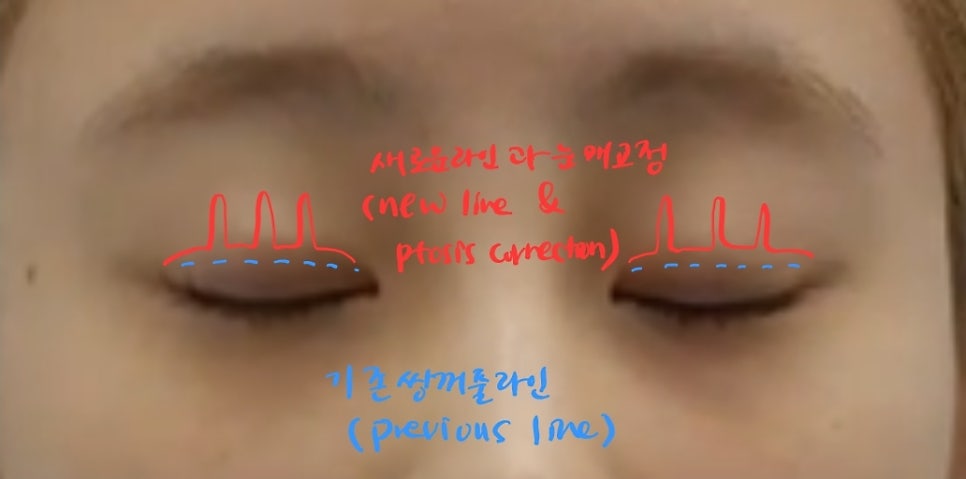
Revision non-incisional double eyelid surgery and eye correction.
If only the double eyelid line is raised in buried-method revision surgery, the double eyelid line alone may become too large and may look like a sausage double eyelid. Improving the strength of eye opening through eye correction can help create a more glamorous double eyelid.
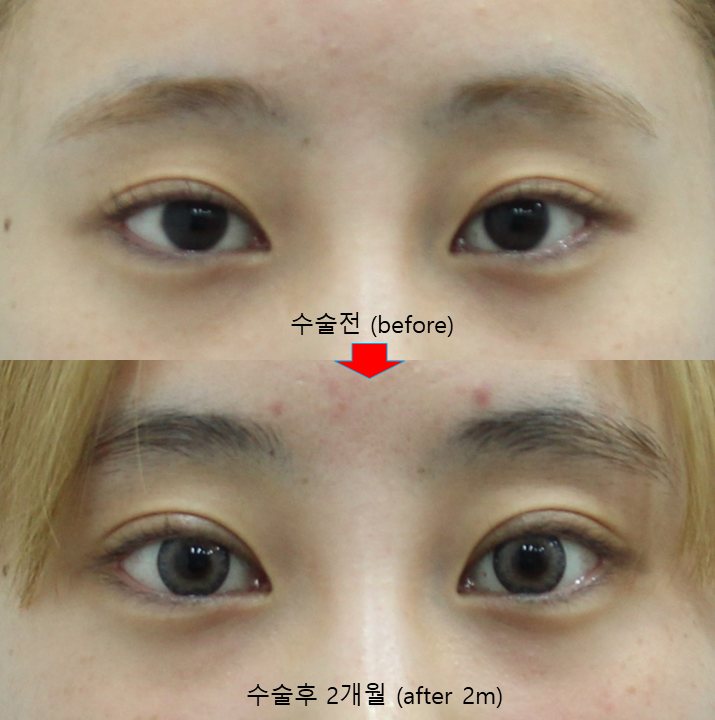
Review of non-incisional double eyelid eye correction. This is a real model with consent for disclosure.
In this way, non-incisional eye correction can improve the strength of eye opening and correct mild ptosis, and it can be applied for various purposes, such as when the existing double eyelid line is not distinct or to help prevent the double eyelid from loosening.

Review of non-incisional eye correction. This is a real model with consent for disclosure. Review of buried-method double eyelid surgery. Before and after buried-method double eyelid surgery