Plastic surgery in Japan has, in the past, been the first to develop and greatly advance surgical methods for Asian patients.
Plastic surgery in Japan is also highly developed, but the number of hospitals that perform cosmetic surgery is not as high as in Korea, and the cost is also known to be higher than in Korea.
For various reasons, such as cost and language barriers, there is a growing demand among Zainichi Koreans living in Japan to come to Korea to receive cosmetic surgery.
Aesthetic standards for the human face are greatly influenced by race and culture, so even among East Asians, aesthetic standards can differ from country to country.
Source: Aesthetic Plastic Surgery
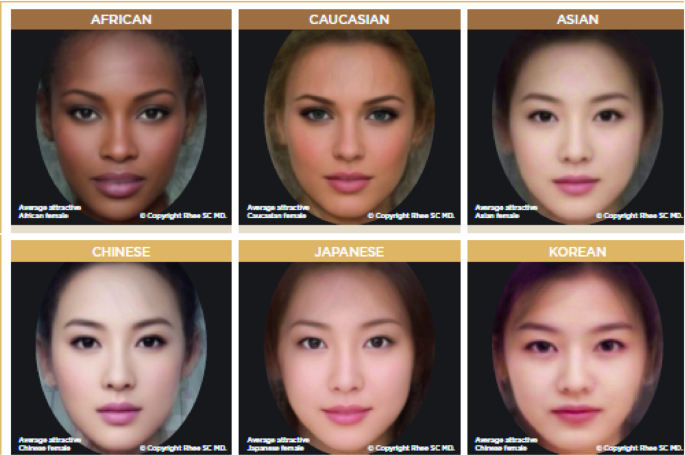
The faces of beauties by race and country.
Even among East Asian countries, the aesthetic standards of China, Japan, and Korea differ, so surgery on the same area may need to be designed a little differently.
At Garnet Plastic Surgery, if you bring a desired photo or your specific requests, we reflect them sufficiently during the consultation.
'Rhinoplasty for Zainichi Koreans'
For Zainichi Koreans who have lived in Japan for a long time, the consultation for rhinoplasty often proceeds in a way similar to that for Japanese patients.
First, many Japanese people or Japanese Koreans do not want silicone implants used in rhinoplasty, so we recommend implant-free rhinoplasty or autologous tissue rhinoplasty.
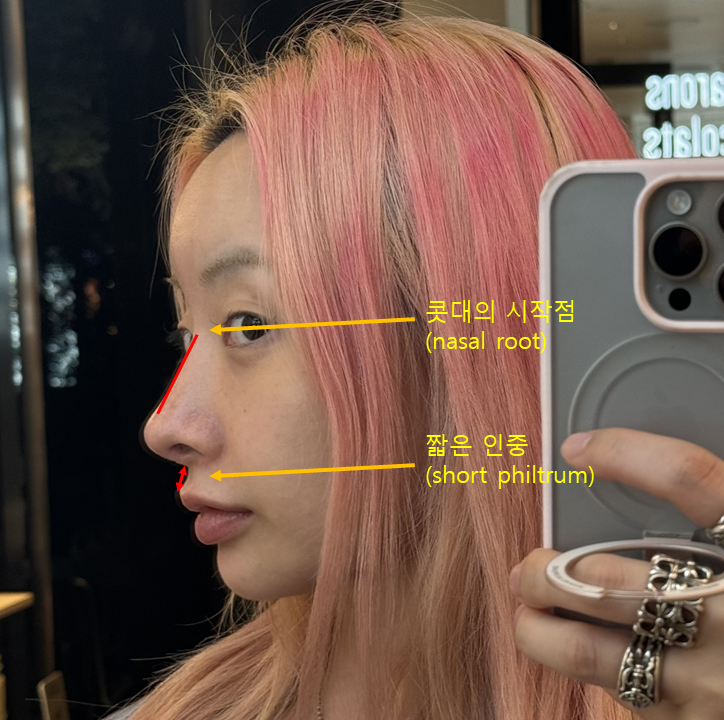
The aesthetic standard for noses preferred in Japan. This is a real model with consent for public release.
Japanese Koreans or Japanese patients tend to prefer a nose shape that makes the philtrum look shorter.
For that reason, philtrum reduction may be performed at the same time, and a nasal tip design that shortens the philtrum through adjustment of the nasal tip and columella length may be needed.
In addition, when raising the bridge of the nose, Koreans often want the bridge to start higher from between the eyes, whereas Zainichi Koreans often prefer the starting point of the bridge to be raised from a slightly lower area.
Even with a silicone implant, no matter how low the implant is, it has to rest in the glabella area of the bridge, so the glabella area will inevitably become 1–2 mm higher.
In such cases, rhinoplasty is needed in which silicone implants are not used, and instead rib cartilage segments and fascia are used to fix the bridge at an appropriate height.
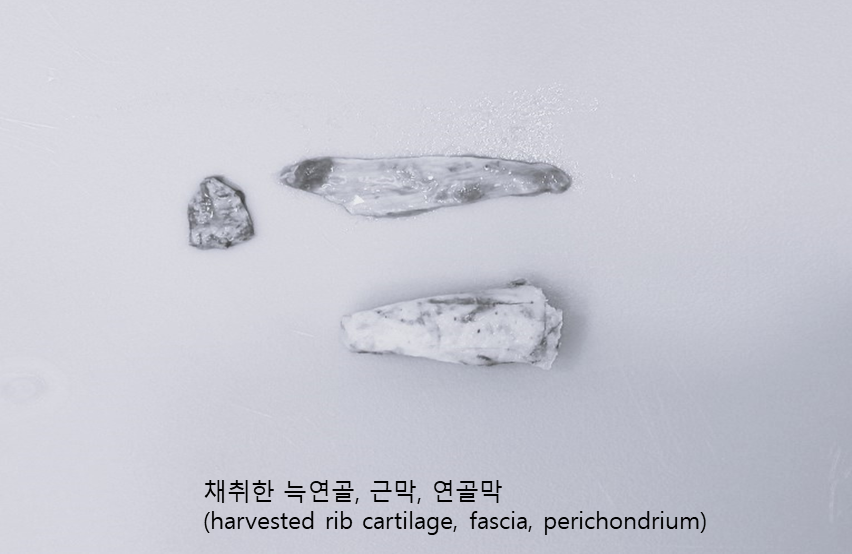
Harvested rib cartilage, fascia, and perichondrium
In a first rhinoplasty, good results may sometimes be achieved using septal cartilage and ear cartilage, but in revision surgery, the septal cartilage has often already been used, so harvesting rib cartilage may be necessary.
In particular, in revision surgery, CT scans should be used to clearly identify internal nasal problems and find the cause of the crooked nose so that it can be corrected.

CT for septoplasty. CT for crooked nose correction
If the nose is raised while it is crooked, the crooked part may become more noticeable or the deviation of the nose may appear worse, so the crooked septum is corrected first, and then the bridge and tip of the nose are raised.
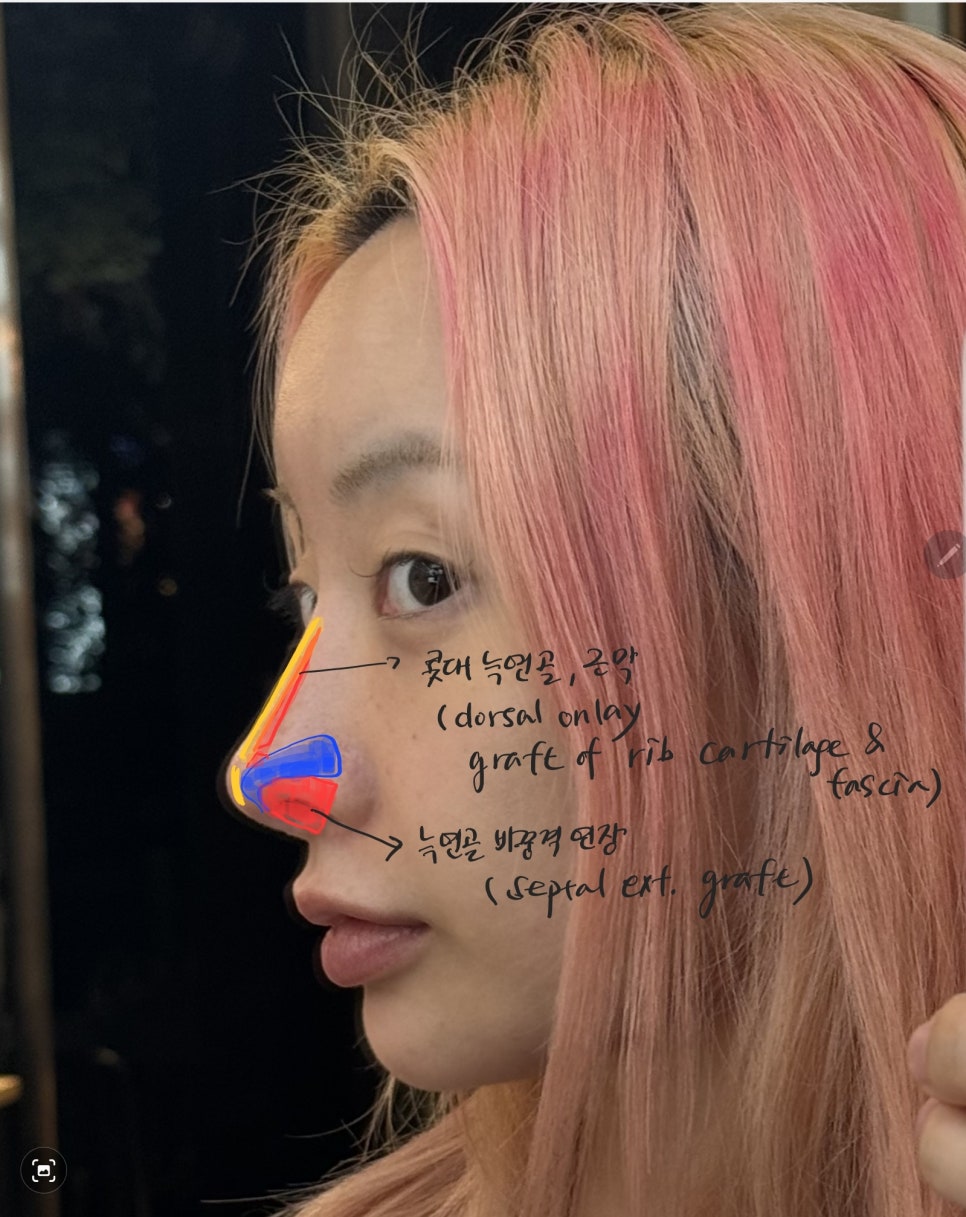
Rib cartilage segments and fascia inserted into the bridge; septal extension using rib cartilage
For the nasal tip, a septal extension method is used in which rib cartilage segments are made into a support structure, and it is especially important to improve the nasolabial angle and make the philtrum look shorter.
In addition, instead of silicone implants, rib cartilage segments are used to raise the bridge, and fascia should be used to cover them so that the rib cartilage does not show through the thin bridge skin, which can help prevent additional revision surgery.
'Before and After Revision Rhinoplasty for Zainichi Koreans (Japanese Koreans)'
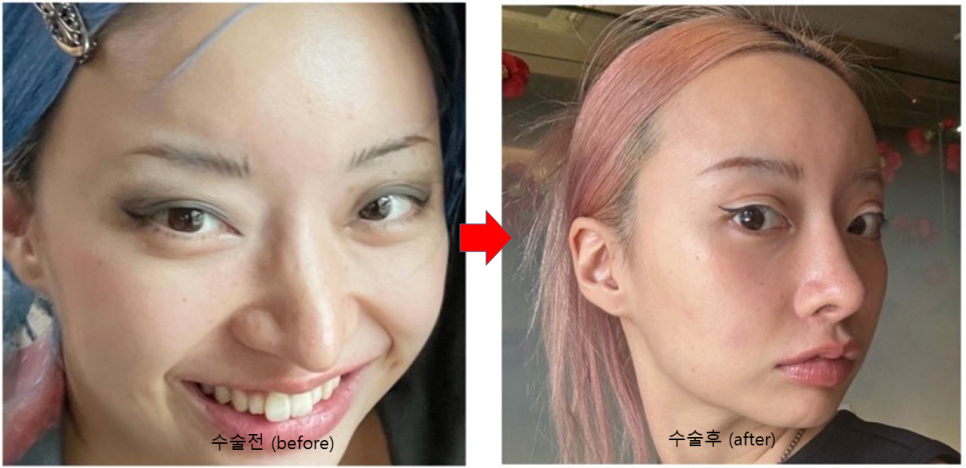
This is a real model with consent for public release. Zainichi Korean plastic surgery review. Japanese Korean plastic surgery. Overseas Korean plastic surgery. Japanese Korean rhinoplasty. Zainichi Korean rhinoplasty.
In the past rhinoplasty, the crooked parts of the bridge and nasal tip were improved, and the part where the nasal tip lengthened like an arrow nose was improved.
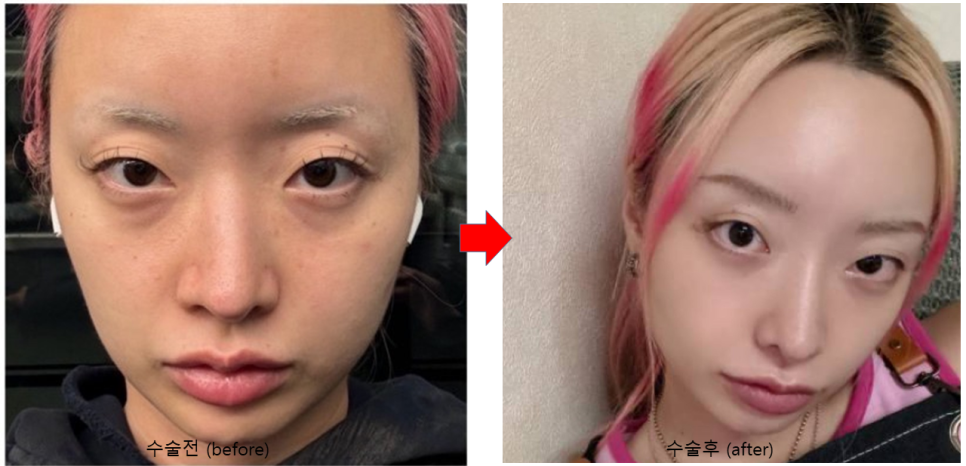
This is a real model with consent for public release. Zainichi Korean plastic surgery review. Japanese Korean plastic surgery. Overseas Korean plastic surgery. Japanese Korean rhinoplasty. Zainichi Korean rhinoplasty.
In line with Japanese aesthetic standards, it is important to shape the nasal tip so that the philtrum looks shorter.
Above all, because the bridge must be raised without using silicone implants, the rib cartilage segments placed in the bridge must be carefully refined, and covering the cartilage with fascia to prevent it from showing through the thin skin of the bridge is also essential.
In addition, because Japanese people do not prefer noses with a high glabella area, the starting point of the nose should be positioned lower than it is for Koreans.

This is a real model with consent for public release. Revision rhinoplasty review. Revision rhinoplasty using rib cartilage review. Implant-free rhinoplasty review.
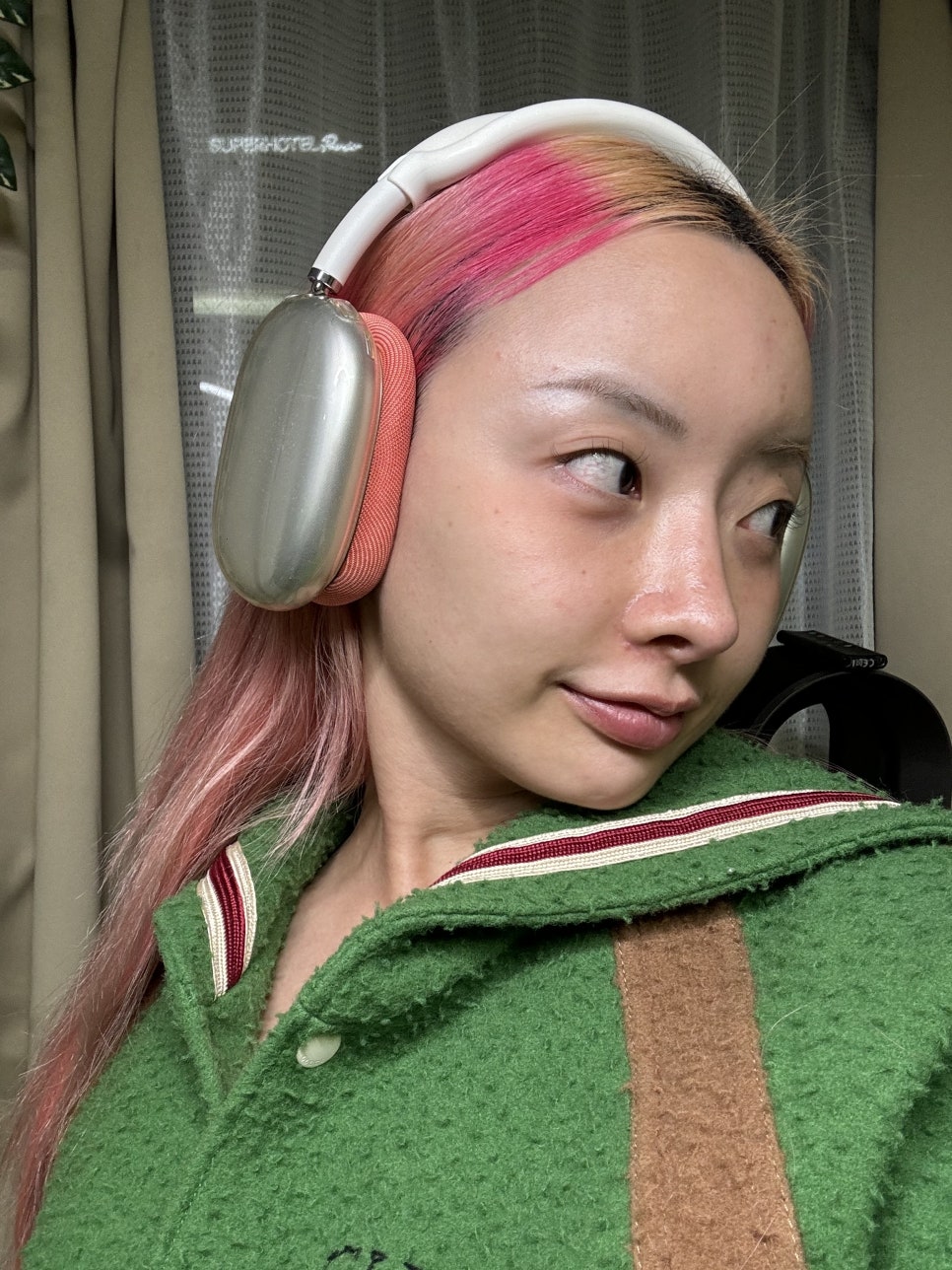
Nasolabial angle correction review. Nasolabial angle surgery. Philtrum surgery using rib cartilage. Zainichi Korean rhinoplasty.