When you visit a plastic surgery clinic for a preoperative consultation and make a surgery appointment, the clinic will inform you about the precautions before and after surgery.
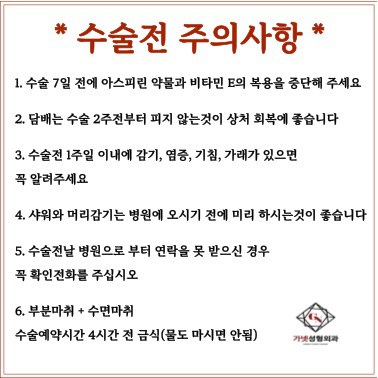
Precautions before surgery
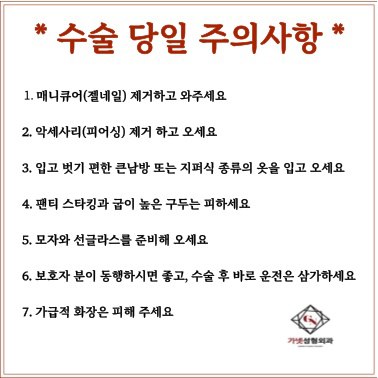
Precautions on the day of surgery
After plastic surgery, everyone wants to recover quickly and hopes that bruising and swelling after surgery will last as little as possible.
Usually, it is fine if you simply follow the hospital’s instructions, but today I will explain the details a little more.
'Tell us about any medical conditions you have or any medications you are taking'
Before having plastic surgery, it is a good idea to let the clinic know in advance if you have any medical conditions.
In particular, for plastic surgery in middle age and later, some people have chronic conditions such as high blood pressure, diabetes, or heart disease and are taking medication, so you must let the medical staff know because you need to discuss whether surgery is possible.
And if you are taking any medication, be sure to tell them during the preoperative consultation, and if you are taking many different medications, it would also be helpful to show your prescription.
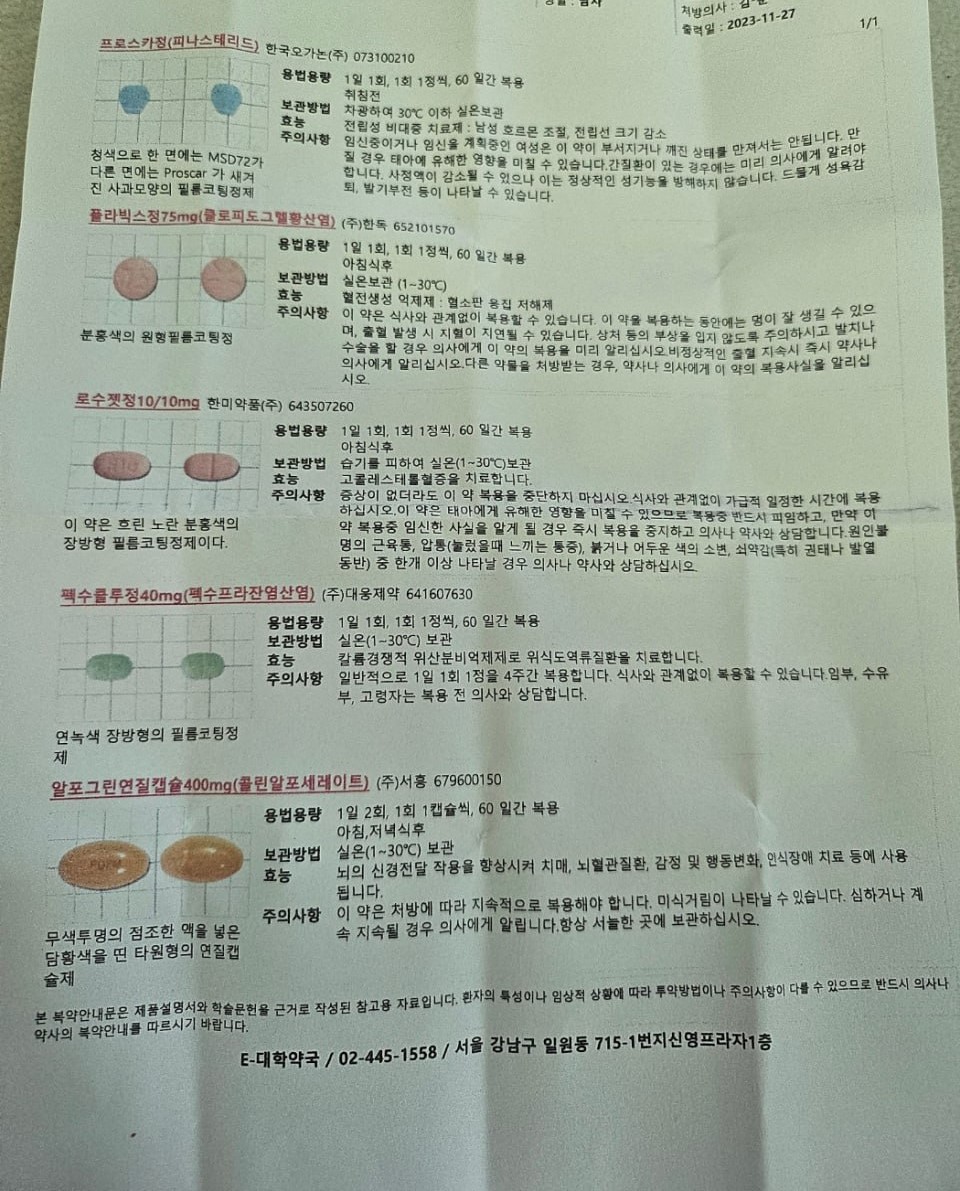
Show your prescription to the medical staff
Most medications do not interfere with plastic surgery, but if you are taking antithrombotic drugs, you must stop them for at least one week before surgery.
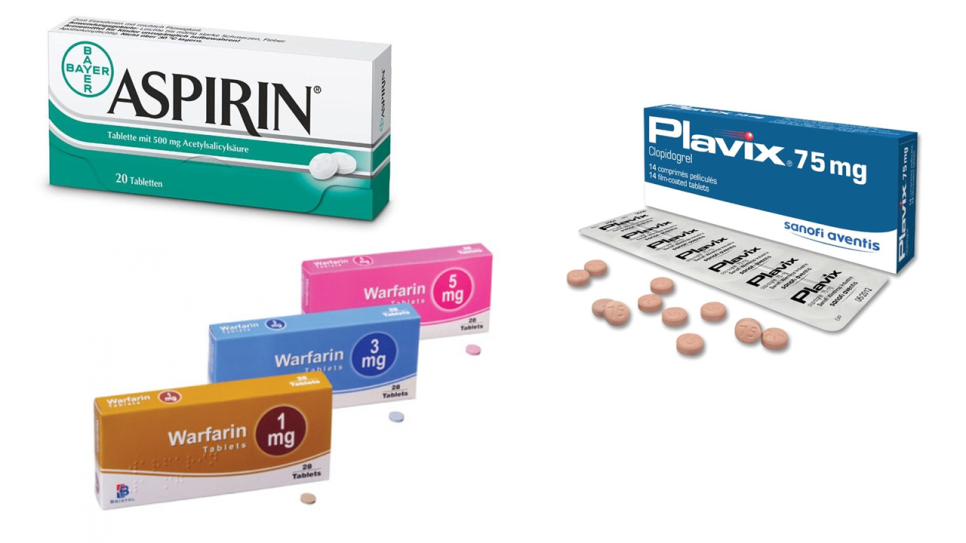
Types of antithrombotic drugs: aspirin, Plavix, warfarin
'Think about stopping health supplements before surgery'
Even if you do not have a specific medical condition, it is best not to take health supplements or nutritional supplements that were not prescribed by a hospital for about 1 to 2 weeks before surgery.
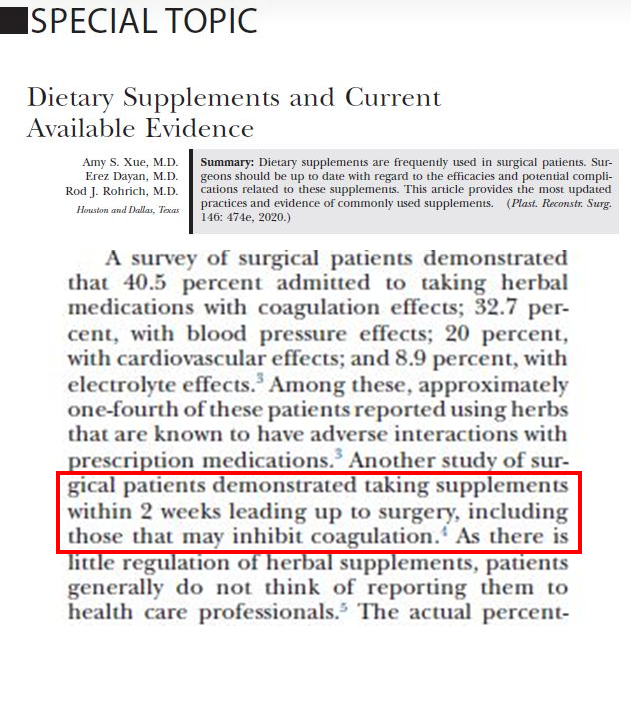
Source: Plastic and Reconstructive Surgery.
According to a recently published paper, many types of health supplements contain ingredients that improve blood circulation, and many of these ingredients interfere with blood clotting. For this reason, they recommend stopping supplements and health supplements for a certain period of time.
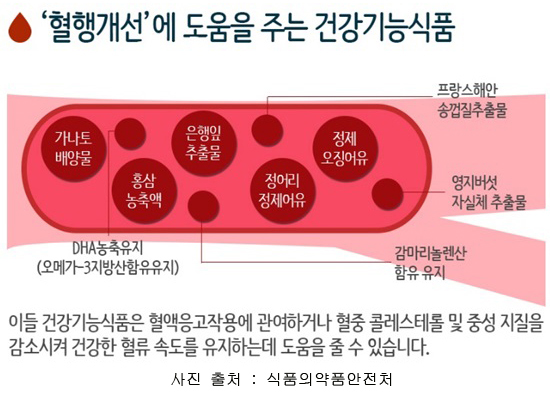
Health functional foods that help improve blood flow
In addition, if there are various medications with unclear ingredients, it is best to stop taking them for at least one week so that they can be sufficiently eliminated from the body.
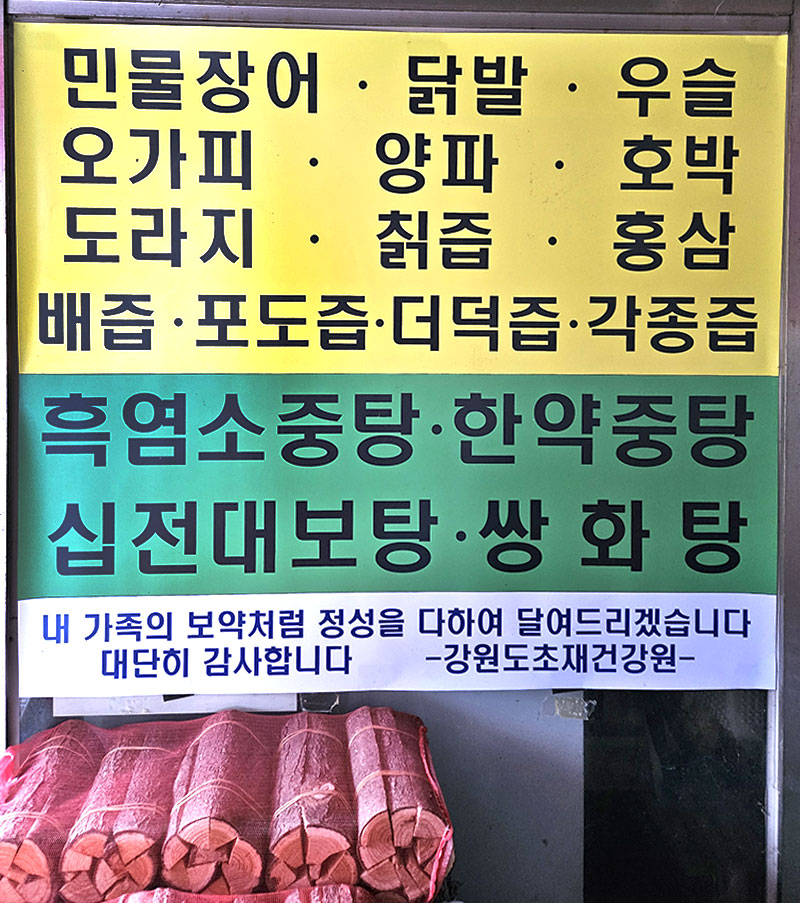
Various medicines from health centers
'Tobacco and alcohol cessation before and after plastic surgery'
To recover faster after plastic surgery, it is best to stop smoking and drinking before and after surgery.
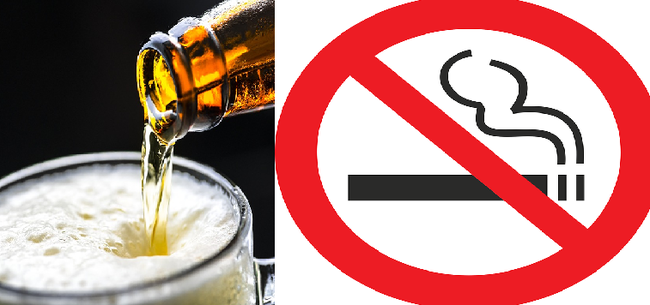
Stop smoking and drinking for at least 1 to 2 weeks before plastic surgery. Source: Maeil Safety News
If you drink a lot of alcohol before surgery, alcohol-degrading enzymes become active in the liver, which may cause the sedative used during surgery to break down too quickly and make it harder to stay under sedation.
And in the case of smoking, it constricts blood vessels in the surgical area, slows wound healing after surgery, and can also cause inflammation after surgery.
E-cigarettes also contain nicotine, so it is best to refrain from smoking for the same period as regular cigarettes.
'Precautions for a quick recovery after plastic surgery'
The instructions given by the hospital before and after surgery may vary by hospital.
Precautions before surgery
-
If you have any medical conditions, inform them during the consultation.
-
If you are taking any medication, inform them during the consultation.
-
Most prescription medications given by the hospital should be taken until surgery.
-
Antithrombotic drugs that interfere with blood clotting should be stopped for at least one week.
-
Various health supplements, herbal medicine, etc. should be stopped for at least 1 to 2 weeks.
-
Bring emergency medicines such as those for asthma or angina.
-
Stop smoking 1 to 2 weeks before surgery.
-
If you are unsure whether to continue taking a medication, show your prescription.
Precautions after surgery
-
Follow the postoperative instructions provided for the specific surgical area carefully.
-
Take the prescribed medication properly after surgery and attend follow-up treatment as instructed.
-
Refrain from smoking and drinking until the recovery period is over.
-
Take light walks and do stretching.
-
Sleep using a high pillow.
-
Reduce salt intake to help reduce swelling.
-
Apply cold compresses properly in the early period after surgery.
-
Do not exercise, use a sauna, drink alcohol, or smoke until one month later.
'Before and after middle-aged comprehensive plastic surgery'
A woman in her 50s who carefully followed the precautions before and after surgery underwent procedures that fall under middle-aged comprehensive plastic surgery.
She had upper blepharoplasty, lower blepharoplasty, facelift, neck lift, and forehead lift. Although she underwent many procedures and most of the face was treated, she had little bruising and swelling after surgery and recovered very quickly.
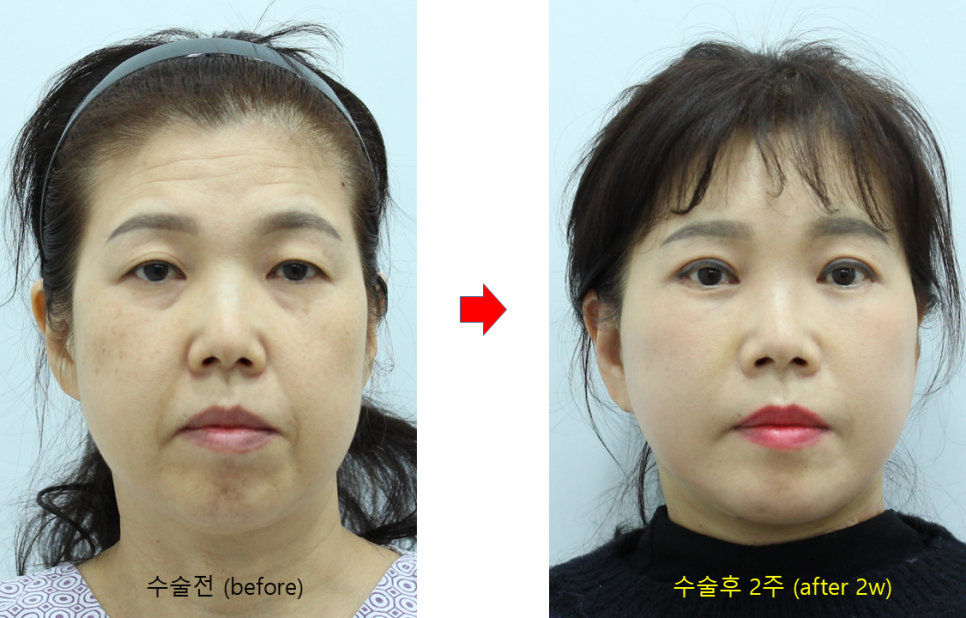
Before and after middle-aged comprehensive plastic surgery. Middle-aged comprehensive plastic surgery review. Anti-aging plastic surgery package review. A real model who consented to public release.
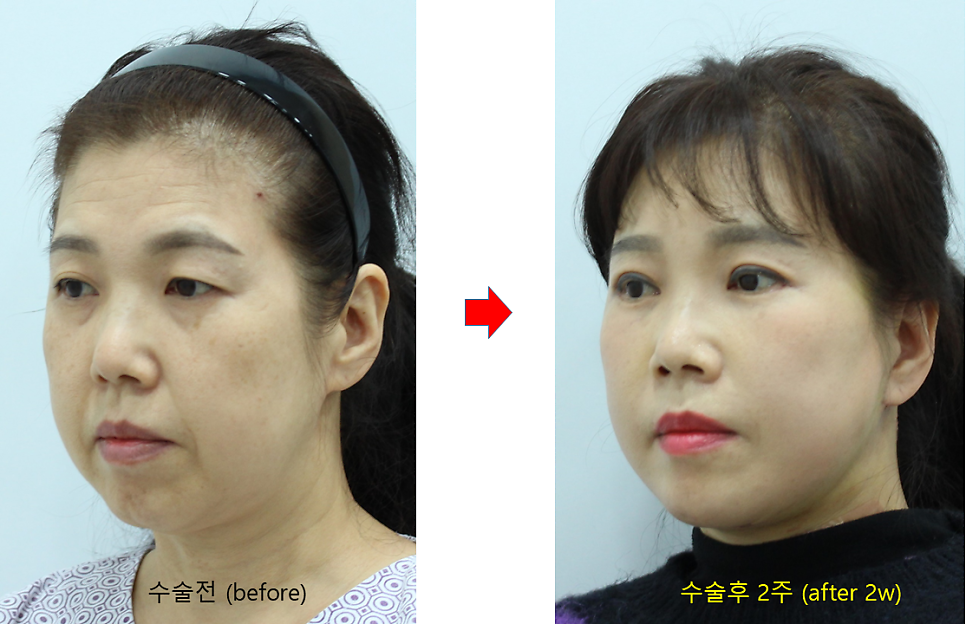
Facelift review. Neck lift review. Forehead lift review. Upper blepharoplasty review. Lower blepharoplasty review. A real model who consented to public release.
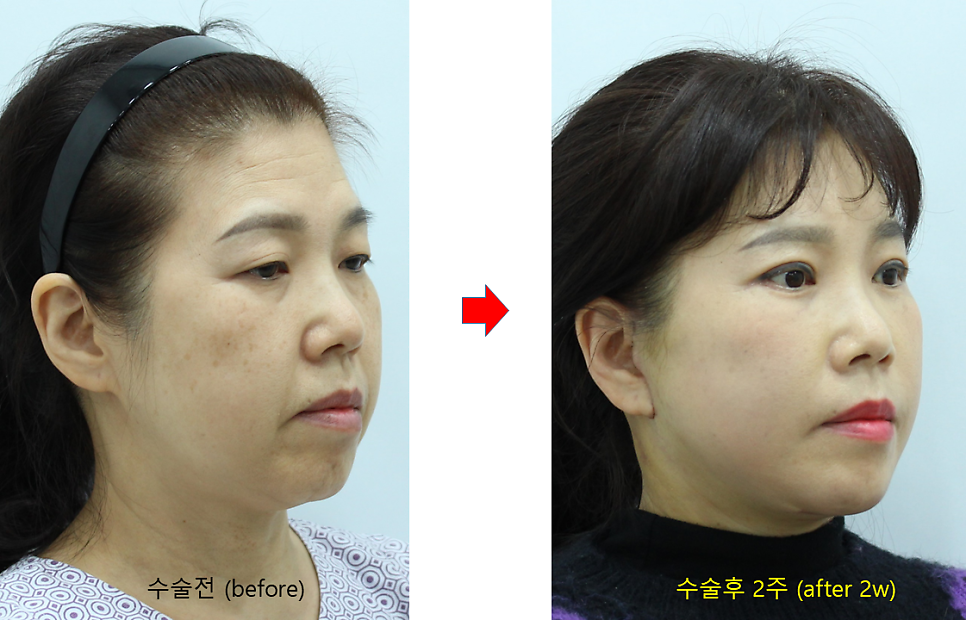
Before and after upper blepharoplasty. Before and after lower blepharoplasty. Before and after facelift. Before and after neck lift. Before and after forehead lift. A real model who consented to public release.
For upper and lower blepharoplasty, stitches are removed in the first week, while for procedures such as facelift, neck lift, and forehead lift, stitches are removed 10 to 14 days (2 weeks) after surgery.
To recover quickly after plastic surgery, the efforts of the doctor and medical staff are also very important. The surgery time should not be prolonged, and appropriate care before and after surgery is necessary.

Facelift 2-week review. Forehead lift 2-week review. Neck lift 2-week review. Upper blepharoplasty 2-week review. Lower blepharoplasty 2-week review. A real model who consented to public release.