Autologous fat grafting has long been used to fill hollow areas of the face.
Fat is harvested from the thigh or abdomen, centrifuged, and then grafted into the face. It can be used in various areas, and one advantage of the procedure is that the grafted fat can last a long time.
However, dissatisfaction can still arise with fat grafting, and the most common problem is clumping of fat particles.
In particular, when fat is grafted into areas with thin skin, clumped fat may be felt by touch or become visibly bumpy, so caution is always needed.
'Fat grafting around the eyes in a woman in her 20s'
This woman in her 20s came in to correct hollowing in the upper eyelids. She had previously undergone non-incisional double eyelid surgery, but due to the hollow upper eyelids, double folds had formed.
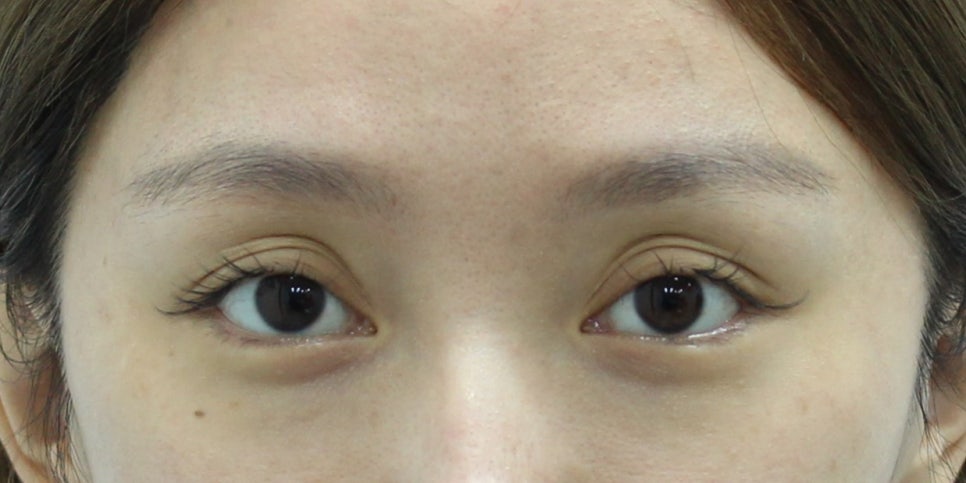
Sunken eyes. Hollow upper eyelids. Double folds. A real model with consent for disclosure.
When there is a lack of fat in the upper eyelids, double folds often develop even after double eyelid surgery.
Of course, a procedure called 'upper eyelid fat repositioning,' which lowers and fixes the eyelid fat through incisional double eyelid surgery, is also possible. However, since she wanted correction with a non-incisional method if possible, non-incisional double eyelid surgery and eye-opening correction were performed.
In addition, micro fat grafting was performed together to fill the hollow upper eyelid area.
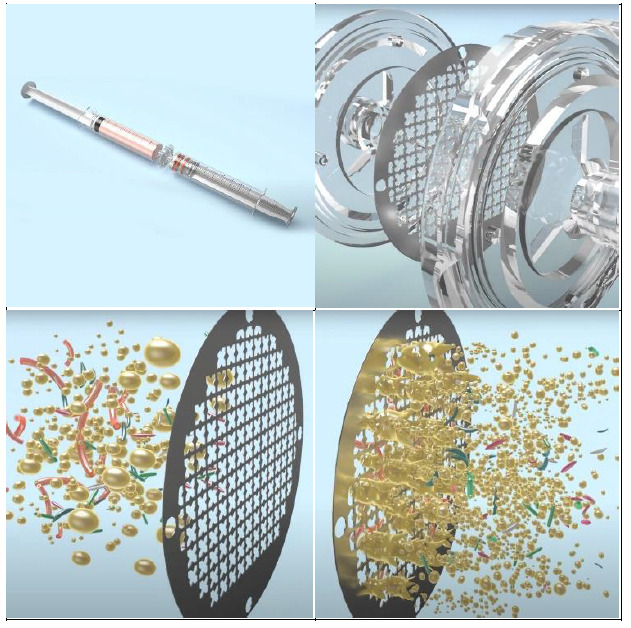
Adinizer smart kit
To graft fat into the eyelids or around the eyes, the harvested fat is centrifuged to remove impurities, and then micro-filtering is performed to obtain fine-particle fat.
This is because if coarse fat is grafted around the eyes, it may be felt by touch and may also cause side effects due to clumping.
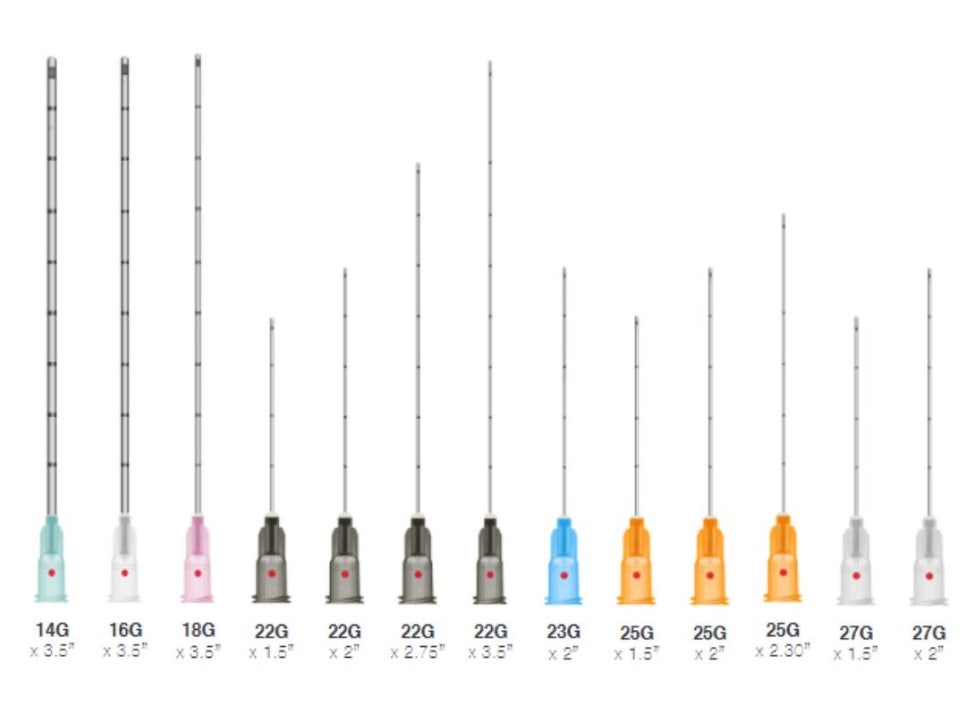
Various types of cannulas with different lengths and diameters. Micro fat grafting. Nanofat. Microfat
In addition, to carefully graft fine-particle fat, it is important to select and use a cannula with an appropriate thickness and length.
For fat grafting in other parts of the face, using a relatively thick and long cannula is acceptable, but around the eyes the skin is thin, so fat must be grafted delicately using a short, thin cannula.
Another important point in fat grafting around the eyes is not to graft too much fat.
If too much fat is grafted in an attempt to fill all the hollow areas, clumping can occur, and the eyelids may become heavy, making it difficult to open the eyes.
'Before and after non-incisional eye-opening correction, upper eyelid fat grafting, and aegyo-sal fat grafting in a woman in her 20s'
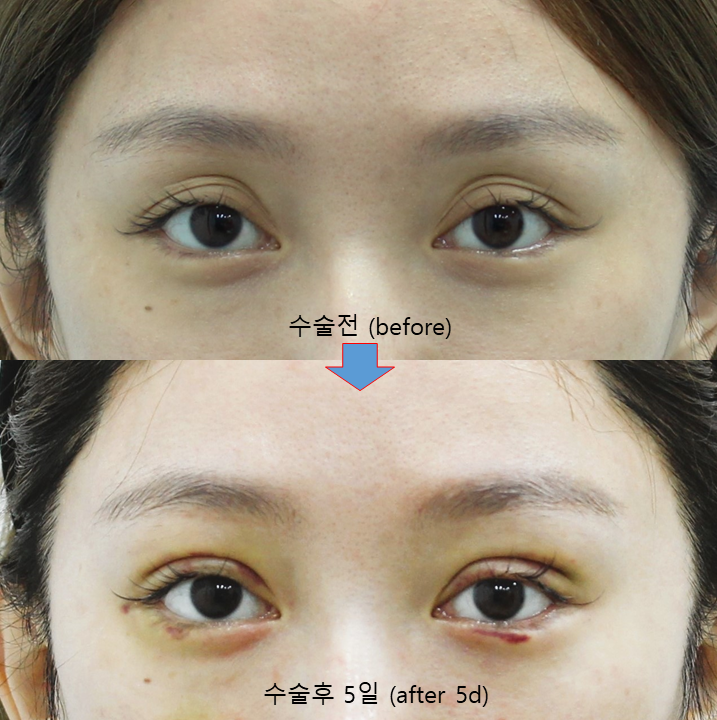
Before and after upper eyelid fat grafting. Before and after aegyo-sal fat grafting. Aegyo-sal fat grafting review. Upper eyelid fat grafting review. A real model with consent for disclosure.
Even though it is still the 5th day after surgery and swelling and bruising remain, you can see that the double folds have been resolved through non-incisional eye-opening correction and a clear double eyelid crease has formed.
And the hollow upper eyelid area has been well filled with micro fat grafting, improving the tired appearance.
Also, in young women, many people want aegyo-sal under the eyes when having fat grafting, so aegyo-sal fat grafting was performed as well.
Many people in their 20s and 30s also want fat grafting because they often have hollow upper eyelids, flat aegyo-sal, or hollowness under the eyes.
Around-the-eye fat grafting is delicate work, so it is important to make fine, small-particle fat using micro fat filters (microfat filters, nanofat filters) and graft it with a micro cannula of appropriate thickness and length.

A real model with consent for disclosure. Aegyo-sal fat grafting review. Aegyo-sal fat grafting review. Upper eyelid fat grafting review.