Problems after the first rhinoplasty or dissatisfaction with the cosmetic result can lead to revision rhinoplasty.
In rhinoplasty, revision surgery is fairly common, and it often involves a more detailed consultation than the first surgery.
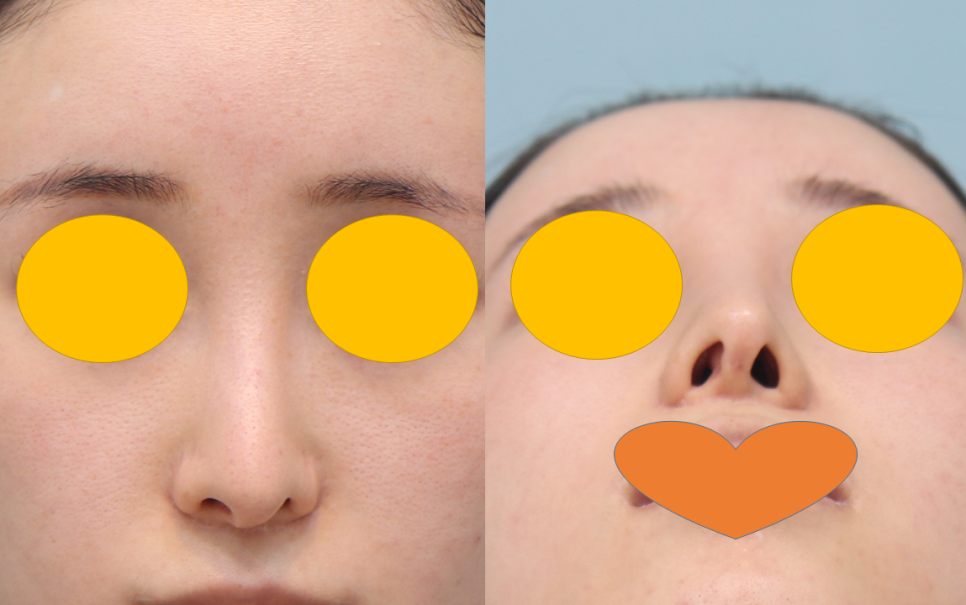
A crooked nose and septal deviation that developed after the first rhinoplasty. This is a partial model with consent for disclosure.
In the first rhinoplasty, it is most common to use septal cartilage or ear cartilage for the tip of the nose and insert a silicone implant for the bridge.
Sometimes, if too much septal cartilage is harvested in the first rhinoplasty, or if surgery is performed without addressing a deviated septum, the nasal tip may become crooked after surgery.
If the nose becomes crooked after surgery, it may look aesthetically unbalanced, and in some cases, when severe deviation is accompanied by airway obstruction, it can cause nasal blockage and discomfort in daily life.
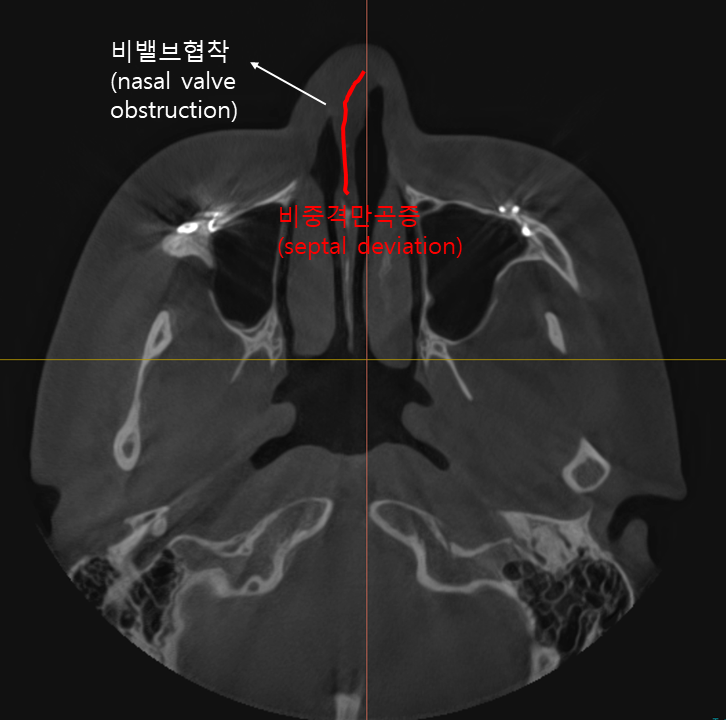
CT taken during a revision rhinoplasty consultation. Septal deviation. Nasal valve narrowing.
In revision rhinoplasty consultations, the most important task is to find the cause of the problems that occurred after the first surgery through a CT scan, but some patients also prepare for detailed consultation about their cosmetic goals.
In particular, for patients who come from overseas, there can be language barriers even with an interpreter, so photo references are often brought in.
Bringing desired photos to a plastic surgery consultation helps make the consultation more objective, and it is fine to bring photos of celebrities or attractive influencers on social media.
While communicating verbally during the consultation is important, the language used to describe what you want can differ, so photo-based plastic surgery consultations are not a problem at most plastic surgery clinics.
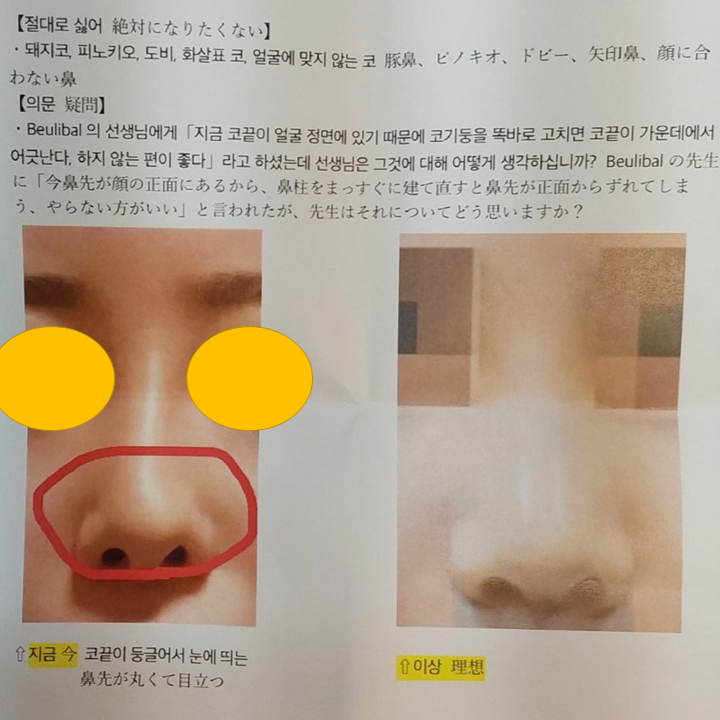
A Japanese patient’s requests for a rhinoplasty consultation.
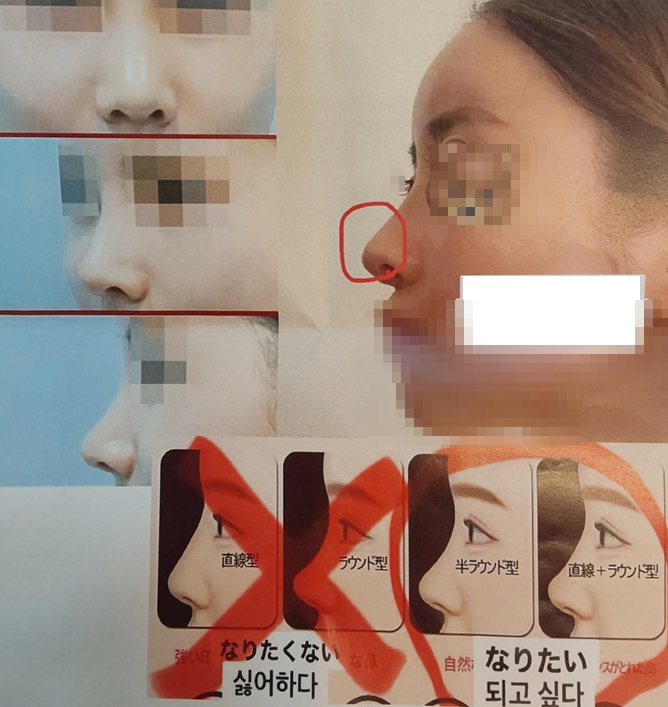
A nose shape desired and a nose shape disliked. Plastic surgery consultation using photos. Photos desired for consultation.
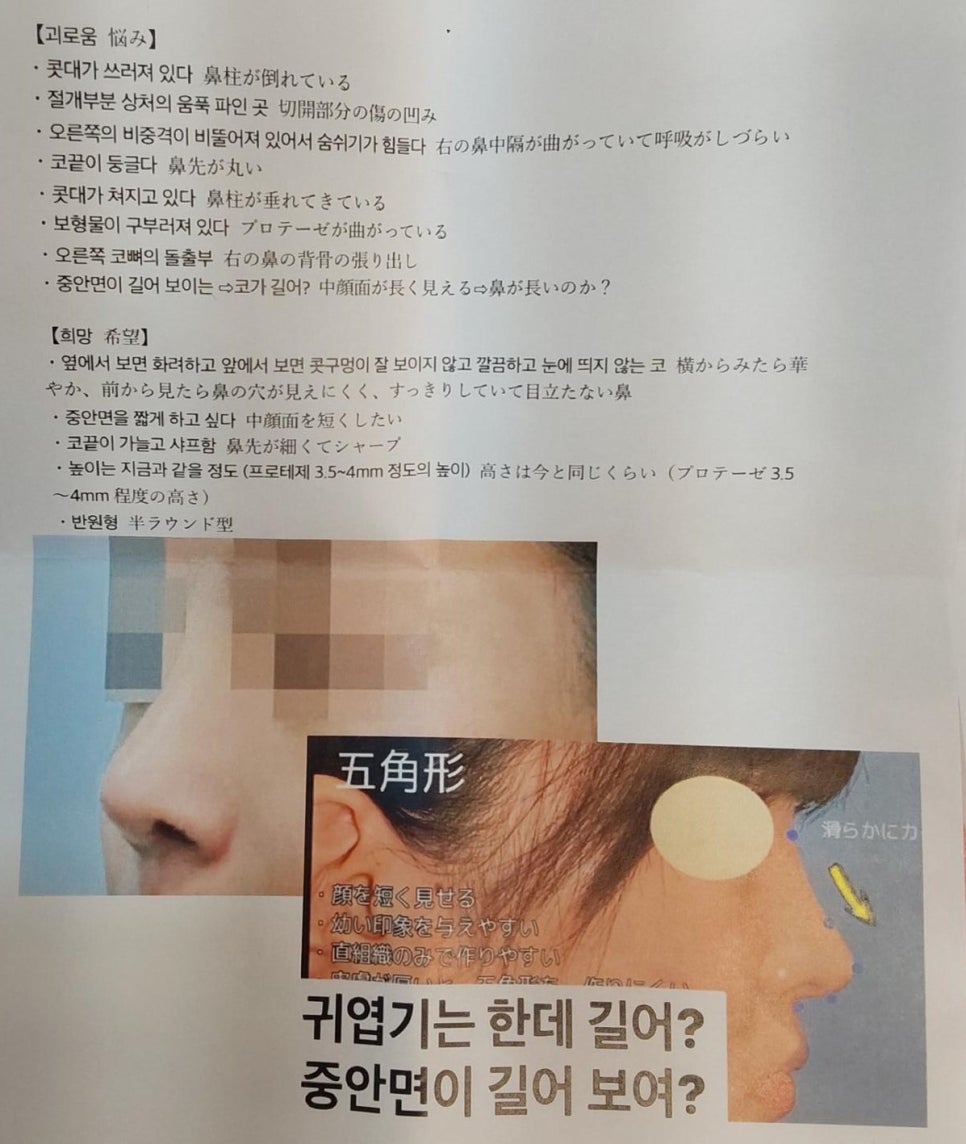
Current concerns and the desired nose shape for facial harmony
The patient’s main goal was to straighten the crooked nose that developed after the previous rhinoplasty and to improve the breathing difficulty caused by septal deviation. Aesthetically, the patient asked to make the nose look shorter, make the midface appear shorter, and make the philtrum look shorter as well.
'Revision rhinoplasty after consultation and rib cartilage'
Because septal cartilage had been used in the past for rhinoplasty, a large amount of cartilage material is needed to correct the crooked nose. For that reason, rib cartilage must be harvested, and it is necessary to harvest the perichondrium along with the rib cartilage to reinforce the thinning skin at the nasal tip.
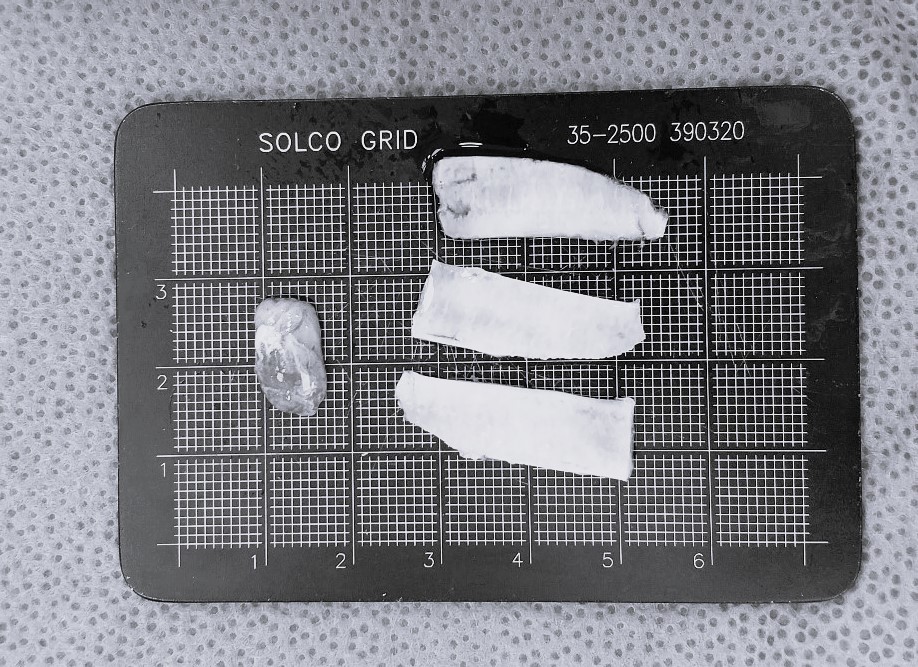
Harvested rib cartilage and perichondrium.
Surgical items
Revision rhinoplasty (replacement of silicone implant)
Correction of septal deviation and nasal valve surgery
Tip rhinoplasty using rib cartilage fragments and perichondrium grafting
'Revision rhinoplasty with rib cartilage: before and after'
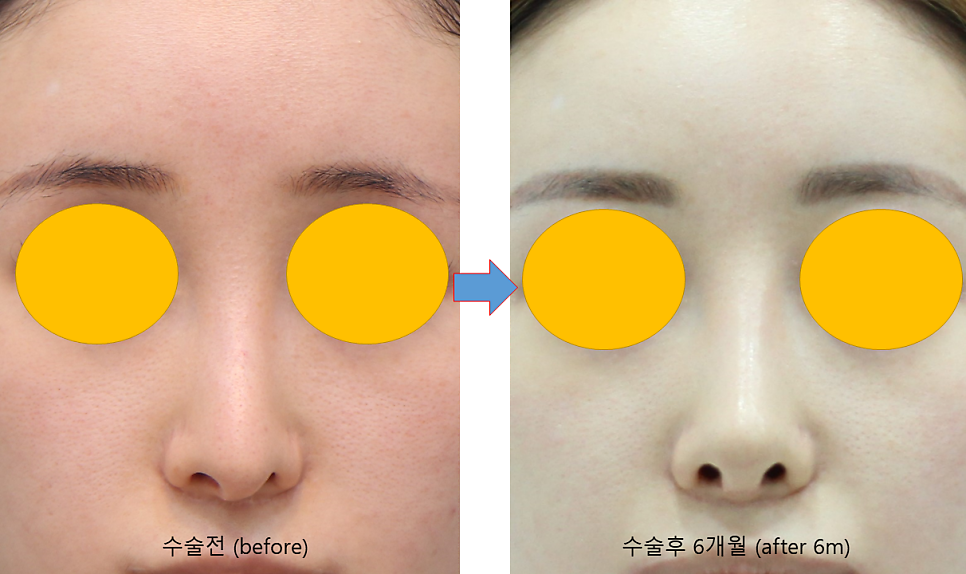
Before and after revision rhinoplasty with rib cartilage. Revision rhinoplasty review. This is a partial model with consent for disclosure.
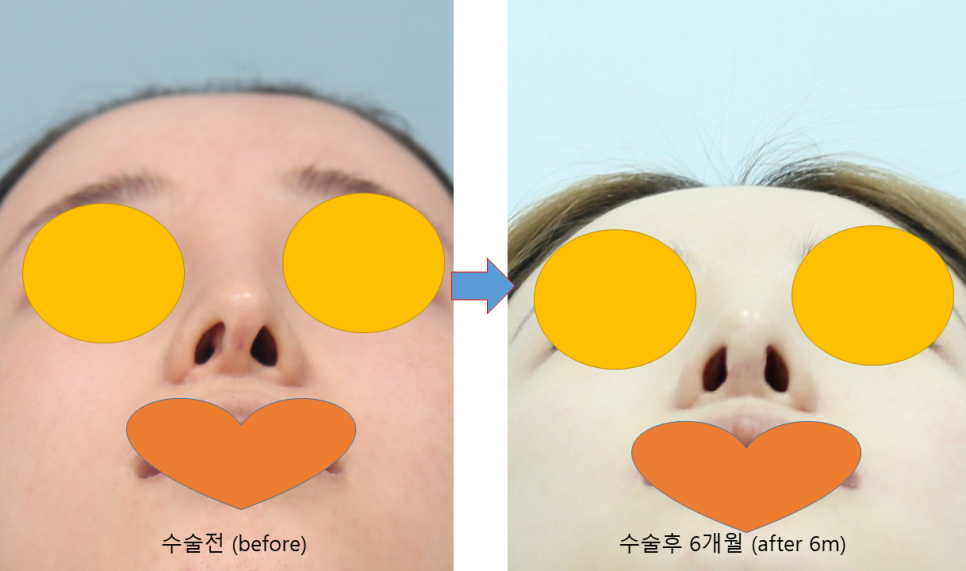
Septal deviation correction review. Before and after septal deviation correction. Nasal valve surgery review. Before and after nasal valve surgery.
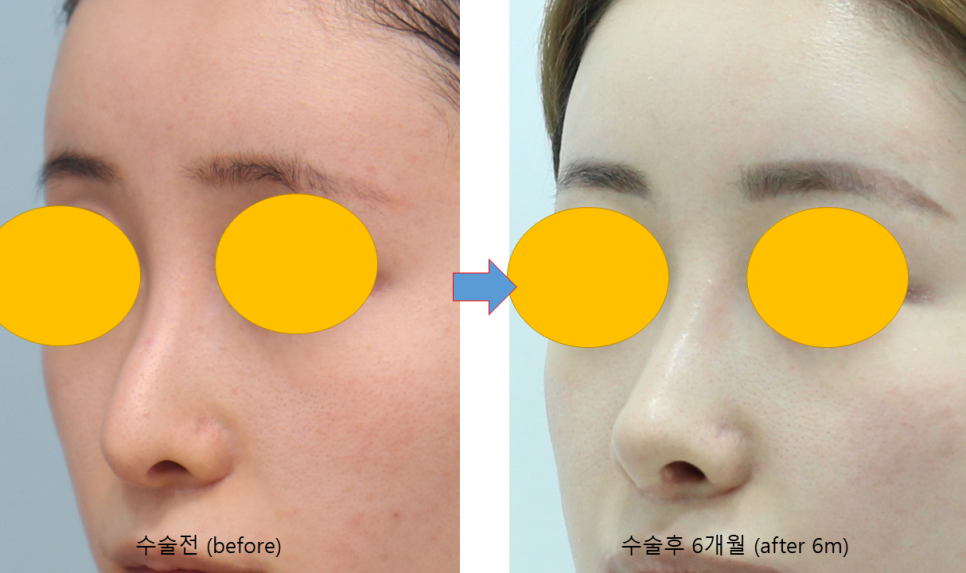
6 months after revision rhinoplasty. Rhinoplasty that makes the midface look shorter.
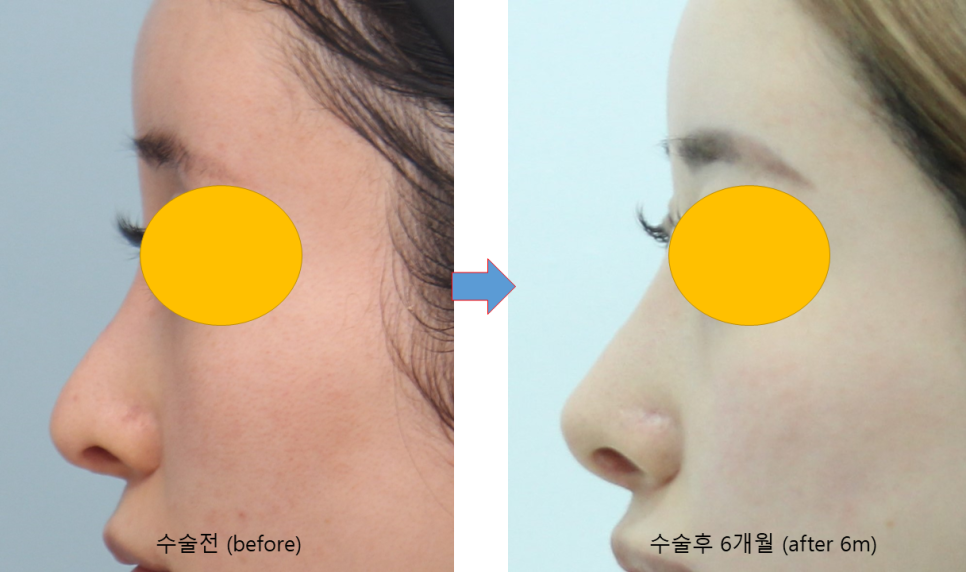
Rhinoplasty review with rib cartilage. Before and after rib cartilage rhinoplasty. This is a partial model with consent for disclosure. Rhinoplasty that makes the philtrum look shorter.
In revision rhinoplasty, it is important to identify the problems with the previous rhinoplasty through consultation and select the appropriate materials for the new procedure.
If there are functional problems, diagnosis is possible through CT imaging, and revision surgery can also resolve functional issues.
If you have a desired nose shape for cosmetic reasons, it can be reflected to some extent through photo consultation.