If we classify the surgeries most commonly received by people in their 20s and 30s at a plastic surgery clinic, they are as follows.
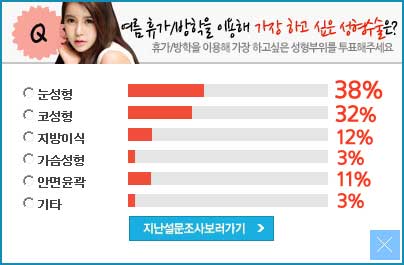
Source: Medical World News.
'Eye surgery,' which includes double eyelid surgery, eye correction, and canthoplasty, has been the most commonly performed procedure in plastic surgery clinics, both then and now.
Next are 'nose surgery' and 'fat grafting,' which are also commonly performed cosmetic procedures among younger people.
So comprehensive plastic surgery for people in their 20s and 30s is often referred to as eye surgery, nose surgery, and fat grafting (fat-related cosmetic surgery), and is sometimes abbreviated as 'eye-nose-fat.'
Eye surgery, nose surgery, and fat grafting can be done separately or together, and many people ask in what order these three procedures are performed.
'Order of eye-nose-fat surgery'
Eye surgery, nose surgery, and fat grafting are independent procedures, so they can be done separately.
In that case, there is no major issue with the order, and you can have the procedure you want.
However, when eye surgery, nose surgery, and fat grafting are performed together, the order of the surgery is:
- Eye surgery => 2. Nose surgery => 3. Fat grafting
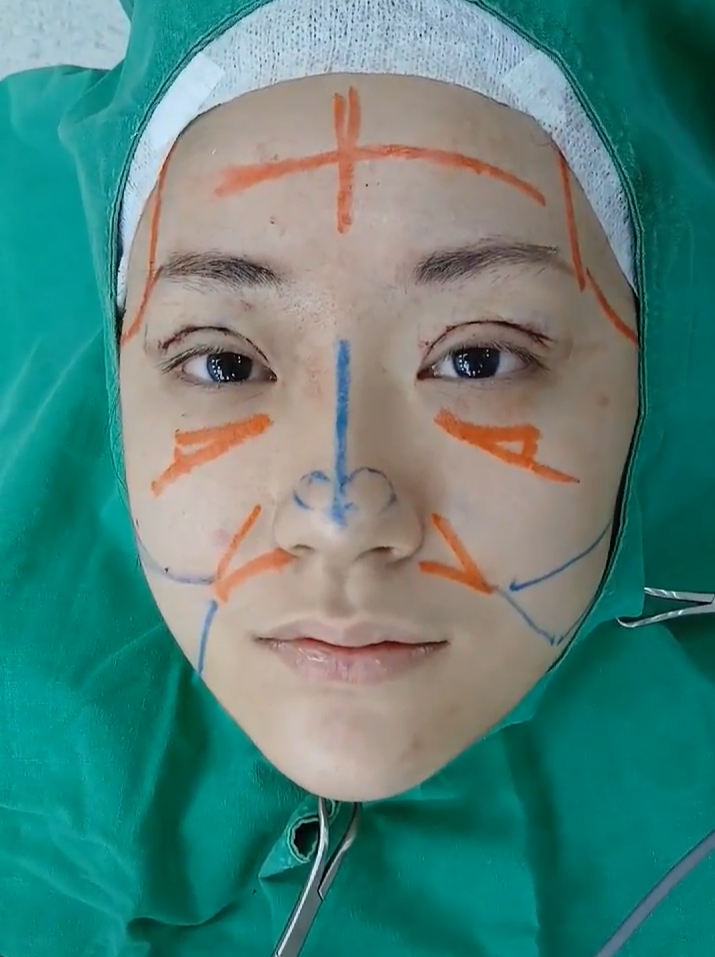 The design for nose surgery and fat grafting after eye surgery. This is a real model who consented to public release.
Usually, double eyelid surgery and eye correction are performed with local anesthesia along with a short period of sleep anesthesia.
In the case of eye surgery, since the size of the double eyelids and the degree of pupil exposure when the eyes are closed and opened are important, it is better to perform the procedure under local anesthesia rather than sleep anesthesia so that the shape of the eyes and any left-right differences can be compared during surgery.
Also, because the results of eye surgery are relatively sensitive, it is better for eye surgery to be performed when swelling is at its minimum.
Nose surgery is then performed second, and it is usually done under sleep anesthesia.
In the case of nose surgery, in the past, nose surgery using silicone implants at a high height was popular, but recently more natural-looking nose surgery has become the trend, so the frequency of no-implant nose surgery, which does not use implants, has been increasing.
Finally, the surgery is completed by performing fat grafting after nose surgery.
The reason fat grafting is done last is that the transplanted fat may be compressed during the surgical process, and another reason is that if the starting point of the nose is too high relative to the height of the forehead, it can look unnatural.
After nose surgery determines the height of the bridge of the nose, fat grafting to the forehead should be done to create a natural side profile.
'Recovery period for eye, nose, and fat grafting (eye-nose-fat) surgery'
Usually, the time to remove stitches and tape after eye surgery and nose surgery is around day 7.
In the case of fat grafting, since the fat is transplanted through a thin cannula, there are no separate stitches on the face, and the stitches at the donor site (thigh or abdomen) can also be removed around day 7.
After the stitches are removed, light makeup is possible, and the additional facial swelling will subside to some extent over the following week.
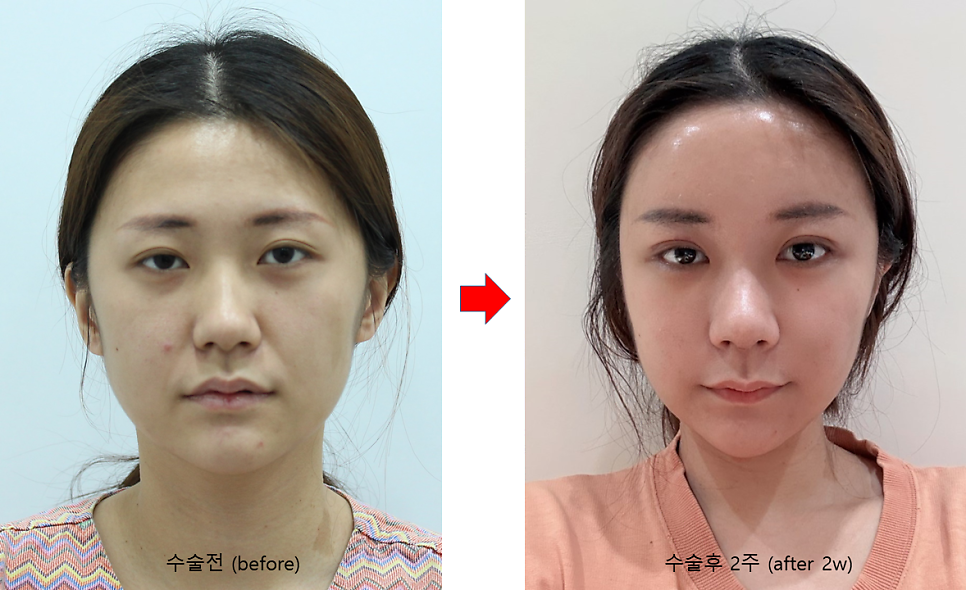 2 weeks after eye surgery, nose surgery, and fat grafting. This is a real model who consented to public release.
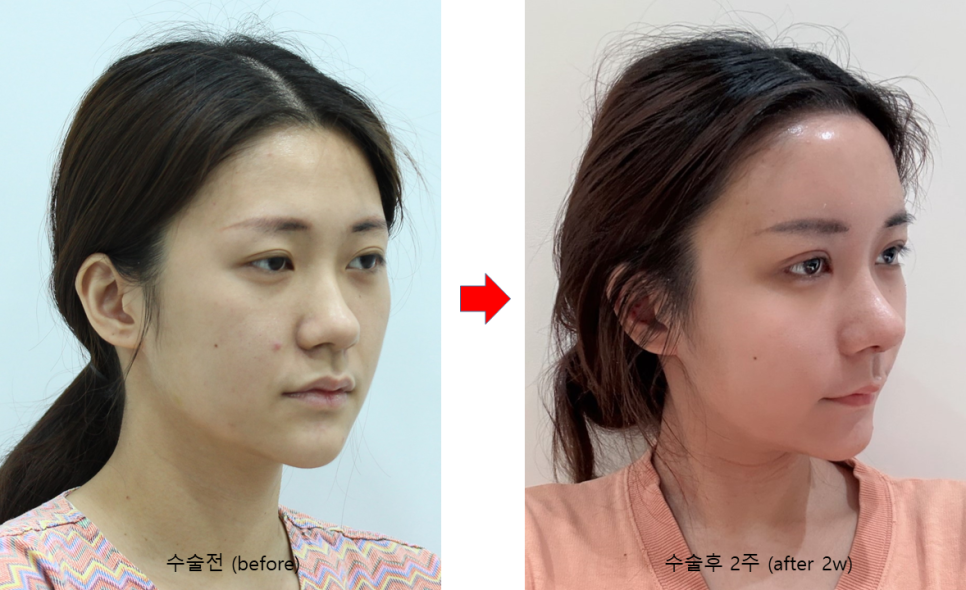 Review of eye-nose-fat surgery. Before and after eye-nose-fat surgery. This is a real model who consented to public release.
In the case of fat grafting, because the survival rate varies from person to person, a second additional fat grafting procedure is often performed about 2 months later.
If eye surgery, nose surgery, and fat grafting are done separately, each procedure requires its own recovery period, but if they are done together, the advantage is that the recovery period does not increase additionally.
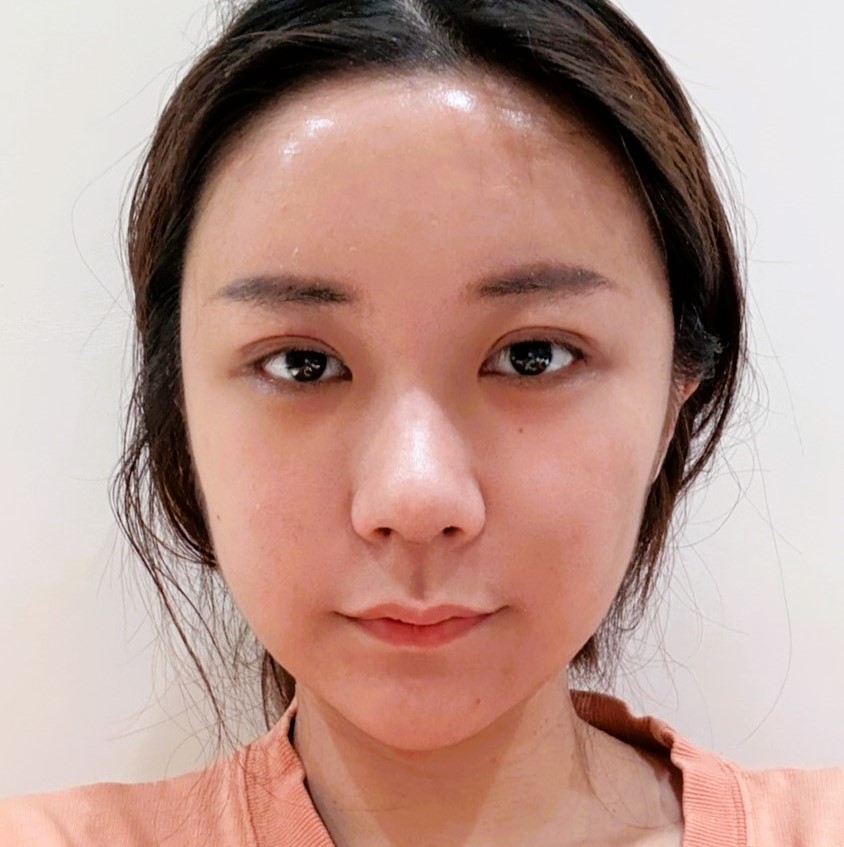 Before and after eye-nose-fat surgery. Eye-nose-fat review. Eye-nose-fat in your 20s. Comprehensive plastic surgery in your 20s. This is a real model who consented to public release.