The framework that classifies face shapes by type can be applied not only in plastic surgery but also in many other fields.
It is especially useful for finding a hairstyle that suits you and for choosing eyeglass frames that harmonize with your face shape.
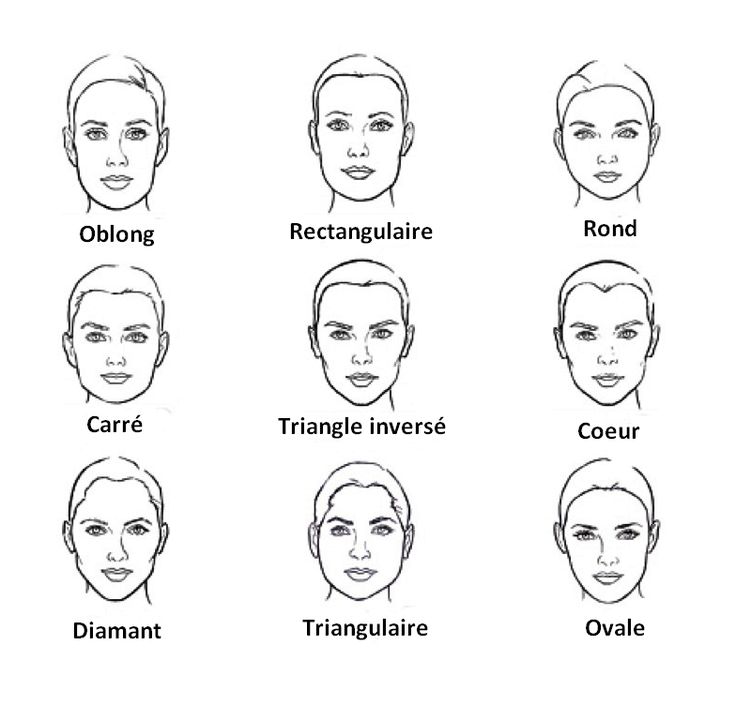
Classification of various face shapes.
There are various procedures and surgeries for correcting different face shapes, and today we will look at how to correct a peanut-shaped face.
'Causes of a Peanut-Shaped Face'
A peanut-shaped face develops as a result of a combination of various factors such as aging, gravity, reduced skin elasticity, and skeletal structure.
In particular, as skin and soft tissue elasticity decreases with age, the skin sags, and as fat and muscle move downward, the peanut-shaped face becomes more pronounced.
A peanut-shaped face is basically closely related to aging, but it can also occur when facial muscle strength decreases during orthodontic treatment, or when the masseter muscles become smaller due to jaw Botox among minor procedures.
It can also occur when the fat layer in the side cheek area becomes thinner due to the use of ultrasonic lifting devices.
'Fat Grafting to Correct a Peanut-Shaped Face'
This patient is a woman in her 40s who visited the clinic to correct a peanut-shaped face.
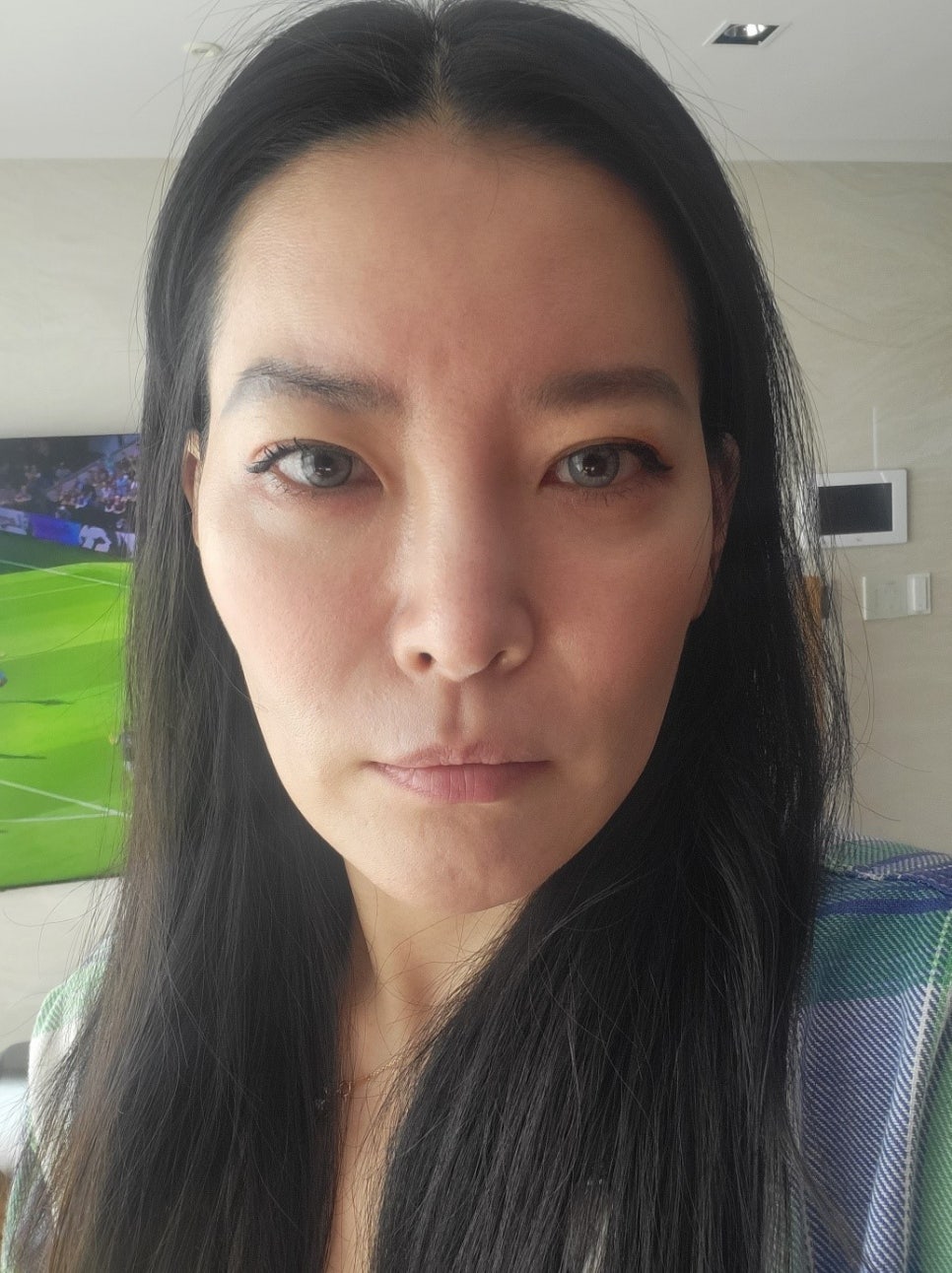
A peanut-shaped face in a woman in her 40s. This is a real model with consent for disclosure.
She had well-developed cheekbone structure, and as aging progressed, skin sagging and hollowing of the side cheeks led to a peanut-shaped face.
We planned fat grafting along with overall anti-aging counseling.
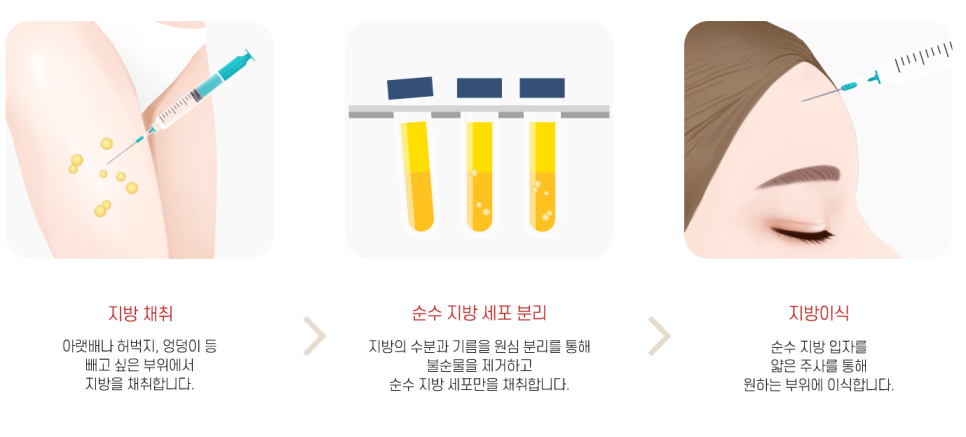
The process of fat harvesting, fat cell separation, and fat grafting required for fat grafting.
Fat grafting is a procedure that creates volume by transplanting one’s own fat to another area.
Fat is usually harvested from the lower abdomen or thighs, then after centrifugation, pure fat cells are separated and grafted into hollow areas of the face.
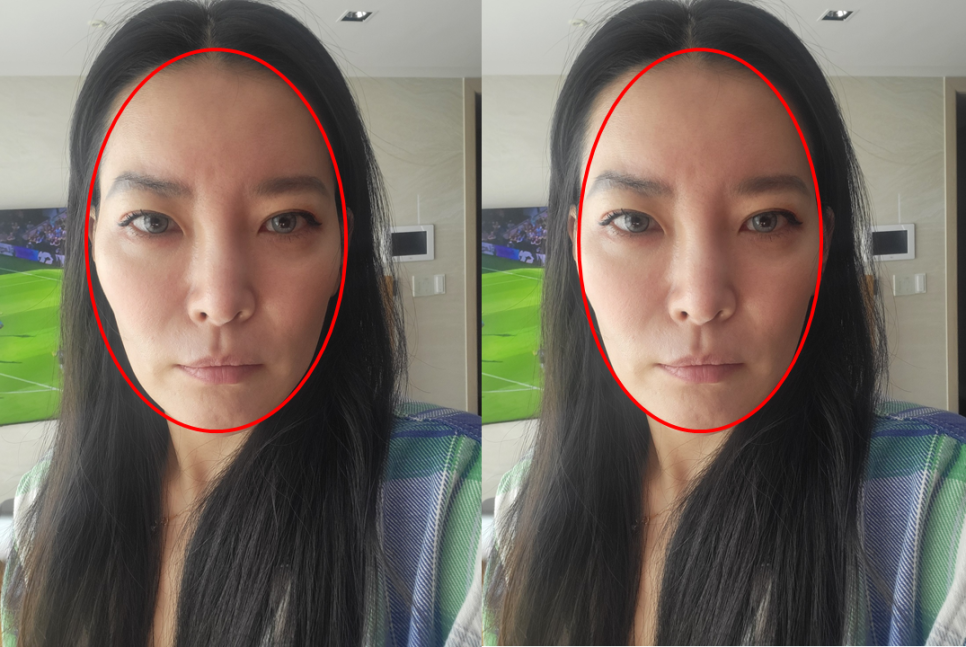
Consultation process before correcting contour irregularities in a peanut-shaped face.
In the case of a peanut-shaped face, fat grafting is performed with greater focus on the side cheeks and temples in addition to the usual fat grafting areas.
However, if you try to fill in the skeletal hollows in the cheeks too much, as in the left photo above, the face can look wider and larger, which is not aesthetically favorable.
Therefore, as in the right photo above, naturally correcting the sunken areas can lead to greater aesthetic satisfaction.
'PRP to Improve Fat Survival Rate'
In addition, PRP can be used as a way to increase the survival rate of transplanted fat.
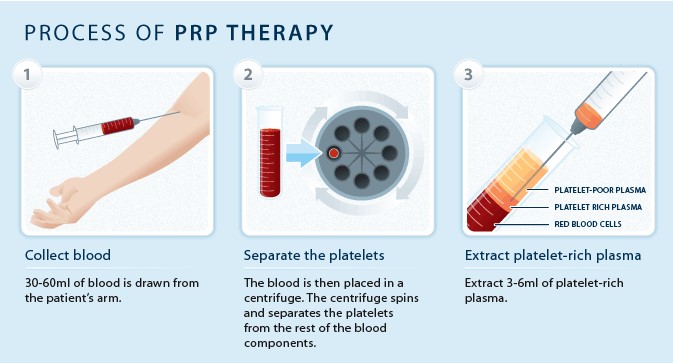
PRP (Platelet Rich Plasma) collection process.
PRP is short for Platelet-Rich Plasma, a component of plasma separated from blood.
Through a PRP kit, platelet-rich plasma can be obtained from one of the centrifuged layers of blood, and because this part contains many growth factors, it can help improve the survival rate of fat grafting when used together with fat grafting.
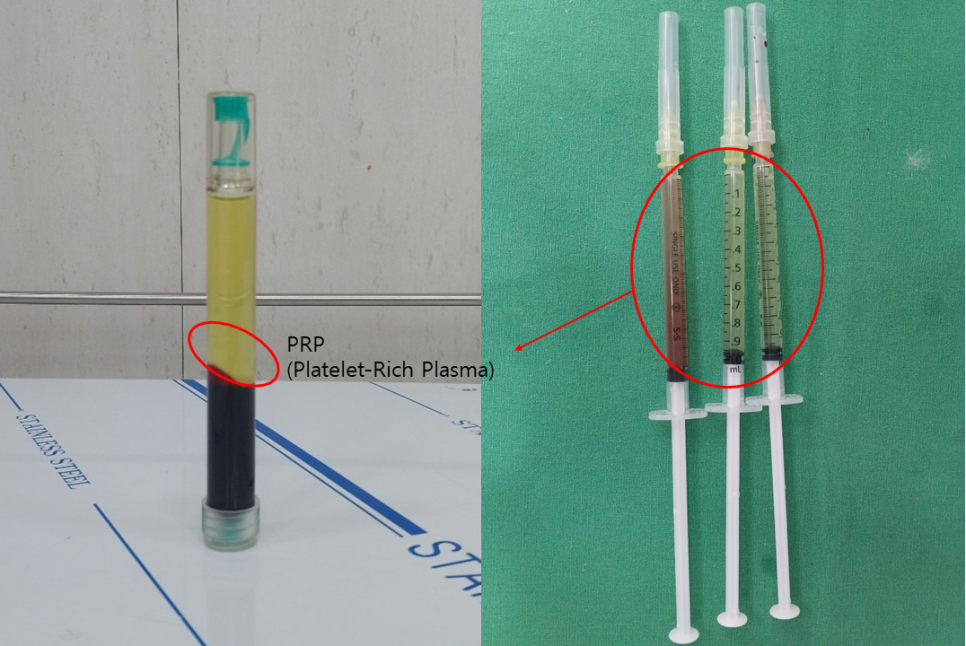
PRP extracted from blood using a kit
'Autologous Blood Skin Regeneration Using PRP'
PRP contains various growth factors, so it can be used not only to increase fat survival in fat grafting, but also to be directly injected into the skin to help regenerate damaged skin.
PRP skin regeneration is a procedure that has been consistently popular for a long time, and it recently became well known again as some celebrities posted vlogs on YouTube.
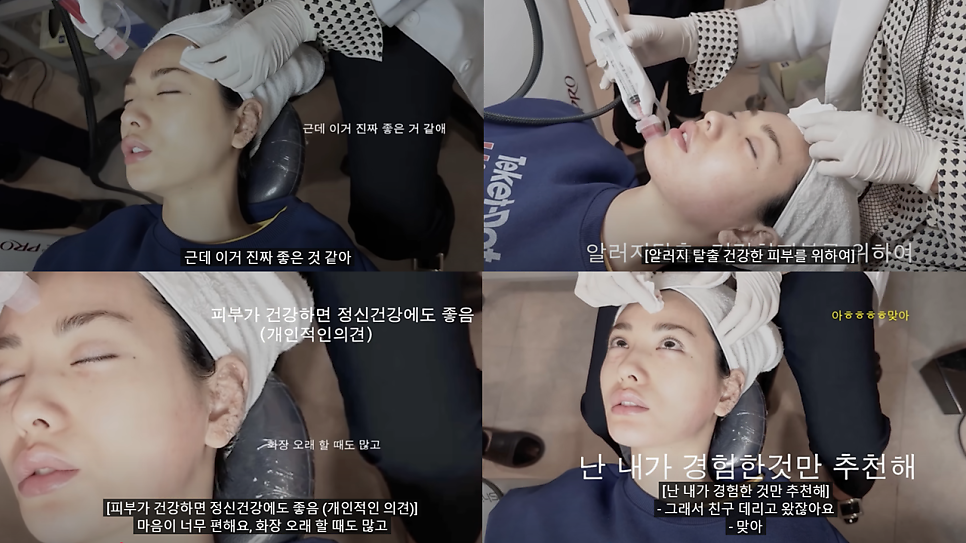
A celebrity receiving PRP skin regeneration treatment. Source: Nana YouTube, NA (Special Care) NA
'Before and After PRP Fat Grafting to Correct a Peanut-Shaped Face'
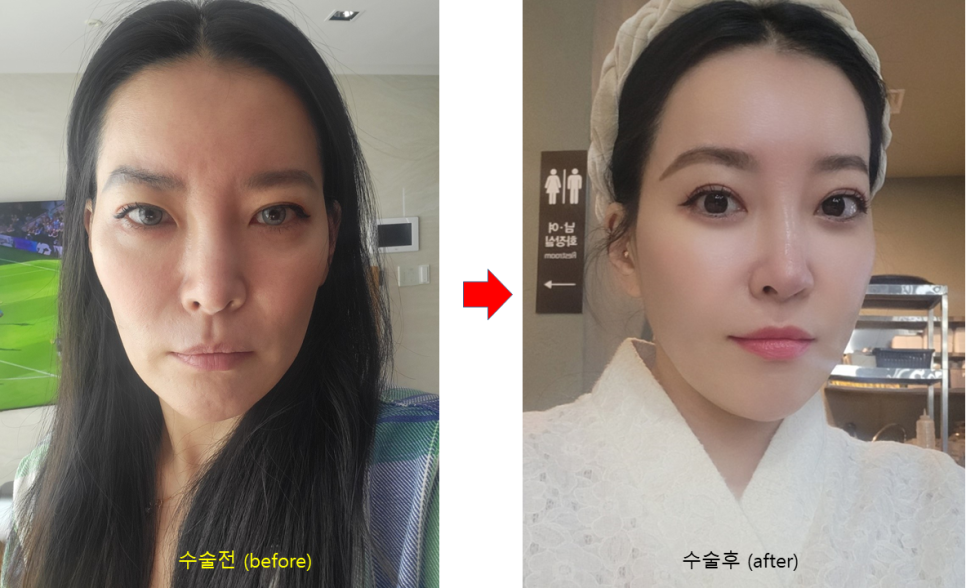
Before and after fat grafting. Fat grafting review. Before and after PRP fat grafting. PRP fat grafting review. This is a real model with consent for disclosure.
Today, we looked at how to correct a peanut-shaped face through fat grafting.
PRP is a good additional procedure that can improve the survival rate of fat, and some of the collected PRP can also be used for skin regeneration.
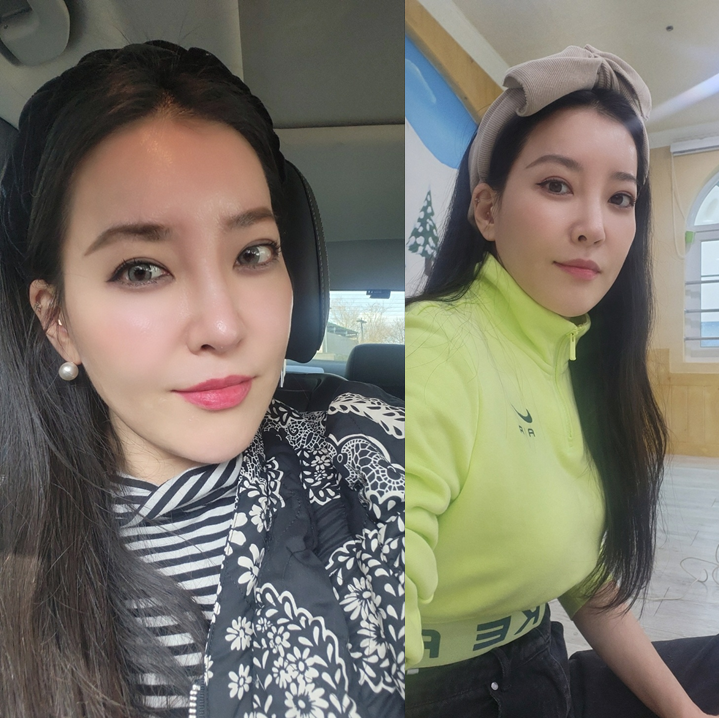
Fat grafting review in the 40s. Fat grafting in the 40s. This is a real model with consent for disclosure.