Lower blepharoplasty is a procedure that improves sagging skin and fat pockets under the eyes caused by aging.
The age group that most often undergoes lower blepharoplasty is people in their 50s and 60s, and as age increases, there are many cases where the elasticity of the tissue under the eyes is weakened.
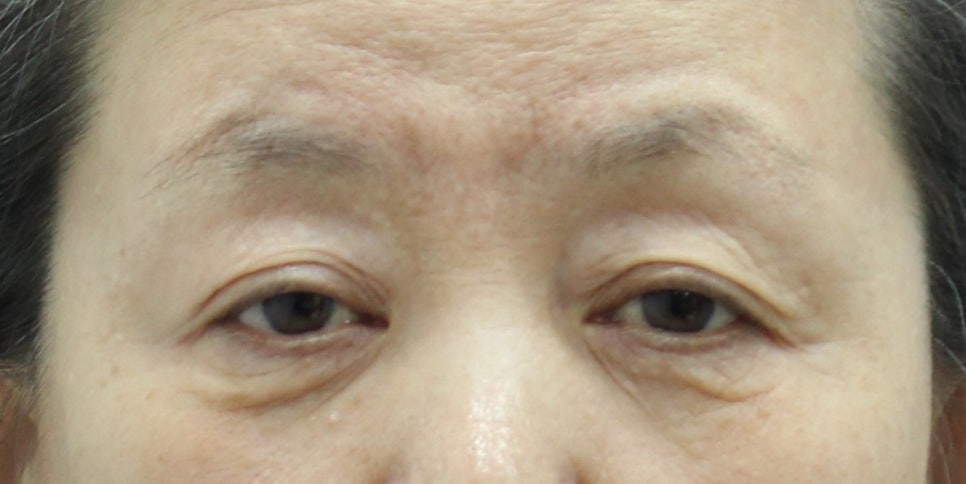
Reduced elasticity under the eyes in a person in their mid-60s. Lower blepharoplasty in the 60s. This is a partial model who consented to disclosure.
A woman in her mid-60s visited the clinic to improve the tired appearance caused by sagging skin and wrinkles under the eyes.
In addition to the usual consultation process for lower blepharoplasty, there are tests needed when the tissue under the eyes lacks elasticity.
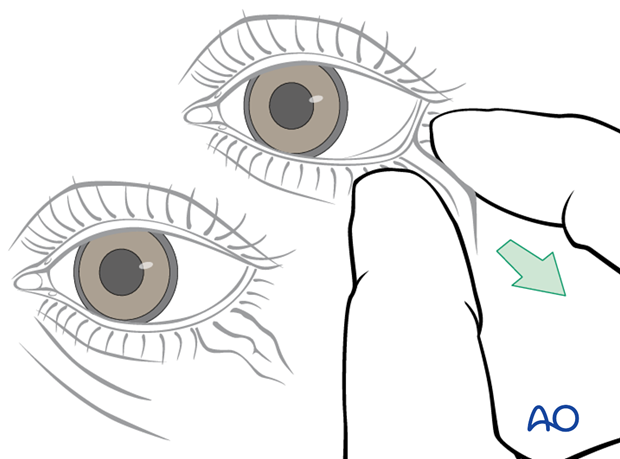
Physical examination to check tissue elasticity under the eyes. Snap back test. Snap-back test.
Preoperative tests performed:
-
Snap Back Test: Checks whether the lower eyelid returns to its original position when pulled
-
→ Delayed recovery time, indicating reduced elasticity
-
Distraction Test: Evaluates flexibility when the lower eyelid is pulled forward
-
→ Spread by 6 mm or more, confirming weakened elasticity
'Lower blepharoplasty to prevent ectropion'
Basic lower blepharoplasty consists of fat repositioning under the eyes and appropriate skin excision.
However, fourth-generation lower blepharoplasty for better results additionally includes SOOF lifting, which lifts the fat beneath the orbicularis oculi muscle, along with suspension fixation that anchors the orbicularis oculi muscle to the periosteum around the eye.
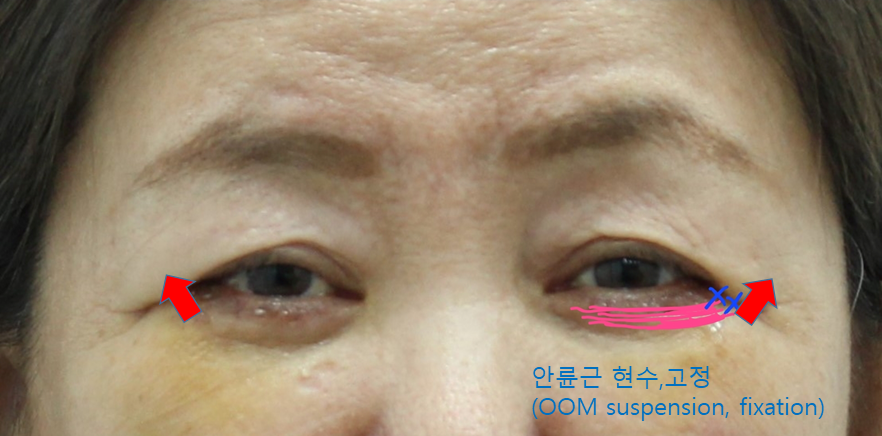
Orbicularis oculi muscle suspension and fixation helps compensate for weakened support in the lower eyelid, prevent ectropion, and plays an important role in maintaining the natural position of the lower eyelid after surgery.
During the early recovery period after surgery, the outer corners of the eyes may appear slightly raised, and it may feel as though the eyes have become smaller.
However, after a recovery period of about 1 to 2 months, the eyelid position settles into the proper place, so there is no need to worry about overcorrection in the early stage after surgery.
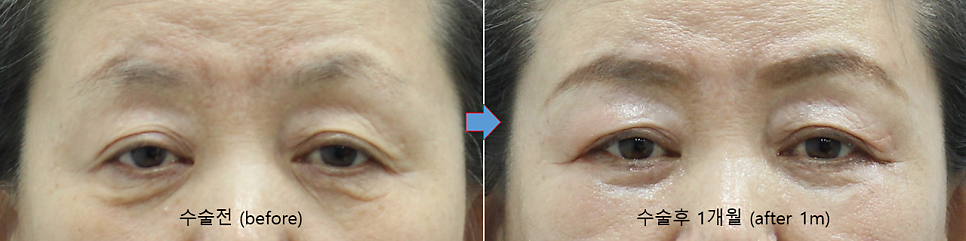
Before-and-after lower blepharoplasty in a person in their 60s. Lower blepharoplasty review in the 60s. This is a real model who consented to disclosure.
Ectropion is a complication that must be prevented in lower blepharoplasty.
If risk factors are accurately identified through a preoperative physical examination of the area under the eyes and muscle fixation and support techniques suited to those factors are performed together, stable and satisfactory results can be achieved.
In addition, scars from the incision under the eyes fade over time, and once the scar stabilization period has passed, they become almost invisible.
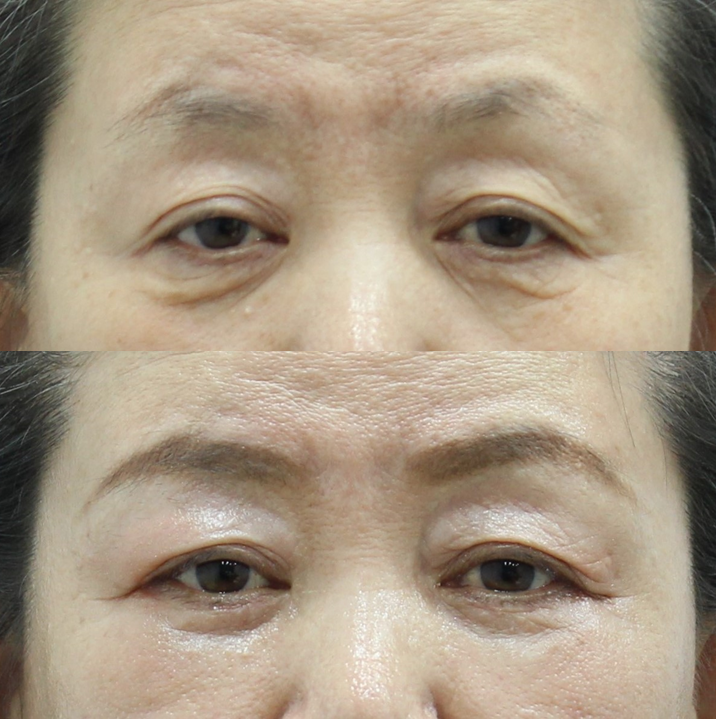
Lower blepharoplasty to prevent ectropion. This is a partial model who consented to disclosure.